
District 11 North Dallas Candidates Face Off on Housing Density, Protecting Neighborhoods
Share News:

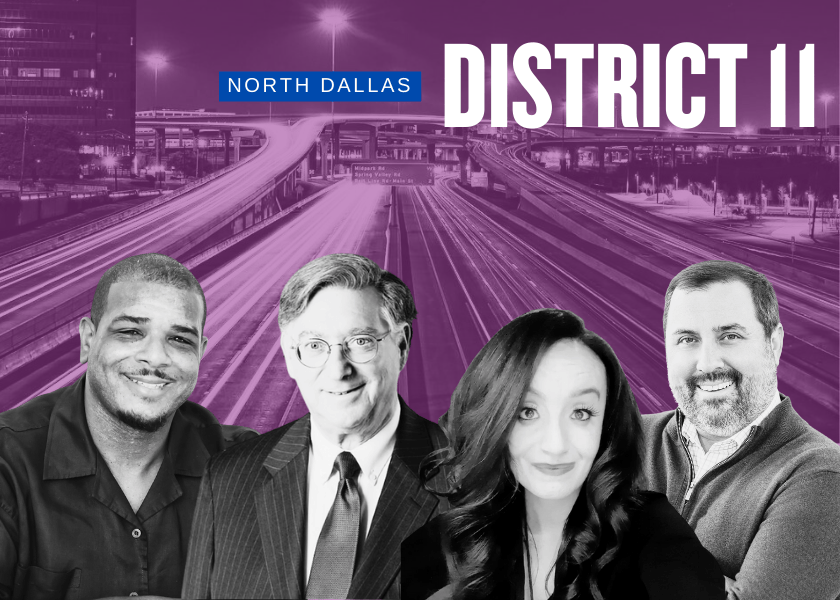
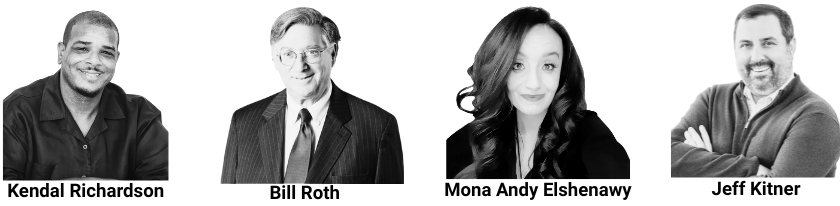
Current Councilmember Jaynie Schultz announced last year that she would not seek re-election. In District 11 North Dallas, four candidates are vying to replace two-term councilwoman Jaynie Schultz, who decided not to run for re-election. Candidates are attorney Bill Roth, public health professional Mona Andy Elshenawy, Parks and Recreation Board member Jeff Kitner, and former mayoral write-in candidate Kendal Richardson.
As a real estate-focused news outlet, CandysDirt.com is asking candidates about the housing issues their district neighborhoods face — and the more difficult question, what can be done as a city council member to improve housing affordability in Dallas.
May 3 Election: If you’re not sure what your city council district is, you can search your address for your city council district on the City of Dallas website. Alternatively, visit the city’s ArcGIS map to search your City of Dallas address.

CandysDirt.com extended these questions to each Dallas City Council candidate, offering them the opportunity to speak directly to our readers and their constituents.
Here are unedited and unabridged responses for Kendal Richardson, Bill Roth, Jeff Kitner, and Mona Andy Elshenawy, in the order they were received.

Kendal Richardson: I believe the most pressing housing needs are affordable housing options for all residents. Rent is extremely high for some of the low-quality housing properties. As a council member, I would advocate for a rent cap and work to define the concept of affordability. The city has yet to establish a clear definition of ‘affordable,’ which is the main issue that needs to be addressed. Once we clarify this concept, we can develop strategies to make housing affordable for all residents.
Bill Roth: The most pressing housing need in District 11 is preserving the character of the neighborhoods in the district. Single-family homes dominate the district, making up between 70 – 80% of the housing type in the district; many of these homes are characterized by large lawns, 3-to-5-bedroom houses and are often between 2,000 to 4,000 square feet in size. Excessive high-rise apartment complexes in or near our neighborhoods does not make sense and should be reserved for other areas of Dallas that are less established or have a need for high density. This district already contains ample multifamily units.
Jeff Kitner: District 11 housing is currently a mixture of single-family and multi-family residential housing. Like much of the city, District 11 needs more housing of all types for both owners and renters. A primary desire of many District 11 residents is to protect single-family residential housing from issues caused by new commercial or multi-family projects. Council members should be listening to the needs of constituents and ensuring that any new development is in alignment with the needs of their districts. That is something I will do.
While I am generally supportive of development, which increases tax revenue and attracts more new business to Dallas, any new development of multi-family housing should be thoughtful and appropriate for the location and conditions of the community. Development should be done collaboratively, bringing all parties to the table. Affordable housing should be considered in areas near public transit and other similar public spaces. Developing this way should have very limited impact on single-family residential areas.
Mona Andy Elshenawy: The need to protect our neighborhoods from a high-density or urbanist agenda. As your next city councilwoman, I will diligently advocate to maintain existing single-family zoning restrictions.

Kendal Richardson: In my opinion, everyone should have the right to operate any lawful business in Dallas, such as short-term rentals. Nevertheless, strict policies must be enforced, so that if a property fails to comply with the rules, it should lose its city privileges.
Bill Roth: Dallas has already in effect dealt with the matter of short-term rentals with Ordinance No. 32482 that bans short term rental in single-family zones.
Jeff Kitner: I am always open to learning more about short-term rentals. However, I think the City Council’s current approach to short-term rentals is the correct one. I would likely oppose a complete ban on short-term rentals in Dallas, provided the rentals are done within the confines of the city’s proposed regulations. This issue is currently pending in the Texas courts, and I am interested in seeing whether the city appeals the ruling or instead tries to work out a solution with the short-term rental community. I would like to see a solution where short-term rentals exist in a highly regulated way and that they do not negatively impact single-family residential neighborhoods.
Mona Andy Elshenawy: We should maintain the ordinance [that City Council passed in 2023] banning short-term rentals from single-family zoned areas. The city should appeal [the injunction that was filed] to the Texas Supreme Court for a review.

Kendal Richardson: My lingering concern is whether Forward 2.0 Dallas is actually cultivating collaboration, given the circumstances surrounding Pepper Square.
Bill Roth: The largest problem concerning ForwardDallas 2.0 is the lack of community input the project had during its development, where residents’ and other community stakeholders concerns were ignored to promote an ideological worldview with public funds aimed at increasing Dallas’ housing supply by 100,000 units within the next ten years.
The impact of this rushed passage erodes the level of community control that neighborhoods have in their surroundings. This only leads to community members having to partake in costly legal fights to preserve the character of their neighborhoods, draining resources from themselves and the city that is supposed to be addressing their concerns, not fighting them.
Jeff Kitner: I do not have any significant lingering concerns primarily because ForwardDallas 2.0 is a guiding, not binding, document. While the City Planning Commission and the City Council are free to use the guidance when considering new zoning cases, additional research and input from residents is needed and should always be solicited and taken into consideration before any zoning changes are made.
Mona Andy Elshenawy: As long as individual zoning requests remains modus operandi, I don’t have major concerns. I hope that FD [per our proximity to the DART Silver Line] isn’t a covert game plan for certain stakeholders to push a high-density agenda.

Kendal Richardson: To address resident concerns about public safety and infrastructure, the council should: allocate more funding to police and community safety programs, conduct thorough infrastructure assessments, prioritize repairs and maintenance of roads and utilities, engage with residents to identify specific needs, and explore potential funding sources to support these initiatives; this could include increased police presence in high-crime areas, community policing programs, street lighting improvements, traffic calming measures, and regular updates on infrastructure projects.
Specific actions for public safety:
Increase police staffing: Hire more officers, particularly in areas with high crime rates.
Community policing initiatives: Develop programs that encourage positive interactions between police and residents.
Neighborhood watch programs: Support and expand existing neighborhood watch programs.
Crime prevention strategies: Implement targeted crime prevention strategies like surveillance cameras and improved street lighting.
Invest in mental health services: Partner with mental health organizations to provide support and crisis intervention.
Specific actions for infrastructure:
Infrastructure audits: Conduct comprehensive assessments of roads, bridges, sidewalks, water systems, and sewer lines to identify areas needing repair.
Prioritize maintenance: Allocate funds for routine maintenance to prevent small issues from becoming major problems.
Important considerations:
Community engagement: Regularly consult with residents to understand their specific concerns and priorities regarding safety and infrastructure.
Transparency and accountability: Keep residents informed about progress on safety and infrastructure projects.
Collaboration with other agencies: Partner with state and federal agencies to access additional funding for major infrastructure projects.
Bill Roth: The infrastructure backlog in the City of Dallas is substantial. It is estimated that transportation-related infrastructure needs alone will cost the city over $10 billion. The Department of Public Works noted a shortfall of over $125 million in funding required to maintain streets at their current condition or to achieve “zero degradation”. Meeting even the minimal infrastructure needs, while fully funding public safety and keeping taxes low will take laser-focused fiscal discipline.
With the passage of Proposition U, the city of Dallas will be pushed to allocate 50% of new annual revenue to the Dallas Police and Fire Pension until it’s fully funded. The remaining funds must then boost police starting pay (to match the top five North Texas Departments) and hire enough officers to reach a minimum of 4,000 – an increase of nearly 900 officers from 2024. Those initial efforts will help with police recruitment and retention and eventually will be a great initial step to increasing police response times (11+ minutes for high-priority calls currently). Eventually, the result of Proposition U will result in more deterrence-based policing, where the police department deters criminals from committing crimes, rather than solely responding to crimes after they have occurred.
The Council needs to work to be better stewards of taxpayer funds. Currently, millions of dollars of government spending are being used on unnecessary offices and programs that fail to address fundamental city necessities.
Jeff Kitner: Public safety is the top issue I hear about when talking to Dallas residents. I support the city manager’s push to divert $7 million to the retention and hiring needs of the Dallas Police Department, and also support the Public Safety Committee’s plan to hire and train 325 officers this year. To meet these lofty hiring and training goals, the city needs to see through its commitment to build and maintain a world-class training center, which I commit to doing. I also believe we must continue to ensure that compensation is competitive, the pension is fully funded, and that our police and fire departments have all the resources they need to be successful.
Infrastructure is the other main issue I am hearing about when talking with Dallas residents. The city made a good first step in addressing our infrastructure challenges by appointing Dr. Gus Khankarli as the Director of Transportation and Public Works, and former AECOM executive Dev Rastogi as the new Assistant City Manager overseeing Aviation, Dallas Water Utilities, Transportation and Public Works, and the Office of Bond & Construction Management. The city must continue to invest in infrastructure and tightly manage bond projects to ensure the estimated cost matches the realized cost. To the extent possible, I would also like to see the city prioritize infrastructure improvements as part of our operating costs rather than relying extensively on bond elections to fund these items outside of the ordinary operating practices of the city.
Mona Andy Elshenawy: Advocate for timely and effective implementation of Proposition U [hiring more police officers]; constituents have shared with me via focus groups that during times of distress they have had to wait “hours” for DPD to rescue them. This is unacceptable! In addition to quantity [in hiring of new officers], we should also be advocating for quality– let’s develop and retain our talent in Dallas!
We should be advocating for adopting best practices for pothole repairs; let’s learn from adjacent municipalities, that seem to excel in this arena and manage to maintain their roads despite budgetary constraints.

Kendal Richardson: My name is Kendal Richardson, and I am running for District 11 City Council
I moved to Dallas 15 years ago, and Dallas has changed into a place that seems more about money rather than the people, and that’s not how I was raised, and this makes me sad.
I want to address some areas of concern in which I am building my campaign around.
Firstly, the issue of homelessness is a pressing concern. According to recent reports, there are approximately 4,600 individuals experiencing homelessness in our city. Personally, I have witnessed the challenges posed by homelessness in my own community, where some individuals have failed to behave as good neighbors. Last year, my apartment complex suffered four fires, resulting in the displacement of 11 families, all of whom were senior citizens. Despite my efforts to contact our current city councilwoman, Jayne Schultz, no assistance was provided to these vulnerable individuals. In contrast, my approach would have involved meeting with the affected seniors to assess their needs, collaborating with organizations like the Red Cross, and personally visiting local churches to secure assistance. Furthermore, I would have ensured that these individuals received help in relocating their belongings. This exemplifies my commitment to serving our community.
The next pressing concern is crime. How has this been permitted to escalate?
In 2023, I personally experienced car vandalism as a Kia owner, and the “Kia Boys” wreaked havoc on Dallas. In 2024, I was victimized by carjacking near Redbird Mall/Oak Cliff. Furthermore, within a single day, 10 of my neighbors’ vehicles were vandalized, with one stolen, and multiple Cadillac converters were stolen.
The responses to 911 calls have been subpar, frequently involving a “please hold” message or a four-hour callback from an officer, culminating in a video chat instead of the traditional in-person response.
I am aware of the city’s initiative to establish a committee addressing this issue, but tangible outcomes remain elusive. Consequently, I will concentrate on identifying vulnerabilities and crafting a comprehensive strategy to enhance the community’s experience. Initially, hiring sufficient staff to address 911 calls and ensuring an adequate police presence for a city of this magnitude are paramount.
Moreover, I must tackle the issue of irresponsible landlords in my district, a distinct concern and that’s another story for a later time.
Although I may not possess unlimited resources or solutions, I am dedicated to listening intently and driving meaningful change. I firmly believe I am the optimal candidate due to my unwavering commitment to advocating for others through my voice. While I may not always be present in the office, I will be actively engaged with the community on the streets.
Bill Roth: For more than 40 years I have called North Dallas home. I have raised my family here, built a thriving small business, and volunteered in numerous civic and education organizations to improve the lives of fellow Dallasites. I am running to ensure we have a voice on council who will take the time to listen to our community and fight for the issues that matter most to residents.
I believe Dallas needs to get back to basics, improve public safety, fix our crumbling infrastructure, eliminate wasteful spending and focus on developments that complement and protect our single-family neighborhoods and improve the lives of the people living and working in Dallas.
Jeff Kitner: In October 2019, my family and I took shelter in our bathroom as a tornado ripped through our neighborhood, destroying not just parts of my home and my business, the North Dallas Chamber of Commerce (NDCC), but over 15 miles of homes and businesses across North Dallas. I am still grateful every day that my family and all residents in Dallas were safe, though the destruction took years to resolve and, in some cases, clean up and rebuilding is still ongoing.
Through the process of rebuilding our home and ultimately selling and relocating the Chamber’s building from Preston/Royal to its current location on LBJ Freeway, I collaborated with City leaders who worked steadfastly to ensure my family, and many just like us, had the resources and information we needed to rebuild our lives. Both my District 11 Councilmember at the time, Lee Kleinman, and the District 13 (where the Chamber building was located) Councilmember, Jennifer Gates, made themselves available to answer questions and concerns and to keep residents informed as the city made many infrastructure repairs and helped us overcome extensive permitting and construction roadblocks. It was clear to me that our residents deserve Councilmembers who care about their concerns not just during times of crisis, but always. If elected, I plan to be the kind of Councilmember who is responsive not only when times are tough, but also to help with day-to-day needs like fixing a pothole expeditiously, replacing a trash can, getting a local park swing repaired, or helping navigate a complex zoning case that impacts our community.
That is the kind of Councilmember I will be, and this is the legacy I believe I left in my seven years on the Park and Recreation Board, where I worked in partnership with neighbors and communities to deliver new amenities across the district based on their needs and interests. These projects include the expansion of the Northaven Trail, including the new bridge connecting the Northaven Trail over Central Expressway with the White Rock Creek and Cottonwood Creek Trails, and, in the future, the SoPAC Trail; the new playground at Arapaho Park; the new trails at the Woods at Valley View; the new Kiowa Park Bridge; the new playground at Anderson Bonner Park; and many more. I will be the kind of Councilmember who provides quality and timely constituent services, while working tirelessly to ensure that our tax dollars are put to good use and that basic city services are serving you well.
I also plan to prioritize good governance and make City Hall work better for its residents. City Hall is a complicated place to navigate, but I know how to do it. I will offer community office hours at different coffee shops and other locations throughout the district to allow for easier communication with the district office. I also plan to send regular newsletter updates and post on social media so that residents are informed of the happenings in the district. Finally, I plan to continue to the Neighborhood Leadership Institute (NLI) by bringing the district’s Homeowners Associations together to share ideas about advocacy, best practices, and upcoming events, and periodically pair the NLI with the representatives of our district board and commission members to allow for the greatest opportunities to collaborate and share information.
Mona Andy Elshenawy: My career has always been characterized by a strong commitment to public service. I have worked for local and national government for more than a decade. Whether it be auditing hospitals to ensure compliance with government standards, supporting the City of Dallas as a contractor, or working as a federal representative at DFW International Airport and US Congress — the common denominator has always been “People First.”
I plan to prioritize constituent concerns by engaging in active listening, quantifying constituent inquiries to understand levels of prioritization, and serving as YOUR neighborhood advocate. My motto is action vs. lip service. Tenacity and being okay with being labeled “The squeaky wheel” are two important characteristics necessary to move the needle forward on key agenda items.

“Cadillac converters” were stolen? Is that a transcription error? Surely candidate Richardson meant “catalytic converters”.