
South Oak Cliff District 4 Candidates Offer Education and Expertise for City Council Race
Share News:

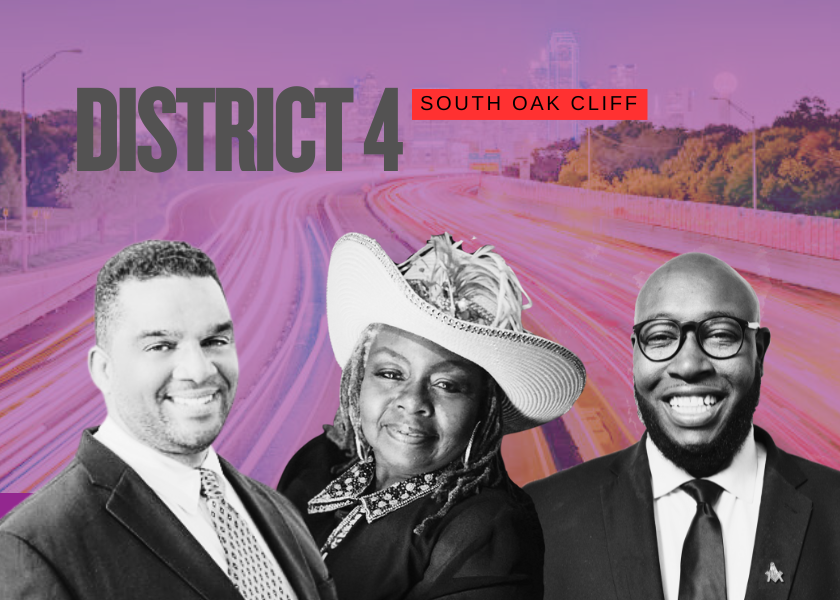
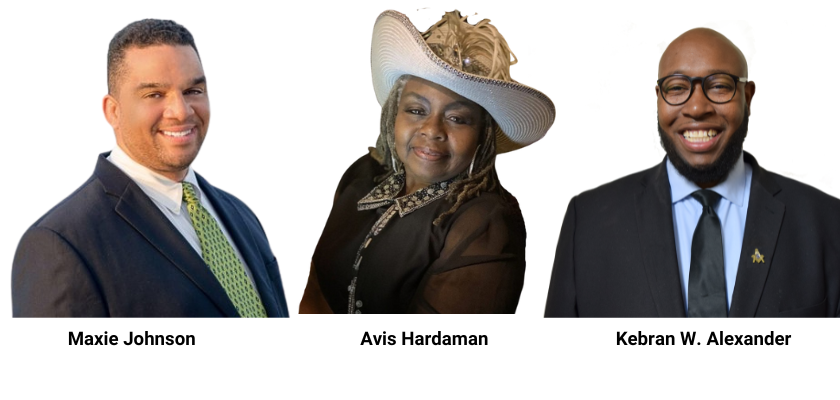
Dallas ISD trustee Maxie Johnson, educator Avis Hardaman, and Dallas County Sheriff’s Department employee Kebran W. Alexander are vying for the District 4 seat held by Carolyn King Arnold, who is term-limited.
Despite a proposition approved by voters in November making Arnold ineligible to seek another term, she filed paperwork but was not qualified by the city secretary. Landers M. Isom III also filed and was not qualified.
Because CandysDirt.com is a real estate-focused news outlet, we’re asking candidates about the housing issues their district neighborhoods face — and the more difficult question, what can be done as a city council member to improve housing affordability in Dallas.
May 3 Election: If you’re not sure what your city council district is, you can search your address for your city council district on the City of Dallas website. Alternatively, visit the city’s ArcGIS map to search your City of Dallas address.

Here are the unedited, unabridged responses for Kebran W. Alexander, Maxie Johnson, and Avis Hardaman:

Avis E. Hardaman: I hear many of my constituents constantly complain about the availability of affordable housing and it is a serious concern for families. It may be helpful to increase funding for needed citizens and shorten the waiting time for housing. Once I am on the City Council, I am sure that I will see more available options.
Maxie Johnson: High-quality affordable housing inventory is the greatest challenge.
In order to address it, we have to define and describe what both high-quality and affordable mean. High-quality, to me, means constructed out of sturdy, long-lasting materials, not the cheapest possible materials. It means safe, accessible, and near green space. It means mixed-use so it can generate revenue, provide employment opportunities, and improve the surrounding neighborhood. Affordable means people of all income levels can live there while meeting their other obligations.
There are a few ways I’ll address this:
1) Resolving the police and fire pension issue by attracting new business and revenue for the city – allowing us to increase that 50% of additional revenue the council and city manager have already agreed to direct toward the pension
2) Advocating against algorithmic price setting to avoid predatory practices that reduce affordability, accessible inventory, and place profit over product and people
3) Streamline the permitting process by working with the business community and the city manager
4) Convene community leaders and organizations regularly to streamline the community meeting process and better define community expectations and needs around housing so new developments can better reflect what the community is looking for.
Kebran W. Alexander: We must continue to focus on increasing the supply of affordable housing through government funding and incentivizing developers to build mixed-income units in ALL areas of Dallas, including the southern corridor. The most pressing housing needs in District 4 pertain to housing inequality. In addressing housing inequality, we should focus on increasing the supply of affordable housing through government funding and incentivizing developers to build mixed-income units. We should also reform zoning laws to allow for denser housing options and provide rental assistance to low-income households. We need to focus on protecting tenants from eviction and addressing discriminatory housing practices to promote equitable access to housing across all demographics. Lastly, it is important to support policies that promote community integration (i.e. income) and prevent housing segregation.

Avis E. Hardaman: Neighborhood Land Use Zoning could define areas where short-term renting is allowed. Once I am on the City Council, I am sure that other options are available.
Maxie Johnson: I am on record and unapologetically pro-single family neighborhoods.
The local efforts at a ban have proven to be unenforceable, so the support or opposition of a ban does not directly apply to my race; however, I have experienced first hand what STRs look like when they are operated well and when they are not.
I think there is room for nuance in this conversation and think we need to look at where these operate to satisfy both communities and operators. We cannot sacrifice the quality of life and safety in our communities.
Local ordinances that prohibit or overly restrict short-term rentals infringe on private property rights, create unnecessary government interference, and negatively impact the small operators who depend on these for income.
Dallas has tools to address nuisance properties and bad actors without imposing broad restrictions that hurt responsible property owners and limit economic opportunities. We need to use these more effectively and make sure STRs do not cause problems for residents. We’re a big entertainment and sports market. The World Cup will be playing games here. Property owners deserve the ability to participate in these unique earning opportunities without causing harm to their neighbors.
Enforcing existing noise, parking, and safety regulations is a more effective and fair approach to maintaining neighborhood quality without penalizing all short-term rental operators.
Many examples of these ordinances are also redundant, creating unnecessary red tape for property owners and tenants alike. We should focus on fair and balanced solutions that protect communities while respecting private property rights.
I would support a registration process for STRs for the following reasons:
1) It would support and strengthen the ability to use existing regulations to hold property owners accountable
2) There is a difference between individuals renting investment properties or spare bedrooms and larger corporate owners and ownership groups. Where common sense dictates flexibility in responses to complaints and violations, registration would facilitate these responses and actions
Kebran W. Alexander: Absent banning all short-term rentals in residential neighborhoods, as a community we should require permits or licenses for STRs. Doing so allows the city to track and monitor STR activity. We can set occupancy limits, establish noise ordinances and enforce parking restrictions. We can also cap the number of STRs in a given area, and potentially create designated areas where STRs are allowed, all while considering community feedback and concerns about STR’s. Community feedback is necessary to gage how the neighborhood feels about potential disruptions caused by frequent turnover of guests. We can garner that community feedback through public meetings and surveys to understand their concerns about short-term rentals in their area. We should also support our homeowners’ associations who may also want certain rules for STR’s within their jurisdiction. Designating specific areas where short-term rentals are permitted and restricting them in other places allows us to consider factors like proximity to other residential properties. Lastly, we should consider mandatory reporting from listing platforms of transactions in Dallas zip codes for the purpose of collecting and verifying rental tax revenue from the property owner.

Avis E. Hardaman: I have looked up the ForwardDallas land use plan. As I see a limited view of the plan, it seems that zoning regulations are required to satisfy the residents of certain neighborhoods.
Maxie Johnson: I would have voted “yes.”
I think our existing neighborhoods and their residents must be protected and considered in any new development conversations.
I was satisfied with the protections in it for single family neighborhoods, I believe it aligns with the city racial equity policy, and I believe that it gives the city the ability to be creative about making the whole city accessible and affordable.
Sometimes leadership means making your vote and explaining your “why” to your constituents. To say no just to say no without providing an explanation to placate your constituents does a disservice and is insulting.
Our entire city must share the path forward to increasing housing units. We’re not talking about building apartments in the middle of single family neighborhoods. The NIMBYism that was on display in some of the conversations around Forward Dallas are exactly why districts in the south bear so much of the burden of providing affordable and transitional housing.
Kebran W. Alexander: I support Forward Dallas 2.0. I do have some concerns about enforcement. I agree in advance to monitor for nonconforming instances. I see affordable housing as a separate, major issue.

Avis E. Hardaman: We need more police to patrol by foot and bike. As I see it, public transportation is to be much improved. Instead of people standing and waiting for a bus, benches will serve as a resting place for people to sit and wait for buses and public transportation. Finally, in my neighborhood, we need to rid our communities of abandoned and stray dogs.
Maxie Johnson: Both of these issues require a city budget and the necessary income on a city level to support them. Yes, we have streets in disrepair, many of which are in communities of color across our city and in areas that don’t have heavy business/entertainment traffic. The police and fire pension crisis must also be addressed, which also comes down to dollars and cents.
We must increase our revenue to address these concerns. I plan to take the approach of being unapologetically pro-business and attracting more private investment into Dallas. This would include but not be limited to:
1) Cutting red tape and streamlining the permitting process to make it easier to build and do business
2) Continuing to invest in the education to workforce pipeline, making it easier and less expensive to recruit and train in Dallas
3) Increasing transparency, efficiency, and accountability in the tax process
4) Offering strategic incentives to convert and build affordable mixed use developments in high need areas
With the new convention center project, the new major park projects coming online in the next few years, a rapidly improving school district, and other major reasons to choose Dallas over any other place to bring your business, I want to be an ambassador nationwide alongside our mayor, my fellow council members, and city staff to bring conventions and corporations alike to our city to do business. We have here what anyone could dream of in a destination. We need the right leadership to bring people here.
Kebran W. Alexander: I consider Quality of Life, Economic Development and Infrastructure as the top 3 issues facing District 4. Building on the solid foundation that exists in district, I want to focus on revitalizing what has been neglected; repairing what is broken; promoting pride and respect for and among the citizens of District 4; and initiate a 21st century vision for our students so that they see themselves as able to live and work in the district. I believe that the district needs an infusion of younger residents, money (investment capital and disposable income), and racial diversity to turn the corner on realizing its potential while addressing the needs of our senior residents. Public safety is important. We work hard to what we can, but we have a long way to go. I see this firsthand in my current position at the Dallas County Sheriff’s Office of Communications, providing 911 support.

Avis E. Hardaman: I will give my undivided attention to all the concerns in District 4. My goal for District 4 is “to unite; to educate; to empower.” I will serve ALL citizens of District 4, regardless of their particularities. I will serve the entire City of Dallas and work together with the other Districts and their representatives. Together, will continue to build a better Dallas, TX.
Maxie Johnson: I want to be a member of the Dallas City Council because our district and our city can be better than it is today with the right leadership. It’s going to take the courage to propose common sense priorities without just saying what people want to hear. It will take collaborative action that brings people together. I have a track record of doing that, and I’m not shy about saying that I am pro-business, which I think is a core value that will lead to the kind of decision making we need to chart the proper course.
I was elected to the Dallas ISD Board of Trustees to represent District 5 in May 2019. District 5 is a large and diverse district that spans Wilmer Texas, West Dallas, Oak Lawn, Uptown, and a large portion of South Oak Cliff and shares a great portion of the District 4 city boundaries.
I also serve as pastor at New Morning Star Baptist Church in West Dallas.
Before becoming an elected official, I served as PTA president and Vice Chair of the Site Base Decision Making Committee for South Oak Cliff. As a community organizer I stood with the South Oak Cliff Alumni Association, community stakeholders, student leaders – including standing with my son David, to successfully advocate and procure $52 million dollars in funding for improvements and renovations of the campus. My advocacy and board leadership has led to over $400 million documented improvements in the southern sector.
I want to continue that progress on the city council.
Kebran W. Alexander: A product of the district he hopes to serve, Kebran Alexander has been involved in District 4 from the outside, as a volunteer – and would be honored to represent the diverse and hard-working citizens of District 4. His focus is on 1) revitalizing economic development through training and business; and 2) improving the quality of life by reducing food deserts, offering improved senior citizen services, investing in infrastructure and repairs.
As a child of a lifetime public school educator and a Department of Justice employee, Kebran came to understand the struggles of progress and gained interest in the improvement and welfare of our community. Desegregation and integration were major nightly topics of discussion in the household for many of his formative years. Kebran moved into the district when it was thriving in the mid-70s, only to watch as businesses rapidly abandoned their new, increasingly African-American and Hispanic customer base. Glendale, Cedar Crest, Lancaster Kiest, Wynnewood, Village Fair, Westcliff, and then Red Bird Mall went into a state of demise and neglect. As he matriculated through St. Elizabeth, Bishop Dunne, Skyline High School and completed a degree in Political Science at the University of North Texas, he noticed the regression. Support him in his bid to represent the district’s best interests and to work collaboratively with other council members to affect change in Dallas, especially in this gem in our southern corridor.