
Dallas Councilmember Mendelsohn Casts Lone Vote Against Floral Farms in Heated Exchange
Share News:

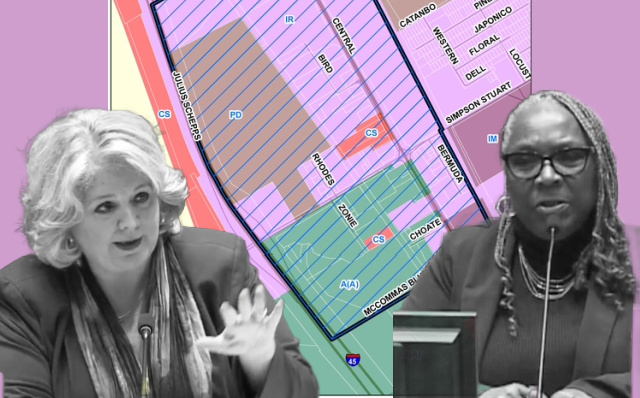
Perhaps one of the spiciest debates of late among Dallas City Council members occurred Wednesday as residents of Southeast Oak Cliff’s Floral Farms — where “Shingle Mountain” once stood — were finally granted a rezoning that will prohibit new heavy industrial uses on a large tract of primarily undeveloped land near their homes.
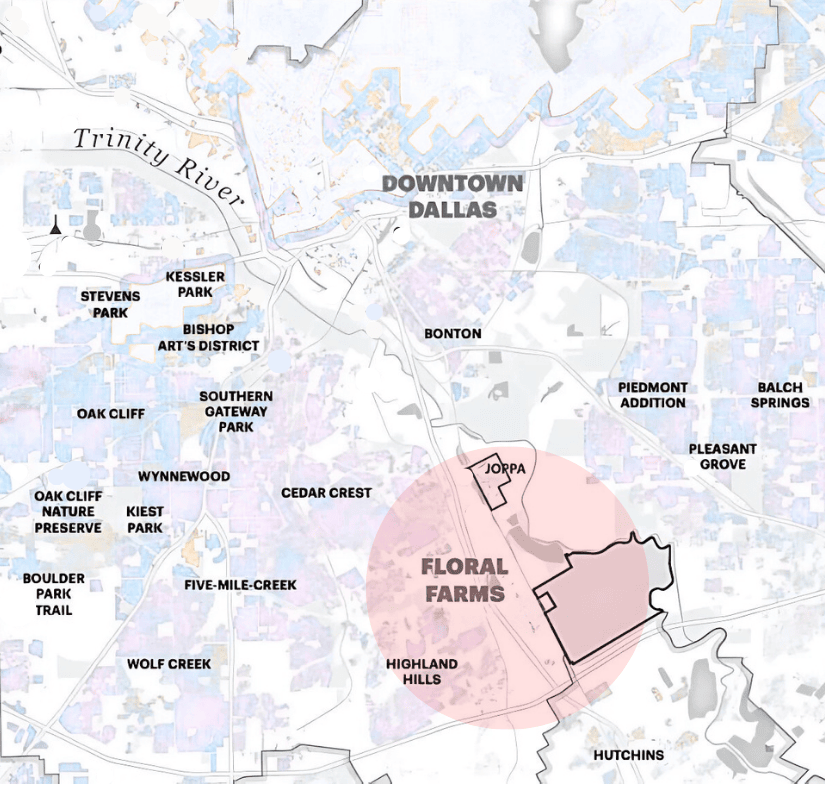
Referred to as a “massive downzoning,” a 522-acre area near River Oaks Road, Union Pacific Railroad, McCommas Bluff Road, and Julius Schepps Freeway was rezoned from heavy industrial to agricultural, retail, and single-family residential. The Council’s action varied from staff’s recommendation which included an allowance for light industry.
Residents of the Floral Farms community have been fighting for the zoning change for about six years, claiming that the industrial uses have harmed their health and prevented them from having access to grocery stores and other services.
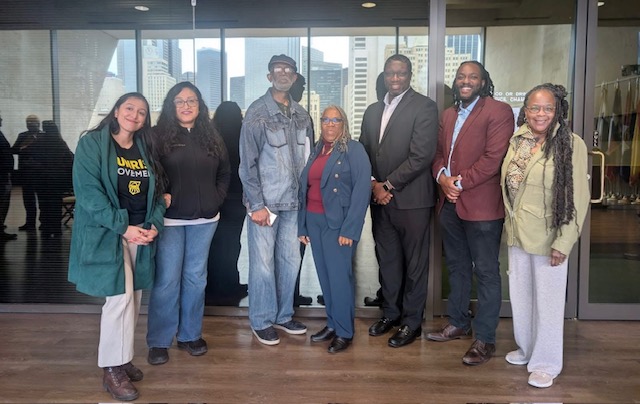
Marsha Jackson, co-chair of Floral Farms Neighbors United, said she wasn’t against business but is against polluters, citing the illegal roofing material dump that once towered over their homes years ago.
“We’re worried about our health, our community,” Jackson said.
Planning and Development staff said 113 notices were sent to property owners both residential and commercial within 500 feet of the zoning request. They received five replies in favor of rezoning and 22 in opposition, meaning a “supermajority,” or three-fourths city council vote was required to approve the item. That means 12 votes were needed to pass it, and that’s exactly what they got.
Far North Dallas Councilmember Cara Mendelsohn cast the lone vote against the rezoning and Mayor Eric Johnson and Councilmember Carolyn King Arnold were absent when the vote was taken.
“They chose to live in this area and now they’re asking us to take a really significant financial hit,” Mendelsohn said. “The thing that happens around this horseshoe all the time is people decry the disparity between the tax revenue we have north and south of I-30. If we do this, we’ll have even less tax revenue coming from southern Dallas and less jobs for people in southern Dallas … From the very first time I met Marsha Jackson, I’m like, ‘Can we move you out? Can we buy your place?’ That, I think, should be our posture.”
The council member called the rezoning “a bad decision” and said just five people were complaining about it. She said she believes in neighborhood determination, but this isn’t a neighborhood; it’s an industrial area with 27 homes.
“I’ve met with Marsha Jackson, I’ve talked to Marsha Jackson, and she moved into her house, I believe in 1995, more than 20 years after that landfill was opened,” Mendelsohn said.
“It was a choice. She wasn’t redlined. She wanted to live there.”
“She wanted to have a horse. She wanted to have big land. She wanted to be on a creek,” Mendelsohn continued. “That is certainly her choice, but to then do this to all these business owners because she made this choice, and again five homeowners are complaining, and we’re going to suddenly bring up every history item for the City of Dallas. This is a bad decision. You can criticize me all you want.”
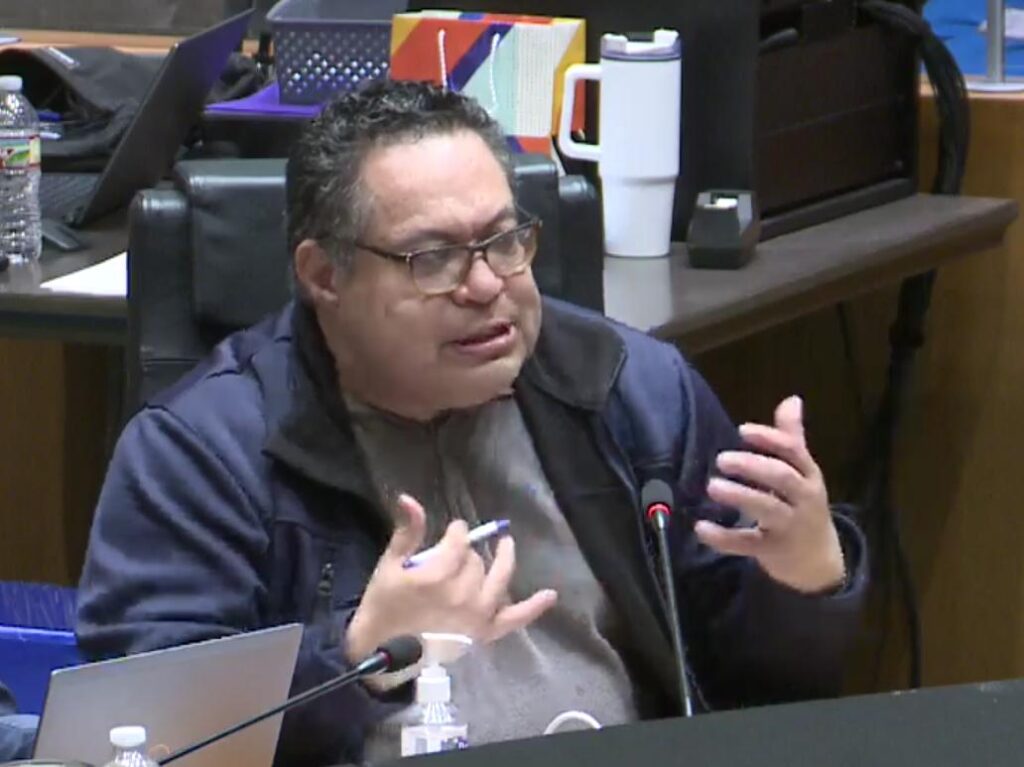
Councilmember Omar Narvaez said such commentary was hateful and hurtful.
“I don’t care when Ms. Jackson moved in there or why she moved in there,” he said. “I get it if you don’t understand because of where your privilege comes from … but don’t put your definition of yourself and what you think that you can get on top of these residents and these business owners and all these people that are listening … For far too long we’ve had to deal with this and it’s not right, it’s not OK, and it’s not fair.”
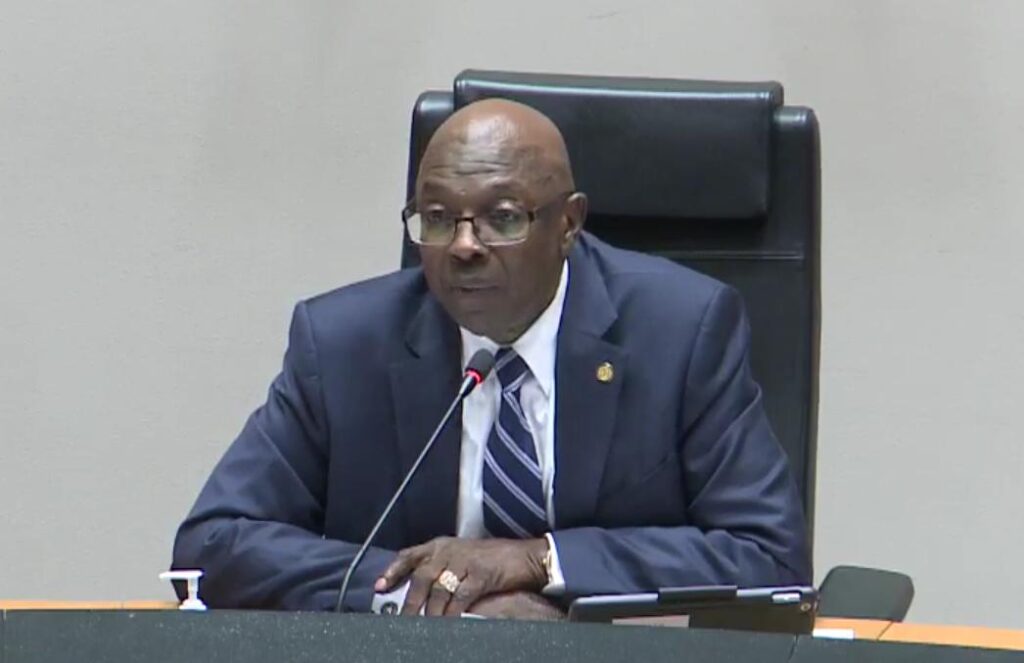
Mayor Pro Tem Tennell Atkins, who represents the area that was rezoned, said the decision was not an easy one when considering the well-being of a community that was harmed for many years by Shingle Mountain, a six-story toxic dump that was removed by the City in 2021.
“One life means the world to me,” Atkins said. “It’s about people, about human beings. You can not justify a life about business, about dollars, if you have a loved one.”
The Dallas City Council was originally supposed to consider the Floral Farms rezoning case in December but postponed it in order to better understand the implications of Senate Bill 929, which addresses the procedures municipalities must follow when changing zoning regulations that affect existing property uses. The Council addressed the bill Wednesday as well.
Watch the Feb. 12 Dallas City Council meeting and read the supporting documents on the rezoning.
Senate Bill 929
The Council discussed Senate Bill 929, which limits the City’s authority to terminate nonconforming uses. The Council approved a resolution that controls the amortization and notice process, explained Bert Vandenberg, chief of general counsel in the Dallas Attorney’s Office.
“The nuance in the motion makes it comply with the actual SB 929,” Vandenberg said. “The portion that deals with the procedure for amortization was retroactive in the bill to February 1, 2023, and we are making our code comply with that.”
Caleb Roberts, executive director of the environmental justice advocacy group Downwinders at Risk, said he understood that the state had “bestowed” the senate bill on the Dallas City Council.
“Good zoning policy, good environmental justice is still able to happen through SB 929,” Roberts said. “This shouldn’t stop any good zoning policy from happening in this city.”
Industrial vs. Residential
Several business owners were opposed to the zoning change and referenced Shingle Mountain as one bad apple that harmed the surrounding residences because Dallas Code Enforcement failed to shut it down sooner.
Attorney Chris Bowers, representing American Industrial Trading, pointed out that there’s a limited number of homes and most of the industrial companies in the affected area are not causing any hazards to the environment.
“The stated purpose of this massive downzoning from industrial to agriculture is to ‘protect health and safety of area residents from industrial uses,’ but let’s look at that statement,” he said. “The area has only 25 residences according to Dallas Central Appraisal District. The zoning map shows a neighborhood to the east but that neighborhood was bought out by the city in the ‘90s and I was a part of that. No one lives there today. Second, and perhaps more importantly, AIT, my client, does not pollute and in fact many of the other uses here do not pollute … This area has been ideal for industrial uses for 100 years because of its proximity to three major freeways, a railroad line, and the city’s landfill.”
Mendelsohn’s Opposition
In response to a question from Mendelsohn, Planning and Development Deputy Director Andrea Gilles said the closest residence is about 1,500 feet from a landfill that opened in the early 1970s. Mendelsohn said the landfill has an offensive odor and people shouldn’t live near it.
“They’re not trash,” she said.
The area was annexed in the 1950s, zoned industrial, and homes were allowed there through “cumulative zoning,” Gilles explained. People moved there because it was a rural area with a massive tree canopy and access to creeks and trails, Gilles opined. A portion of the area is industrial but there’s a large area that is undeveloped, she said.
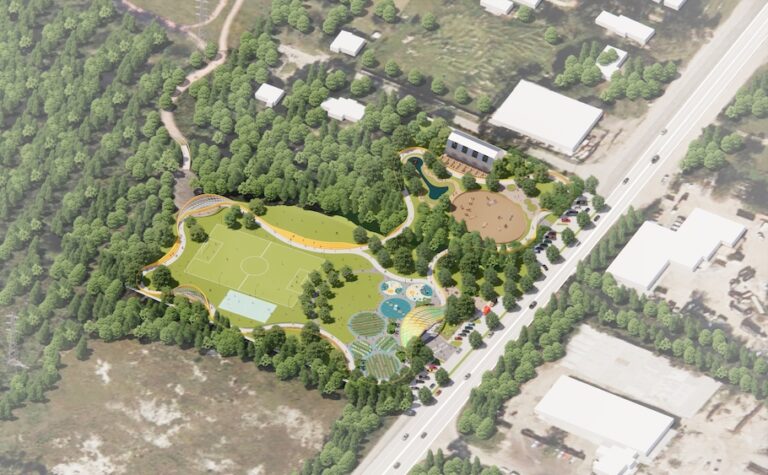
“We’re not recommending this influx of new residential subdivisions but the fact is, people live there and we want to make sure that we’re honoring that and that has not been honored for the past decades,” Gilles said. Residents have expressed interest in building a park in the undeveloped area.

There are about 50 businesses in the area and none will have to cease operations based on the zoning, Gilles said.
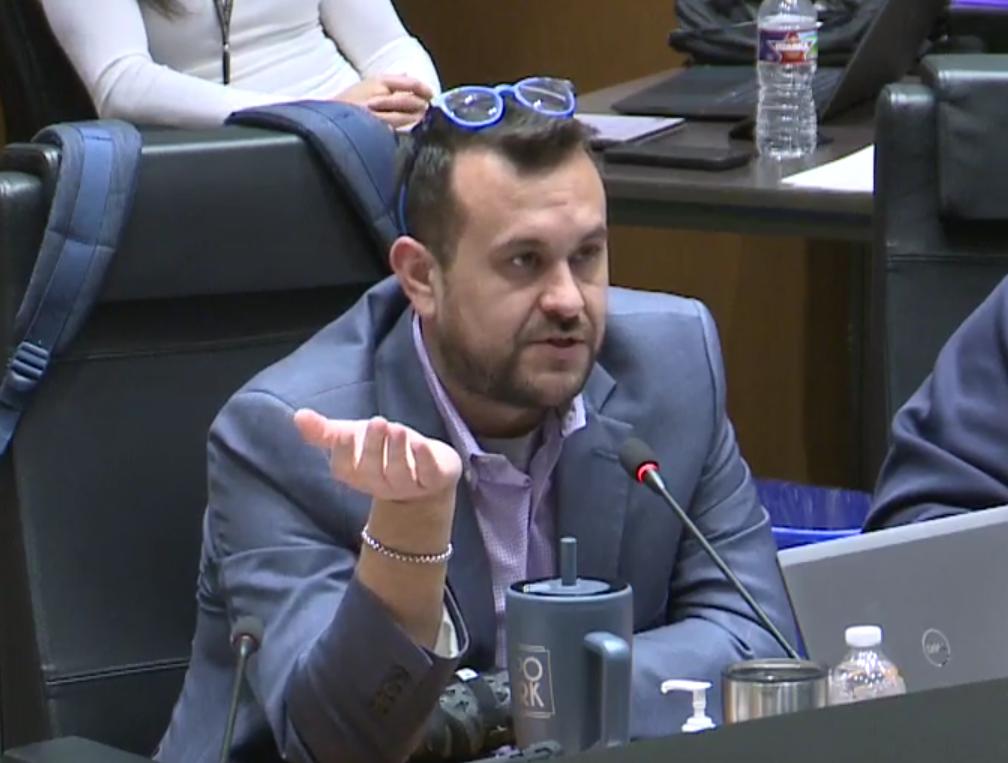
Mendelsohn argued that the zoning change was akin to Dallas turning its back on businesses and taking away their equity.
Deputy Mayor Pro Tem Adam Bazaldua said it was unbecoming and embarrassing for a leader to minimize the importance of a neighborhood.
“We’re here to represent every resident of the City of Dallas, and clearly it’s a residential neighborhood if 27 homes exist there,” he said. “I think we need to look back at the history of our city, why we have it so segregated, why we’re always speaking about equity, why we are still bringing in policies to undo practices from leaders in the past.
“We cannot continue to perpetuate the haves and have nots of our city.”
“We cannot continue to allow rhetoric from the policy decisions that we make here on the horseshoe to minimize the importance of some residents in our city, some of the most vulnerable, some who have been dealing with things that other parts of our city that you do consider residential have never had to worry about. Never,” Bazaldua continued. “To ignore the plight of people that you don’t personally understand is not leadership. It is embarrassing.”







The rhetoric from a few of these CM’s is hypocritical… demanding such concessions for a 27 household community; while just a few months ago, they fought to up-zone entire swaths of Single Family Neighborhoods for multi-family development. It’s selective outrage…