The Little Area Plan That Could: South Dallas Residents Shape Their Future
Share News:

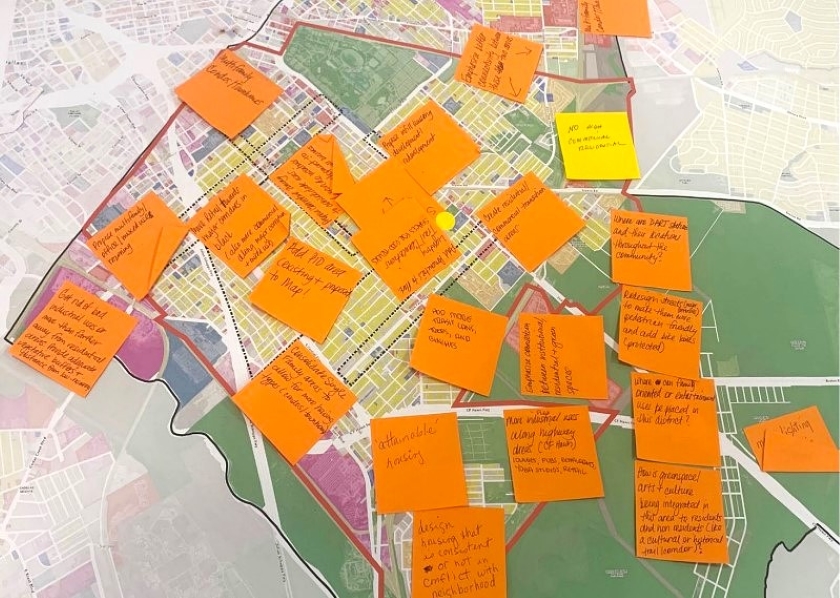
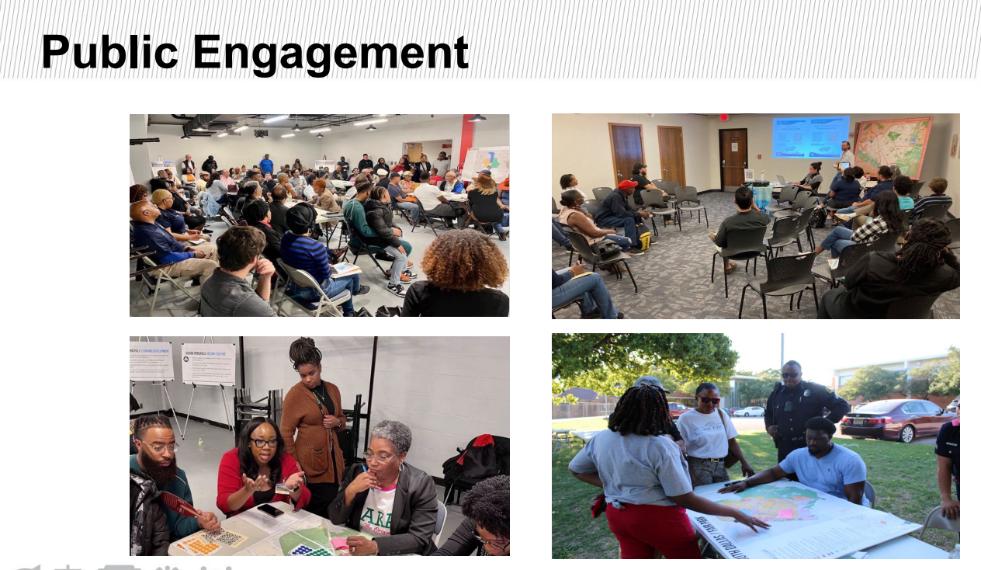
Dallas staff is careful about which communities are selected for a labor-intensive area planning process. Area plans, which guide future land use, can be tedious. They require a ton of public engagement and willingness from neighbors to roll up their sleeves.
But there’s something special about South Dallas/Fair Park. Its residents have heart, and that’s why we’re deeming their document — nearing the finish line for a public hearing — the Little Area Plan That Could.
The region bounded by R.L. Thornton Freeway, Scyene Road, Fair Park, and Parkdale Lake is represented by Deputy Mayor Pro Tem Adam Bazaldua and Plan Commissioner Tabitha Wheeler-Reagan.
Wheeler-Reagan served as co-chair with real estate advisor Scottie Smith on the task force that collaborated with staff to develop the area plan.
Chief Planner Patrick Blaydes provided an overview presentation to the City Plan Commission last month that included recommendations for infrastructure, economic development, community well-being, history and culture, and housing. South Dallas is a neighborhood, he explained, not the overarching “southern Dallas” quadrant of the city.
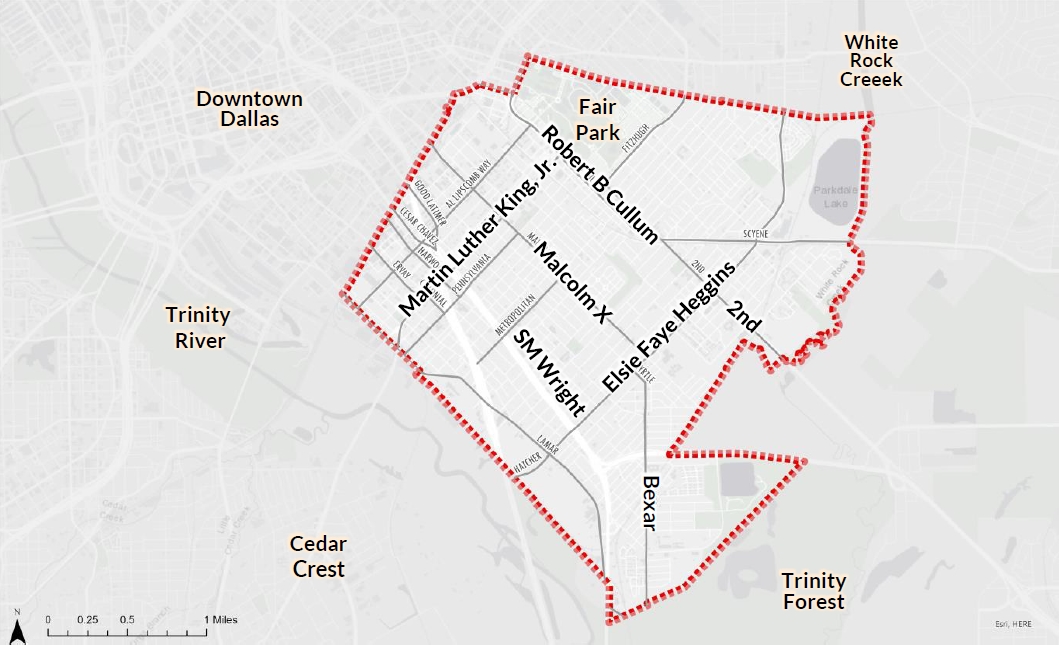
“The South Dallas community has gone through considerable community trauma,” Blaydes said. “There are a lot of historic inequities in South Dallas … This is not us parachuting in and saying, “These are some great ideas to help South Dallas.’ This is us standing in that room and listening to what those community members said they wanted.”
Watch the Jan. 23 City Plan Commission meeting.
Guiding Principles
Senior Planner Lindsay Jackson said numerous plans within South Dallas, including an economic development corridor plan, Fair Park Master Plan, and Dallas Area Rapid Transit station plans, have been reviewed over the past 20 years, but implementation hasn’t happened.
In 2020, Bazaldua filed a five-signature memorandum requesting an area plan and authorized hearing process for South Dallas/Fair Park. It was delayed due to the COVID-19 pandemic but resurfaced in earnest in late 2023.
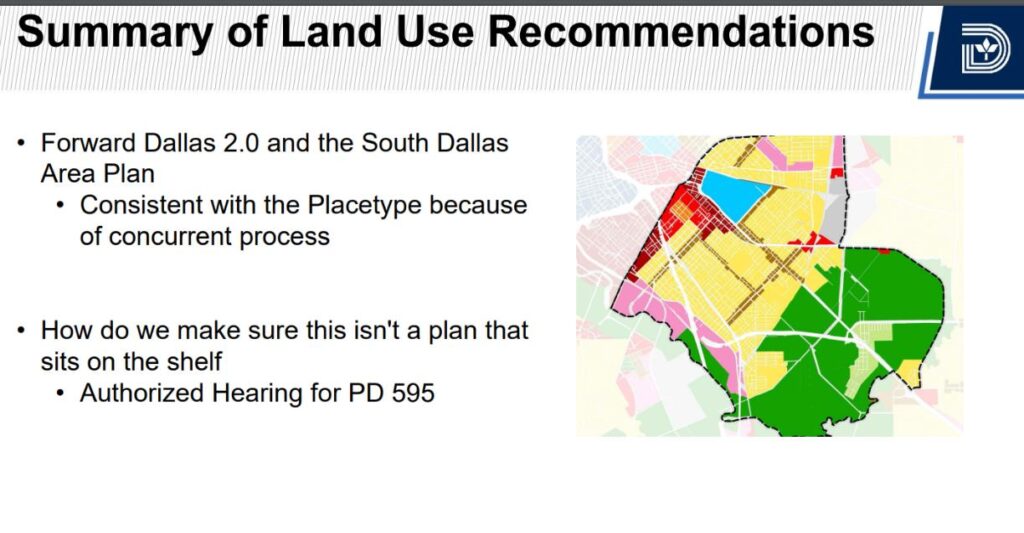
The task force came up with guiding principles, including how they want to address future land use in Planned Development 595. They identified focus areas that include Second Avenue south of Mill City, Elsie Faye Heggins Street, Malcolm X Boulevard Corridor, the MLK Jr. DART Station, and Queen City.
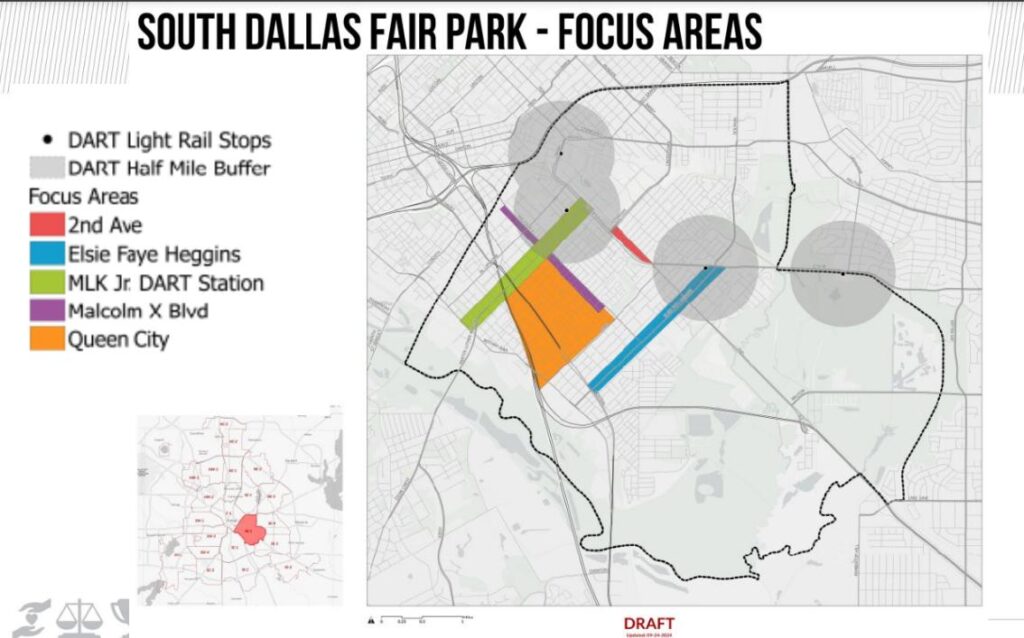
Wheeler-Reagan organized a neighborhood coalition that now meets quarterly. Another offshoot of the task force, the Pointe South Revitalization Committee, which includes landowners and developers, meets monthly.
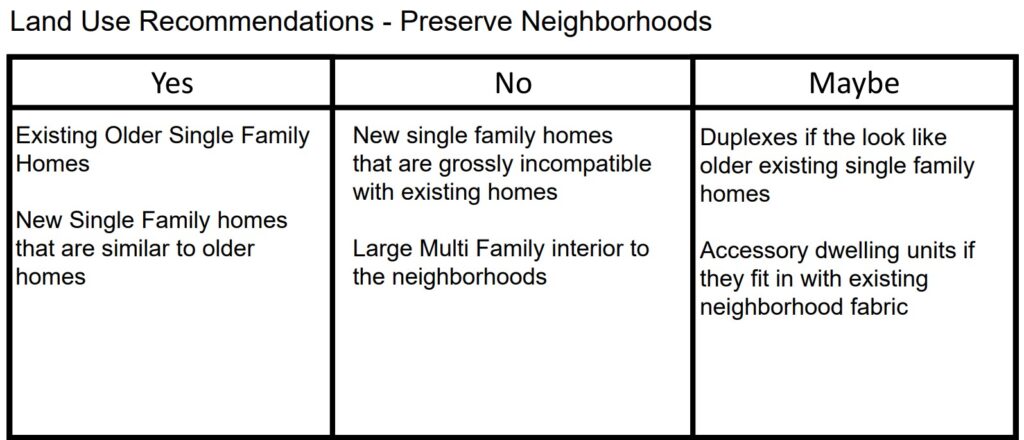
‘Grossly Incompatible Housing’
For about four years, planning staff has been working with South Dallas residents on what they want new housing to look like.
“One task force member talked about the ‘grossly incompatible housing.’ It wasn’t necessarily all the housing they didn’t like; it was the ones that were the most egregious,” Blaydes said. “We talked a lot about, if that’s what the idea is, what are the tools to get there? We talked about the neighborhood stabilization overlay. We brought in the conservation district staff and historic district staff.”
As a result of that conversation, Queen City initiated the process of becoming a historic district.
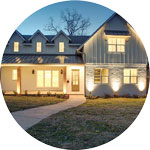
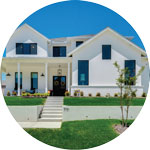
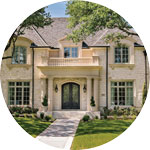
As for how to deal with grossly incompatible new home construction, the task force kept it simple. Here’s what they want:
- A porch in the front.
- A garage in the back.
- A maximum height of two stories.
- A pitched roof.
- A small driveway in the front.
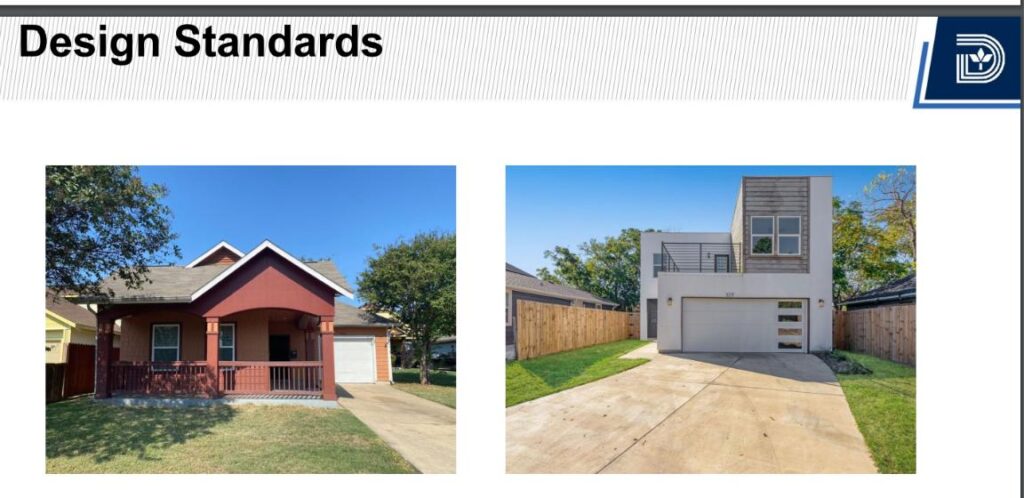
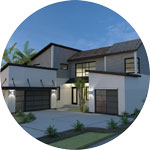
The type of housing they don’t want, depicted in the photo on the right above, has a front-facing garage and it’s “very boxy,” Blaydes said.
“The front yard is all driveway,” he said. “It has that flat roof. That’s the type of house they said, that’s the grossly incompatible ones that we want to talk about not having in South Dallas.”
The neighborhood is open to duplexes and accessory dwelling units as long as the construction is compatible with what already exists in the area.
“To be clear, the area plan does not recommend allowing duplexes in any of the single-family zoning districts,” Blaydes said, explaining that a zoning change would be required to build a duplex in a single-family zone.
Land Use
Beyond the area plan, big things are happening in South Dallas. The region is designated a Neighborhood Revitalization Strategy Area, meaning federal funds will be allocated toward housing. The area plan will also serve as the basis for an authorized hearing — a neighborhood-initiated rezoning — to make changes to Planned Development 595.
Several “big, broad land use recommendations” for South Dallas/Fair Park were folded into the citywide comprehensive land use plan ForwardDallas 2.0, which the City Council adopted in September.
One land use matter the residents want to address, Blaydes said, is that South Dallas has become a “food swamp,” littered with convenience stores that sell nothing but alcohol and junk food.
The plan also calls for design standards for new housing and revitalization of commercial corridors as mixed-use corridors.
City Plan Commission Feedback
Plan commissioners were generally supportive of the plan and wanted to know more about Queen City’s historic district designation process and clarify that approved design standards would apply just to PD 595 rather than a larger area.
A recommendation is in place to remove Queen City from the PD because they’ll be protected from incompatible development due to their historic designation. Wheeler-Reagan suggested that Colonial Hills might also be interested in a historic district designation.
The commissioner added that the diligent planning staff, led by Director Emily Liu, has addressed issues with the area plan in “real-time.”

“I call them regularly,” Wheeler-Reagan said. “Where the other 13 task forces closed out early, we’ve been open for five years because we keep addressing new issues. Thank you all. We’re near the end and we’re ready. This has been hard.”
Wheeler-Reagan also pointed out that the area plan recommends mixed-use zoning for the Malcolm X, Elsie Faye Heggens, and Second Avenue corridors because there are sections that just have commercial zoning rather than a mix of commercial and residential.
“On Malcolm X, there are pockets where it’s just single-family housing, and the recommendation isn’t to change that but it’s to change those areas that already have commercial zoning to make those mixed-use areas,” Blaydes said.
There are some homes within PD 595 that are nonconforming because they’re too close to the street and violate a setback requirement, Blaydes explained.
“The plan talks about how we can create those new design standards but that we’re not creating design standards on certain streets that would lead to more displacement,” he said.
Commissioner Tip Housewright said consideration of design standards is needed all over the city.
“We get so many concerns from residents coming down here in these neighborhoods that have this redevelopment momentum going on, and it’s generally the same comments about the big duplexes and the flat roofs and the big garages,” he said. “I can support the kind of things you all are talking about.”