
Bryan Tony: Creating Solutions for the Dallas Housing Crisis at Inaugural Summit
Share News:

By Bryan Tony
Guest Columnist
We don’t have to tell you this, but if you live in Dallas County, you know that it is becoming unaffordable — and already is — for many of our residents. Especially for people in some of our most important workforces — school teachers, firefighters, police officers, and those in the hospitality industry. The average cost of a home in Dallas is $405,000 and the median income is $63,985. You can do the math and see that this kind of disparity is unsustainable. And home prices are not slowing down any time soon.
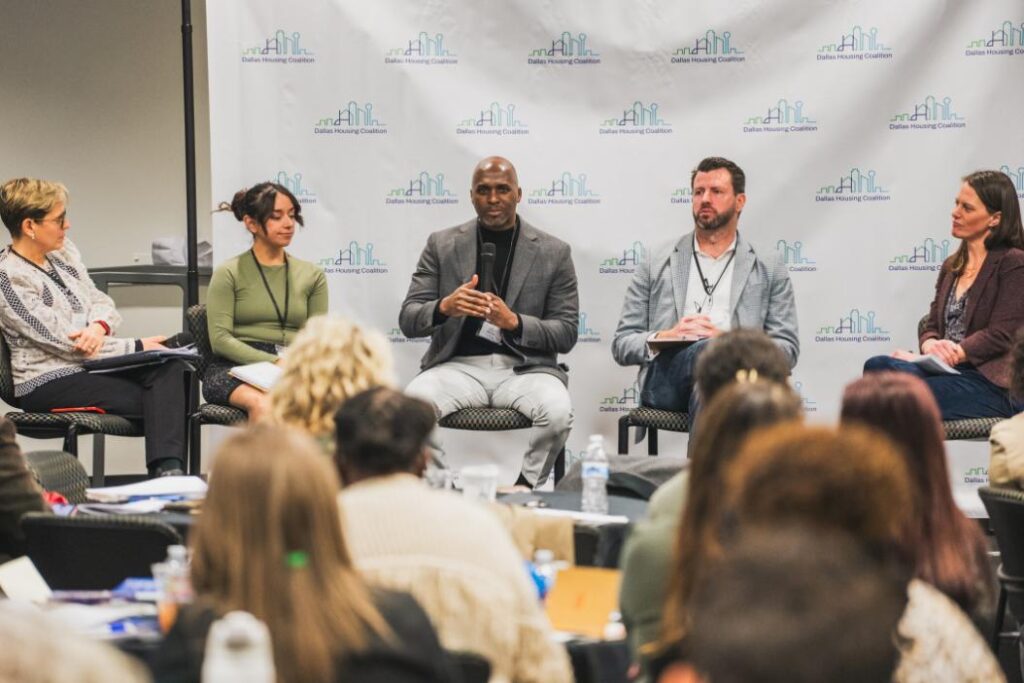
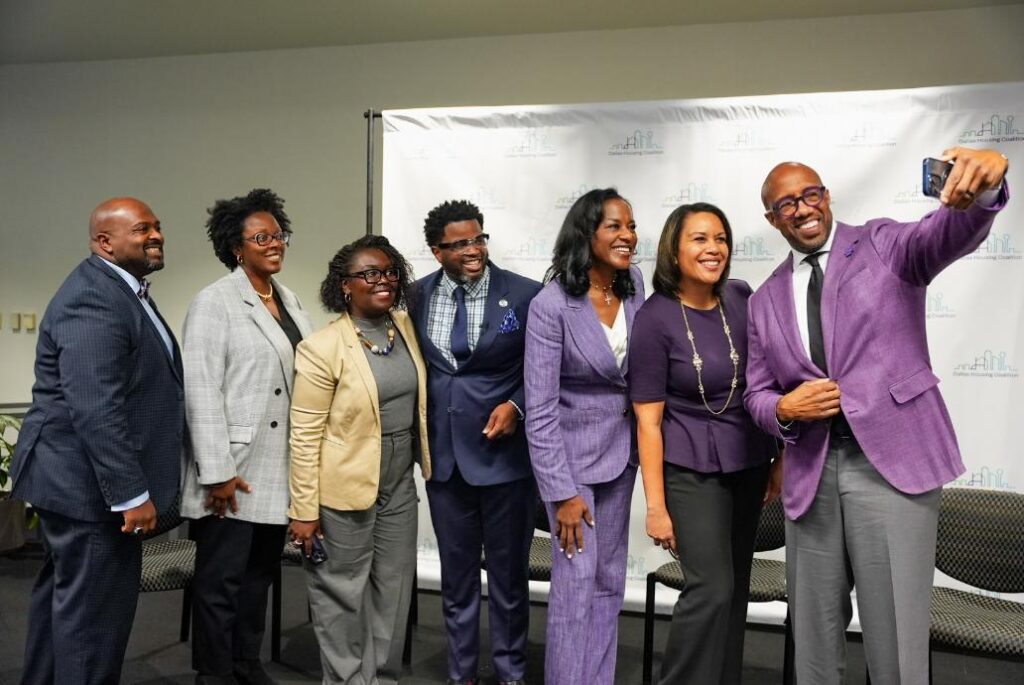
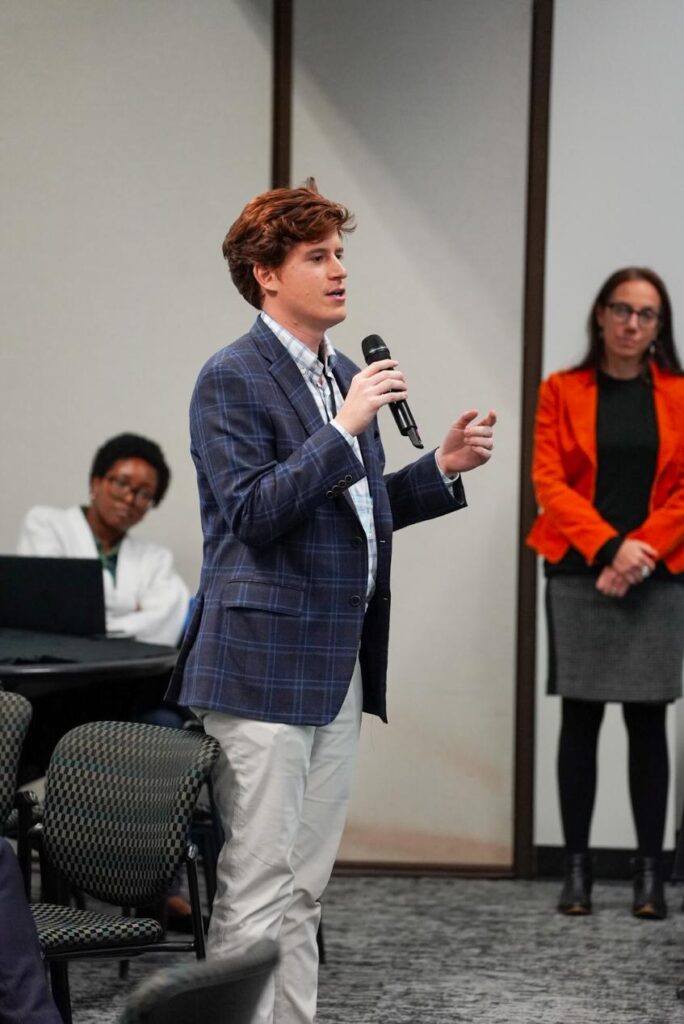
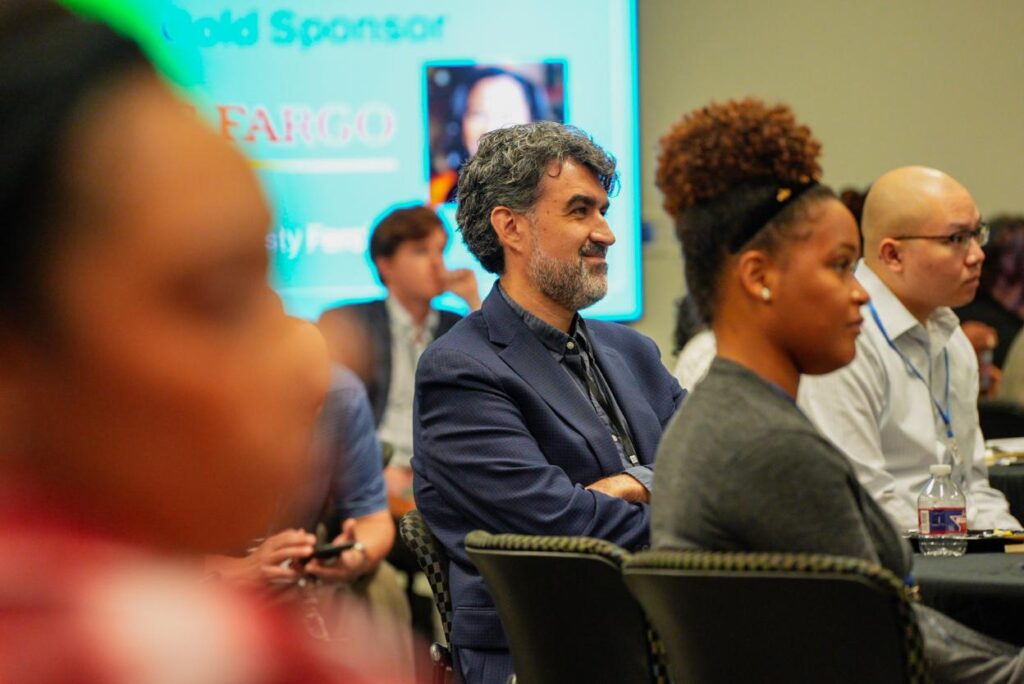
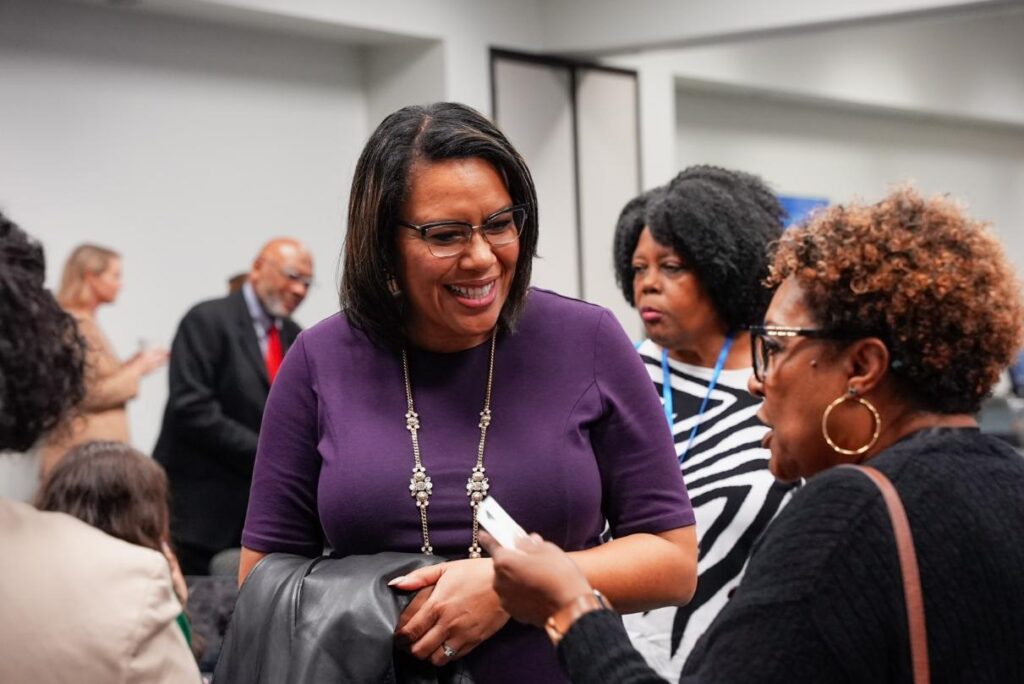
That’s why more than 280 people gathered Nov. 21 at Dallas College’s Bill J. Priest Center at the inaugural Dallas Housing Summit, hosted by the Dallas Housing Coalition, to discuss and create solutions for Dallas’ worsening housing crisis. The Summit featured housing affordability experts, speakers, and panelists from the City of Dallas and organizations like Dallas Area Habitat For Humanity, Housing Forward, and Urban Land Institute.
According to a recent report by Builders of Hope, who were also present at the Summit, by 2032, the typical Dallas renter will only be able to afford 21% of rental units, while Dallas homebuyers earning the median income will only be able to afford less than 2% of homes on the market at that time. A common theme that came out of the event was the need to remain in close contact to build more political support for many of the policy recommendations experts shared.
Dallas-Fort Worth is projected to grow to 8.5 million by 2028. Our booming economy and high growth are certainly good news for the city, but if it’s too expensive to live in Dallas, we will continue to lose residents to suburbs and surrounding cities. Access to housing is the greatest reason people move. Where people move, companies move, and that’s not good for Dallas. Add to that our recent college graduates who were born, raised, and educated in our city only to not be able to live here once they graduate because housing is too expensive for many college-educated entry-level employees.
According to housing experts like Charles Marohn, founder and president of Strong Towns and the bestselling author of Escaping the Housing Trap: The Strong Towns Response to the Housing Crisis, Dallas is only 10 to 20 years behind larger cities in California that are grappling with a severe housing crisis. If we don’t take action now to find solutions to make Dallas a more affordable place to live, we too will suffer the same fate.
Referring to the summit, Ashley Brundage, Dallas Housing Coalition Board Chair and CEO of Dallas Area Habitat for Humanity said, “Today was really incredible seeing all of the different folks attending, creating collisions that we have not seen before where public, private, nonprofit, faith-based, and different types of groups all came together to learn more and create solutions.”
Summit breakout session topics included Anti-Displacement Tools, Financing Strategies for Mixed-Income Development, Tenant Protections, Permanent and Temporary Housing Solutions, Local Issues & 89th Legislative Session Updates, and Making the Case for Housing Solutions: Research Findings from Dallas.
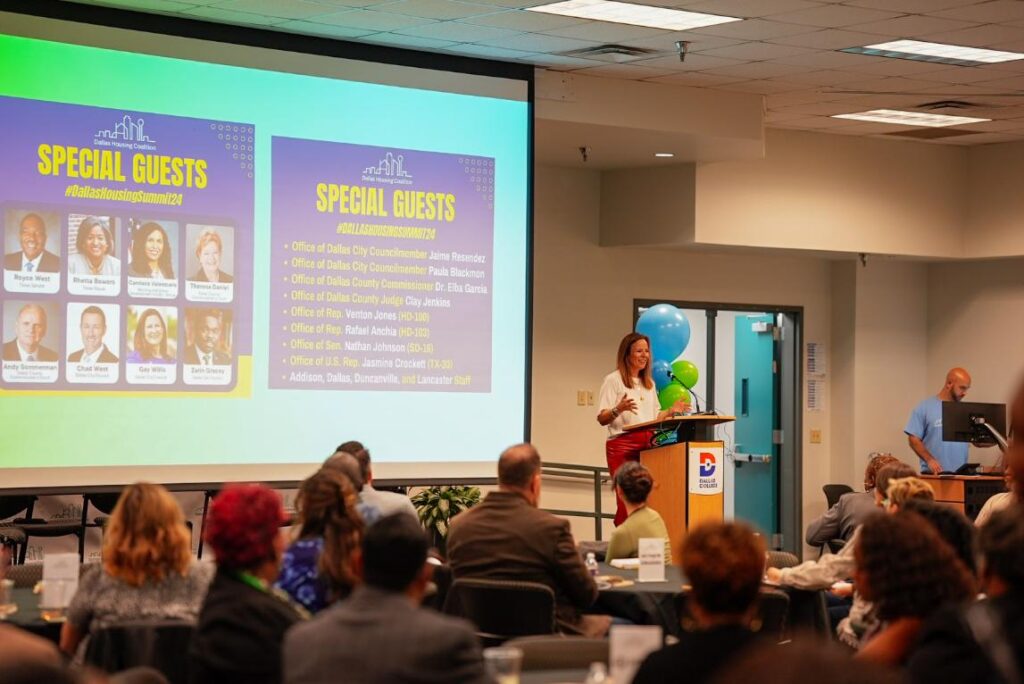
Organizers hope to make this an annual event and are currently working to strengthen the Coalition further by raising funds to hire a full-time staff member to sustain the organization’s momentum in 2025.
The Dallas Housing Coalition also awarded the first Raul Reyes Jr. Housing Advocacy Award to Stephanie Champion of Builders of Hope in tribute to his lasting legacy in West Dallas and beyond and for her outstanding advocacy work in 2024.
Slides from the presenters are available here and the video of the keynote lunch panel is available here for those who missed the inaugural summit.
To get a better idea of the worsening Dallas crisis by the numbers and the challenges we are facing, our friends at Child Poverty Action Lab and Builders of Hope recently published reports on the state of the rental market, gentrification, and housing-burdened populations within our city.
Rental Market Challenges
The City of Dallas has a gap of 39,919 rental units affordable to households earning at or below 50% Area Median Income (AMI), which is $48,700 for a family of four (2022).
This means there are 65 affordable units for every 100 households at or below 50% AMI. – Child Poverty Action Lab, Rental Housing Needs Assessment Report
The City of Dallas has a gap of 39,919 rental units affordable to households earning at or below 50% Area Median Income (AMI), which is $48,700 for a family of four (2022). This means there are 65 affordable units for every 100 households at or below 50% AMI.

Child Poverty Action Lab
Driven by an anticipated loss of 54,000 unrestricted affordable housing units (a 98% decrease), Child Poverty Action Lab forecasts the gap to grow to 76,073 units by 2035, which means there will be 24 affordable units for every 100 households at or below 50% AMI.
Despite improvement over time in educational attainment and wage growth within the City of Dallas, the median rent is unaffordable for 71% of residents. – CPAL
Housing Cost Burdened
Forty-nine percent of all renters in the City of Dallas are housing cost burdened (meaning they spend more than 30% on housing), but some renters are disproportionately affected: 69% of senior renters, 79% of renting single parents with children, 56% of Black renters, and 51% of Hispanic/Latino renters are housing cost-burdened. – CPAL
Although all workers have realized nominal wage growth, the top three most common job types in D-FW have median wages of less than $45,000. Due to inflation, wage growth has not necessarily translated to improved purchasing power, and residual income (income after paying rent) is thin for low-income households. Wage growth has also been uneven: from 2012 to 2022, the median income for Hispanic/Latino households grew the most (28%) and for Black households grew the least (8%), when adjusted for inflation. – CPAL
Gentrification
One in five Dallas neighborhoods is in the early stages of gentrification. These neighborhoods are primarily, though not exclusively, in the southern sector of the city, where home sale prices have increased rapidly since the pandemic. Home sale prices in these neighborhoods were typically around $55,000 in 2011-2012 and rose to $238,000 by 2021-2022. Over the same period, rents in these neighborhoods increased from $740 to $1,140. – Builders of Hope
One in 10 Dallas neighborhoods are in the dynamic or late stages of gentrification. These are neighborhoods with vulnerable populations that have experienced demographic change and have either accelerated or sustained housing markets. From 2011 to 2021, these neighborhoods lost on average 90 families with children in poverty while gaining 450 households with college degrees. – Builders of Hope
In Conclusion …
The time is now to find solutions for attainable housing in Dallas. The more than 265 non-and for-profit organizations and individuals who make up the Dallas Housing Coalition have already successfully helped secure $82 million in bond funding this year earmarked for affordable housing and homeless solutions. We also advocated for the updating of ForwardDallas, our city’s official land use plan, to help pave the way for a diverse range of housing types in our city such as duplexes, triplexes, and the like to provide more starter homeownership opportunities to our residents. We invite you to join our coalition and help contribute to finding solutions by completing the membership form at the bottom of our homepage.
As we say at the Coalition, Dallas is big enough for everyone.

Bryan Tony is a public policy professional and organizer of the Dallas Housing Coalition. He also serves as the founder and managing director of BGT Strategies, a Dallas-based consulting and advocacy firm. The Dallas Housing Coalition is a grassroots volunteer-powered group of more than 265 non- and for-profit organizations and individuals committed to advocating for the creation and preservation of attainable housing in the city of Dallas for all.
4 Comments
Leave a Comment

I think your effort is noble however it does seem to be greatly underrepresented so I do hope that is accommodated shortly! My husband and I (married 53 years) are native Dallasites caught in the biggest financial crunch in our life that we never thought possible! Rental is beyond reach because so much is required so when we found ourselves at the end of a 4 year lease with such a huge increase we realized we could no longer hold on, inflation had reached us in every way and our benefits could not possibly meet these increases without adjustments. So what do you recommend? Our landlord hated losing us because as former homeowners we did know how to maintain a property, but as a landlord he too was faced with increasing costs to maintain on the investment side. How are we to negotiate to landlords that we’re a good investment as renters with only sweat equity on our side? We are healthy and still work when we can but it’s a stretch to find a safe, affordable and healthy place to live. Look forward to any wisdom you can share! Thank you~ Laura and Bill Farmer
Blue City Syndrome. Same thing is happening in Austin, Houston, San Antonne. Our daughter is moving out of Denver to Nashville for this very reason. 30% more house for the dollar in Tennessee. Applying Blue Logic to solve a problem created by Blue Logic will only make things worse. Think Different Dallas: vote Republican.
The average Dallas house price is almost $100,000 less than the average Nashville house price. Also, Nashville voted blue this last round. You might want to do some more research.
Please see the enclosed comment submitted December 2st at 12:35pm.
Looking forward to your reply with answers for direction from Forward Dallas and any of the housing non profit coalitions referenced in that multipage document enclosed. Thank you!