
Report: Infill Development, Code Updates Could Close the Gap in Dallas’ Affordability Crisis
Share News:

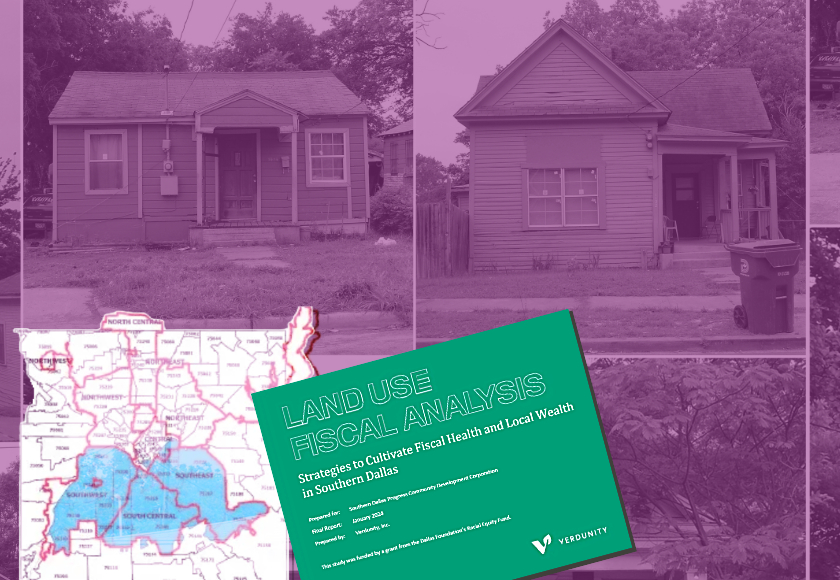
Dallas has built a city that residents can’t afford to live in and the city can’t afford to maintain, according to a report released last month. The solution per a local consulting firm: Update development codes to eliminate things like minimum parking requirements and minimum lot sizes, build infill development on vacant lots, and provide infrastructure in long-neglected areas of southern Dallas.
Engineer and consultant Kevin Shepherd put it plainly.

“What we have right now is broken.
“You can kick the can for a while but at some point somebody’s going to pay for it,” Shepherd said. “We have a gap that’s getting bigger and it’s due to our development pattern. Then the question is how do you want to close that? You can pay more, you can cut services to fit the budget you have, or you change the model — either the development pattern or the finance structure.”
The report — titled “Strategies to Cultivate Fiscal Health and Local Wealth in Southern Dallas” — was developed by engineer and community planner Kevin Shepherd, founder and CEO of Verdunity, a consulting firm that analyzes and interprets the fiscal health of communities. The study was funded by a grant from The Dallas Foundation and requested by James McGee, president of the Southern Dallas Progress Community Development Corporation.
CandysDirt.com spoke with McGee and Shepherd about the report and how it’s been received by local planning officials and policymakers. For those who want to skip the report’s deep dive, a summary also has been provided (below).
Vacant Land in Dallas

When it comes to improving the City’s fiscal health, providing more attainable housing, and upgrading residents’ quality of life, southern Dallas presents several “win-win” opportunities, particularly when it comes to infill development, McGee said.
According to a recent report, there are about 32,000 vacant lots and more than 8,000 vacant structures in the entire City of Dallas, McGee explained.
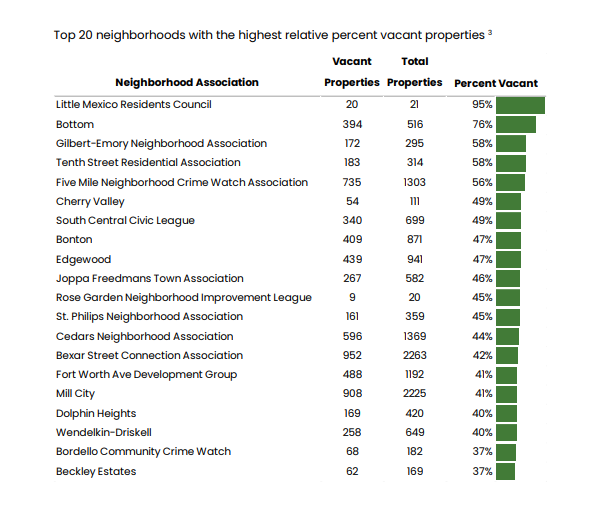
“Outdated zoning codes that prioritize larger lot sizes and parking minimums combined with [Not in My Backyard] culture have made it difficult to create more buildable lots and ‘missing middle’ housing options that are smaller and more affordable,” the report states. “For communities to remain vibrant and affordable into the future, cities will need to have a development pattern that generates enough revenue to cover service and lifecycle infrastructure costs while also providing a mix of housing options at different price points.”
Infill development
Where, when, and how a city adds new development and infrastructure has a direct impact on the long-term fiscal health and affordability of the community, Shepherd’s report states. The dominant development approach implemented across the U.S. since World War II has prioritized auto-centric design with larger lots and wider roads, fast growth, and low taxes in the near term without fully considering long-term costs and impacts.
“While new development adds rooftops and businesses that generate additional revenue, it also increases a city’s service and infrastructure liabilities,” the report states.
Shepherd’s work is similar to that of Joe Minicozzi of Asheville’s Urban3, who recently studied Dallas’ taxable value per acre as part of a study for MetroTex Association of Realtors.
“We have a series of maps that show the value per acre, the tax revenue per acre, the net per acre with budget costs included, and the net per acre when you do budget and unfunded streets,” Shepherd said. “We look in the data itself, so we can slice and dice it by lot size, by zoning, and by neighborhood, and see which properties hold their value even when you add more cost to it.”
Older parts of cities always do better than suburban areas, Shepherd added.
“Suburban infrastructure is so bloated,” he said. “The streets are twice as wide. You have all the cul-de-sacs. You push that development so far out it just doesn’t have the density to pay for itself unless you get to a price point that is crazy high. We’ve studied a few suburbs around the metroplex and they will pencil out but it’s because their average home value is $800 grand.”
So how do you close the gap without pricing people out?
Shepherd said infill development makes sense.
“There are always vacant lots in core cities and they have full service,” he said. “They’ve got infrastructure, they’ve got police and fire, and there’s no building on it. Just putting buildings on vacant lots can bump your tax revenue without changing city costs at all.”
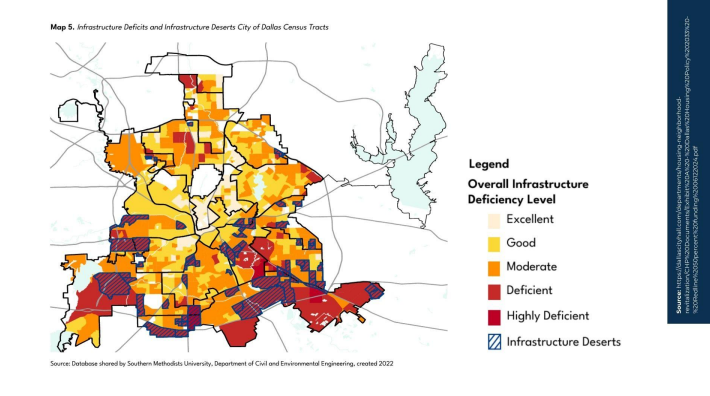
There are parts of southern Dallas that have older infrastructure that needs to be fixed and parts that have no infrastructure, the consultant added.
“We’ve pushed a bunch of investment and money and resources north and you see all that development and activity there, but the city is still on the hook to serve and take care of the southern part of the city,” Shepherd said. “At some point when you neglect it for so long, the property values start to stagnate or decline and so the revenue to the city declines, and the needs and the issues escalate. We’re trying to unwind that. A lot of the recommendations are about infill on vacant lots. Obviously this whole conversation about [code updates related to] lot size and parking minimums, we have data to show we’ve got to get rid of those things. We’ve got to allow small developers to get in and do infill development. We’ve got to be able to subdivide lots and put more units on them.”
Next Steps
Over the past month, local developer Monte Anderson, equity consultant Lorin Carter, and Shepherd presented their findings to the Urban Land Institute. Additionally, Anderson and Shepherd presented to the Greater Dallas Planning Council.
“The feedback from these events has been outstanding,” said McGee, president of Southern Dallas Progress Community Development Corporation. “As you are aware, the City of Dallas faces a $38 million deficit by fiscal year 2025. We believe this report contains solutions to prevent shortfalls.”
McGee’s comment came prior to the unveiling last week of Interim City Manager Kimberly Bizor Tolbert’s proposed $4.97 billion budget. The proposed budget for Fiscal Year 2024-25 is balanced, with no shortfall, but services and employee positions were eliminated.
Shepherd said his part of the presentation “gets at the why — why change is needed — and a little bit at the ‘how,’ with respect to the city side of getting your codes and your land use stuff right.”
“Monte comes in with the ‘how’ from the actual implementer of doing small development with the locals, for the locals,” Shepherd said. “At the same time you’re developing and raising the tax base at the city, you’re also cultivating the wealth of the local people who actually pay for it over time. You avoid gentrification because you’re doing it incrementally but you’re doing it with the people there as opposed to having some big guy come in and buy up 100 acres and do it all at once.”
Shepherd said he’s been hesitant to work with the City of Dallas because “they’re all over the place right now” with the ForwardDallas comprehensive land use plan update, development code changes, and staff turnover.
In fact, the consultant didn’t engage city staff while compiling his report, but now that it’s complete, he’d like their input.
“The study, in a nutshell, shows there are a lot of vacant lots in southern Dallas,” Shepherd said. “There’s infrastructure investments that are not being taken advantage of, and there’s a need to put infrastructure in. So it’s aligning the city’s infrastructure investments with some of their economic development strategies and doing it with local partners in a small incremental way. It’s a way to grow the tax base and cultivate housing and economic opportunities in southern Dallas. The big picture is you’re generating more revenue that goes into the City of Dallas coffers that can help pay for quality of life and services for the whole city.”







Wow, sounds like a bureaucratic fantasy. I have to say, I do not really understand the term “infill” but it sounds like there’s a little robin hood going on, so we can all help give the City some play money, pay the City’s bills, pay the much-needed police pensions, and other accumulated inefficiency’s that are sometimes blamed as discriminatory neglect rather than bad fiscal management that results when self-indulgent leadership insists on pet projects which destabilizes the City budget for years. It also keeps the City from taking a responsible look at how it got where it is and its’ budget.
allow developers to build 8 smaller units on land limited to 4 units due to parking requirements in the core
allow mf2 and PD to get more dense land cost prohibits developers from selling cheap housing cause the land they buy is not cheap and commercial mf development is still difficult despite what is said at 300 jefferson street
small and mid sized developers lose out to the mega companies that use out of state money to big huge number of doors flooding market and hurting smaller local developers
allow more density not more mega structures
Jane,
Infill means exactly what it sounds like “filling in” lots that are vacant in the existing neighborhoods. There is a lot of empty lots through out Dallas city limits on streets with existing infrastructure. You FILL those empty lots with homes.
“Bureaucratic fantasy”? Did you read the same article as I did? They are recommending a reduction in bureaucracy.