
Faster, Better, Stronger: Meet the 3D-Printed Home You Have to Feel to Believe
Share News:



Given that home affordability, sustainability, and the undersupply of shelter is one of real estate’s most urgent problems, we knew it wouldn’t take technology long to fix it. Enter the 3D-printed construction technology of ICON and COO Graeme Waitzkin.
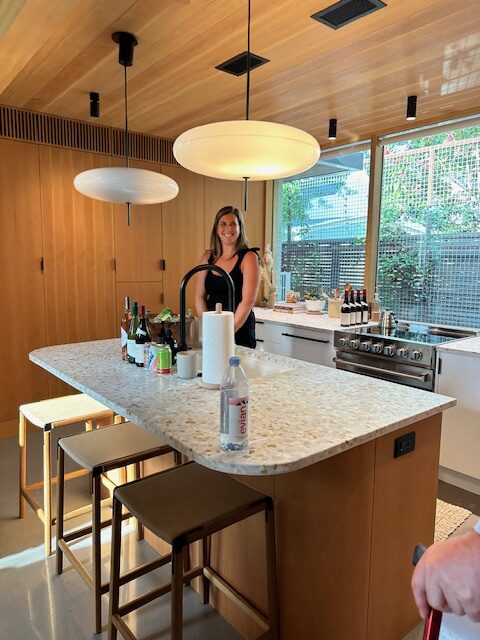
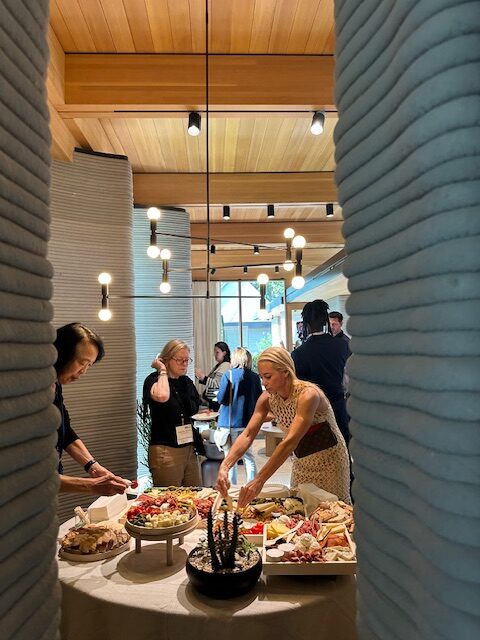
ICON offered CandysDirt.com and other real estate insiders an extended walk-through and reception inside ICON’s phenomenal House Zero last week at the National Association of Real Estate Editors annual conference in Austin.
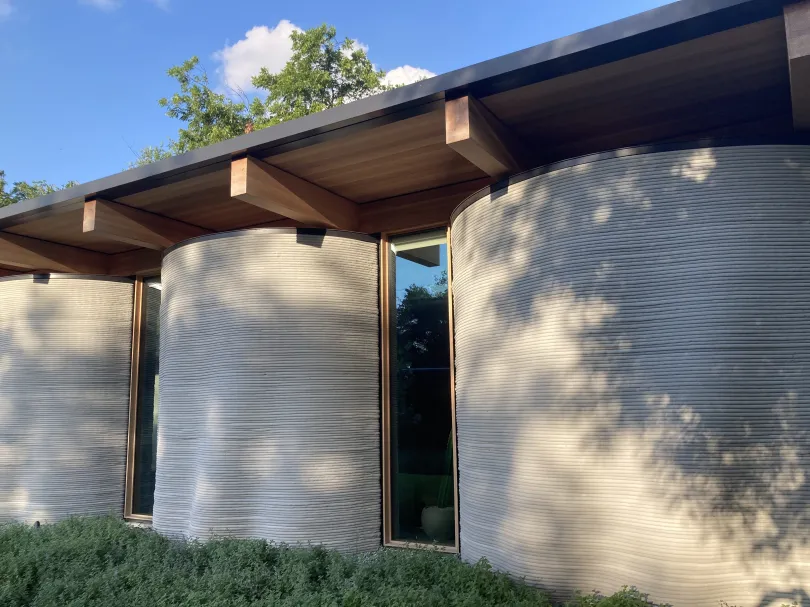
The Austin-based start-up builds striking concrete homes that are 3D-printed using robots — probably unlike anything you’ve seen before, save something from “Building Off the Grid” or “Extreme Homes.” They promise a much faster product for less cost, and major home builders/developers are paying attention, including Dallas-based Hillwood Communities.
Lennar already partnered with ICON to build a 100-home master-planned community at Hillwood Communities’ Wolf Ranch in Georgetown. The Wolf Ranch homes are being constructed by innovative robotics, software, and advanced materials that promise environmental sustainability and architectural prowess.
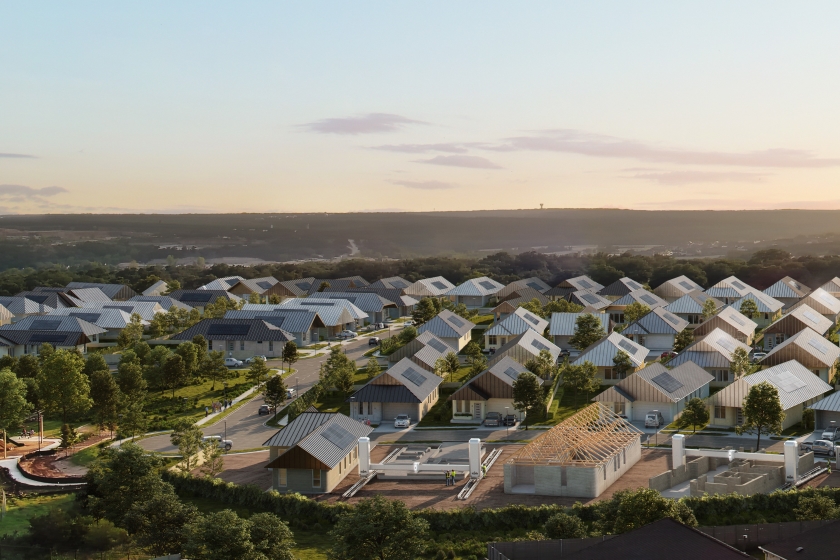
“These homes are market rate housing in the Austin area,” Graeme Waitzkin said. “The homes are between 1,600 and 2,200 square feet, selling between $450,000 and $650,000, and really these are truly beautiful and really groundbreaking homes. It really is is an incredible example of what is achievable with 3D construction.”
Home Sweet 3D-Printed Home
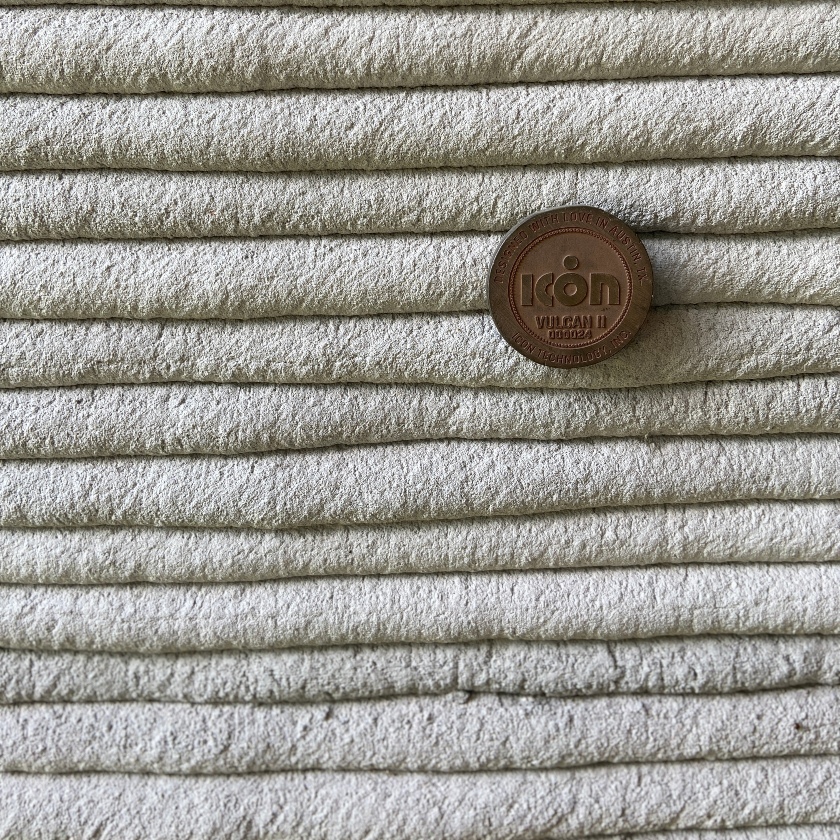
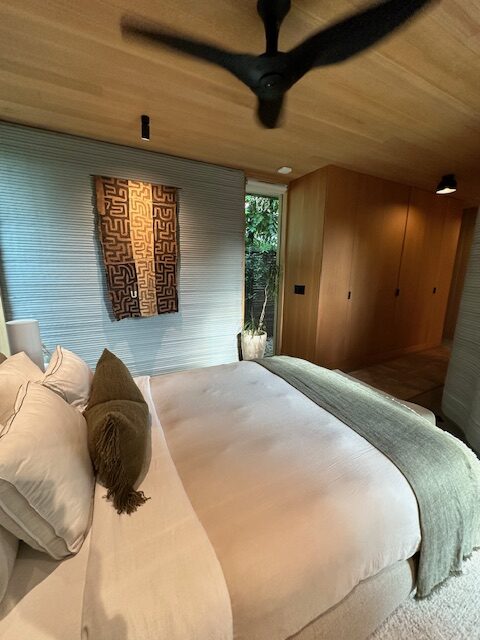
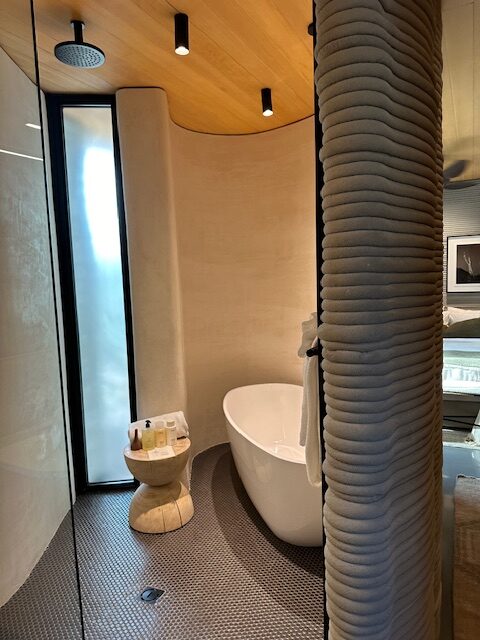
Located in East Austin, House Zero is ICON’s crown jewel, a three-bedroom, three-bath, 2,000-ish square-foot-home built layer by layer from the ground up. It’s one of 140 homes and structures that ICON has 3D-printed across the U.S. and Mexico.
Designed by San Antonio-based Lake|Flato, the home beautifully blends Midcentury Modern with Ranch-style aesthetics. Plus, its energy efficient design highlights the benefits of resiliency and sustainability, even using low-carbon concrete as its proprietary base.
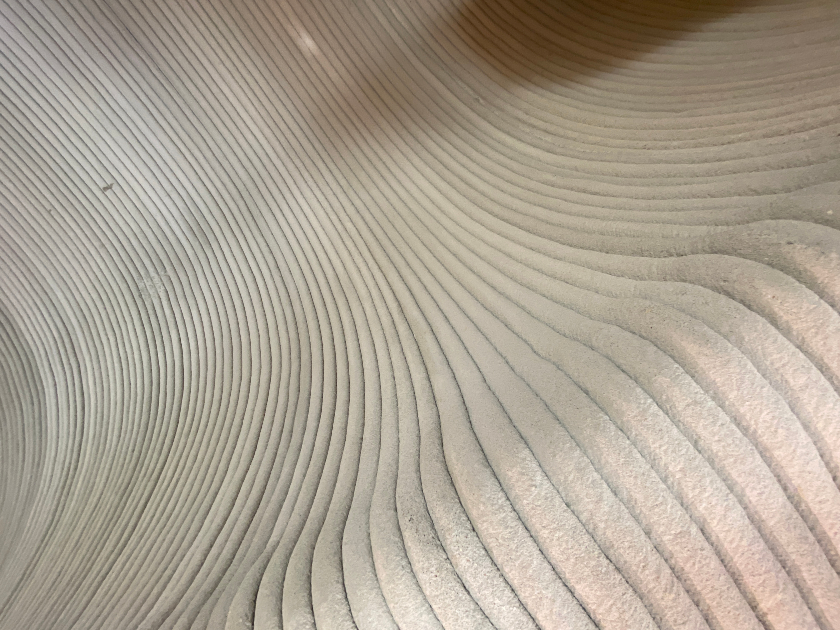
But the feel of this home was what the CandysDirt.com team couldn’t get over. It looks positively squishy. Yet, the company’s patented “Lavacrete” building material is wind, fire, and termite resistant — and like concrete, it gets stronger as it ages.
Print a Home in a Week
The printer that does all the work is ICON’s 3D printer, the Vulcan. It prints a single family home in about a week, making it possible to scale the technology for fast production homebuilding. Continuing to innovate and improve its design process, materials and hardware, ICON has developed its next-generation 3D printer, the Phoenix, to take home building to other markets and second stories.
Unlike the Vulcan, which cannot get around much at 15 feet tall and operating on fixed-tracks, the Phoenix printer is a mobile unit affixed to a crane, and allows for larger floorplates, taller buildings, and more flexibility in the design.
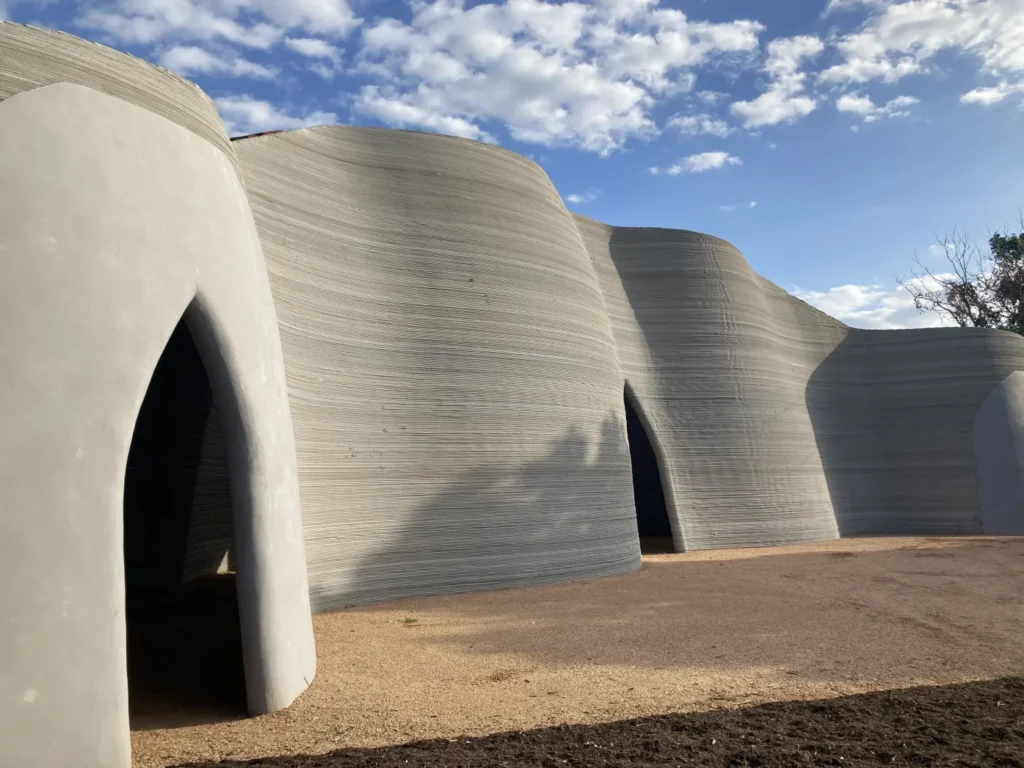
Last Tuesday, ICON Chief of Staff Michael Gauthier led real estate journalists on a tour of the company’s first Phoenix-printed structure: a 27-foot tall, 110-foot-long demonstration project called the House of Phoenix.
House of Phoenix drew inspiration from Antelope Canyon and looks (and echoes) like a naturally-formed cave — but built by a dialed-up robot.
“We know what the Vulcans are capable of, we didn’t know what Phoenix could or couldn’t do,” said Gauthier. “And so we dialed it up to 11. It’s a test. I guess you could live in this, it would feel a lot like like a cave. But it was more an art showcase.”

Efficient home building seems to be reverting to the old Sears Roebuck days of catalog ordering, only done by robots through online catalogs. Codex is ICON’s new catalogue of ready-to-print home designs at varying price points. They include studios, accessory dwelling units, ranch-style homes, and even estate homes.
“We wanted to show the world that have have opportunities for developers around the world who say I want an iconic home in my development,” said Waitzkin, an architect and civil engineer who started his first company at age 26. He holds two MBA’s from Stanford University, and a Bachelor’s in Civil Engineering and a Masters of Engineering Management from Duke University and Virginia Tech. He is a Venture Partner at Tuesday Capital.
“We generated this catalog of designs that we could start printing immediately,” says Waitzkin. “On Codex, we have homes that can be built for $100,000 all the way up two homes that will be built for $2 million.”
Or, as he told me, possibly $32 a square foot.
House Zero, called such because of ultra high energy efficiency, will soon be available to replicate in Texas and elsewhere.
“Central Texas is our home market, and so we’re actively scoping projects all over Central Texas, and we’ll be launching some new developments later this year,” Waitzkin said. “And then we’re actively figuring out and planning expansion to new markets. I probably can’t say too much at this point, but we’re in active discussion with developments around the country.”





I can attest they were IMPRESSIVE!