
New Housing Law Aims To Boost Supply, Expand Homeownership
Share News:


A new bipartisan housing affordability law went into effect over the weekend, offering some hope to prospective homebuyers.
The 21st Century ROAD to Housing Act was passed by Congress on June 23. It became law on Saturday after President Donald Trump declined to veto it. Provisions in the law aim to expand the national housing supply, improve affordability and homeownership opportunities, and modernize federal housing programs.
We’ll be taking a closer look at the new law’s implications for homebuyers, renters, and developers in the coming weeks. For now, here are some of the broad strokes.
A major throughline is deregulation, with reforms in the law streamlining environmental reviews for certain federally funded projects, expanding flexibility for local governments administering housing programs, and encouraging the formation of new community banks and credit unions. There are also incentives for local governments if they streamline permitting, establish density bonuses, and modernize zoning.
The law also includes several measures aimed at expanding access to financing, particularly for buyers of lower-cost homes. It directs the Federal Housing Administration to establish a pilot program for mortgages under $100,000 and requires new disclosures to help eligible borrowers compare VA and FHA loan options. The legislation also includes provisions intended to improve financing opportunities for manufactured housing.
“By reducing regulatory barriers, helping builders increase supply, and expanding opportunities for homeownership and rental housing, this landmark law is an important step toward easing the nation’s housing affordability crisis,” said Bill Owens, chair of the National Association of Home Builders. “We look forward to working with the administration and Congress to implement it.”
A controversial measure in the law will address institutional ownership of single-family homes by prohibiting institutional investors that own 350 single-family homes or more from buying anymore. However, the law allows exceptions in the case of developments specifically built for the rental market.
The provision had been a roadblock in Congress earlier this year, with some lawmakers arguing institutional investors own a relatively small chunk of the nation’s housing stock and that restricting their business activity would constitute federal overreach. Supporters of the measure, meanwhile, claim that institutional investors buying up single-family homes has helped drive up home prices.
Last month, the median existing-home price was $440,600, almost 50% higher than it was in June of 2020, according to data from the National Association of Realtors.
Congress has been at work for months — years in the case of some provisions — on crafting a housing bill, finally arriving at a compromise package in June. Any bill’s fate, however, seemed to be thrown in doubt earlier in the year when Trump said he wouldn’t sign anymore legislation until Congress passed the controversial SAVE Act, which would significantly limit mail-in voting, mandate that states verify voter rolls using federal databases, and require individuals to provide documentary proof of citizenship when registering to vote in federal elections.
Trump did not sign the 21st Century ROAD to Housing Act, but he opted against vetoing it. Bills passed by Congress automatically become law without a presidential signature or veto after 10 days (excluding Sundays) while the body is in session.
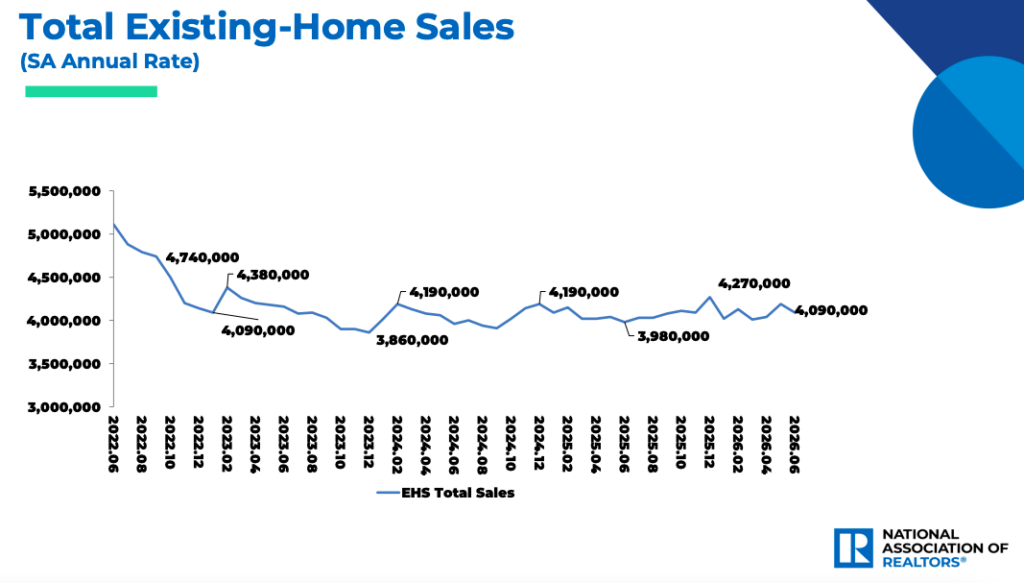
NAR, which has been hoping for a more active housing market, celebrated the enactment of the law on Saturday. Existing-home sales have been slipping in recent years amid elevated listing prices and mortgage rates.
“Today’s achievement is the result of years of persistence, trust, and collaboration,” said NAR’s executive vice president and chief advocacy officer Shannon McGahn. “NAR leaders testified before Congress, worked with lawmakers on both sides of the aisle, provided technical expertise as the legislation evolved, and mobilized thousands of REALTORS® to advocate directly with their elected officials. This law combines nearly 50 carefully negotiated measures to increase housing supply, improve affordability, expand access to homeownership, strengthen housing finance, and support veterans.”