
Reimagine All of Downtown Dallas, Rather Than Focusing Myopically on City Hall
Share News:


By Cullum Clark
The current debate over Dallas City Hall sometimes misses the forest for the trees.
Dallasites are battling over the architectural merits of I.M. Pei’s 1978 structure and the cost of staying versus going, as well they should, but the city needs a livelier conversation about the future of downtown Dallas as a whole. Here’s my suggestion: Figure out what kind of downtown you want to have, then ask how City Hall fits into that vision.
Traditional downtowns as they’ve existed since the 1950s in America — monocultures of office towers filled with white-collar workers and little else — are dying. Some are successfully remaking themselves as vibrant live-learn-work-play settings.
Downtown Dallas is no exception. The number of people working in Dallas’ central business district on an average weekday is between 40,000 and 50,000, down from more than 100,000 at its peak. AT&T’s departure for Plano will reduce the downtown working population by another 10%, assuming no other tenant takes its space. With about 40 workers per acre, Dallas has fewer people working downtown adjusted for the area’s physical size than most peers: Chicago has about 136 workers per acre, Seattle 135, Boston 100, Austin 100, Philadelphia 80, Houston 58, and Fort Worth 44, I estimate based on publicly available figures. Denver and Atlanta have slightly fewer workers per acre than Dallas.
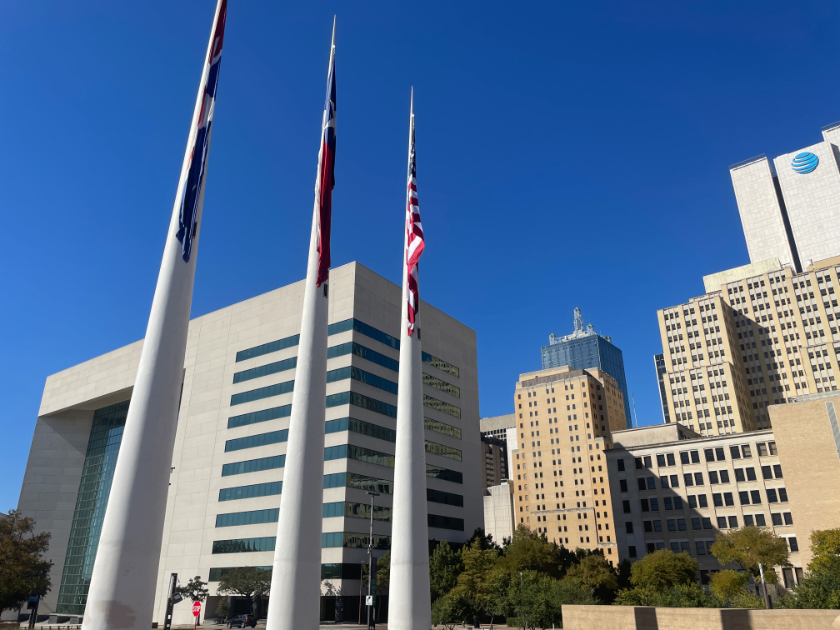
The downtown working population is likely to shrink further. America’s office worker population is barely growing. The share of all U.S. working hours spent outside traditional workplaces has stabilized at more than 25% after declining from pandemic highs. Most importantly, fast-growing alternative job centers continue to gain market share at the expense of downtown. Uptown — which we probably should count as an extension of downtown — now has more than 20,000 workers on an average workday, with Goldman Sachs set to add thousands more. The main job centers of Plano and Frisco along the tollway have a combined 125,000.
But there’s good news: 16,000 people live in Dallas’ central business district, based on Downtown Dallas Inc. figures, up from just over zero in the year 2000. Projects in the pipeline, including office-to-residential conversions, will take this to roughly 20,000. Dallas is ahead of many peer cities for the number of residents living downtown per acre, though it’s still behind Austin, Chicago, Philadelphia, and Seattle. Living downtown is becoming more manageable as stores and other routine amenities open up.
Like other Texas cities, Dallas devotes an extraordinarily large share of its downtown to parking lots. This is bad news for downtown Dallas’ urban fabric, but it means there are many relatively cheap sites for future apartment buildings, townhomes, stores, and restaurants. Dallas also scores well below most large cities for the number of college students studying at downtown facilities. Growing this population through a new Dallas College campus and satellite campuses for four-year universities represents a great opportunity for downtown revitalization.
For traditional downtowns to bounce back as high-energy live-learn-work-play neighborhoods, they must be relatively safe. This requires good policing, but it depends even more on having large numbers of them out and around all day, every day of the week, as the great urbanist Jane Jacobs wrote in her classic The Death and Life of Great American Cities.
Convention centers, which host conventioneers half of the time, at most, give rise to vast neighboring areas that are mostly empty and thus scary if the center isn’t closely surrounded by places frequented by the city’s own residents. Dallas City Hall is surrounded by an oversized plaza and huge, mostly empty surface parking lots. Startlingly few people walk nearby most of the time. Not good.
Great architecture is a plus, but it’s more important to have a well-connected urban fabric connecting one block to the next. Vibrant downtowns need to have a high density of appealing places and excellent walkability. In downtown Dallas, people usually won’t walk more than two or three blocks, so virtually every block needs to have attractive street-level things to see or do.
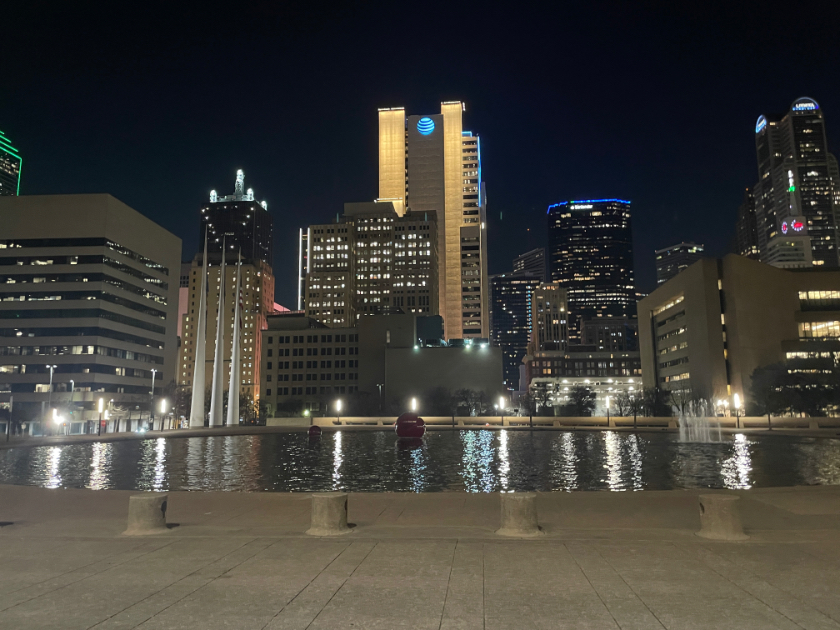
Activities in busy downtowns inevitably create “spillover” effects for other people, and successful downtowns generate good spillovers while minimizing bad ones. The quintessential activity with bad spillover effects is casino gambling, which is still illegal in Texas. Casinos usually generate little incremental tax revenues since their customers (outside Las Vegas) are mostly local and simply reallocate their spending to the casino from other recreational activities and from household savings. But casinos also give rise to binge drinking, drug abuse, and prostitution in their immediate vicinity, many studies show.
As for downtown features that deliver positive spillovers, the single best is having a large resident population living there. Nearby residents support lively restaurant, bar, and coffee shop scenes that, in turn, attract visitors from elsewhere in the city as well as tourists. Art venues and sports arenas help, too — though some cities make the mistake of funneling large amounts of taxpayer dollars into arenas that could readily pay for themselves.
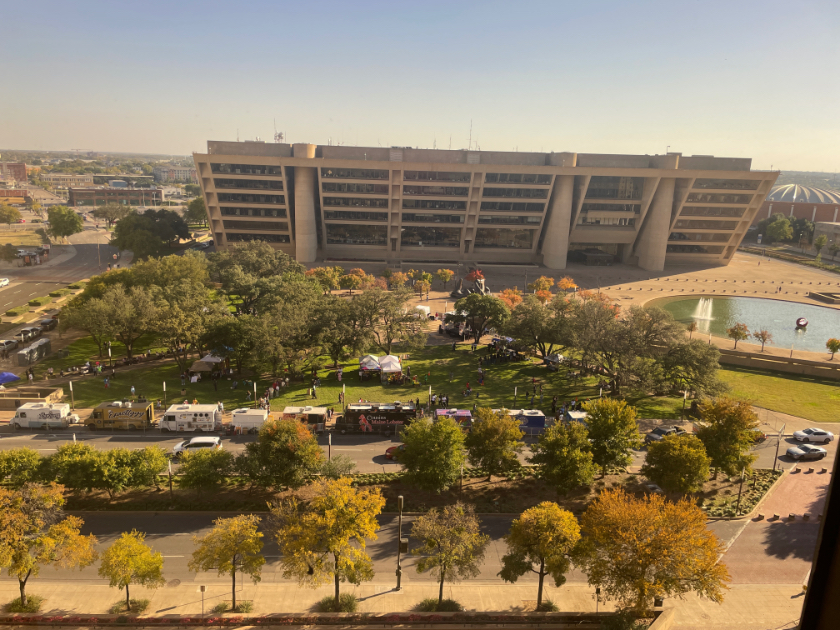
So, the case for keeping or demolishing City Hall depends on the city’s broader vision for downtown Dallas’ south side. Perhaps the area could become a dense, low-rise, mixed-use neighborhood — a North Texas version of Greenwich Village — surrounding Pei’s building to the south, west, and east. Philadelphia’s magnificent city hall is surrounded by a beehive of activity. It even has fun attractions inside the building, not just transactional venues like the offices providing water hookups and death certificates on Dallas City Hall’s ground floor.
Or perhaps the south side will be dominated by a giant new convention center and Mavericks arena. If so, let’s hope they’re closely surrounded by residential development and places Dallasites enjoy visiting. Nashville’s convention center is connected to the Country Music Hall of Fame and Museum, and it’s just a couple blocks away from the city’s spectacular live-music scene in the Broadway Historic District. Dallas’ Victory Park District shows how an arena can become embedded in dense urban fabric, but it took a long time for it to develop. Maybe a reimagined south side could happen faster.
Either way, city leaders should aim for a dramatic transformation of our whole downtown, not just a minor upgrade to City Hall or a relocation of city staff to one of downtown’s old, mostly empty office towers. Let’s aim higher.



The government doesn’t need a new building before the streets are repaired.
The City of Dallas should stay in the current City Hall and learn how to take care of it. Budget for it adequately without giving out contracts to relatives or favorite buddies. But, alas, it never has before. City officials are notorious for slovenly care of their property, whether it is City Hall or a Fire Station or a Police Station or a Library.
I was a planner in the Department of Planning and Development in the early 1980s, and I worked on a “Concept Plan” for downtown. The key recommendation was for more residential growth, especially in the southwest corner of the CBD where there was, at the time, a vibrant farmer’s market. City Hall was just a few years old and was an amazing place to work for a young city planner. I.M. Pei’s design concept, as I recall, was to embrace downtown.
It sounds like downtown is having the same problems today as when I was there, although that may be unfair. Klyde Warren Park and Victory Park weren’t there, the West End Historic District was newish and the Arts District was just getting started.
I wonder if it’s a definitional problem. When I was in Dallas, downtown was defined as the area inside the freeway loop, which in this day and age may be anachronistic. Many cities have downtown-adjacent neighborhoods that have attracted a lot of new development and energy that might have gone to their traditional downtown cores in earlier eras.
I’m retired now and living in downtown Chicago, where the Central Loop has many of the same problems with high office vacancies left over from the pandemic. But the definition of Chicago’s downtown includes high density mixed-use neighborhoods to the north, south and west with a combined residential population of around 130,000 and growing.
Many sports teams these days are seeking new facilities with room for entertainment districts surrounding them. The Chicago Bears, White Sox and Fire FC are seeking new facilities with adjacent entertainment districts, and the owners of the United Center where the NBA Bulls and NHL Blackhawks play are building a new residential and entertainment district on the acres of surface parking surrounding the arena. An entertainment district on the south side of downtown Dallas is an attractive vision and could bring more activity to the area, but it would be a shame to lose City Hall.
It’s interesting to me that downtown Dallas has become a series of districts that were developed in chunks, but I wonder how well they work together. I haven’t been to Dallas in a number of years, so I could be mistaken, but that’s what it was like when I was there. Older cities with dense, walkable downtowns and urban districts that developed organically over time and are served my mass transit seem to have healthier, denser urban fabrics and more pedestrian activity (see Jane Jacobs, Death and Life of Great American Cities).
Good luck, Dallas citizens! Dallas is a great city, and its downtown is worth preserving and improving.
Great article. Dallas needs to learn to embrace what treasures we have and foster the right new development to build destinations that attract people. The deck park between downtown and The Cedars offers a great opportunity to bring more residents into downtown.
I couldn’t agree more! Thanks for stating this Excellent point!
It seems like you are abandoning the idea of a Business Civic Center in favor of a concept like a ’15-minute city.’ While this may attract singles and retirees, it may not meet the needs of families who require access to quality schools, parks, and essential neighborhood services—elements that are currently lacking in the downtown area. Let’s allow the free market to determine the future of downtown; it will find its own way.
I don’t think that is what he meant at all, Michael. As to free market leading the way. It already has and for years. Booker T is downtown one of the BEST schools in America.The Ida B Wells Montessori for PK -5 is downtown, Pegasus School of Liberal Arts and Sciences K-12 is IN the manor house. Imagine sending the kids downstairs for school! I know many families living downtown with kids and they love it. We have the great park across from the Statler and Klyde Warren on the edge of downtown. I drove through a bustling city center today and noticed signs everywhere about restaurants opening, new apartments and new businesses. The people claiming downtown is dead never go there so are not based in reality. Look at Boston, NY. LA, Chicago. A lot of people love living in a city center. Dallas is not different. I remember when there was ONE apartment building, The Manor House. Now there are tons of options for every demographic and incredile night life. Maybe take a stroll downtown soon and see what’s happening. Have dinner there and you will see people walking dogs, babies in strollers and enjoying life in our city center and talk to someone that lives there : )
Such a fantastic article and set of ideas. Thank you. The IM Pei City Hall is an elite athlete just waiting to be let loose with some quiet insertions. Along with the larger area, it should be burnished up for the next 50 years. When it was built, there were only six council people, I believe. Now there are 14. (Those numbers might be off). This point was stated at the AdEx panel. But, right across the street is a 600,000 SF library. How about if some percentage of that library is dedicated to city staff offices. Even a new library built elsewhere. The new 2013 Austin downtown library by Lake Flato is only about 150,000 SF. The Dallas 600,000 SF library was a vision by Erik Jonsson as a research library. Now that research is much online, Jonsson would be smiling down on saving his City Hall by converting some or all of the library to extra office space. The ground floor could even become a restaurant open to the street. This move could also include the 7th floor exhibition space and library moving to the street level as another tourist option as people walk along Young St from the 6th floor museum to the farmers market. In addition, the library could be clad in a new material. In many ways, it detracts architecturally from IM Pei’s city hall. If it were not concrete but was clad, it could be a dynamic new corner interest and let Pei’s genius concrete volumes shine. Perhaps, Founder’s Square could be a new library or permitting shop. Perhaps, some of the existing library could become a permitting shop. Thank you for this article.
Dallas City Hall is but another precious jewel in the Downtown Dallas’ City Crown. In keeping with Karen Eubank’s comments, the museums, theatre’s, and the Myerson Symphony Hall also lend to a vibrant energizing environment. Art, education, and community are very evident in one of our nation’s beautiful and vibrant downtown areas. Adding a sports complex and destroying the iconic building of I.M. Pei is ludicrous and short sighted. The Dallas Public Library across from City Hall also sends a strong statement regarding the complementary use of architecture. These two buildings with the gorgeous Henry Moore Vertebra in Three Pieces shows how the collaboration between a great artist and a great architect can make public buildings historically significant and timeless.