
Compass Sues Zillow Over Private Listings Ban That Violates Antitrust Laws
Share News:


Zillow’s crackdown on off-market listings escalated this week as Compass filed an antitrust lawsuit in the Southern District of New York, challenging Zillow’s enforcement of its new 24‑hour “private listings” rule. CEO Robert Reffkin called it an abuse of Zillow’s “monopoly power,” accusing the platform of blocking homeowners and agents for marketing listings elsewhere too soon.
What Is Zillow’s 24-hour Private Listings Rule?
Zillow created these Listing Access Standards in 2024 to encourage transparency and support fair access to listings for all potential homebuyers, and they are now actively enforced in 2025. Specifically:
“A listing publicly marketed to any buyer should be marketed to every buyer. Publicly marketed listings should be entered in the MLS within one business day and published on Zillow as well as other sites that receive MLS feeds.”
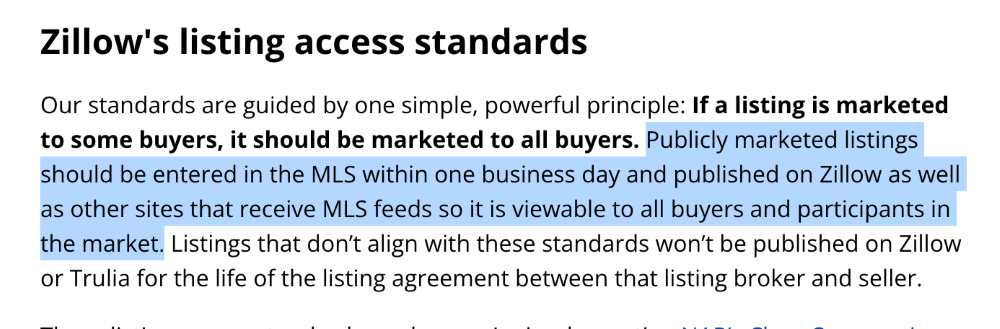
In essence, it discourages “pocket listings” that limit visibility and restrict price competition. Otherwise, Zillow considers the listing non-compliant and will remove it and repeat offenders from its platforms. Beginning June 30, on an agent’s third violation, Zillow will remove the non-compliant listing for the life of the listing agreement.
Zillow’s 24-hour private listings rule falls in line with the National Association of Realtors’ 2019 Clear Cooperation Policy, which aims to put listings in front of as many potential buyers as possible. It states:
“Within one business day (24 hours) of marketing a property to the public, the listing broker must submit the listing to the MLS for cooperation with other MLS participants.”
National Association of Realtors Clear Cooperation Policy, 2019
That means if a listing is publicly marketed anywhere — for example, through email blasts, social media, “broker exclusives” on its website, or “coming soon” yard signs — it must appear on MLS and Zillow within 24 hours.
In response to more recent agent feedback and lawsuits, NAR approved an optional “Delayed Showings” policy, giving MLSs flexibility to let sellers delay the start of showings while still entering the listing into the MLS.
Why Is Compass Suing Zillow?
Compass alleges Zillow is using its market dominance to impose an exclusionary policy that stifles competition. Under the rule, any property publicly marketed — even off‑MLS — for more than a day before appearing on Zillow is blocked indefinitely. That, the complaint says, amounts to steering inventory away from rivals and imposing an “incremental tax” on transactions.
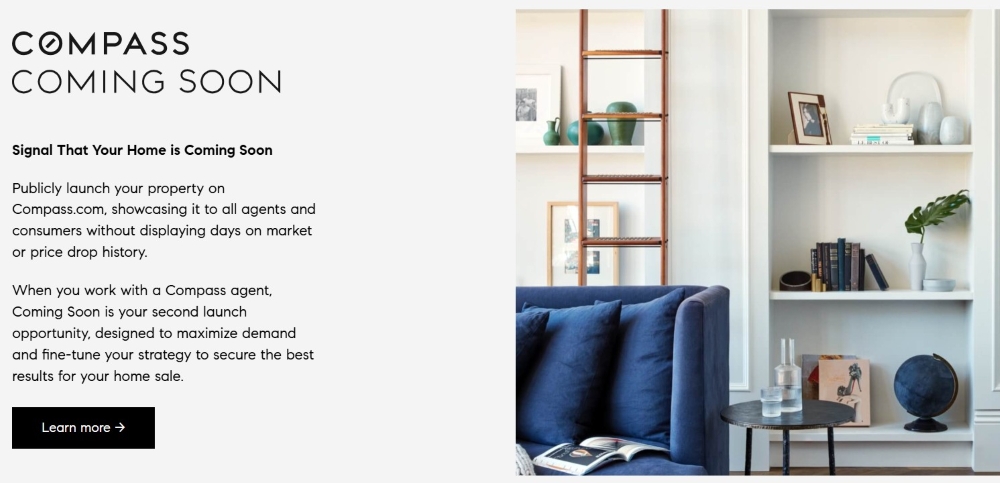
Brokerages like Compass, which use multi-phase or exclusive “Coming Soon” strategies, are most directly affected by Zillow’s crackdown. Specifically, Compass offers sellers the opportunity to pre-market their homes with the Compass 3-Phased Marketing Strategy, before listing publicly through a local Multiple Listing Service (MLS). The listing is marketed as Compass Private Exclusive (Phase 1) and then Compass Coming Soon (Phase 2) before it’s listed publicly on MLS.
Compass argues this allows the seller to test pricing, complete staging or painting projects, and offer client privacy without racking up days on market and revealing price reductions, which may appear negatively to potential buyers.
“We continue to advocate for homeowners’ right to choose how, when, and where their home is marketed,” Compass CEO and Founder Robert Reffkin said in a statement.
Other Sites Follow Suit
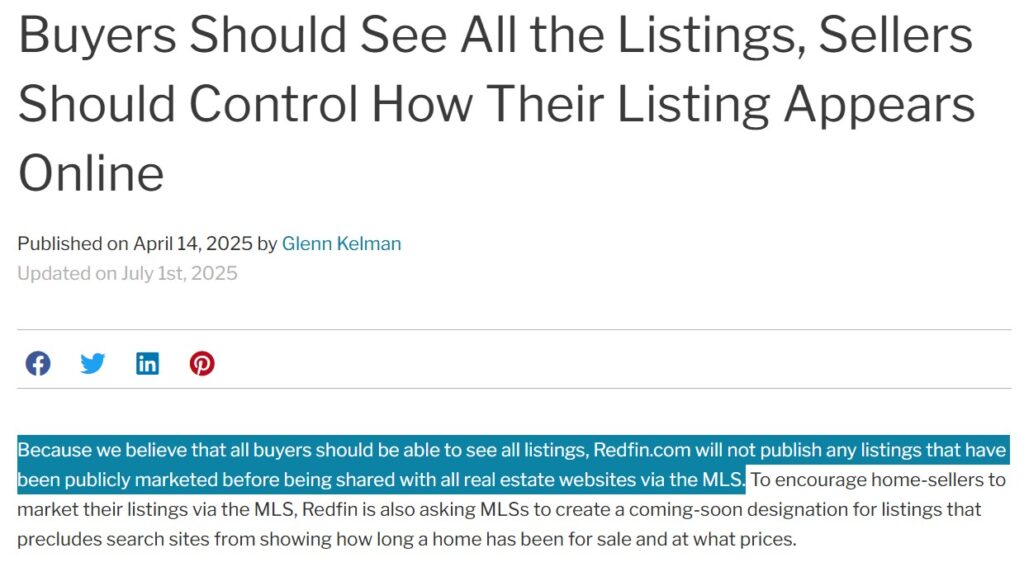
Other listing sites and brokerages like Redfin and eXp Realty followed suit and announced they, too, would not list properties excluded by Zillow.
“Buyers should see all the listings,” Redfin CEO Glenn Kelman wrote in a short blog post supporting Zillow’s ban. In what may or may not be related, Redfin teamed with Zillow in February 2025 to showcase multi-family listings on its affiliate sites, Rent.com and ApartmentGuide.com — both sites are owned by Redfin. On July 1, Redfin announced its $2 billion sale to Rocket Companies.
Competing Data
Zillow data shows homes sold off‑MLS tend to fetch about $5,000 less, while Compass touts 3% higher average pricing for pre‑marketed listings.
Zillow’s February 2025 study examined home sales from 2023 and 2024, finding that homes sold off-market typically sold for $4,975 less than those listed on the MLS. The loss is much more significant in some areas; sellers in California, for example, typically gave up more than $30,000 selling off the MLS.
“This research highlights the importance of a for-sale listing being entered into the MLS to be openly marketed to the widest audience of home buyers,” the Zillow report said. “By listing on the MLS, sellers can expose their properties to a broader pool of potential buyers, which increases competition and can result in securing the highest possible sale price.”

A few days after Zillow’s report, Compass released its own research that found in 2024, its pre-marketed listings were associated with a 2.9% increase in final close price compared to listings that went directly to the MLS.
“These early findings are an encouraging signal that giving homeowners more choices on how they market their property and list on the MLS is strongly correlated with better outcomes,” Dave Crosby, Compass’ Chief Data Officer, said in a release.