
On the Right Track: The Lasting Impact of Trolley Stop Shops and Streetcar Apartments
Share News:


By Jim Anderson
Jim Anderson’s final installation on trolley life in Dallas lends insight into some special buildings that have been beautifully adapted for our needs today. Catch up on last week’s edition, “Streetcars in Dallas Get Electric!“
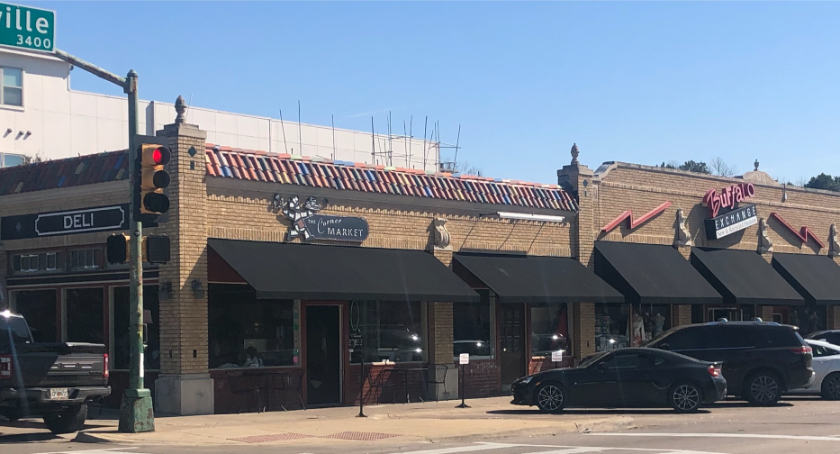
In the 1920s, the Dallas streetcar system spawned an architectural icon unique to Dallas: The trolley stop shop. Many are still scattered throughout East Dallas, Oak Cliff, and South Dallas.
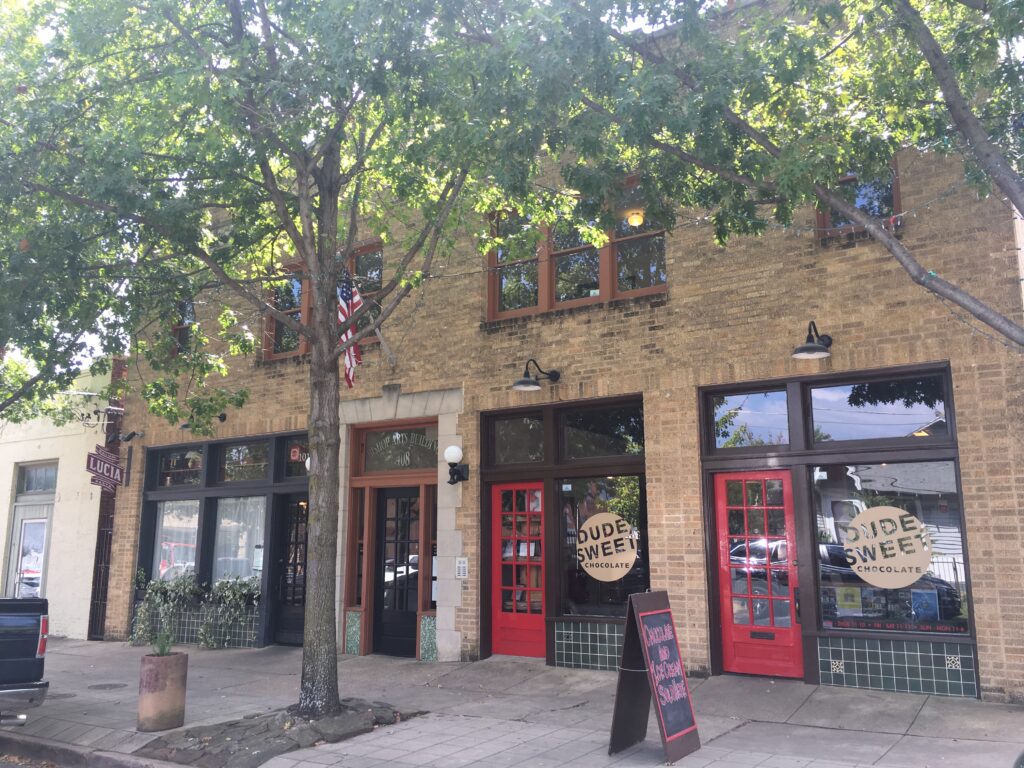
These low, narrow, one-story, buff brick structures, with their distinctive tiled front-facing shed roof, are a unique architectural feature of the Dallas streetcar system. Always located on a corner of a popular streetcar line, the trolley stop shop may be a stand-alone building or have multiple bays grouped into a small shopping center for retail services, including diners, coffee shops, shoe repair, and markets.


These 1920s shopping areas can still be found on Lower Greenville Avenue, Bishop Arts District, Parry Avenue across from Fair Park, Davis Street, and Henderson near Central Expressway.
One particular trolley stop shop on Eighth Avenue in Bishop Arts has the unique distinction of being one of two buildings in the district with a second story, and the only one that offered apartments.

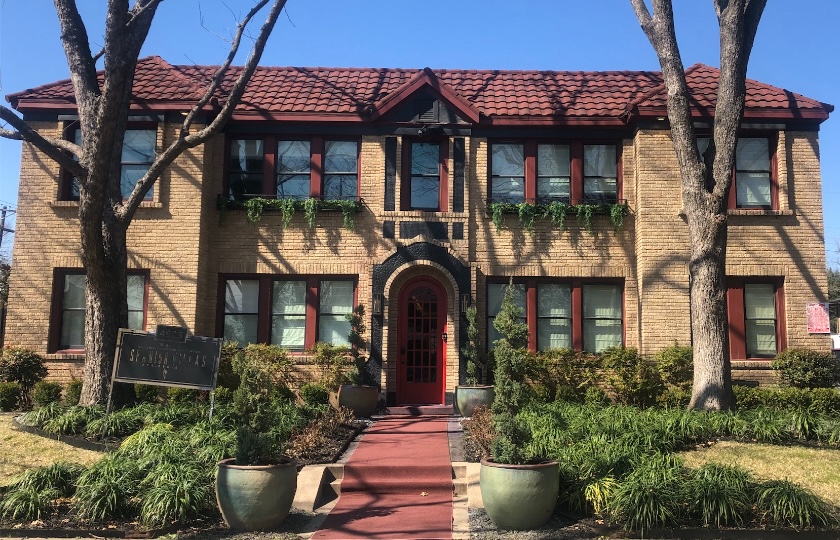
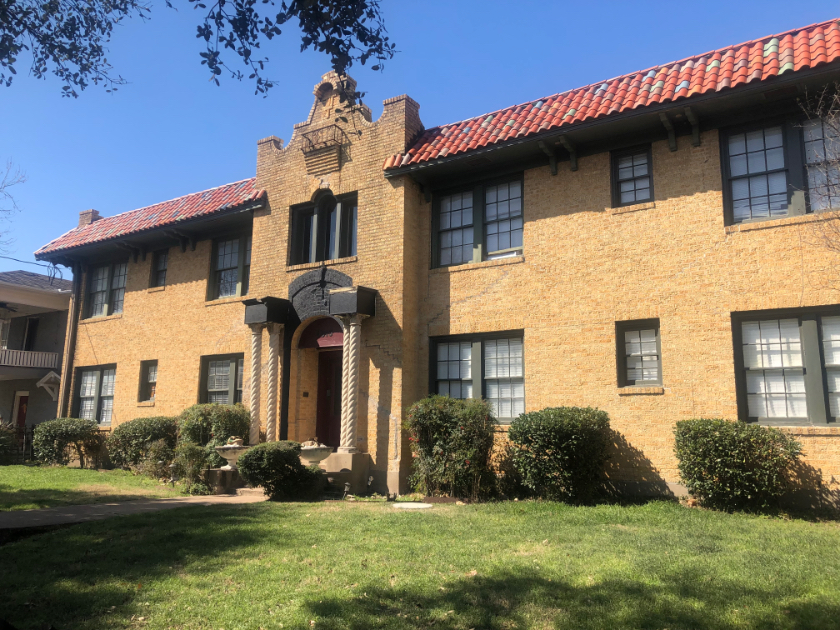
The streetcar apartment is also unique to 1920s Dallas. Also located on or near popular lines, they were early convenient transit-oriented apartments for single folks and empty nesters. They resemble the trolley stop shops as they are always brick with tile roofs and generally in the Spanish or Mission style of architecture. These apartments allowed the renter to reside near transit without requiring a car.
By 1925, trolley operations were roughly limited to Downtown, North Dallas, Highland Park, East Dallas, Oak Cliff, and South Dallas. At the height of operations, the Dallas Railway and Terminal Company had almost 400 streetcars and 200 miles of track.
The greater North Texas area also had a very extensive early rail transportation system with connections to cities in the region. Until the automobile age, electric railways connected North Texas cities that did not have steam locomotive service. First, there was a streetcar service from Dallas to Fort Worth with an extension to Cleburn from Fort Worth. Terrell and Denton were an early expansion of the Dallas system. By 1930, the Texas Electric Railway had electric lines from Dallas, terminating in Dennison, Corsicana, and Waco. At that time, there were 48 cities with service on this rail line. At its electric rail peak, about 70 percent of all rail mileage in Texas was in the Dallas-Fort Worth area.
Over several years, the many Dallas streetcar companies were consolidated into eight companies before a final consolidation into the Dallas Railway Co. The reorganization and sale of the Dallas Railway Co. were finalized in 1926. At the same time, Texas Electric had a major terminal building built downtown on Jackson Street to allow all streetcars and interurban lines to exchange passengers.
During the Great Depression, when home purchasing declined, streetcar developers saw fewer profits. This, along with the adaptation to automobiles and buses, resulted in the system’s decline and the loss of patrons when these vehicles started to replace the streetcars. World War II further accelerated the decline, as it created the last high transportation need for streetcars in Dallas, leading to their eventual discontinuation.
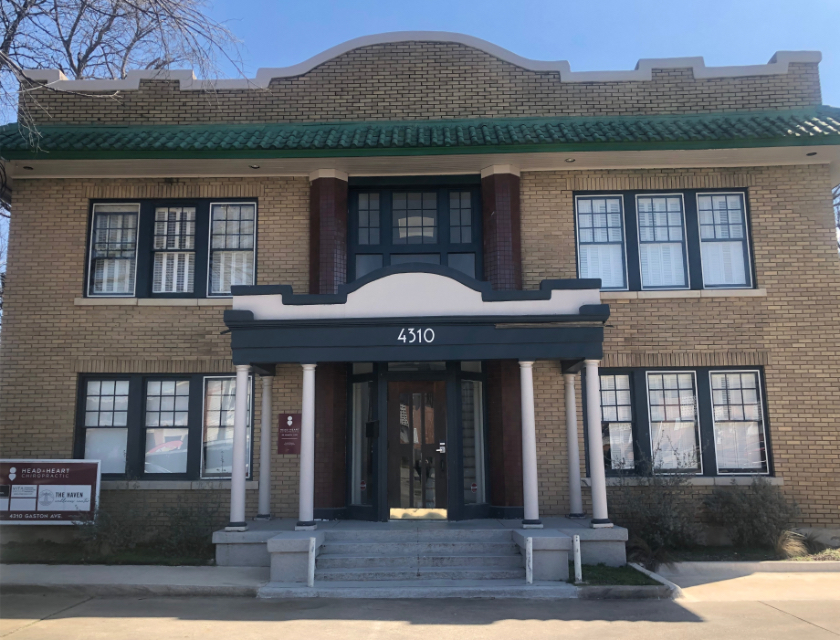
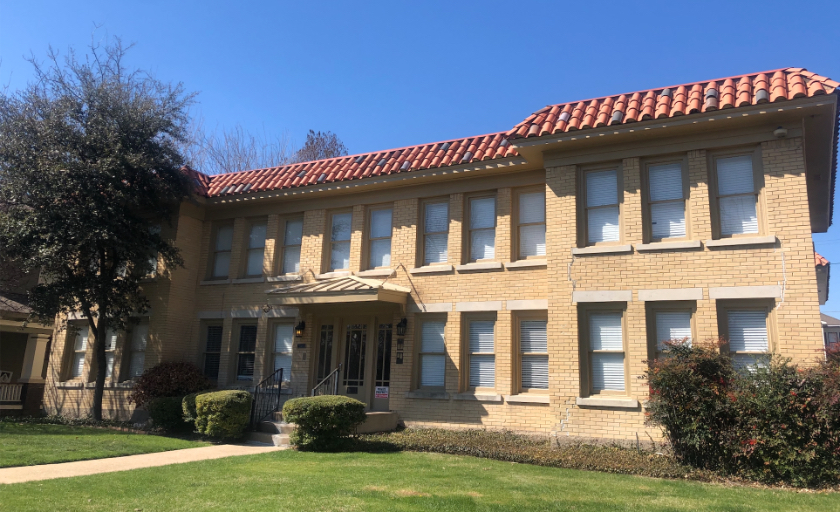
The City of Dallas bought the streetcar system in 1954 when R. L. Thornton was the mayor. Thornton declared, “Dallas will never be a modern city as long as it is tied to an antiquated, electric rail system.” In January 1956, the Dallas streetcar made its last run, ending in Oak Cliff.
1 Comment
Leave a Comment






I loved riding the trolleys with my grandfather and my mother in the ’50s.