
Tracks Through Time Part 1: Dallas and the Golden Age of Trolleys
Share News:


By Jim Anderson
You may have ridden the vintage McKinney Avenue Trolley or even taken the Dallas Streetcar to Oak Cliff. What you probably don’t know is the trolley (or streetcar) was the major mode of transportation in Dallas for decades.
No one is better equipped to educate us on the history of the Dallas trolley than Jim Anderson. He’s a preservation consultant, and has served the City of Dallas for 26 years as an urban planner in historic preservation, so we asked him to tell us about trolley life in Dallas!

In 1872 Dallas Captain George M. Swink introduced the first mule-drawn cars on Main Street downtown. The first two cars, painted yellow and white, were originally pulled by Swink’s horse Sam. They were named for Swink’s daughter and Dallas founder John Neeley Bryan. In that same year, Captain William Gaston, prominent banker, and founder/developer of the City of East Dallas coerced the Houston and Central Texas Railroad (H&TC) to come to the City of East Dallas (located in present-day Deep Ellum) with free land and cash under the table. The Railroad resulted in Dallas creating a north/south streetcar line in downtown. When, in 1873, the Texas and Pacific Railroad (T&P) arrived with its east/west route in this same location, growth in Dallas exploded. By 1886 the streetcar system expanded to nine cars and 18 mules. Also, in 1886 a group of Oak Cliff businessmen introduced the first steam-powered streetcar, the Dallas Oak Cliff Steam Railroad, which ran down Jefferson and crossed the river via the Tenth Street Bottoms.
Suburban development in what was then-North Dallas (present-day Oaklawn/Uptown) was slower to occur than to the south and east. By 1886 Belt Street Railway helped reconnect the northern part of Dallas and prompted the Ross Avenue construction of French and Italianate mansions which resulted in the two mile band of splendor. This line also tied Ross Avenue to South Ervay Street located in the Cedars which also regenerated interest in development of this Victorian-era mansion district.

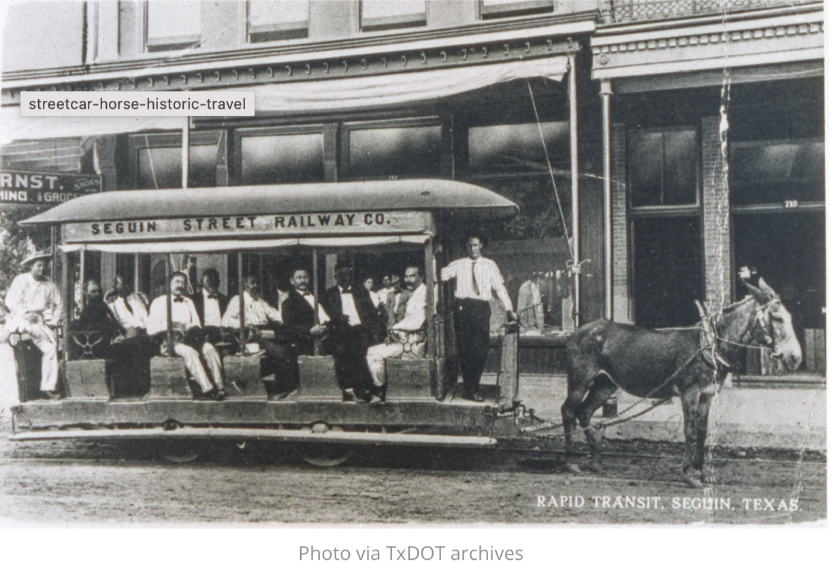
In 1887 Dallas Circuit Railway had a four-mile steam-driven Fairland line loop up McKinney Road. This line, at five cents a ride, became popular as a family activity. The open summer cars were lit with colored lights that were perfect for a summer night ride to cool down before bedtime. Also popular were Sunday trolley rides to Trinity Cemetery for picnics. An advertisement for the Thomas-Colby Addition read “North Dallas, high ground that was healthful, cooler, and less muddy than the city.” The climb up McKinney Road from Field Street to Harwood Street needed extra power, so a stall was kept at McKinney and Caroline for the extra mule power needed for the assent. Planks were laid to keep the mules out of the mud.
Between 1880 and 1890 Dallas’ population tripled and unprecedented growth occurred in this area culminating in 1890, when the Dallas city limits were expanded to include East Dallas, South Dallas, and North Dallas.
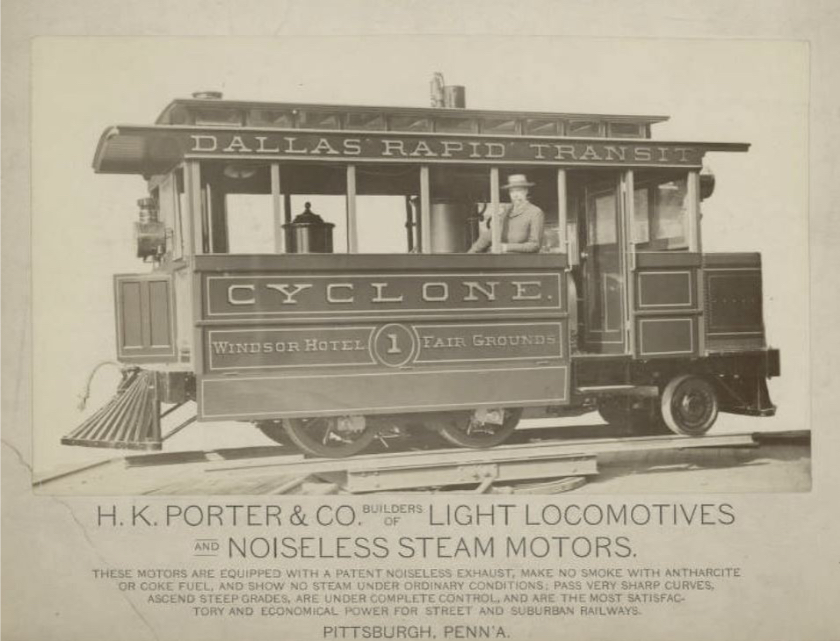
While the initial development along the early streetcar lines were high-end residential, that shifted in time. With the unsightly catenary electric wires, the louder noise from the heavier electric cars that damaged previous horse tracks, and motor whine, the uses started to shift from residential to retail and commercial uses along the main tracks.
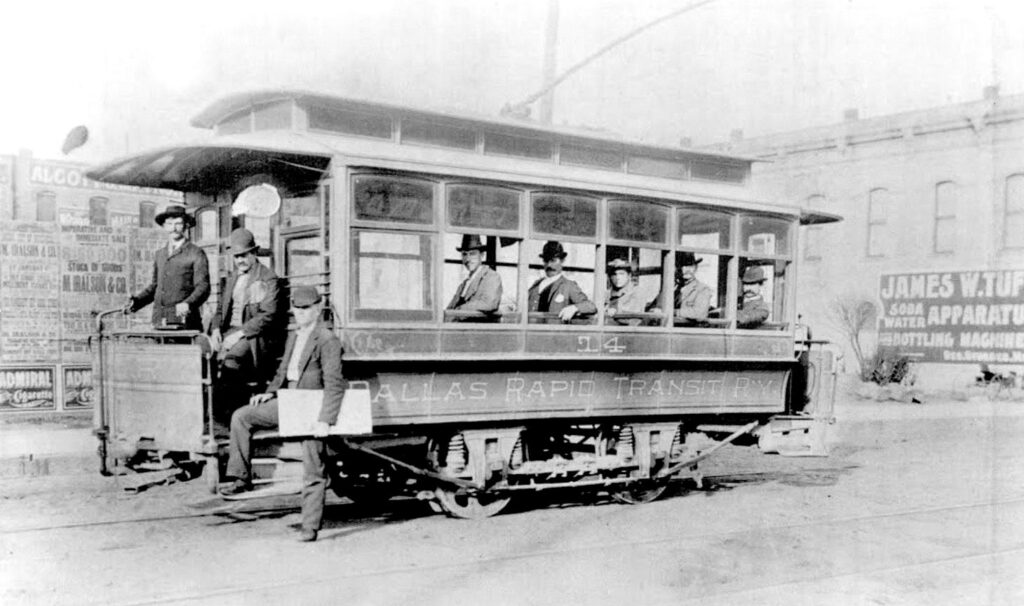
But the electric street car was about to arrive and change everything. Read part 2: “Streetcars in Dallas Get Electric!“
3 Comments
Leave a Comment





As The Yankee who came to call Dallas home for forty years, I can attest to Jim Anderson’s ( the man from Wisconsin) – ( “the land that…etc.”) stature in embracing Dallas lore and knowing interesting back stories as well. A Swiss Avenue (“two mile band of splendor”) resident/historian!
Be sure to read his second installment this Thursday!
Great Article. Do you have any images or content related to 707 that used to run between Dallas and Junius Heights?