North Cliff Rezoning Moves Forward to Allow ADUs, Single-Family, Commercial Uses in Conservation District
Share News:

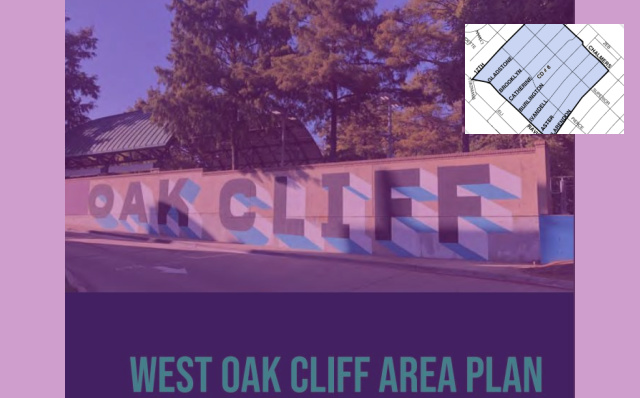
Dallas plan commissioners spent just seven minutes last month discussing a rezoning in North Oak Cliff that would clean up some antiquated zoning and allow for more diverse businesses and accessory dwelling units by right.
The North Cliff neighborhood, within a conservation district approved in 1996, is the third of five neighborhoods to move forward with an authorized hearing as a result of the West Oak Cliff Area Plan. An authorized hearing is a neighborhood- or city-initiated rezoning rather than one brought forward by a developer.
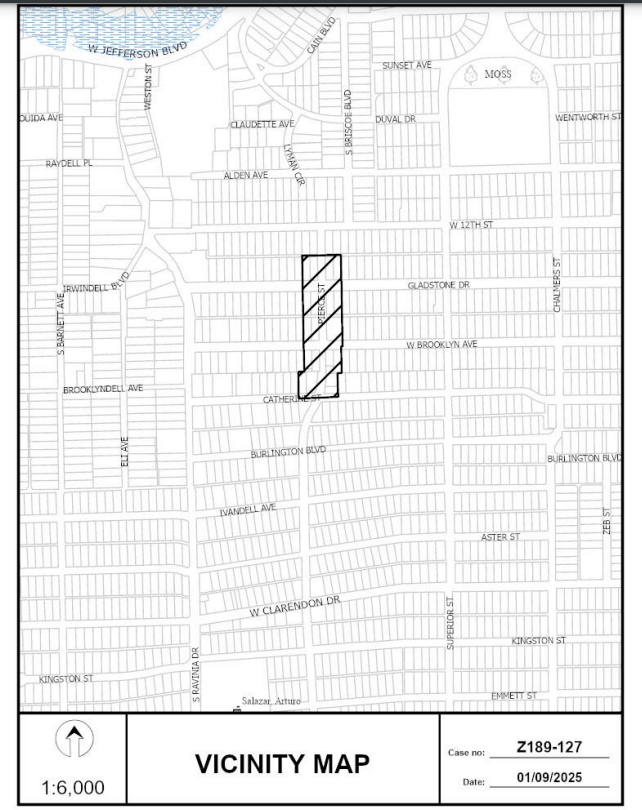
Twelfth Street frames the area on the north, Chalmers Street on the east, Clarendon Drive on the south, and Ravinia Drive on the west. The architectural styles in North Cliff include Tudor Revival, Arts and Craft, Minimal Traditional, Spanish Eclectic, and Prairie Foursquare.
The rezoning was recommended for approval by the City Plan Commission on Jan. 23. The matter is expected to go before the City Council later this month.
Rezoning North Cliff
North Cliff’s rezoning proposal included development standards along both sides of Pierce Street from Catherine Street on the south to the alley north of Gladstone Drive on the north, covering about 5.15 acres.

District 1 Plan Commissioner Christian Chernock made a minor amendment to staff’s recommendation allowing single-family uses and non-residential uses on a particular city block.
“I made a slight change from the staff recommendation because there is one particular lot that has some complexity and it currently has residential and commercial infrastructure on it,” Chernock said. “If we followed staff’s recommendation, we would be taking the commercial rights away from that particular lot, which would potentially create an issue for development in the future such that an applicant would need to do a zoning change back to commercial.”
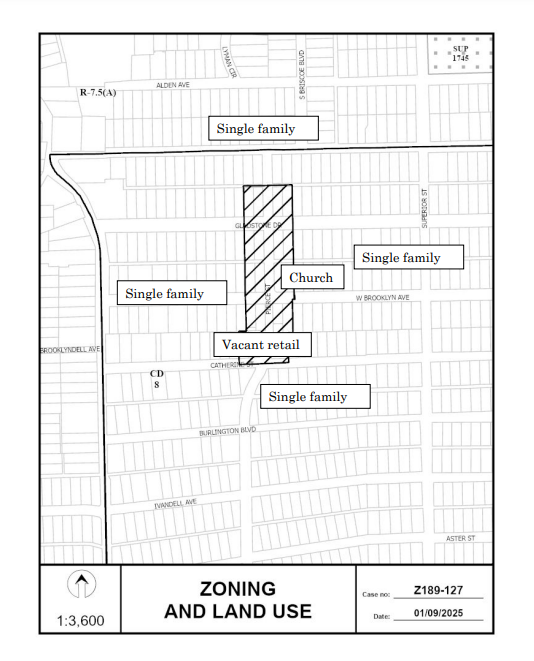
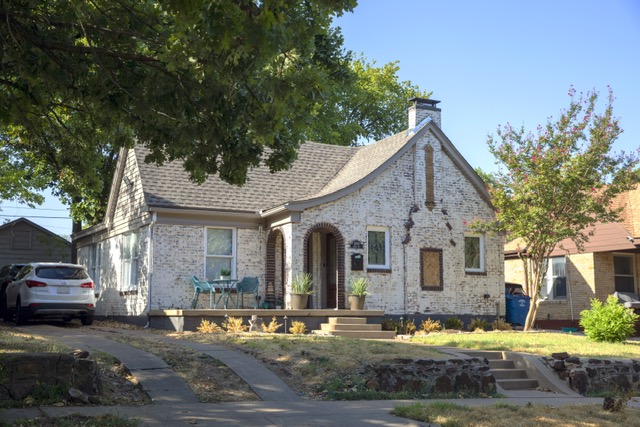
The rezoning, if approved by the City Council, will clean up the zoning for 15 single-family homes that currently sit on commercial property.
“This solves some parking challenges for the small commercial buildings that are there,” Chernock added. “Those buildings have been vacant for decades and there are several challenges that they face. Parking is one of the major ones.”
The new zoning also allows accessory dwelling units by right, removes some unwanted units like batch plants and fuel stations, and adds desired uses like retail and restaurants.
“I’m excited that this is finally here,” Chernock said. “This has been a long time in the making. Precluding the five authorized hearings, the district passed WOCAP, the West Oak Cliff Area Plan, with the intent that these authorized hearings would follow the vision that the community set out. This particular area is going to see a bunch of needed improvements.”
Commissioner Tip Housewright said the zoning change represents “a lot of good things.”
“I think there’s a lot to like here … preserving the existing fabric of that district, revitalizing commercial buildings, parking relief … and embracing ADUs, what they can do to stabilize a neighborhood,” Housewright said. “I like this one a lot.”
West Oak Cliff Area Plan
The West Oak Cliff Area Plan goes into more detail about the desired future land use in North Cliff.
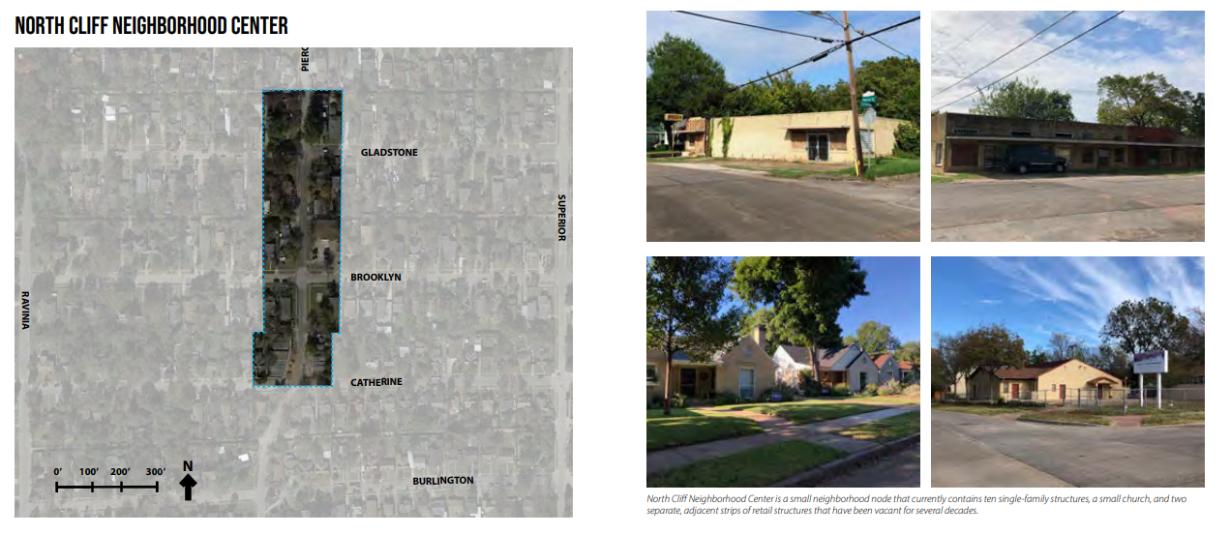
“There is a desire to preserve the historic commercial structures at Pierce and Catherine, if possible, and enable them to redevelop into a walkable neighborhood center with retail uses such as dry cleaners and small cafes/restaurants or personal service uses such as art studios and low-traffic offices,” states the plan, which was unanimously adopted in October 2022. “There is also a desire for some of the structures to serve a community purpose, such as a tool-lending library, maker spaces, or meeting rooms. Lastly, there is a desire for outdoor recreation space such as a community garden or playground to be developed in this area.”
The plan goes on to address a desire to protect a small commercial area and single-family homes, while also allowing for ADUs and live-work units.
“In addition to rehabilitating the existing structures, there is a desire for the zoning to maintain the existing scale (30-foot, two stories maximum) and character as outlined in the current zoning,” the plan states. “Additionally, due to the small existing lot size and the existing, underutilized parking area at the existing church, there is a desire to allow for shared parking agreements and general parking ratio reductions for commercial uses to better enable redevelopment of historic properties and foster this as a pedestrian-oriented area.”
Authorized hearings in Elmwood and Jimtown were approved by the City Council in March 2024 and January 2025, respectively, also resulting from WOCAP. Next up is the Hampton-Clarendon neighborhood, which could go before the City Plan Commission later this month.