
Floral Farms’ Fight Over Industrial Zoning After Shingle Mountain Pushed to February
Share News:

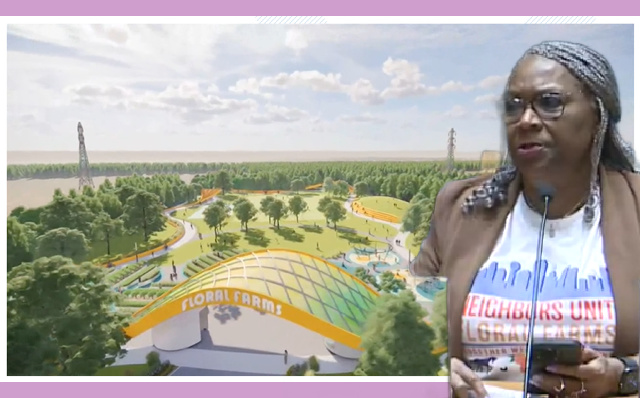
Southern Dallas residents have waited years for a rezoning effort to correct past injustices, such as the intrusion of concrete batch plants, scrap yards, and the notorious “Shingle Mountain” into their neighborhoods. But at a recent Dallas City Council meeting, they were told they’d have to wait a little longer.
Environmental justice advocates and about 40 residents of the Floral Farms community, located near I-45 and Simpson Stuart Road just south of the Trinity, took their turn at an open microphone during a Dec. 11 Dallas City Council public hearing only to be told the zoning change — which would alter the current industrial designation to agricultural, retail, and light industrial — must be delayed until Feb. 12. Council members appeared empathetic to the pleas of Southeast Oak Cliff neighbors like Marsha Jackson, co-chair of Floral Farms Neighbors United, who said the homes in her neighborhood were built before the area was annexed into Dallas.
“The homes in Floral Farms were in this area first and it was an agricultural area,” Jackson said. “The city then decided in the era of segregation to place industrial zoning next to these homes.”
City leaders could have changed the heavy industrial zoning adjacent to single-family homes after Civil Rights laws passed, but chose not to do so, Jackson argued. Decades later in 2017 with industrial zoning still in place, a recycling company started dumping asphalt roofing shingles and debris until Shingle Mountain towered over Floral Farms homes like a six-story toxic dump. The City cleaned up the Blue Star Recycling site in 2021.


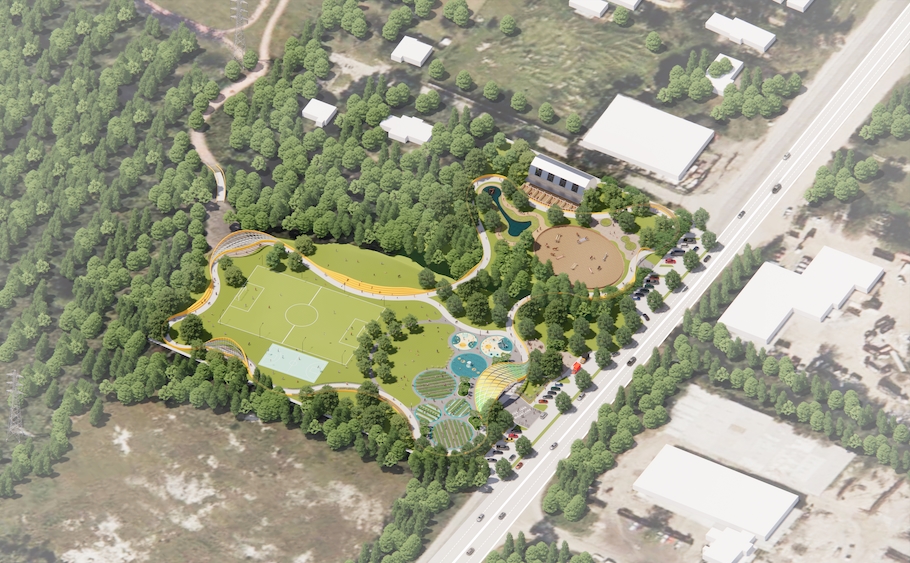
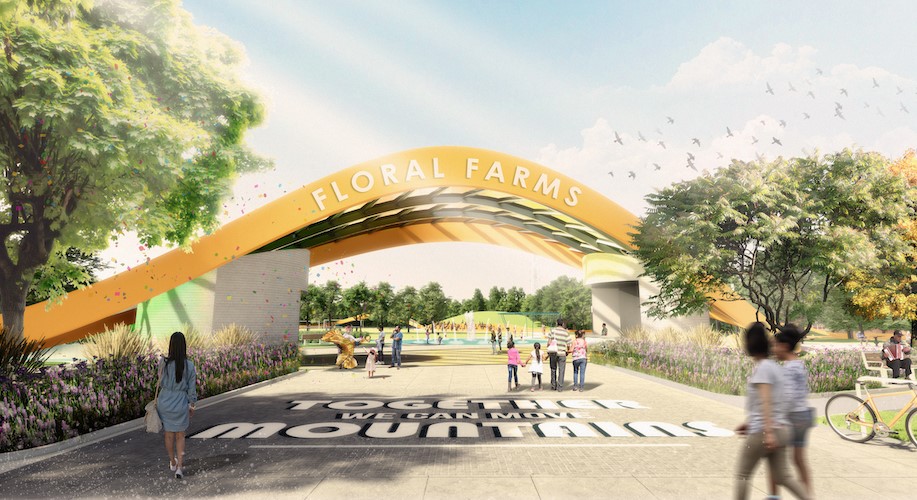
Residents want to create a park where Shingle Mountain used to be, and HKS Architects has already designed it. But the future of the 522-acre site — bounded by River Oaks Road to the north, Union Pacific Railroad to the east, McCommas Bluff Road to the south, and Julius Schepps Freeway to the west — hinges heavily on Senate Bill 929.
The new legislation took effect last year and the council will be briefed on Jan. 15 on the long-range effects it could have on nonconforming properties in the City’s development code. The rezoning request should be considered after the code change, a majority of council members agreed.
“The city did this and we need to start unwinding it,” said East Dallas Councilmember Paula Blackmon. “I understand that we can’t come back and change a zoning, but I just can’t keep perpetuating hurt and angst with neighborhoods. If we’re talking about self-determination and preserving them, it should be all of them.”
The City Plan Commission (CPC) voted in May to recommend the rezoning be approved.
Pros and Cons
Several speakers at last week’s meeting spoke against the rezoning, saying the industrial uses in the area provide jobs and boost the local economy. Most of the industry operators go to great lengths to ensure there is no pollution from their businesses, they do not handle hazardous substances, and have had no complaints from neighbors, opponents to the rezoning said.
Scott McMahon, vice president of development for North Texas Natural Select Materials, said his business has been zoned industrial for over 60 years and is not Shingle Mountain.
“It’s said that government can only give to one person that which it has taken from another,” McMahon said. “We experienced that firsthand as smaller property owners sought to impose their vision on our property during this process, even earmarking our entire 102.6-acre property as public park and open space during the early stages of these neighborhood meetings. It’s a mighty generous allocation of someone else’s property … Doing the right thing here requires that you vote no to the CPC recommendation and uphold the vested rights of the existing property owners.”
Of the notices to property owners within 500 feet of the area of request, more than 20% were opposed, meaning a three-fourths vote, or 12 of the 15 council members, is required to approve the rezoning.
But the voices supporting the rezoning were louder as they pleaded with elected officials to “do the right thing.”
Evelyn Mayo, co-chair of the Downwinders at Risk board, said she fought for years alongside the residents of Floral Farms for the closure and cleanup of Shingle Mountain, a “100,0000-ton dump.”
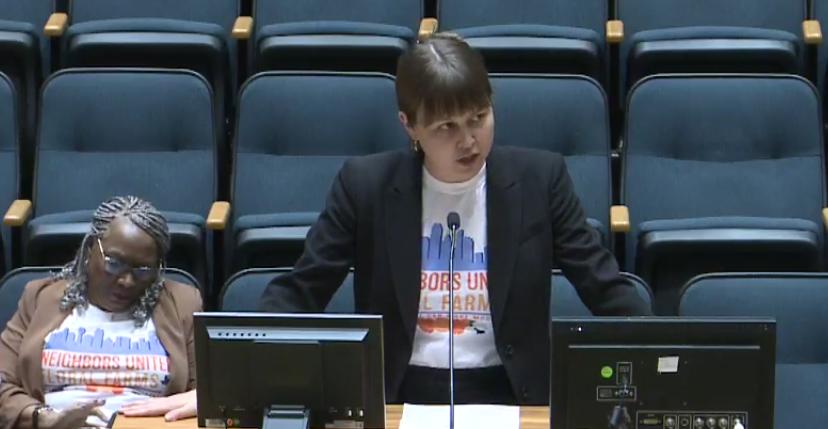
“This is a neighborhood that has done nothing but follow processes and procedures laid out by the city and has had to dedicate the last six years of advocacy to ensure that the city follows its own laws,” Mayo said.
She urged the council to support single-family homeowners by providing them “the basic protections they are due by being rezoned to residential and by removing industrial zoning adjacent to homes, legal businesses, and the environmentally sensitive floodplain and forest.”
“You have a chance today to take a historic step in reversing the harm caused by redlining, the concentration of industrial uses in low-income communities, and chronic disinvestment,” Mayo said.
Why Is This Zoning Change Taking So Long?
A public hearing was authorized in 2019, explained Planning and Development Deputy Director Andrea Gilles. It didn’t actually “get kicked off until 2022,” she said.
“We got to it as soon as it was next in line,” she said.
Gilles said an attempt is being made to strike a balance between what is already on the ground and what city leaders and residents want their communities to look like in the future. About 60% of the acreage in question is undeveloped.
“Staff was looking a lot into how … we handle those areas that are undeveloped, as opposed to the areas that have already been developed from a residential standpoint or an industrial standpoint,” she said.
City Attorney Tammy Palomino answered a litany of questions about SB 929 and council members agreed they will have more questions after the January briefing.
“Dallas has a unique process by which we used to amortize nonconforming uses,” she said. “Based on 929, the City had to begin looking at its ordinance on amortization. So that went to [Zoning Ordinance Advisory Committee], then it went to City Plan Commission. It went to committee, and the committee asked that the full council be briefed on the proposals before the ordinance came to council.”
After the Jan. 15 briefing, the council would ideally pass an ordinance, “and then everyone in the city would be very clear on what our process going forward for nonconformities will be,” Palomino said.
Mayor Pro Tem Tennell Atkins, who represents the Floral Farms area, thanked Jackson for her hard work on the rezoning.
“Here we are again [asking] why did it take so long?” Atkins said. “There was a process … We have been here waiting since 2019 going through the process.”
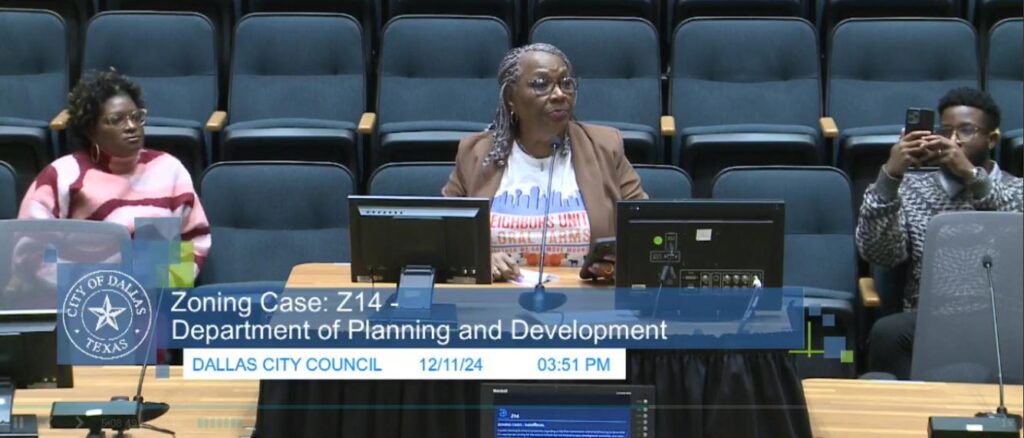
A motion to delay the zoning case to March 26 failed, and council members appeared to agree that January was too soon to revisit it.
Deputy Mayor Pro Tem Adam Bazaldua said he wanted to ensure that the council is prioritizing its fiduciary responsibility to taxpayers.
“Although justice delayed is seen as justice denied, I will tell you that with the amount of time that we have waited to get to this point in the process, a small delay should not be something that deters us from the overall opportunity for a win,” he said.