
Are You a Super Commuter? Housing Report Cites North Texans Going the Distance
Share News:

Staff Reports
As some Dallas leaders want to create a less car-centric transportation system, a new report shows more than 60,000 North Texans won’t exactly be biking to work anytime soon.
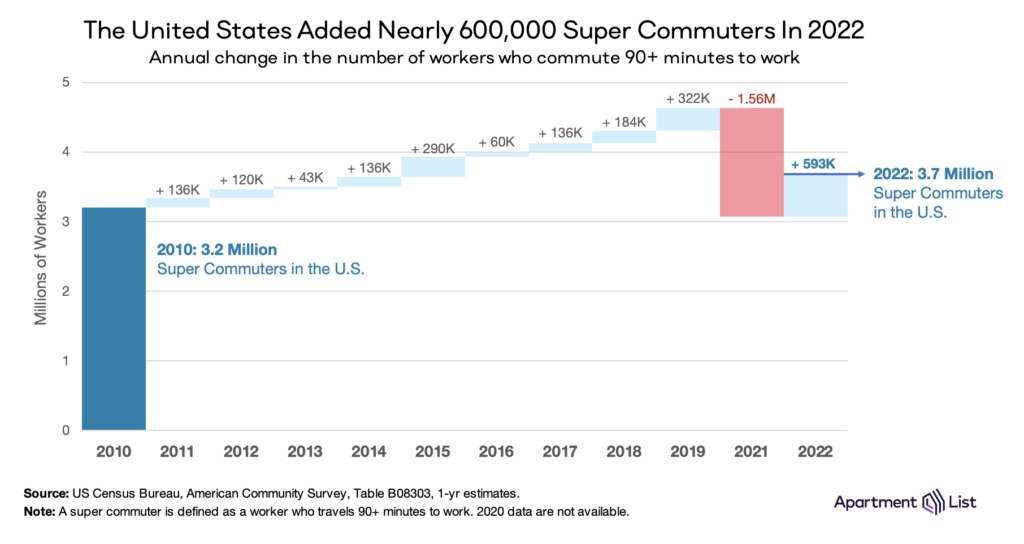
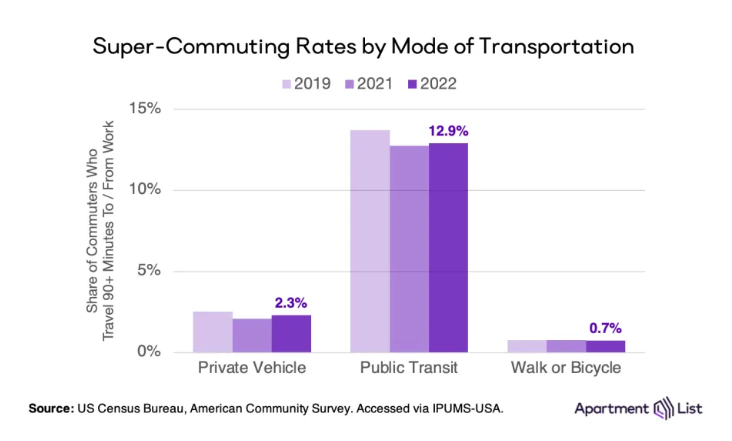
The June 20 report, released by AparmentList.com, shows that about 3.7 million Americans spend at least 90 minutes traveling one way to work, a practice known as “super-commuting.”
Senior research associate Rob Warnock, author of the ApartmentList article on super-commuting, said the trend may increase tension between workers and employers, as they negotiate working arrangements that affect their commutes.
“These extreme commutes are getting more common as suburbanization accelerates, and employers pull back on remote work,” Warnock said. “Worsening commutes for drivers increase car-related expenses, impact physical health, and amplify the environmental consequences of suburban sprawl.”
Housing isn’t being built fast enough to accommodate job growth in some areas, Warnock added.
“Many regions with high super-commuter rates have been expanding job markets much faster than housing markets, in some cases adding more than 10 jobs for every new home built,” the report states. “Naturally, this uneven growth drives up local housing prices and encourages families to look outward for affordable living. Other markets have more sustainable jobs-to-housing ratios, but there, it is sprawling single-family housing which dominates, instead of multifamily developments that would support higher density, better job access, and shorter commutes.”
Key Takeaways on Super-Commuting
Warnock’s research revealed the following:
- As of 2022, there are 61,395 super-commuters in the Dallas metro area, accounting for 2% of all commuters.
- Hood County, at the southwestern fringe of the Dallas metro area, has the nation’s highest super-commuter rate: 13%.
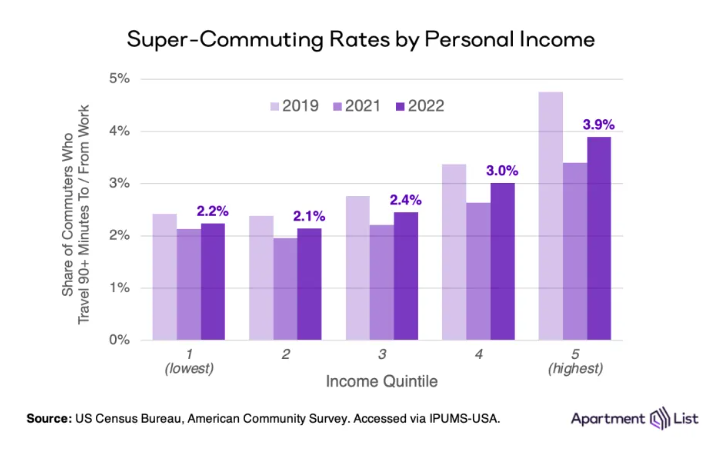
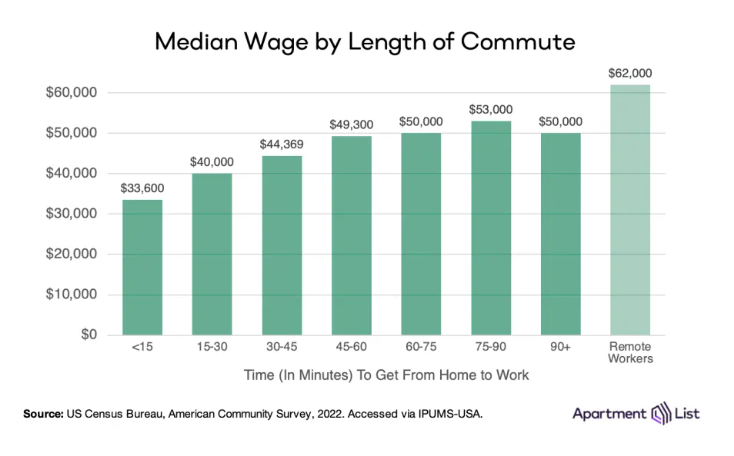
- The data show that super-commuting is most common in higher income brackets, where workers are more willing to endure long commutes to access higher-wage jobs.
Housing Options Needed
One reason people are super-commuting in North Texas is because they don’t live near their jobs. Many in the Dallas workforce live in the suburbs for affordability, safety, or a more desirable school system.
City officials who are updating the ForwardDallas comprehensive land use plan have said that “missing middle housing” — options for professionals such as teachers, firefighters, and nurses — will help to address those challenges. Additionally, there ought to be affordable options in each council district and transit-oriented housing development near Dallas Area Rapid Transit stations, planners say.
Warnock’s article outlines the correlation between super-commuting and a lack of housing options.
“Housing is of course central to any attempts to cut back on super-commuting,” he writes. “In cities and suburbs alike, dense construction and infill development, built at a rate that scales appropriately with job growth, can improve housing opportunities so that those who wish to live closer to work can afford to do so.”