Generational Homeownership Gap Widens
Share News:

The homeownership rate in the United States is apparently higher than it’s ever been, but don’t tell that to the zoomers. The generational gap has also never been bigger.
Homeownership among Americans under the age of 30 has fallen by 36% between 2005 and 2024, leaving Generation Z with a 4.5% homeownership rate, according to the cash-offer home selling platform Clever Offers.
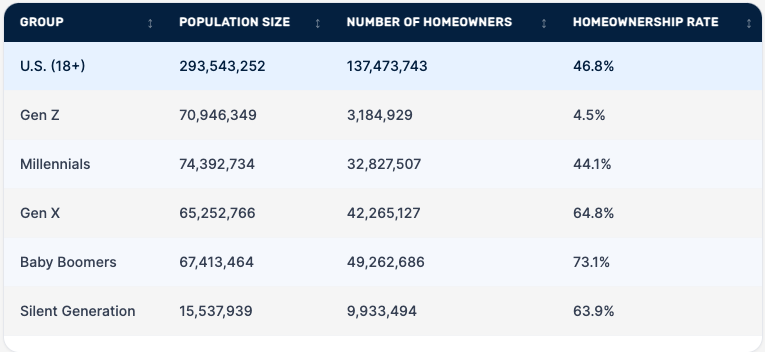
Clever Offers looked at homeownership data across the two decades to measure demographic trends, including outright ownership and a mortgage.
As for who can boast the largest homeownership rate, it should be no surprise: baby boomers at 73.1%. That makes for a generational rate gap of 68.6% nationally, the biggest on record, according to Clever Offers.
For their part, millennials have an homeownership rate of 44.1%, and Generation X is sitting at 64.8%.
While age has always played a role in homeownership, housing experts say today’s affordability challenges are creating larger barriers than previous generations faced. Home prices remain elevated, mortgage rates are still well above the historic lows seen during the COVID-19 pandemic, and there have been few sustained signals suggesting home prices will dip low enough to impact the market for those under 30.
Recent data also suggests that Americans are reaching homeownership milestones later in life. The median age of a first-time homebuyer reached a record 40 in 2025, reflecting the growing difficulty many households face when attempting to save for a down payment while managing student debt, rent increases, and other living expenses.
In Dallas, the homeownership rate for zoomers was 3.1% in 2024. Meanwhile, boomers clocked in at 70%.
Policymakers at both the federal and local levels have been increasingly focused on addressing the underlying supply shortage that many economists believe is driving affordability concerns. Several bipartisan housing proposals advancing through Congress would encourage new residential construction, streamline permitting processes, modernize rules for manufactured housing, and incentivize local governments to reform zoning regulations that limit development.
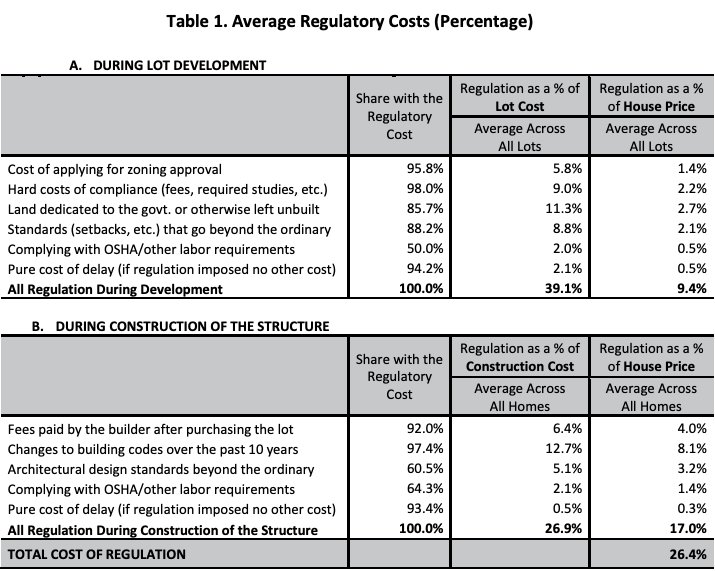
Other efforts are targeting the cost side of the equation. Industry groups have pointed to permitting requirements, development fees, and other regulations that can add substantial costs to new housing projects. A recent analysis by the National Association of Home Builders estimated that regulatory requirements now account for more than one-quarter of the cost of a newly built home.