Dallas Homeless Director Says City Could Partner With Private Developer For Homeless Housing Alternatives
Share News:

Thousands of unhoused people have turned Dallas streets into waiting rooms, and city officials said last week they’re willing to try a pilot program that employs public-private partnerships to bring housing alternatives to the homeless.
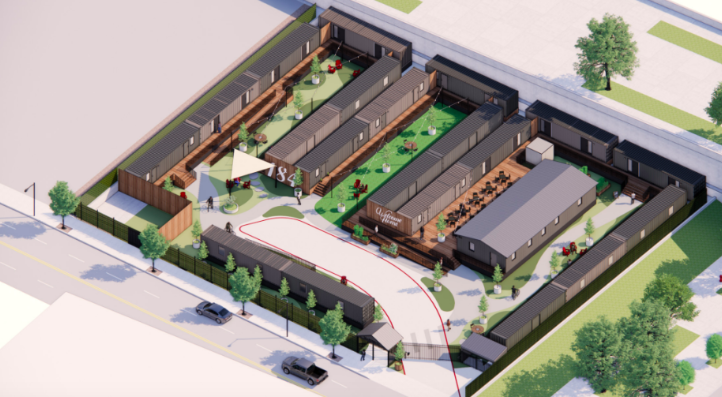
Christine Crossley, director of the Dallas Office of Homeless Solutions, presented information about industrialized housing, pallet homes, and retrofitted shipping containers during a recent Housing and Homelessness Solutions Committee meeting.
Housing alternatives have been a subject of debate lately, as advocates say they don’t want funding pulled from Housing Forward, a successful local model that provides permanent supportive housing.
“What Housing Forward is doing is working; it’s just that it’s slow,” Councilwoman Gay Donnell Willis said during the May 24 HHS Committee meeting.
Pilot Program For Homeless Housing
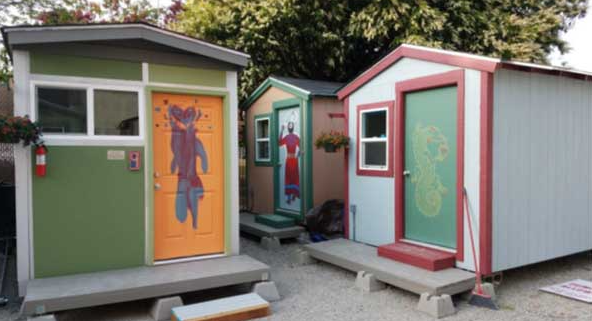
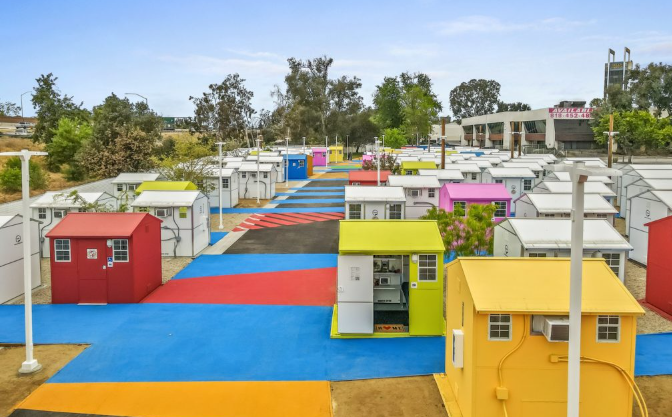
Crossley proposed a pilot program that would involve a public-private partnership to house the homeless. She referenced case studies including a tiny house village in Seattle, a pallet home community in Los Angeles, and a retrofitted shipping container site in Atlanta.
Dallas has about $1 million budgeted for homelessness that will expire in September and $1 million in bond funds that could serve as “seed money” for a partnership in which an operator funds a significant portion of a new development, Crossley said.
“This does impact the system because if we’re putting dollars here, we’re not putting them toward what we know already works,” she said. “However, if there’s a new provider out there that has the capital and the will to step into this space, great. We don’t have one at present. The system is at capacity working on what we know is successful and working at full speed, but there’s always room for new folks.”
Staff is recommending industrial housing. If the full City Council greenlights the pilot project, a Notice of Funding Availability would be issued to see what kind of partnerships and opportunities arise, Crossley said.
“Cost varies across all product types with key factors being the site chosen, the amount of preparation it requires, the planned size of the site, and how quickly we can cycle people through the site,” she said. “The recommendation is based on what could be most quickly stood up across more areas in the city under the current development codes.”
Watch the May 24 Housing and Homelessness Solutions Committee meeting here.
Housing Those Who Don’t Want to Be Housed
District 2 Councilman Jesse Moreno chairs the HHS Committee and represents a portion of downtown Dallas, where some say homelessness is driving large corporations to other cities.
“This is something new to Dallas,” Moreno said of the proposed alternative solutions. “We have to tailor it to the needs and the uniqueness of our city, but I do want to make sure that we try something innovative and new, understanding that it might not work. Until we give it an opportunity, we won’t know.”
District 12 Councilwoman Cara Mendelsohn pointed out that — other than persistent outreach — the city’s strategy doesn’t address care for those who don’t want to be housed.
“There’s no way in Dallas that homelessness has decreased; it’s just not possible,” she said. “We have to adjust our strategy to actually meet our challenges.”
The state doesn’t allow camping on public land, and it doesn’t appear that the City of Dallas is complying with that law, Mendelsohn added.
“We need to put in a strategy that will actually address removing people from our public land,” she said.
Mendelsohn suggested combining tiny units in a warehouse with on-site services for things like laundry and showers. Councilwoman Willis agreed that a pathway forward is needed for those who chronically refuse services.
About 95 percent of those engaged by the city’s outreach coordinators accept housing, Crossley said.
District 1 Councilman Chad West said he is more inclined to support a permanent solution than a temporary one. Crossley explained that’s a big reason why staff is recommending industrialized homes.
“It’s already set up to be permanent supportive, but that does not mean that you can’t have several different use cases there before it up-cycles into permanent supportive [housing], if you wanted to,” she said. “You could also use vouchers on, let’s say [a recreational vehicle] as long as it has a bathroom, but the trouble with something that’s manufactured and doesn’t have a permanent foundation is it slots it into a very narrow zoning in the city. We have a lot more flexibility if it counts as industrialized.”
Mendelsohn said the housing development should absolutely be temporary, a “way station” between living unsheltered and finding a permanent home.
Council members agreed that a pilot program should last at least two years.
Housing Alternatives And The Cost of Homelessness
During the same May 24 committee meeting, Dallas County Health Authority Director Dr. Phillip Huang presented the “economic cost of homelessness in Dallas and Collin counties.”

According to last year’s Housing Forward Point-in-Time Count, about 4,244 persons were experiencing homelessness in Dallas and Collin counties on a single night. Costs to government agencies associated with homelessness include hospitalizations, medical treatment, mental health emergency room visits, incarceration, and emergency shelters, Huang said.
It costs almost $200 million a year to cover those costs for 4,244 unhoused individuals, the doctor explained.
A $70 million investment in Housing Forward’s initiative to house 2,700 individuals is a less expensive per capita effort, he said.
“It’s not to say that if they’re in the REAL Time Rehousing that they don’t have any of those other costs, but we’re trying to show that housing will decrease some of those figures,” Huang said.
Mendelsohn pointed out that the expensive services outlined by Dr. Huang fall under the county’s purview. Dallas County budgeted about $1 million for homelessness in the current fiscal year, while the City of Dallas spent $54 million on homelessness for Fiscal Year 2024, Mendelsohn said.
“I’m not sure the county is putting in the dollars to do the prevention and to help people leave homelessness so you aren’t incurring these higher expenses,” she said.