
How To Keep Your AC Running Cool and Efficient This Summer
Share News:


It can be helpful to think of the long North Texas summer as a marathon with your AC as the runner. You want to go into it with the best possible physicality. Throughout the race, you’ll want to maintain your performance through hydration, energy boosts, and rest as needed. And don’t forget to stop and patch up in the event of injury along the way.
You need to maintain home equipment in the same way if you expect it to last, yet most people more or less ignore their AC systems unless they’re not working. While we recommend having your AC professionally serviced once a year, there are several things you should be doing yourself to keep things running well across the summer.
Keep Vents Clean
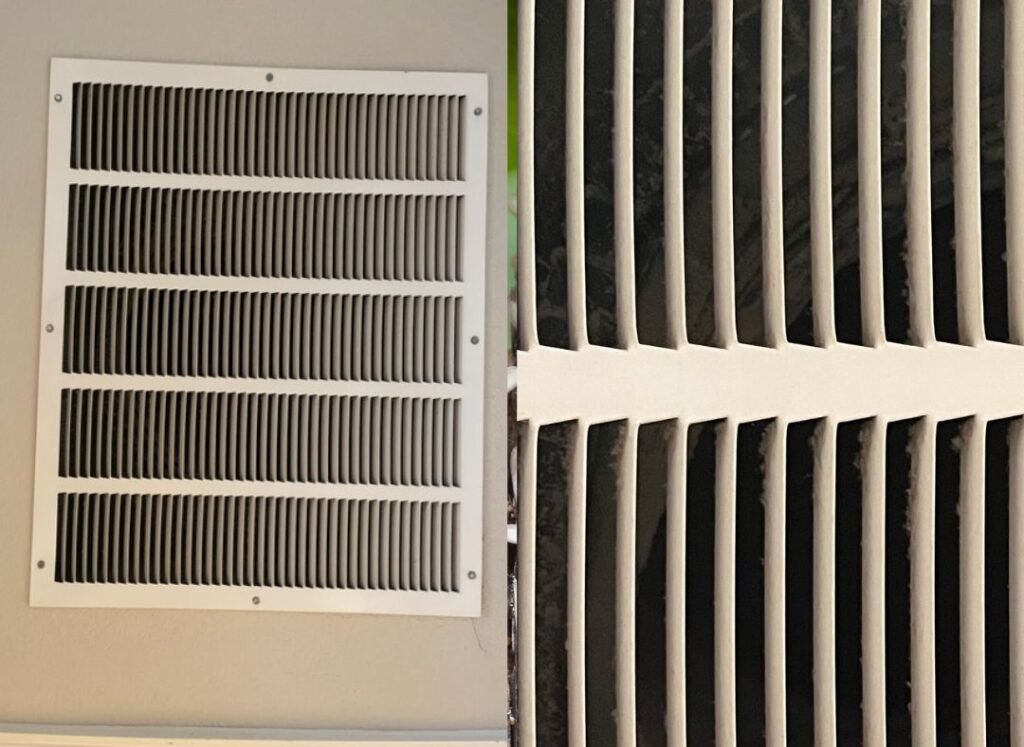
If you’re not super familiar with your AC system, there are generally three types of vents in your house: supply, return, and exhaust. The large vent you see on the left is a return vent. Air goes into the return vents to the AC for cooling, then the cool air goes back out to the house through the supply vents. The exhaust vent is where the really, really tired air goes. Kidding, but it’s sort of true: stale air in your attic or other ventilation spaces exits your home through exhaust vents.
On the right, you can see a close-up of this return vent. See all the dust and debris accumulated on the vent fins and inside the duct? You can unscrew the vent cover, clean and disinfect it, and use a duster to remove the dust and debris inside as far back as you can reach. This clears the path and keeps all that crap from reaching the filter, blocking the ducts, and/or getting in the air you’re breathing.
If you have rust on your vent covers, replace them with moisture-resistant resin covers.
Check Vent Seals

First, an interesting note: we’re not allowed to say the word “mold” when we’re inspecting a home. In the case of this photo, we’d have to say there appears to be a “black foreign substance” on the vent. “Mold” is not super specific. It also tends to scare people, sometimes unnecessarily. So when you see something that might be mold, it’s best to have an expert test it to find out what exactly it is and how to get rid of it.
Vents get “foreign substances” growing on them when they get wet. If you have vents that tend to form condensation and drip, it’s usually because the vent cover is getting too cold. Why? Probably because the vent isn’t properly sealed, and cold air is escaping around the sides. When the warmer, humid air in your house hits that cold vent cover, condensation forms. This is something you can fix yourself. You can use a spray foam sealant like Great Stuff and weather stripping to seal all the supply vents in your house. Here’s a simple video that shows you how.
If your vents are already properly sealed and you still have condensation, your house may be way too humid. This could be because your doors and windows aren’t properly sealed, leading to too much outside air getting in. You should invest in a dehumidifier and/or start working on resealing/replacing your doors and windows. You can figure out if this is going on by having a home energy assessment.
Clean Your Primary Condensate Line
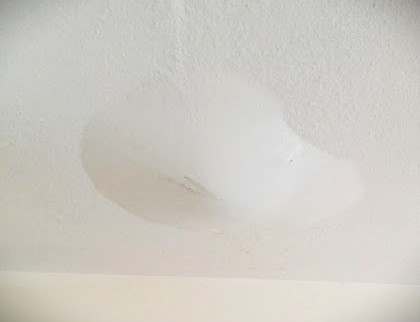
You might never have seen a white blob like this before. Well, this is what happens when you have a leak behind the drywall in your ceiling. This is what it looks like before it breaks and spills water everywhere. I wish whoever took this photo (it was me) had thought to put something next to the white blob for reference so you could tell how big it is. But if they had put a yardstick up there, you would be able to see that the white blob is roughly the whole length.
Anyhoo, the primary condensate line takes the water that collects in the drain pan away to a plumbing trap in the house, usually a bathroom sink. You most often find this in one of the secondary baths of the house. Do you have a bathroom sink where you hear a funny dripping sound even when no water is running? That’s the one. When the line gets clogged, the water in the pan has nowhere to go. The pan fills up, and in my case, spilled into the attic, leaked through the attic decking into the ceiling below, and — shortly after this picture was taken, unfortunately — all over the carpet.
You know that saying about the cobbler’s children having no shoes? Even home inspectors make mistakes. What we should have done at our house is what you can do now. Drip some diluted vinegar or Nuline AC line cleaner down the primary condensate line to keep it from getting clogged.
If you have questions about your AC or would like to schedule a seasonal home maintenance inspection to get this and more checked out at your home, give us a call!