
Dallas Considers Outsourcing Operations at Historic Majestic Theater
Share News:

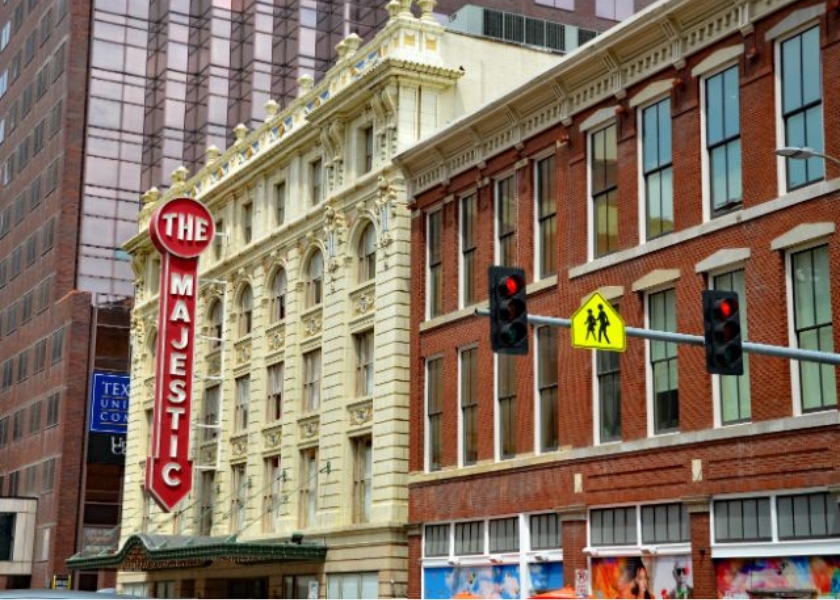
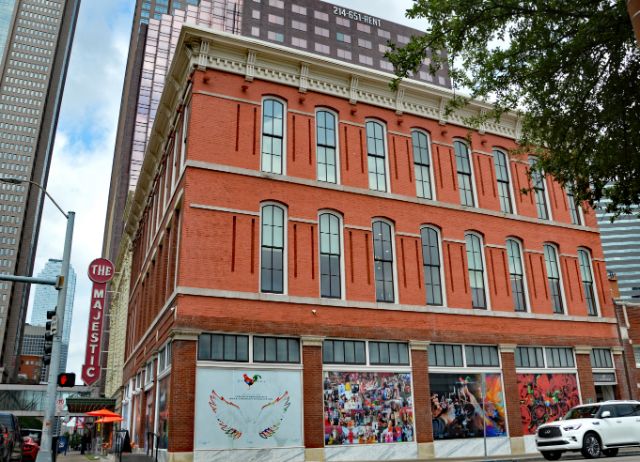
Dallas officials are exploring whether a third party should take over management of the historic 1921 Majestic Theatre to improve the downtown venue’s financial performance.
Staff presented members of the Quality of Life, Arts & Culture Committee with options for a potential public-private partnership on Monday, including a lease agreement or a management/operator agreement as possibilities.
“The venue continues to require ongoing city financial support, which is a burden to the general fund,” said Russell Dyer, superintendent of cultural venues for the Office of Arts & Culture.
OAC has operated The Majestic, one of Dallas’ most recognizable historic landmarks, since 2010, when a management agreement with Dallas Summer Musicals Management Group expired. The department keeps administrative offices at the Renaissance-style theater, which has six full-time employees and 16 part-time ushers assigned there.
Dyer said “informal discussions” have taken place with outside groups interested in The Majestic.
Council members on the committee were broadly supportive of the idea to mitigate taxpayer obligations by contracting operations out to an organization with industry expertise.
“There are people who are really good at this,” said Council Member Gay Donnell Willis (District 13). “They’re experts. It’s their core competency. I think the proactive pursuit of more business would be a good thing. I mean, as I look at the numbers, it needs help.”
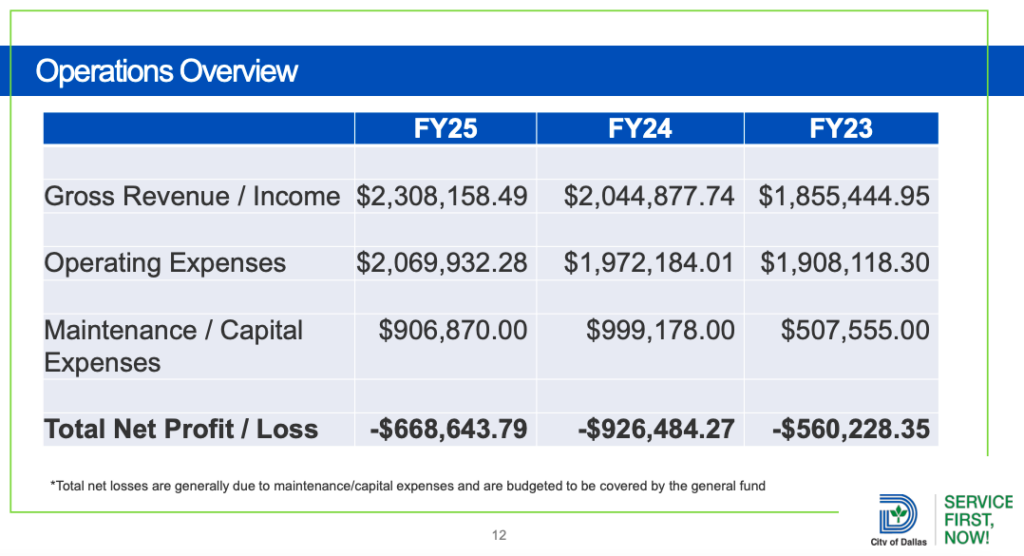
According to staff, the theater generated approximately $2.3 million in revenue during FY 2025 and hosted 132 ticketed events attended by more than 166,000 people. Operating expenses totaled about $2.07 million.
However, after maintenance and capital costs were factored in, the facility posted a net loss of roughly $669,000 for the year. During the previous two fiscal years, the venue lost a combined $1.49 million.
“This is really concerning me a lot because I think that Majestic Theatre is absolutely one of our gems, and I’m distressed if it’s not producing and it’s not being operated properly,” said Council Member Bill Roth (District 11). “That’s, to me, really serious, and we need to fix this.”
Dyer said anything over 100 events in the venue management industry is “doing okay… I’m not going to call it fantastic.”
Staff explained that under a lease-oriented agreement, a private entity would assume primary responsibility for operating and maintaining the theater in exchange for revenue opportunities associated with the venue.
Such an arrangement could reduce the city’s financial burden and potentially generate lease revenue, though it could also reduce city oversight of programming and maintenance decisions.
The second option would involve a management or operator agreement, under which a third party would run the venue on the city’s behalf while the city retains ownership and significant financial responsibilities. That model would preserve greater municipal control over programming and maintenance standards but might provide fewer opportunities to reduce city costs.
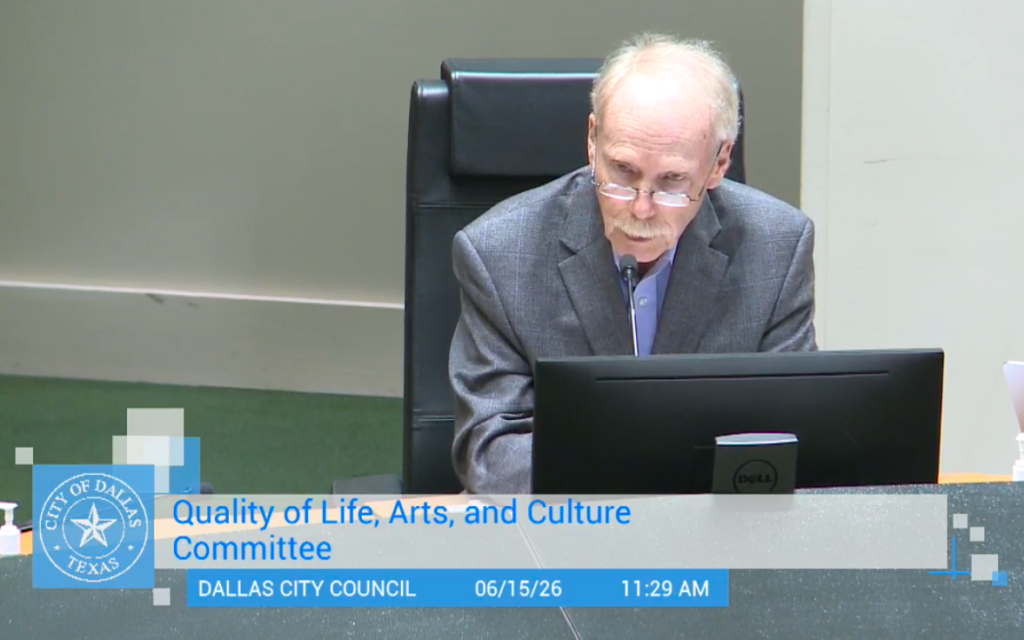
Council Member Paul Ridley (District 14) suggested something along the lines of the long-term facility agreement the city has with the AT&T Performing Arts Center, which has a nonprofit handling all maintenance, repairs, updates, and bond programs.
The city does still subsidize the center, though, contributing to its own fundraising and revenue generation to maintain the building and operations.
Council Member Laura Cadena (District 6) cautioned staff about vetting potential third-party operators, referencing the controversies surrounding Fair Park First and Oak View Group’s alleged mismanagement of Fair Park.
“My fear is we get an operator that doesn’t have that commitment to arts and culture and a proven track record, that we could end up in a situation where if we were to get the asset back, it would be in worse condition,” she said.
The committee ended up voting to direct staff to explore the issuance of a request for proposal for a management/operator-oriented agreement and the model utilized for the AT&T Performing Arts Center.
Despite the discussion over sustainability and reducing costs, there are funds incoming. The Majestic is set to receive more than $8.3 million in improvements from the 2024 bond program. Work includes water infiltration repairs, window replacement, new audience seating, elevator upgrades, accessibility upgrades, HVAC work, and restoration of the building’s historic facade. None of the work is expected to begin before FY 2027, though.







The city of Dallas has proven itself incompetent to manage much of anything these days, so its probably a good idea to put management in the hands of a promoter who knows what they’re doing.
The theatre can’t have more show because of the mandatory overtime for employees. In this article they complain not enough shows, but how are they supposed to put on more shows when the city handcuffs thier hours? 40 shows were turned away because no overtime. City council does not care about the culture or the arts. They have made that very clear this past year. They have missed managed funds and need people to throw under the bus.
It’s not “the 1912 Majestic” it dates from 1921.
You’re right, I transposed the numbers there. Fixed now
This passage raises concern: “…though it could also reduce city oversight of programming and maintenance decisions.” Maintenance decisions? Oh, you mean the way decisions were made in maintaining City Hall?
The Majestic is over 100 years old and needs a lot of attention. The fact that it is still standing and operating very effectively is because it has been managed well by the City of Dallas. The fact that it has not been operating in a deficit is a testament to its management. Any private companies that try to do the same will only find out that it will not generate revenue but only maintain its existence. The Majestic has been a case study to other Centennial theaters across the country. If the Majestic changes hands it will begin Its demise. Dallas will begin to loose money by supporting the taker. A loose loose for the city, Majestic, the arts, the tenant, and the patrons. It cannot happen.