
Storm Season Is Here: What To Do When You Have Hail Damage
Share News:


They say April showers bring May flowers, but this year’s abundance of April showers might turn into May thunderstorms. And spring storms bring hail. In fact, we’ve already seen hail around the area this spring, with reports coming in from around North Texas. Hail damage is one of those nightmares of homeownership that is just a reality of living in this part of the world, and this week’s Upon Closer Inspection is all about navigating it.
Hail Damage

In the images above, you can see two different types of damage we had in my neighborhood a couple of years ago during a major hail storm with golf-ball-to-baseball-size hail. On the left is a hail strike to vinyl siding, and on the right are several strikes on shingles.
Most insurance policies will cover the replacement of vinyl siding due to storm damage. For roof damage, replacement vs. repair is decided based on a combination of factors such as the age of the roof, whether it’s watertight, and how many hits it took. The roofer will take a sample square of 10×10 feet and count the number of hail marks. Insurance policies differ in their requirements, but the typical figure to justify replacement is between 7 and 10 marks.
If possible, try to schedule your roofer to come at the same time as your insurance adjuster. This way, both parties can be in agreement about the damage they see.
Pro-Tip: Don’t listen to the guys who try to tack on a bunch of extra “damage” to the bill to attempt to get more money from the insurance company. This is called fraud. Insurance companies have cracked down on it, and you’ll probably get caught. Plus, if a contractor doesn’t mind lying to the insurance company, they might not mind lying to you, so you should probably take your business elsewhere.
Business in the Front, Hail in the Back
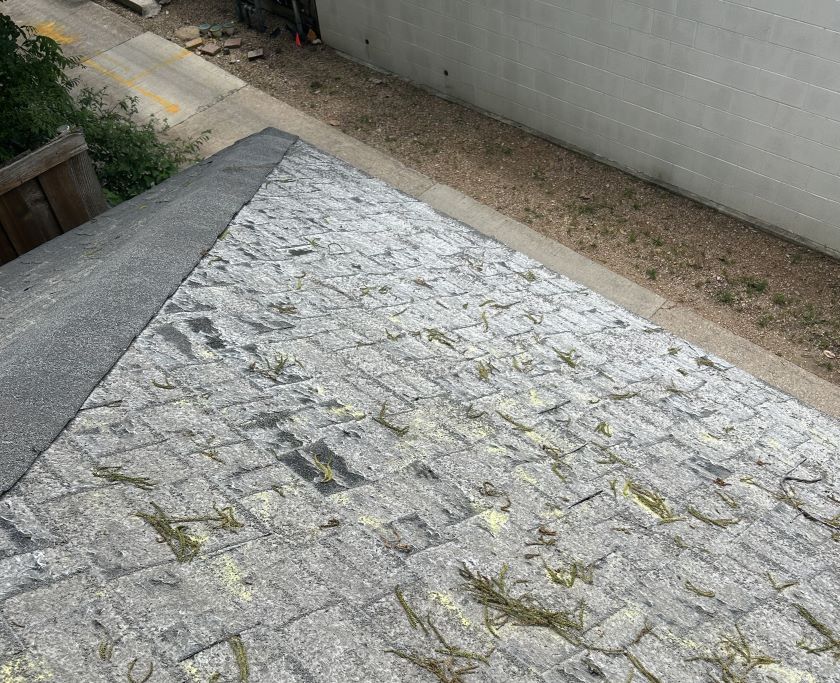
This type of roof damage is called granule loss, and it can be caused by prolonged hail damage, wind damage, or just normal wear and tear, but it is definitely … not normal. In this case, it looks like the roof either always got hit on that side of the house or the owner decided to only repair the front-facing half for appearance’s sake, which is fine if you think of a roof like a hairstyle instead of one of the things that’s literally holding your house together.
Roof Replacement: What Not To Do
When we’re inspecting a roof, we always start here at the roof line to check for multiple layers of shingles. In most states, including Texas, you’re legally allowed to have only two layers of shingles on your roof. So you can get away with covering over a single layer of shingles one time, rather than replacing the roof (no one would recommend that you do that, but it’s legal).
You’d be surprised how many people do it repeatedly. But why is that bad, you ask? For one, multiple layers of shingles weigh a lot and put more stress on the roof supports than they’re meant to handle: i.e., your roof could cave in. Additionally, layers of shingles trap heat, which can become a fire hazard: i.e., your roof, your roof, your roof could catch fire.
DIY Roofing
When you’re staring at your large roof insurance deductible, it might be tempting to think about attempting the job yourself, but this is a poor choice for a few reasons:
1) It’s not safe if you don’t know what you’re doing;
2) The work is not insurable;
3) You’re decreasing the value of your home by putting an unlicensed, uninsured, likely unprofessional-looking roof on it. What money you save by not using a pro, you’ll lose when it comes time to sell.
I know some of you will get hail damage this season and will think about getting up there and slapping a new layer of shingles on yourself (or maybe just fixing up the front side). I feel your pain. That deductible tanked my summer fun budget and then some a couple of years ago. But if you can swing it, take into account that a new roof adds considerable value to your home, and it’s work that is best and most safely left to professionals. If you need a recommendation for a good, professional roofer, ask a home inspector or real estate agent. They will have worked with a pro that they know and trust.