
A New Vision for Downtown and City Hall From the Next Generation of Architects
Share News:

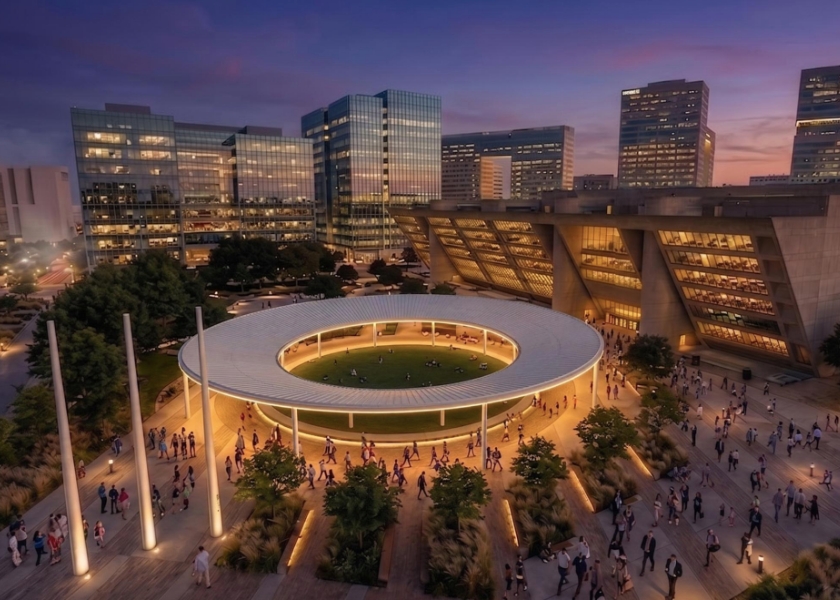
The open call for concepts for a reimagination of Dallas City Hall and the surrounding downtown area is officially closed, and one of the submissions getting a lot of buzz is the master plan designed by UT Arlington architecture students.
We touched on the plan in an earlier roundup, but more recently, we got a chance to speak with a bunch of the students and professors involved. More than just a school project or one of the hundreds (418, to be exact) of pitches city officials are going to field this month, what this group of seniors in UT Arlington’s College of Architecture, Planning & Public Affairs program came up with is a comprehensive, forward-looking transformation of south downtown Dallas.
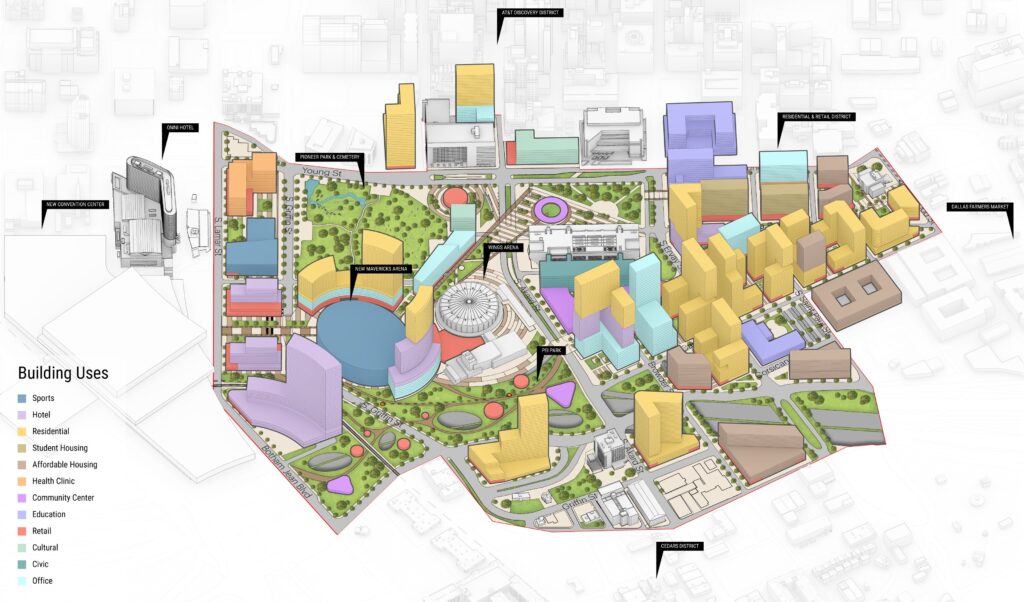
The semester-long project grew out of both timing and intent. As speculation began to swirl late last year around the future of 1500 Marilla St., a potential new Mavericks arena, and the broader direction of the central business district, architecture professors Eduardo Castañeda, Carlos Alba, and Jason Wheeler saw an opportunity for their students to enter an active civic debate. Through the open call for concepts, they were able to participate in shaping the future of a city some of them call home.
“It’s an important moment for Dallas, and I feel like it’s important to me specifically because it feels like part of my identity in a way, and I’m sure there’s other people that think that too,” said Christian Amaya.
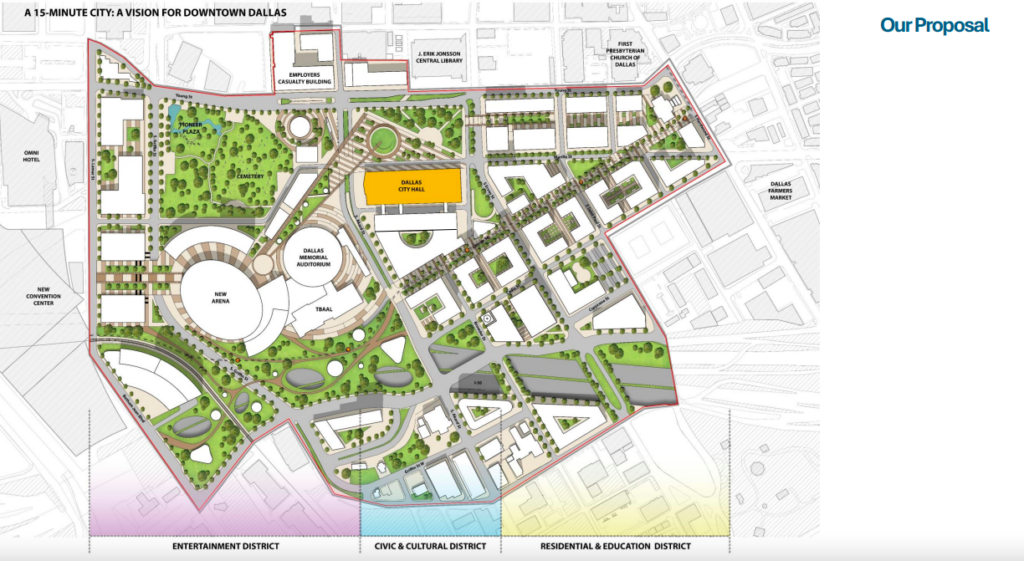
Their plan organizes downtown’s southern sector into three interconnected districts (entertainment, civic/cultural, and residential/educational) designed to create a more cohesive and active urban core in line with the 15-minute city concept.
“It’s basically having all your daily necessities — living, working, offices, entertainment, shopping — everything you need within a quick 15-minute walk or bike ride from your home, not necessarily relying on car dependency but more so public transit as well as walking,” said Abi Phuyal.
Variations of the concept have been embraced by city officials in the development of ForwardDallas 2.0, which envisions a very transit-oriented mix of land uses and high-density projects that reduce the need for surface parking and create a dynamic urban livability in the city center.
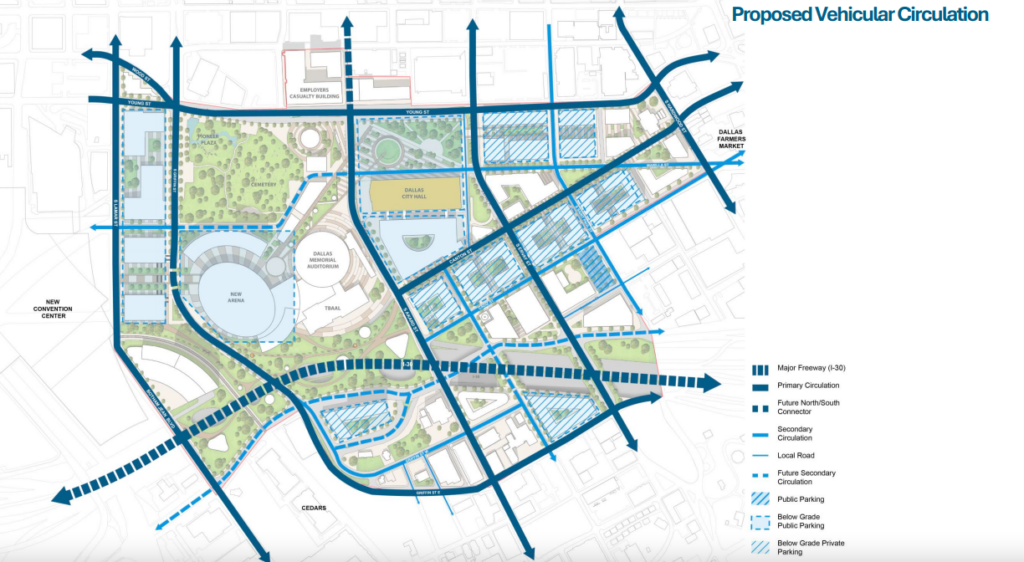
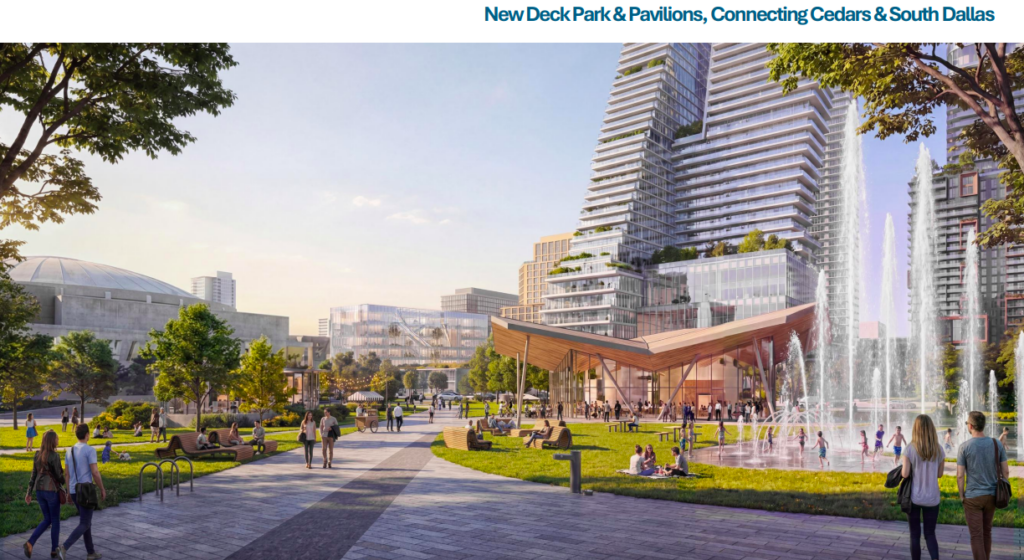
The students’ plan recognizes the organic shift away from office concentration, betting instead on residential development. It calls for a mixed-income residential and education district with a new college facility to grow a permanent population to support a 24-hour economy of retail, dining, and recreation in the neighborhood. The plan also includes a green loop to facilitate walkability across the districts and a green park deck over I-30 that would create a bridge to The Cedars and South Dallas — the kind of urban integration officials have been hoping to achieve.
“We see a lot of developers talking about this, that it’s no longer just [office],” Castañeda said. “You have to revitalize by putting up residential. You have to basically move people in.”
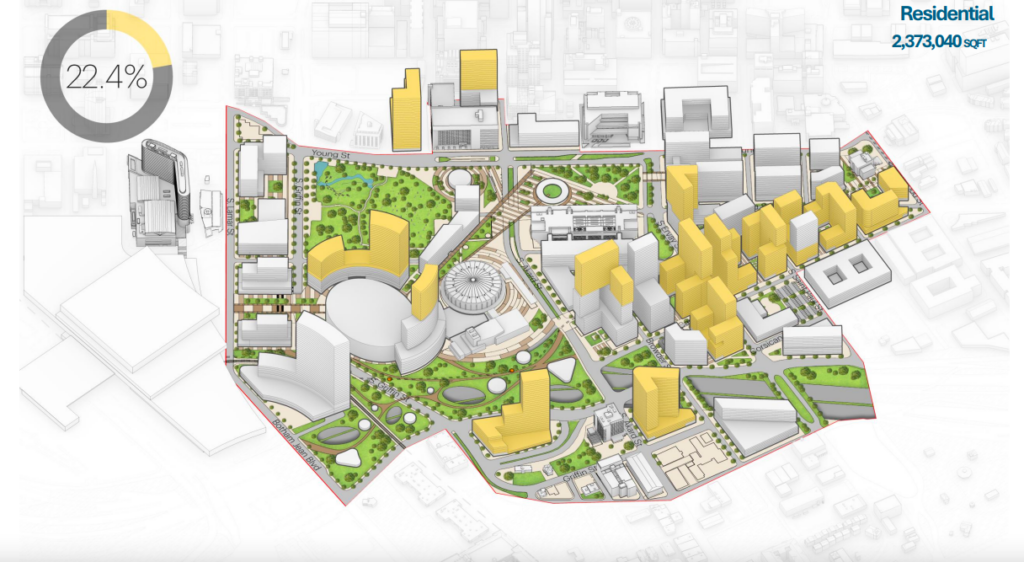
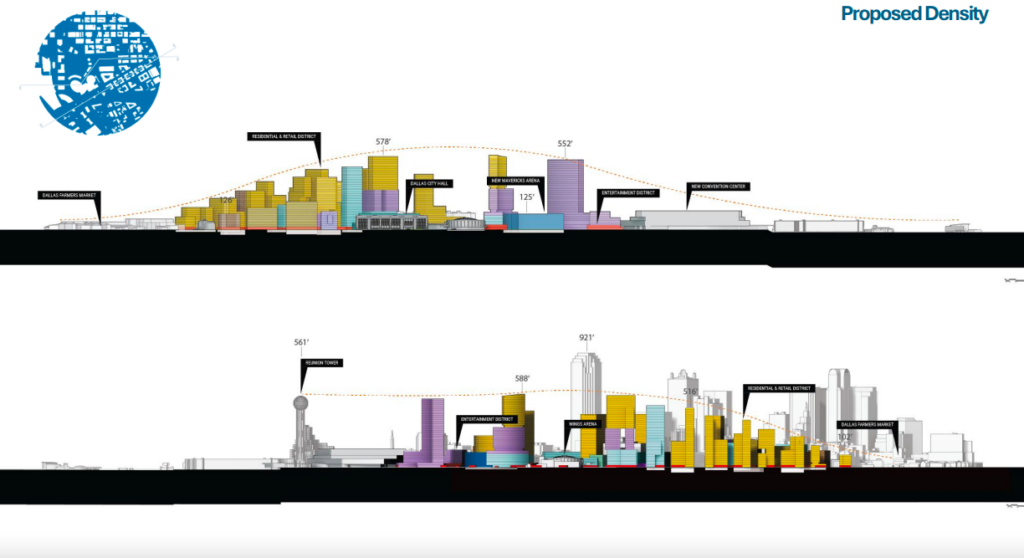
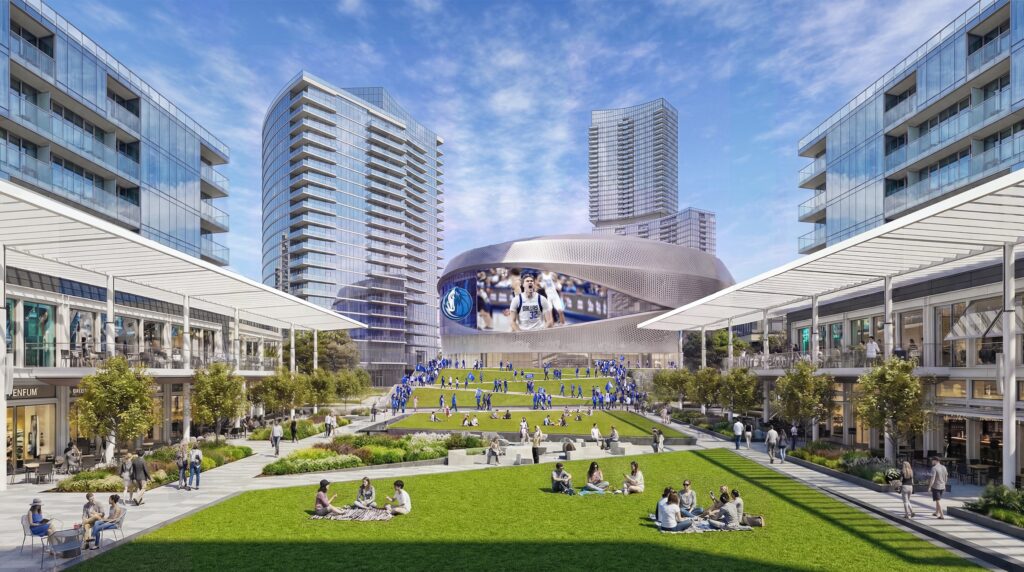
The plan also refuses to take the bait of an either/or framework pitting the I.M. Pei-designed City Hall building against a new Mavericks arena. Instead, it plants the arena between Dallas Memorial Auditorium and the Kay Bailey Hutchison Convention Center redevelopment, laying out new plaza space and community activation zones from the AT&T Discovery District on down to South Lamar Street. The idea is to maintain activity outside of game days.
“It might be nighttime or 2 or 3 p.m. and people can come and enjoy it,” said Isaac Cabrera. “Kids, families can come enjoy all these different amenities rather than just the arena itself … places where people can go on non-game days and keep this area alive rather than it just dying like we see in some other entertainment districts.”
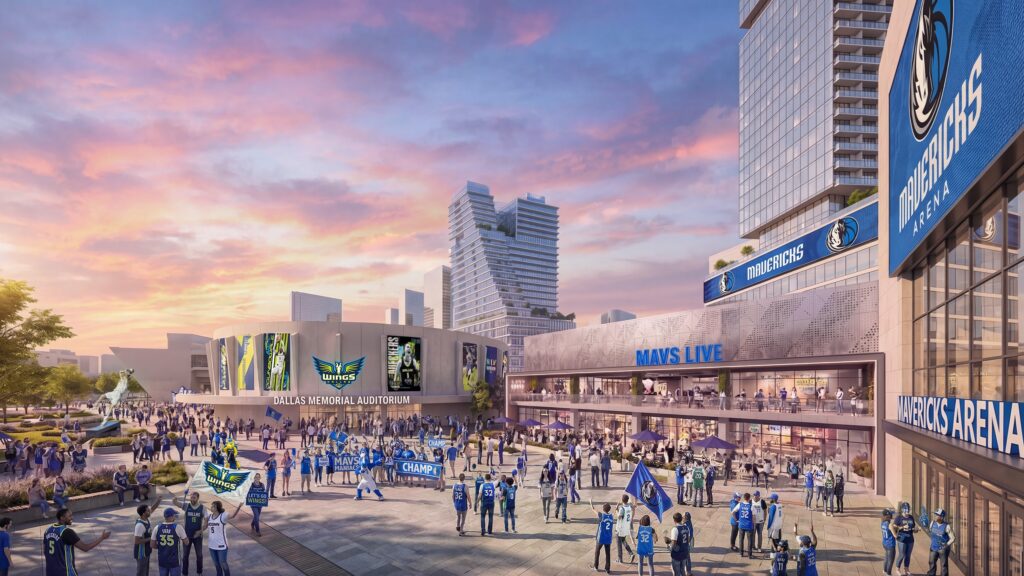
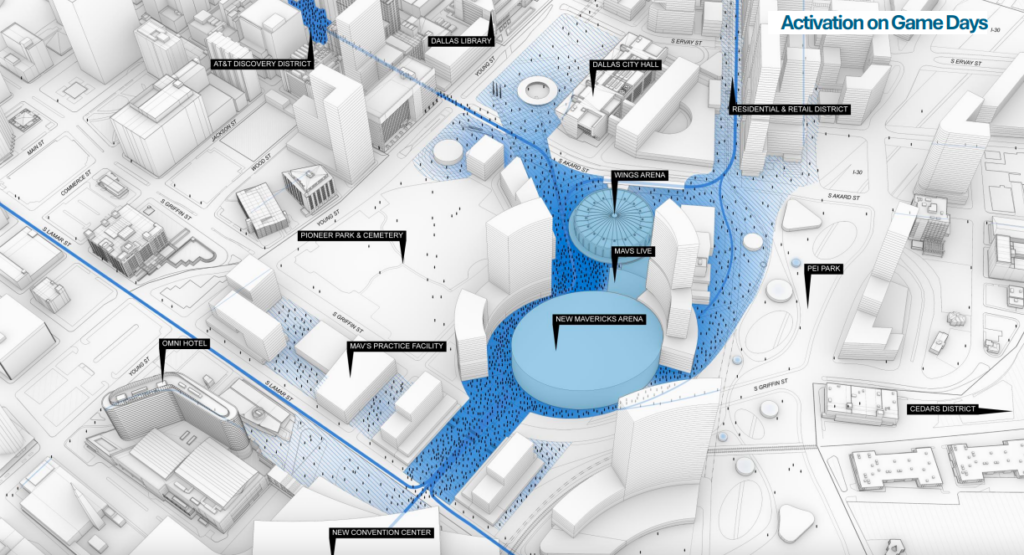
A lot of research went into the project, with the students studying master plans from other big cities. The area around London’s Wembley Stadium was particularly instructive.
“It works extremely well, and it’s something that we looked at that could be very, very vital here in downtown Dallas,” said Michelle Estrada. “It’s what we need to stitch our city together and reimagine and reactivate the area.”
The Mavericks have submitted their own plan to the city for a 50-acre entertainment district anchored by the new arena. It’s widely assumed the team’s proposal calls for the demolition of 1500 Marilla St.
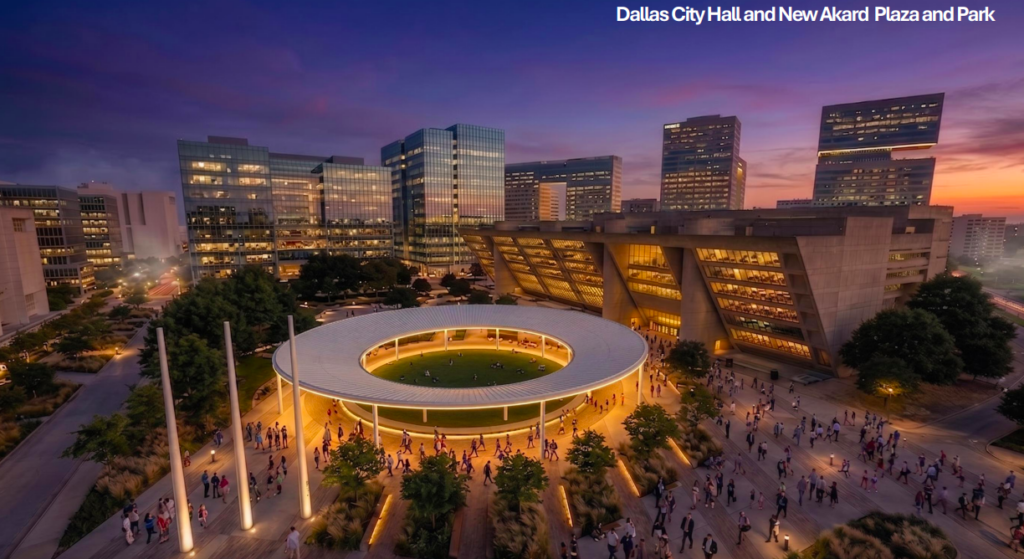
Being architects and design professionals in training, it’s probably no surprise that the students want to keep the iconic Brutalist structure standing. But that doesn’t mean they don’t see improvements that need to be made — aside from the needed structural repairs. They want to see an extension built out over the surface parking behind the building (a space I.M. Pei intended for expansion) as well as a community center for quality-of-life amenities city employees could enjoy. There’s also the matter of Akard Plaza out front.
“As it is right now, people don’t like to visit the plaza because it’s open concrete,” said Manuel Ortega. “It’s really hot in Texas. People would rather just pass by and walk to AT&T Discovery District, not only because it’s shaded — that space is activated.”
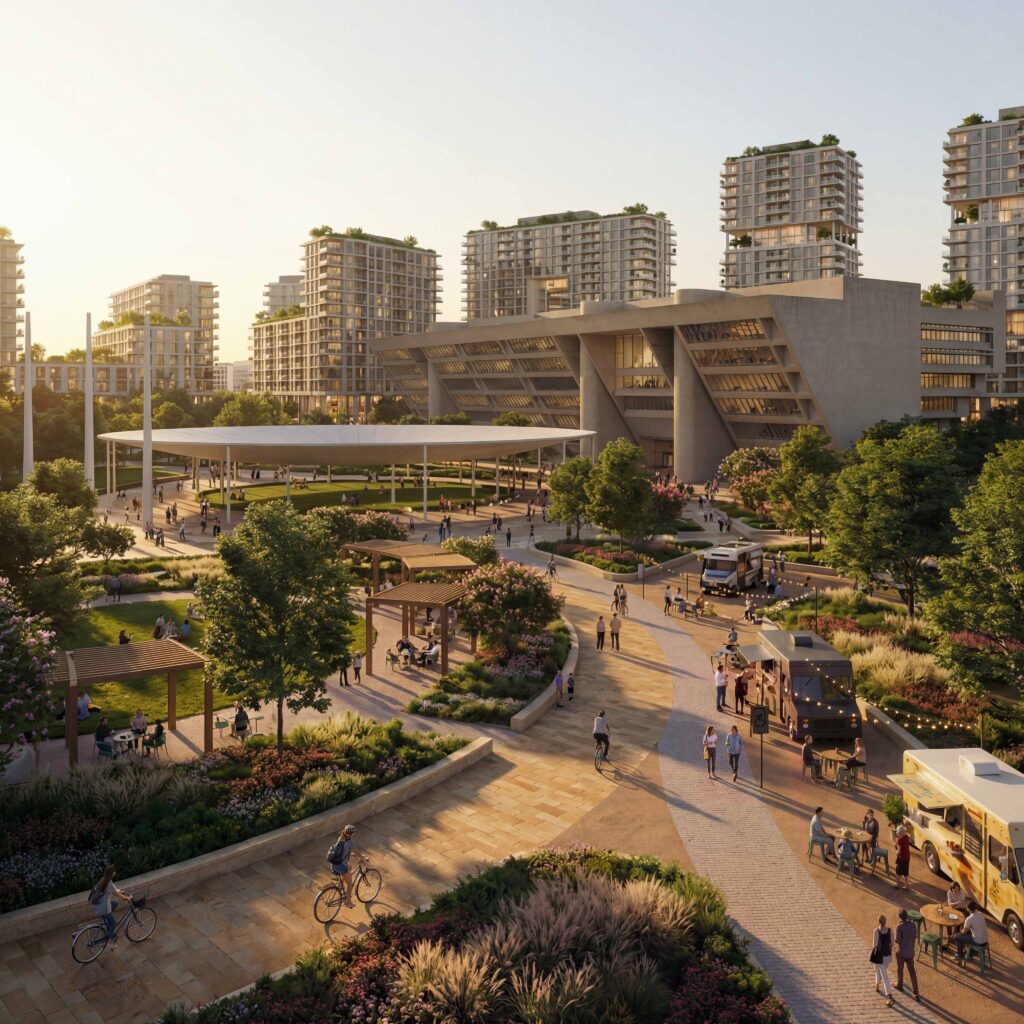
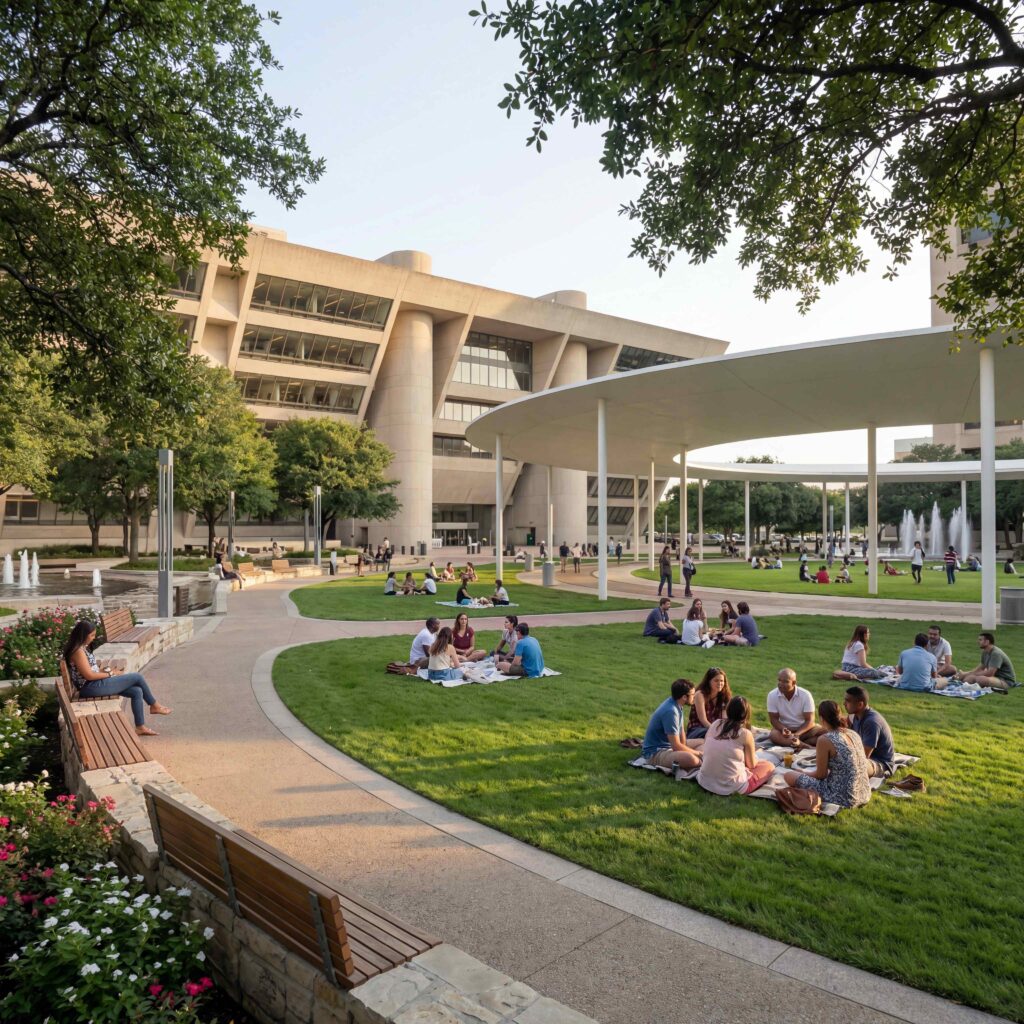
The deployment of green space, vendors, and well-situated shading could give city workers and neighborhood residents reason to enjoy lunch out on the plaza and take in architecture.
“We wanted to keep [City Hall]. It’s part of preserving Dallas history,” said Khalia Jackson. “We also didn’t change the urban fabric of downtown too much. We kept to the blocks. We kept the streets the same and tried to work around what’s currently there, because we don’t have to completely start over in order to bring a better future to downtown.”
Using industry standard technology and modeling techniques, the students got a lot of hands-on experience developing their plan. They also got a chance to meet with city officials and stakeholders like Downtown Dallas, Inc. to get feedback as they worked.
“I think a lot of the inspiration that we got to keep going throughout the semester is that the project is real,” said Daniel Maldonado Orozco. “It’s not something that is conceptual in another city. It’s right in our back yard. This is what we’re saying we want for our city.”
The UT Arlington CAPPA students’ plan is being submitted in partnership with the Ten Presidents, a group of past AIA Dallas presidents who have been submitting their own white papers arguing for the restoration of 1500 Marilla St. The Ten Presidents drafted an economic report on the potential impact of the plan.
“It’s the real deal,” said Alba. “We’re excited because this is a very serious proposal to the city.”
The city is currently reviewing all the submissions it received, making sure to remove applicants’ legally protected personal information before posting the proposals to a dedicated webpage. City Manager Kimberly Tolbert said all the submissions will be publicly accessible by May 14.
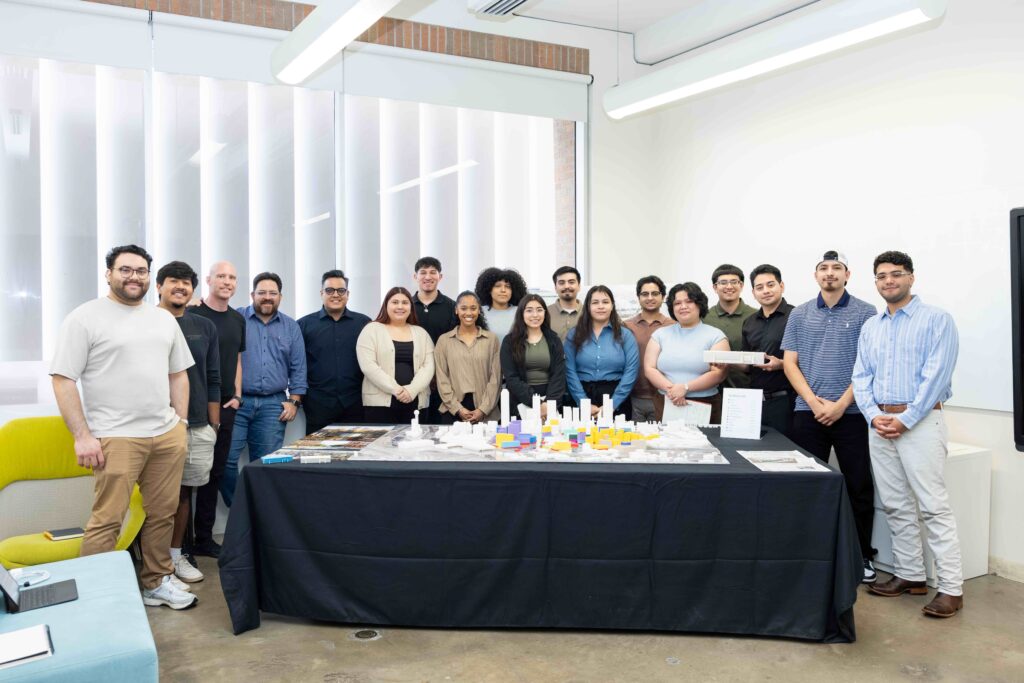
Students: Christian Amaya, Isaac Cabrera, Michelle Estrada, Khalia Jackson, Mariana Lopez, Juan Martinez, Lorenzo Najera, Daniel Maldonado Orozco, Manuel Ortega, Abi Phuyal, Deidre Pomare, Alexander Reyes, Paulo Ruiz, Rhea Joanne Marie Tabora, Angelica Villasana
Adjunct Professors: Eduardo Castañeda, Carlos Alba, Jason Wheeler


MTGDGA (Make The Government District Great Again)! Arena, residences, shops, restaurants, and our Great City Hall as a Crown Jewel, newly REVAMPED and SPRUCED UP.
I was lucky enough to attend the presentation at AD/EX by these brilliant students. In my opinion, we need to be led by this generation as the decisions made now, affect them and their children the most. This plan should be adopted in full.
I am so glad to see an article on this, and that this plan is getting attention. I earnestly hope it gains traction. IMO this is the plan to be promoted. In fact—when asked for citizen’s input, my response was . . . I can’t do better than this. It is a WIN-WIN!
AGREE!
This makes me sooooo happy to see!! This merges respecting history and preserving it while also moving the City forward into the future, developing it into a more walkable and enjoyable downtown environment. I’m a local realtor and get asked for walkable neighborhood recs and there just are not many options. These students are brilliant and I truly hope their plan is chosen and implemented. Kudos!!!!!
The students have taken what exist and enhanced it more than most of us imaged. The students have truly reimagined our horizons beyond our dreams.
Great Job! to all the students. Than you!!! Your dream to reality is obtainable for sure. The reason is its civic inclusiveness.
Dallas City Hall Dallas Federal Reserve and Fountain Place are all IM PEI Foot print that defines the refined city
Great work – Bravo to the Architects and I remind City Council – everyone is now watching!
Listen to these students! These are a whole host of really wonderful ideas from them! Keep the City Hall Pei building and do all of this! I especially love the green loop and the ideas that will keep anything new from being a deadsville wasteland when it is not being used. Bravo to all of them! 🙂
Now that’s a plan! Bravo! It respects our heritage yet moves Dallas forward from stale to vibrant!
I love it moving Dallas into the future, keep up the good work,
I have been saying since the City Hall controversy started that the City Hall plaza space is a concrete jungle, dead space that needed to become a park. Duh.