
Texas Renters Gain Leverage as Multifamily Vacancies Rise
Share News:

The Lone Star State’s multifamily market is competing to lead the nation in rent correction, with apartment renters gaining leverage as vacancy rates tick up and units stay on the market longer.
Reliable Cash Home Buyers put together a renter leverage index using apartment listing metrics like vacancy rate, time on the market, and year-over-year rent changes. Analyzing data from January, it looks like Texas is at the center of a shift in the market, with new supply driving things in favor of renters.
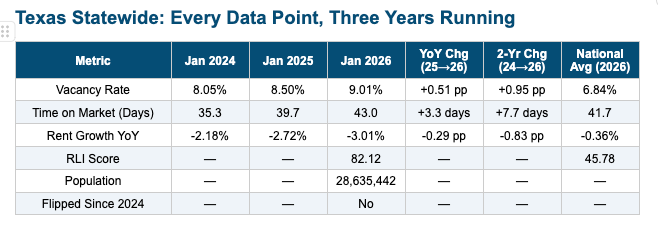
The state had the second-highest vacancy rate in the United States at 9.01%, with rents falling three years in a row for the month of January. It was also the only state with four metros in the top 13 of the renter leverage index.
“No state has more skin in America’s renter power shift than Texas,” reads the Reliable Cash Home Buyers report. “With nearly 29 million residents, four of the country’s largest metros, and a building boom that has flooded the market with new apartments, the Lone Star State is ground zero for the correction that is handing tenants leverage they haven’t had in years.”
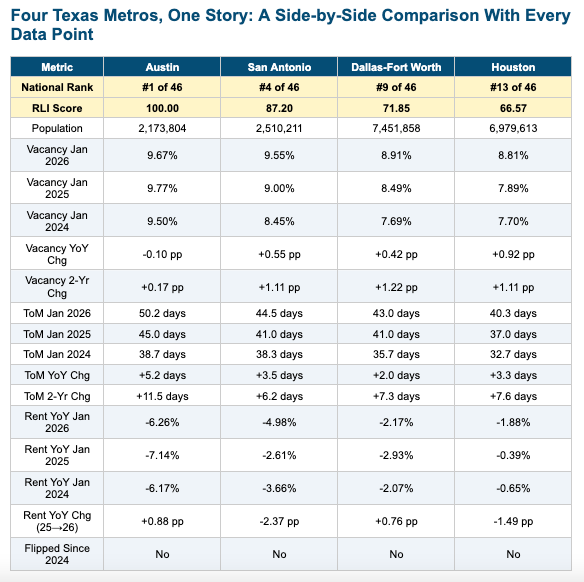
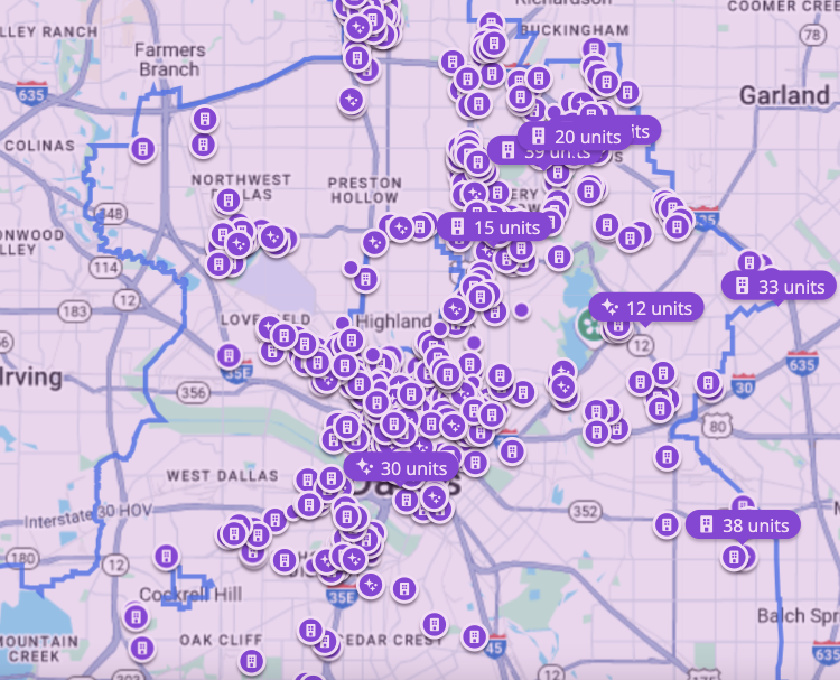
D-FW came in at No. 9 in the nation. The January vacancy rate was at 8.91%, rents were down 2.17% year-over-year, and units stayed vacant 43 days on average. Officials in Dallas proper brought up the vacancy rate during a recent briefing on the city’s housing needs, with some questioning whether residents are still facing a housing shortage.
Housing advocates and staff argued Dallas is underbuilt when it comes to multifamily units for lower-income residents, putting the number at around 46,000. Significant population growth, rising living costs from inflation, and a surge in mostly market-rate development has purportedly left many renters cost-burdened across the city.
Some council members, however, have questioned whether proposed policy solutions (supporting more mixed-income and affordable unit production and expanding assistance programs) are really the answer, especially when some neighborhoods have higher vacancy rates than others and properties with naturally-occurring affordability.
As for the other big Texas metros, Austin landed the top spot at No. 1, clocking a vacancy rate of 9.67% and a year-over-year rent decrease of 6.26%, with units taking just over 50 days on average to lease. San Antonio’s metro came in at No. 4 with a vacancy rate of 9.55%, a rent decrease of 4.98%, and 44.5 days on market. Houston placed No. 13, logging an 8.81% vacancy rate, a 1.88% dip in rents, and 40.3 days on market.
“Texas is the biggest story in the national renter leverage conversation — not because one metro is struggling, but because the shift is happening across every major market in the state simultaneously,” said Jake Stoddard, owner of Reliable Cash Home Buyers. “When all four of your metros are posting falling rents and above-average vacancy, that’s a structural correction, and renters across the state should be negotiating accordingly.”