
From Pool Parties to Protests, Dallas City Hall Was Designed for the People
Share News:

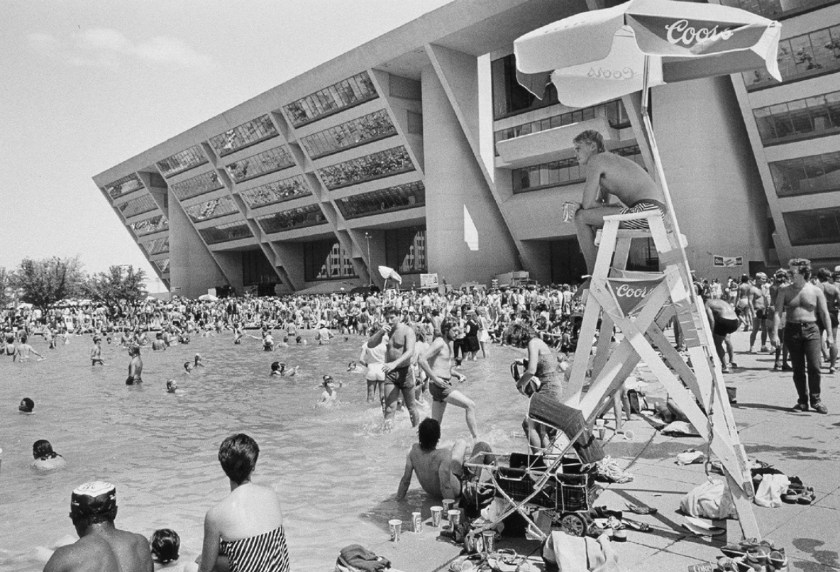
In the summer of 1984, Dallas City Hall briefly traded its stately civic gravitas for something unexpected — 42 tons of sand.
With beach volleyball courts, sandcastle building competitions, and a Beach Boys cover band, 1500 Marilla became the memorable site of “Summer in the City,” a Muscular Dystrophy Association fundraiser sponsored by KZEW-FM “The Zoo” and the Coors Brewing Company. About 12,000 partygoers packed into the two-block plaza that had been transformed into a beach and massive 180-foot diameter swimming pool. With swimmers splashing around Marta Pan’s famous red floating spheres and finding shade beneath I.M. Pei’s sharply angled municipal building, Dallas City Hall became exactly what it was intended to be — a place where Dallas came together.
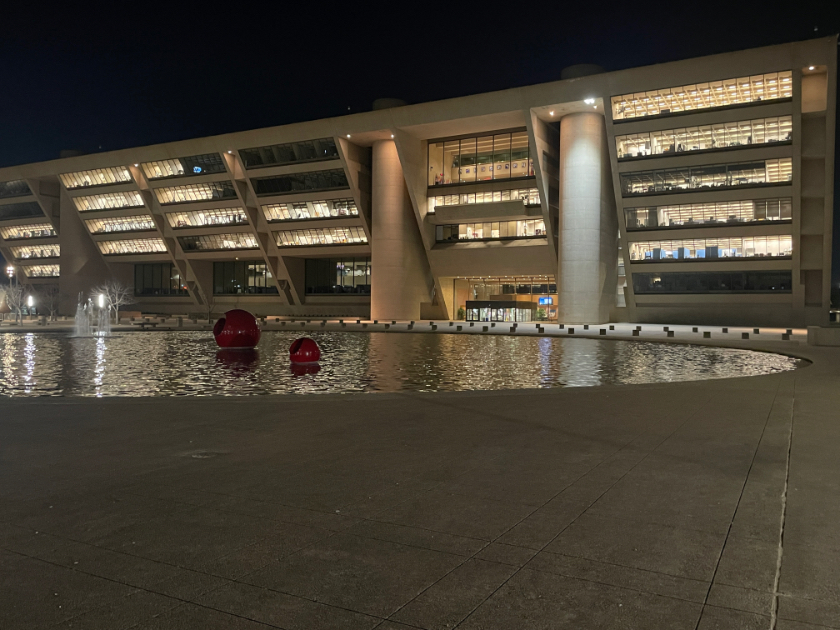
Stories like this surfaced during Preservation Dallas’s latest InTown Outing last night, which launched with a sold-out City Hall tour led by Marcus Watson, chief planner at the Office of Historic Preservation. After gathering on the historic plaza, Watson walked attendees through the historic and architectural significance of the award-winning I.M. Pei-designed building, its surrounding plaza and park, and the many intentional design details inside and out that shape how the public experiences the property today.
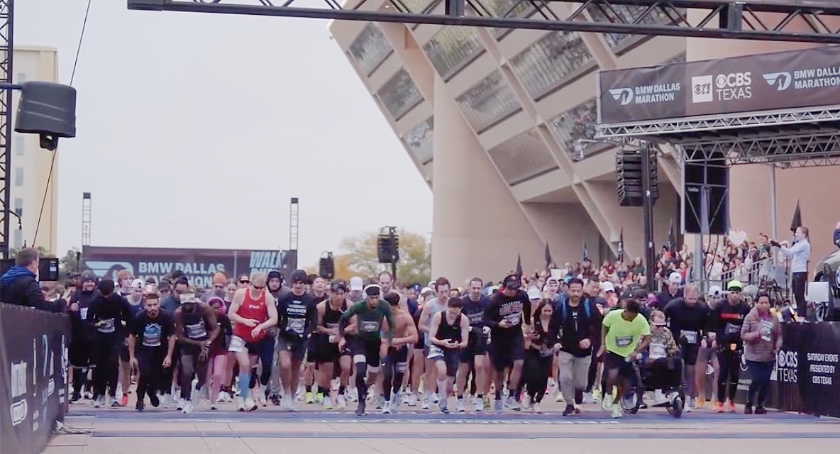
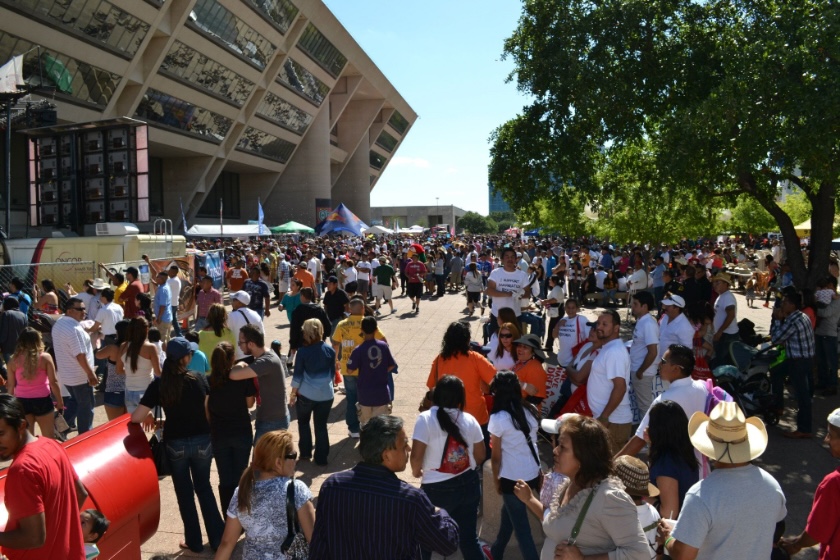
The 7-acre plaza was always central to Pei’s plan. It is divided, on an angle of course, with native trees and grass on one side and a large public square, reflecting pool, and fountain on the other. Three stylized 84-foot flagpoles anchor the right side of the plaza with a Henry Moore sculpture near the building’s left. Designed for the public as a gathering space, the plaza continues to fulfill that purpose, regularly hosting races, civic events, protests, and celebrations.
The building itself was dedicated on March 12, 1978. Created from cast-in-place concrete, it stretches 560 feet long, sloping outward at a 34-degree angle. Pei intended the structure to project transparency and lean toward the people, rather than tower above them. Each floor is about nine feet wider than the one below.
According to Pei, Cobb, Freed & Partners, the building has both a “symbolic and logical function,” noting that “…the boldly horizontal building, designed in deliberate contrast to surrounding highrises, makes City Hall inseparable from its official life and functions.” Pei continued the transparency theme by incorporating a vast number of windows that offer a look in and flood the interior with light.
Sitting on 11.8 acres, the building contains approximately one million square feet, with 374,000 square feet of usable office space and two underground parking levels for 1,426 cars, according to the city’s website. Public spaces include the Council Chamber, Flag Room, and Great Court.
The path to completing Dallas City Hall was lengthy. Planning began in 1964, when a search committee selected Pei as architect. Pei is also renowned for designing the John F. Kennedy Library in Boston, the Louvre pyramid addition, and Dallas’s Fountain Place and Morton H. Meyerson Center. Altogether, the process from planning to dedication took 14 years.
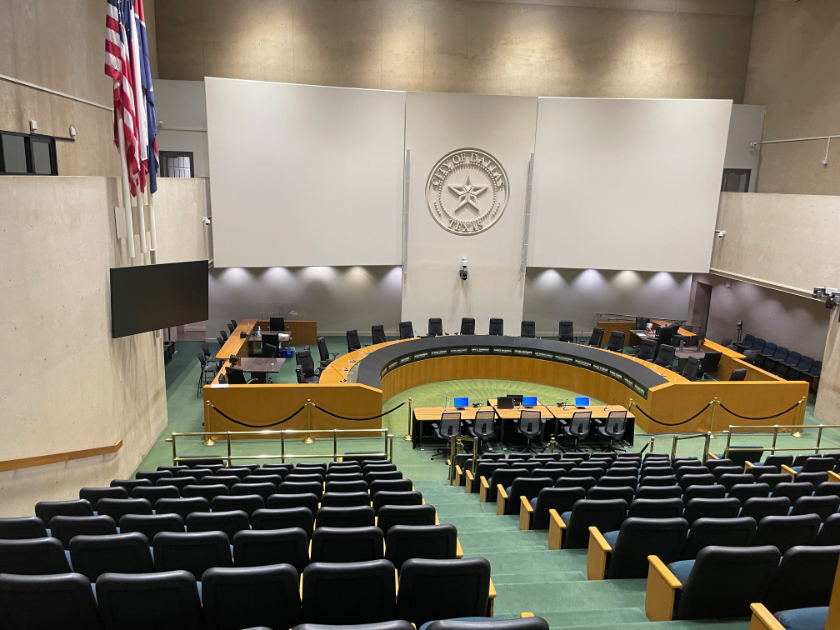
From the massive 250-foot-long Great Court with a vaulted ceiling about 100 feet high, to the three-story City Council Chamber, which seats 250 people, the building’s interiors are dramatic indeed. When the building was finished, it had 1,400 workstations but very few floor-to-ceiling walls. Instead, partitions measuring 5 to 7 feet high created separate workspaces that allowed light to flow throughout the building and offered everyone a view.
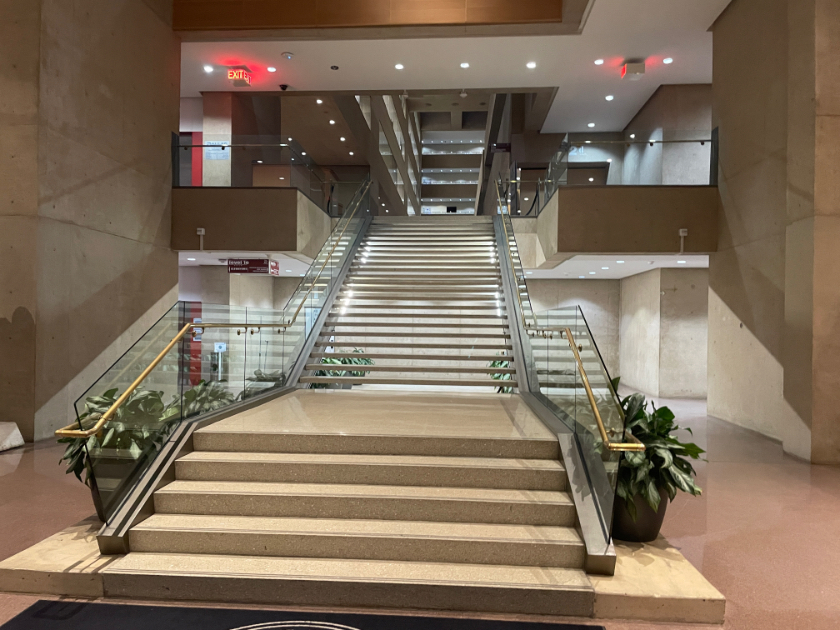
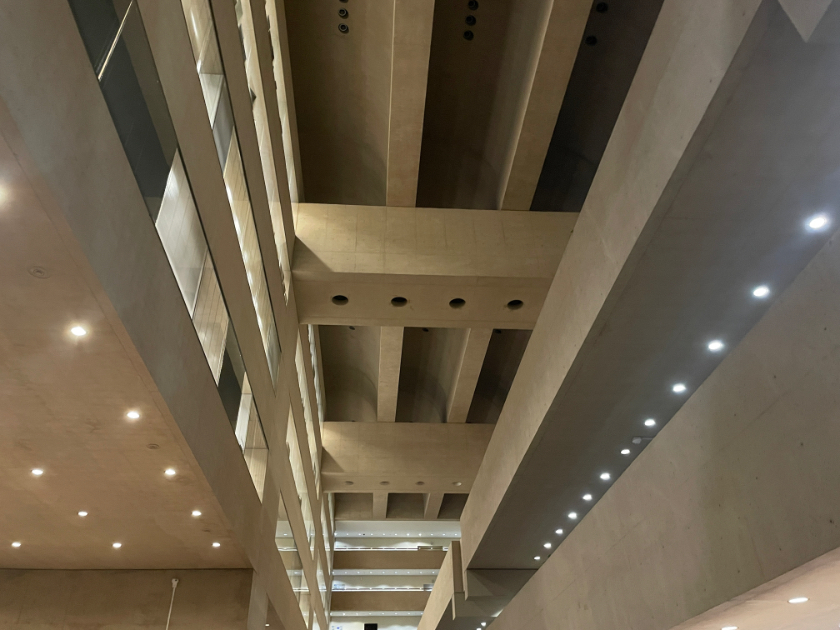
The public building is grand in scale and intention, significant architecturally and historically, and continues to serve Dallas residents and staff daily. For those who have never stepped inside this iconic Brutalist building, public areas are open for exploration and offer an awe-inspiring at Pei’s vision.
Nearly 50 years after its dedication, the Dallas Landmark Commission began the process to designate City Hall as a local landmark. It places a two-year moratorium on alterations without commission approval, ensuring Pei’s iconic civic structure remains protected as the city continues to grow around it.
For more information on Preservation InTown Outings consider becoming a member!






Good little bio for this great building, Karen!
The Mexican Food Tasting Festival of Dallas, the summers of ’84,’85 and ’86, saw 30,000 Dallas residents enjoying food served by 20 locally-owned Mexican restaurants, live Tejano musicians like Johnnie Rodriguez, artworks, and dancing – all supporting the redevelopment of Little Mexico. On the Plaza, a marvelous public space.
It’s a pretty cool building. My vote would be to repair and modernize, not just keep chugging along. Definitely could use a lot of quality of live improvements. And for god’s sake get some shade out on that plaza!