Dallas Renters Get a Little Relief as Apartment Competition Eases
Share News:

Things can change in just a matter of months, and that was certainly the case in Dallas’ rental market heading into the summer. While affordability remains a problem for many, apartment hunters in the Big D had an easier time finding a unit than they did last year as new supply and slower leasing activity eased competition.
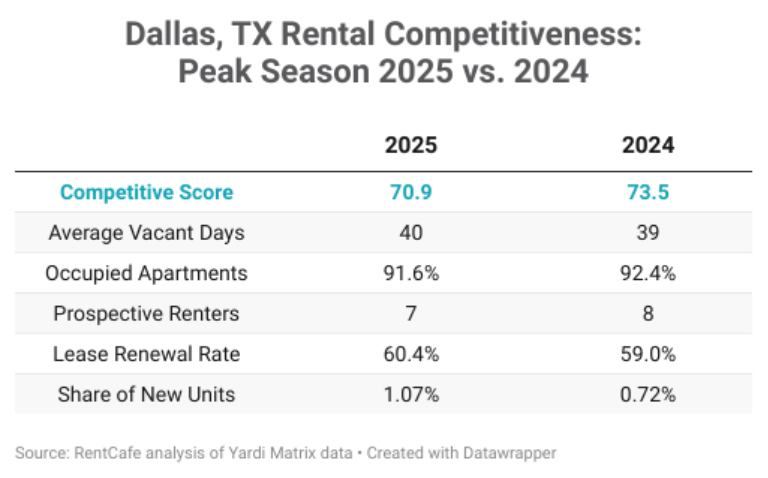
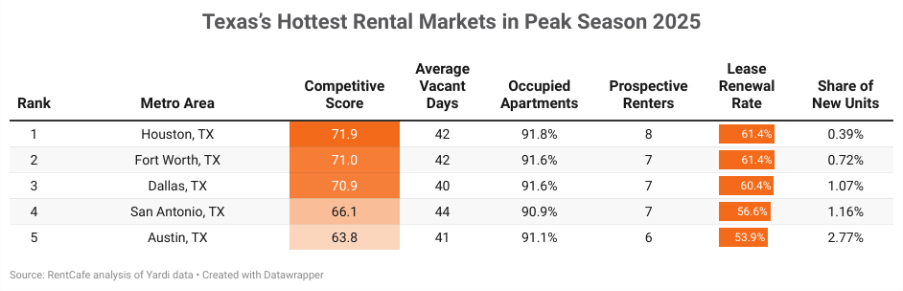
RentCafe’s quarterly Rental Competitiveness Index found that the Dallas metro’s score (not the D-FW, mind you) fell from a 73.5 to a 70.9 year-over-year, ranking No. 51 out of 139 markets for Q2.
Apartments took an average of 40 days to lease, up slightly from 39 days last year, and each vacant unit attracted about seven prospective renters instead of eight. Meanwhile, occupancy dipped to 91.6%, down from 92.4% in Q2 of 2024.
New construction helped ease the pressure, too. Apartment stock grew by 1.07%, out pacing Q2 2024’s 0.7% expansion.
Most renters stayed put during the quarter, with 60.4% renewing their leases for a small increase from 59% in 2024. On average, renters in Dallas stay in their units about two years, making the city one of the Lone Star State’s most mobile rental markets, according to another recent report by RentCafe looking at leases between 2018 and 2023.
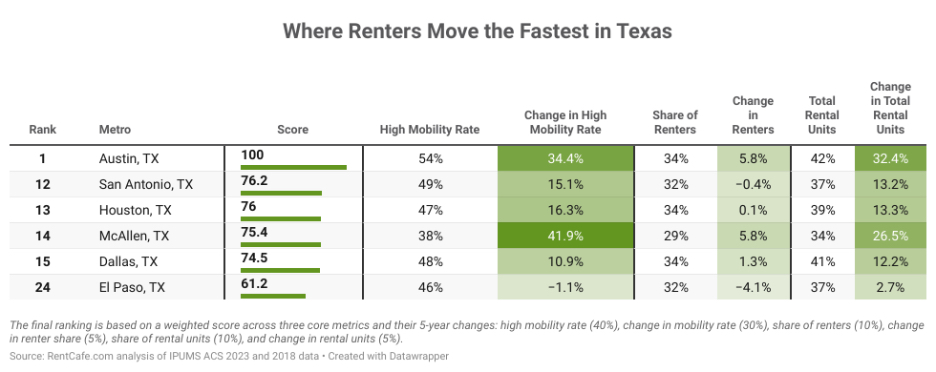
Dallas ranks fifth in Texas and 15th nationally among “move-easy” metros. Younger renters are driving much of the movement. Roughly 73% of tenants in Generation Z changed apartments within two years in 2023, compared to 53% in the case of Millennials.
Looking at the Big D’s standing among the five biggest rental markets in Texas, Dallas placed third for competitiveness behind Houston and Fort Worth. In Q1, Dallas ranked second only behind Houston.
RentCafe’s data was sourced from the property management software firm Yardi Systems, which pulled information from 139 rental markets across the United States. The research team specifically reviewed rental market data from market-rate multifamily properties with at least 50 units. “Fully affordable multifamily properties were excluded,” according to the study’s methodology.
Competitive scores were determined by five weighted factors during the second quarter of this year (April, May, and June): apartment occupancy rate, average total days vacant, prospective renters per vacant unit, renewal lease rate, and “share of new apartments completed during the same timeframe compared to the existing overall supply at the start of Q2 2024.”