D-FW’s Rental Market Is Still Competitive, Despite New Builds
Share News:

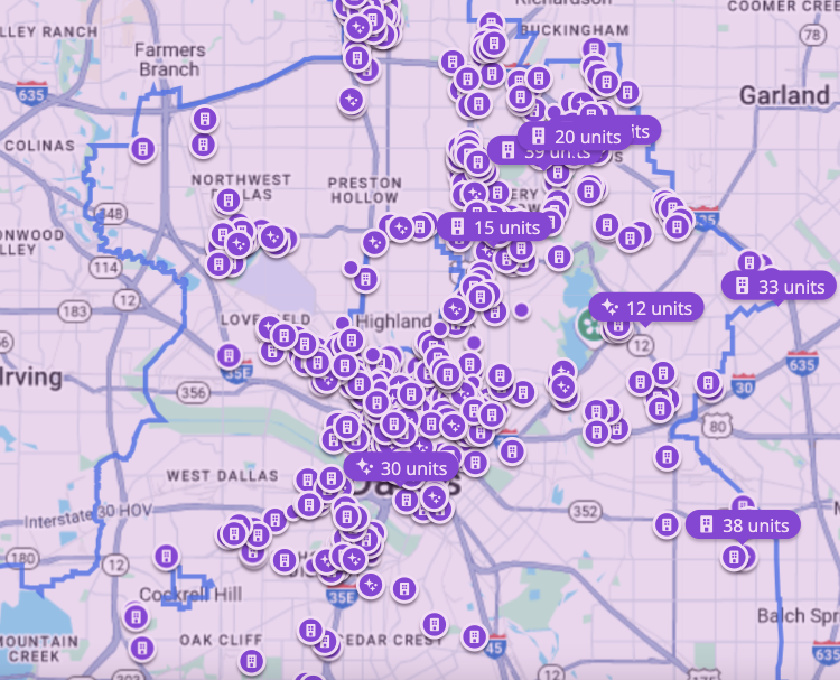
While some reports have suggested the delivery of more housing stock to D-FW over the last year has empowered consumers by giving them more options and negotiating leverage, a recent study by RentCafe shows there are still plenty of headwinds in the region’s rental market.
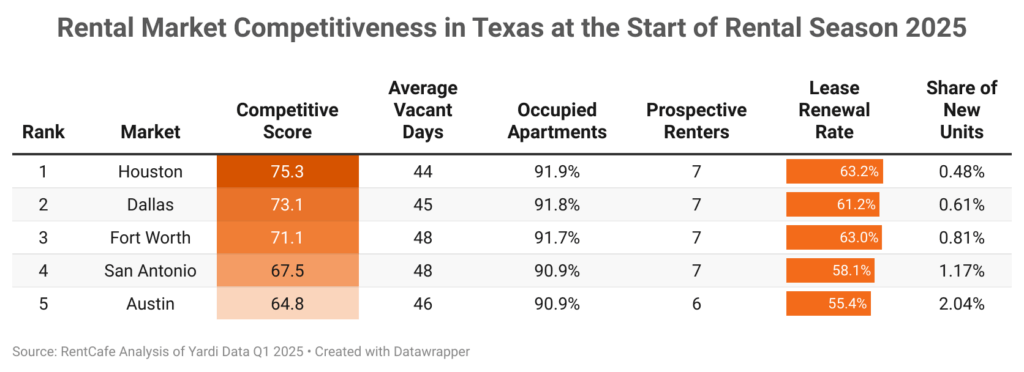
D-FW renters are actually dealing with one of the tightest housing markets in the Lone Star State. With demand rising, lease renewals up, and new apartment supply falling behind, Dallas and Fort Worth rank second and third, respectively, for the most competitive rental market among the five biggest metro areas in Texas, behind only Houston.
“Both Dallas and Fort Worth saw an increase in lease renewals, suggesting that renters in these areas are increasingly satisfied with their current apartments and are eager to lock in existing rates for longer,” said RentCafe writer and research analyst Veronica Grecu in a statement to CandysDirt.com.

The renewal rate in Dallas increased from 56.8% to 61.2% year over year. Fort Worth’s renewal rate ticked up, albeit not as much, from 61.4% to 63%. Grecu went on to note that the average length of stay in a Dallas apartment is pretty high at 23 months.
“With many renters having moved into newly built apartments in the past two years, fewer are looking to relocate now,” she said.
Despite all the multifamily construction going on, the share of new units in Dallas heading into the rental season saw a year-over-year dip, with the city clocking a rate of 0.61% in 2025, down from 1%.
Grecu called the decrease a “notable slowdown.”
“When you combine that with a rising lease renewal rate and stable demand metrics across the board (like number of prospective renters per apartments), it signals a more competitive market ahead,” she said.
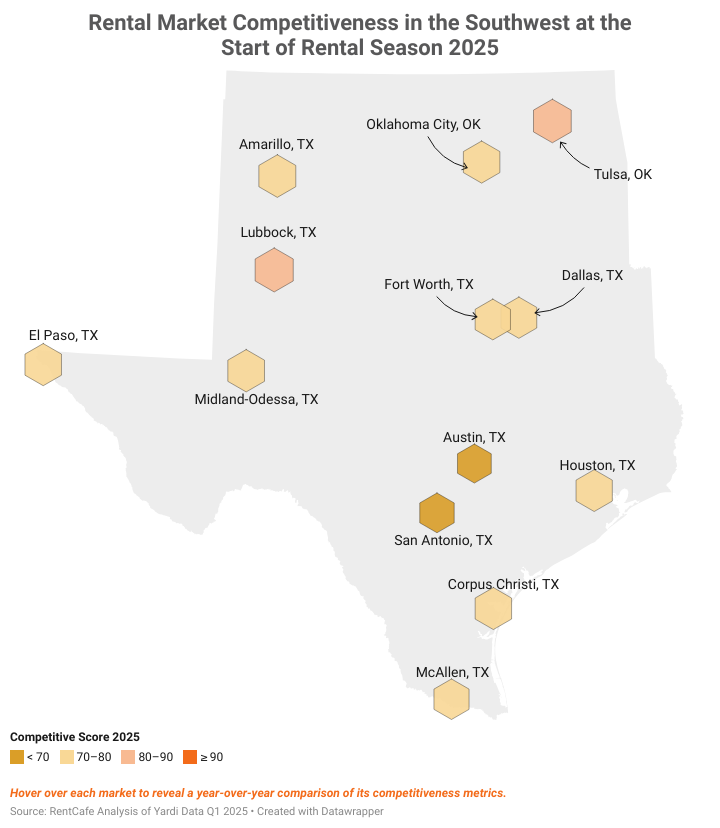
Looking at Fort Worth, some 0.81% of its apartment units were new heading into the 2025 rental season.
Still, while the D-FW’s two flagship cities ranked high for rental market competitiveness among Texas’ biggest cities, they actually ranked lower than smaller metros in the state. Dallas and Fort Worth were awarded competitive scores of 73.1 and 71.1, respectively. Meanwhile, Lubbock, Amarillo, Central Texas, Midland-Odessa, El Paso, and Corpus Christi earned higher scores.
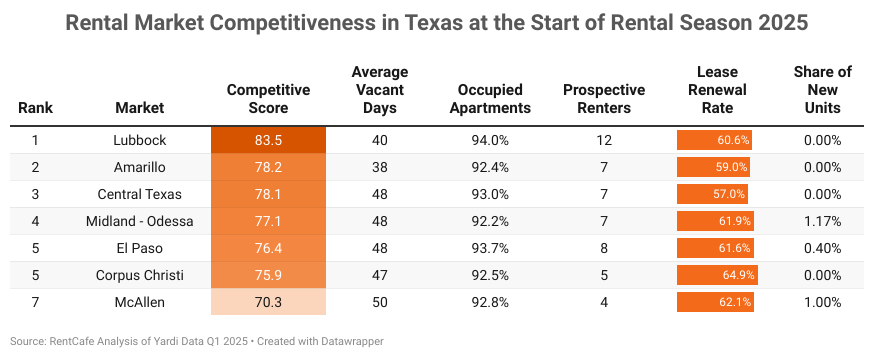
Zooming out even further, though, multifamily housing competition in Texas was lower than in other parts of the country.
“Thanks to the apartment supply added in recent years, rental markets in Texas remain more accessible compared to areas like Miami or suburban Chicago,” Grecu said. “As a result, even with increasing demand, no Texas metro areas ranked among the top 20 most competitive rental markets nationwide this season.”
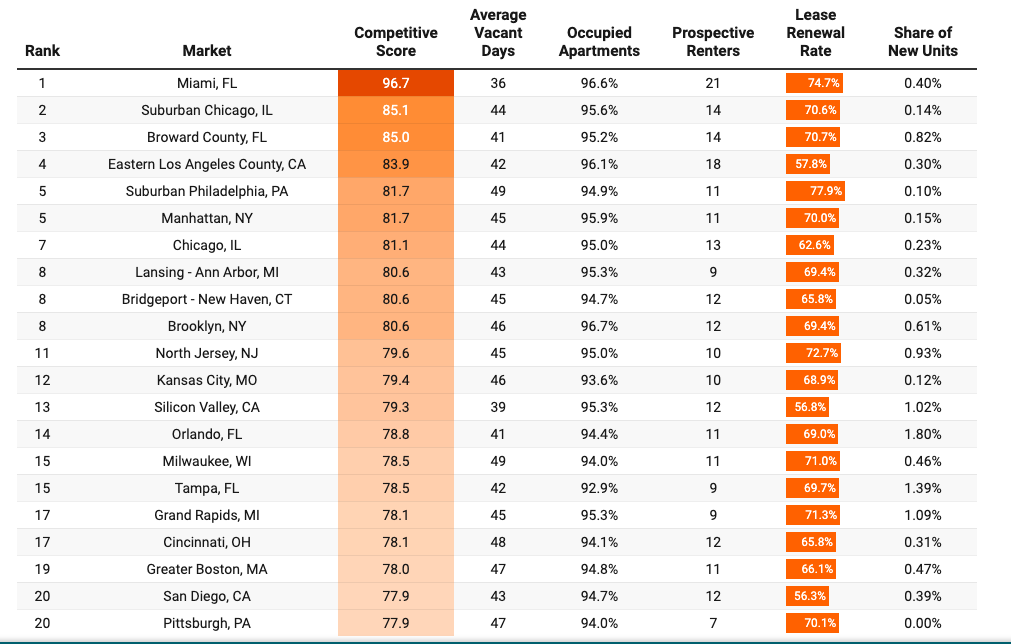
You can see how the rest of the country, broken down by regions and markets, stacks up against D-FW by reading the full study here.
RentCafe’s data was sourced from the property management software firm Yardi Systems, which pulled information from 139 rental markets across the United States. The research team specifically reviewed rental market data from market-rate multifamily properties with no fewer than 50 units. “Fully affordable multifamily properties were excluded,” according to the study’s methodology.
To determine competitive scores, RentCafe assigned weighted values to five factors during the first quarter of this year: apartment occupancy rate, average total days vacant, prospective renters per vacant unit, renewal lease rate, and “share of new apartments completed during the same timeframe compared to the existing overall supply at the start of Q1 2025.”