
Dallas Park Board Suggests Phasing Out Its Nine Legacy Pools
Share News:


A dramatic headline that has since been changed by the publication that published it has put a spotlight on the Dallas Park & Recreation Board’s recommendation to phase out the city’s nine aging community pools as part of a spending cut package requested by the city manager’s office.
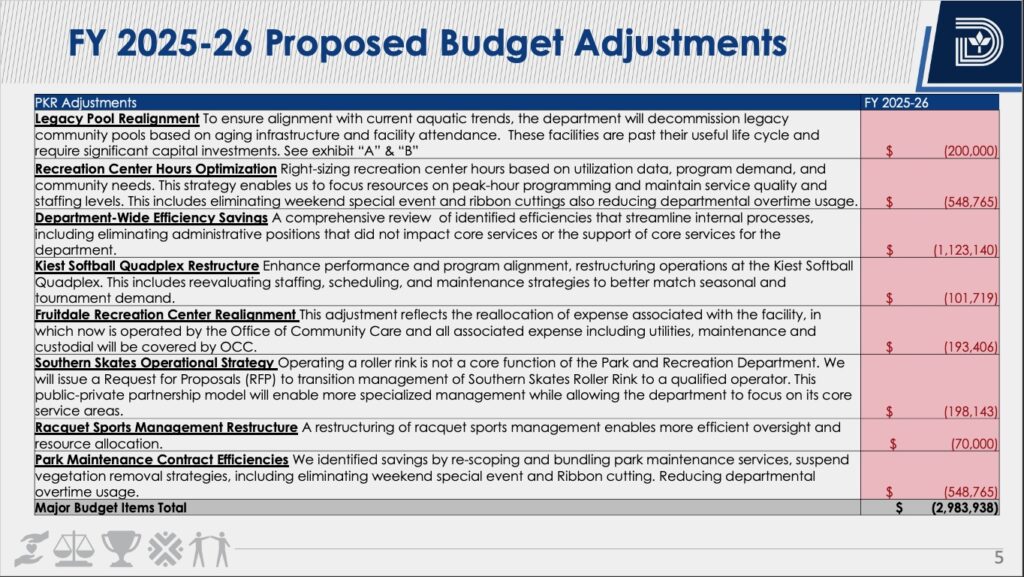
DPR has to come up with $3 million in cuts for FY 2025-2026 to share in the pain of offsetting projected declines in sales and property tax collections and help pay for increases in spending on police and firefighters. Each community pool that gets shuttered would save the city $100,000.
Staff said at a DPR board meeting on Thursday that the nine legacy pools on deck for decommissioning have all surpassed their shelf life by decades, with the oldest of them (Grauwyler) dating back to 1947. Apparently, the city doesn’t have an inventory of old parts for the aging facilities, making ongoing maintenance a costly endeavor. Left to their own devices, some of the pools might not even make it to 2026.
Three of the pools — Glendale, Grauwyler, and Walnut Hill — have clocked lower usage compared to 2023 in terms of both total season attendance and daily averages. While DPR’s board didn’t officially select them as candidates for closure this coming fiscal year, it wouldn’t be a surprise.
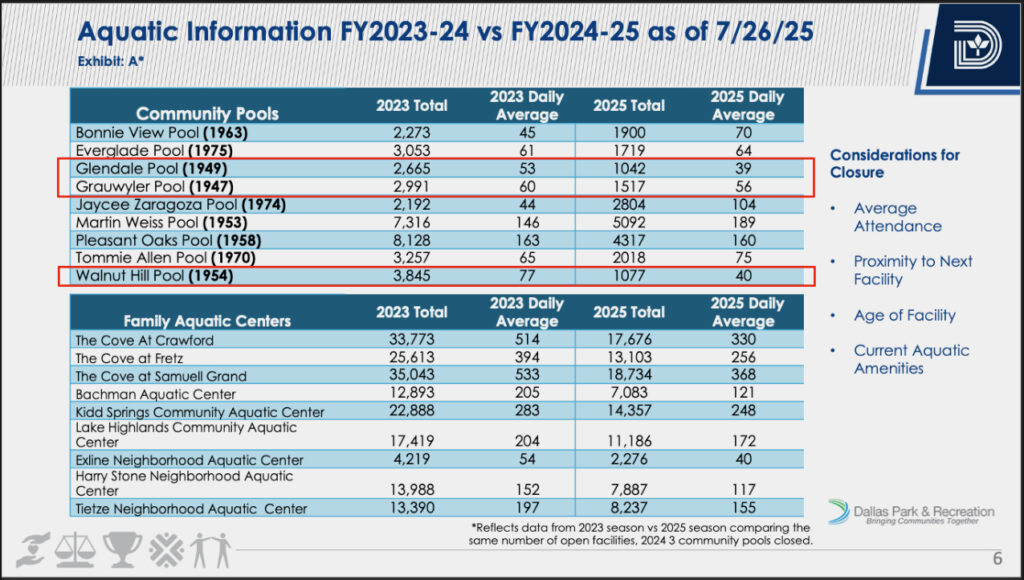
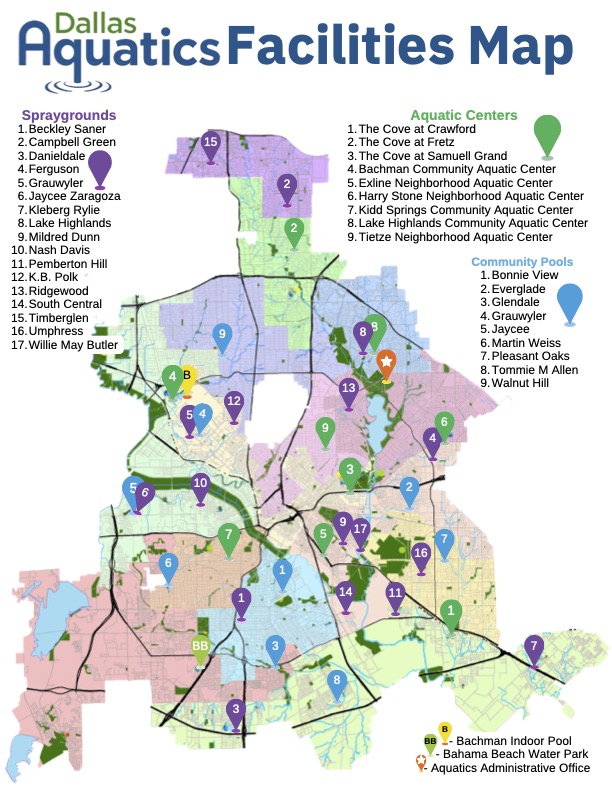
Board members expressed agreement during the meeting that it was time to sunset the legacy pools, citing the 2015 update to the city’s $75 million aquatic master plan. At present, there are nine legacy community pools, nine aquatic centers (all of which include a pool), and more than a dozen splash pads across the city’s aquatic portfolio.
“The consensus that we reached was let’s take three, go ahead and decommission them, then let’s create a phased approach,” said Rudy Karimi, DPR board member for District 14, speaking with CandysDirt.com. “It could be three this year, it could be two next year, it could be three next year, or it could be four — those things aren’t set in stone, but we ultimately do need to close all nine of these legacy pools, I’d say definitely before the next bond cycle.”
Council members will have the final say when they approve a budget next month. They may agree with DPR’s recommendation of a phased approach, but some could push to shutter all nine at once.
Karimi said he understands how painful it might be for residents who patronize the longtime neighborhood fixtures. It’s why he vocally defended keeping them open last year. Now, given the city’s budget situation, hard choices have to be made.

“We wanted these to keep surviving for as long as humanly possible, but when we look back at the timetables, they realistically should have been decommissioned 20-plus years ago,” he said. “The fact of the matter is this park department, the leaders that we have, they kept these things open because they understand the value to the community despite their age.”
For literally generations, the pools have provided residents with affordable summer recreation, a safe place for kids to cool off, and a hub for neighborhood life — especially for those of modest means without access to private clubs or backyard pools.
One resident summed up the neighborhood cost of the decommissioning better than I could:
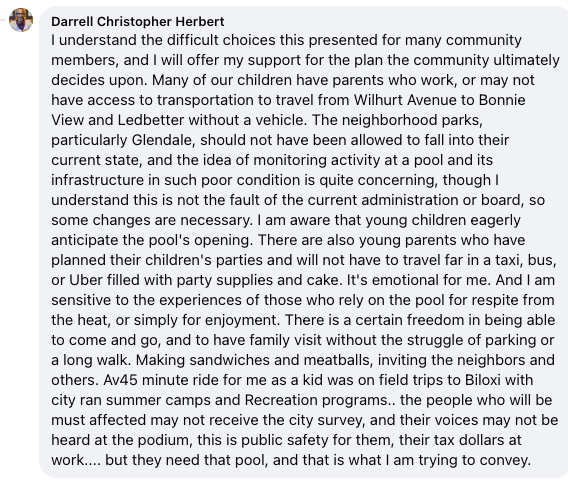
“It’s emotional for me. And I am sensitive to the experiences of those who rely on the pool for respite from the heat, or simply for enjoyment. There is a certain freedom in being able to come and go, and to have family visit without the struggle of parking or a long walk. Making sandwiches and meatballs, inviting the neighbors and others.”
Still, DPR has to come up with $3 million in cuts as part of City Manager Kimberly Tolbert’s budget proposal. Karimi said the data on legacy pool usage doesn’t seem to justify maintaining them much longer, especially when it comes to Glendale, Grauwyler, and Walnut Hill. As for the other six legacy pools, he said he hopes officials will be data-driven in a phased approach.
“So maybe the argument here is we don’t close the other six because they increased their daily averages from last year and the year before, so on that trajectory alone, they deserve to be open another year. Let’s go year by year, and if something changes next year with these pools, then at least we’ve been transparent,” he said.
Community pools aren’t the only part of DPR’s operations that will suffer from cuts. Right-sizing recreation center hours and programming, eliminating administrative positions, reevaluating park maintenance services, and ending direct management of Southern Skates Roller Rink are all part of the conservation to get to that $3 million figure.
1 Comment
Leave a Comment




Projected city revenue is up over $60 million vs last year. These cuts are to pay for hiring more police while the rest of the city services suffer.
https://dallascityhall.com/departments/budget/financialtransparency/AnnualBudget/FY%202025-26%20Proposed%20Budget/4.%20Revenue.pdf