
Dallas Officials Get Ready To Do Some Belt-Tightening
Share News:

It’s looking like Dallas City Council members are going to have to make some tough choices this budget season, with staff estimating a roughly $36.5 million deficit during Wednesday’s council briefing.
Apparently, declining property and sales tax forecasts are putting a damper on the city’s planned $5.13 billion budget for FY 2026. Even worse, without significant spending cuts or some enormous windfall, the shortfall is expected to more than double for FY 2027.

“There is some element of a compounding effect that we have a shortfall between revenue and expenses for fiscal year ‘27 of just under $83 million,” said Jack Ireland, the city’s CFO. “Unfortunately, this will probably be a headline, but the thing to remember is this is a snapshot. This is today, we will balance the budget before we bring it to you in August.”
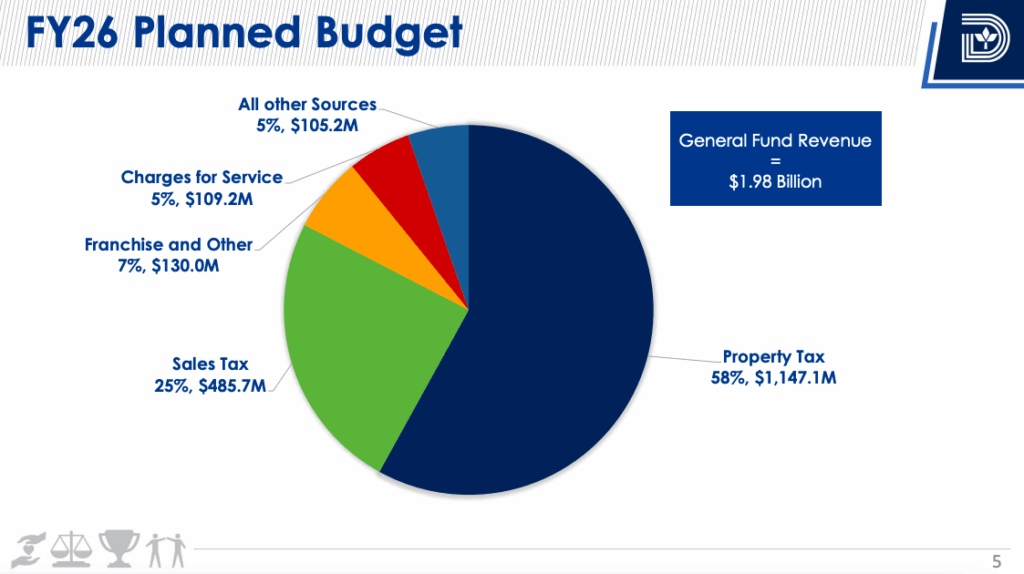
On the property tax front, which is expected to comprise approximately 58% of general fund revenue, staff revised their projection down by around $13.3 million for FY 2026, citing expanded homestead exemptions for seniors and an increase in successful property tax protests at the Dallas County Appraisal District.
Sales tax revenue is also coming in below what staff previously expected. According to staff’s presentation to the city council, the projection for FY 2026 is now about $8 million less. Ireland said this revision was made “based on the uncertainty in the market.”
“This conservative approach is actually very similar to our peer cities — San Antonio, Austin, and Houston — who are all reflecting changes between 1 and 2% when you compare their five year forecast from last spring to their current five year forecast,” he said.
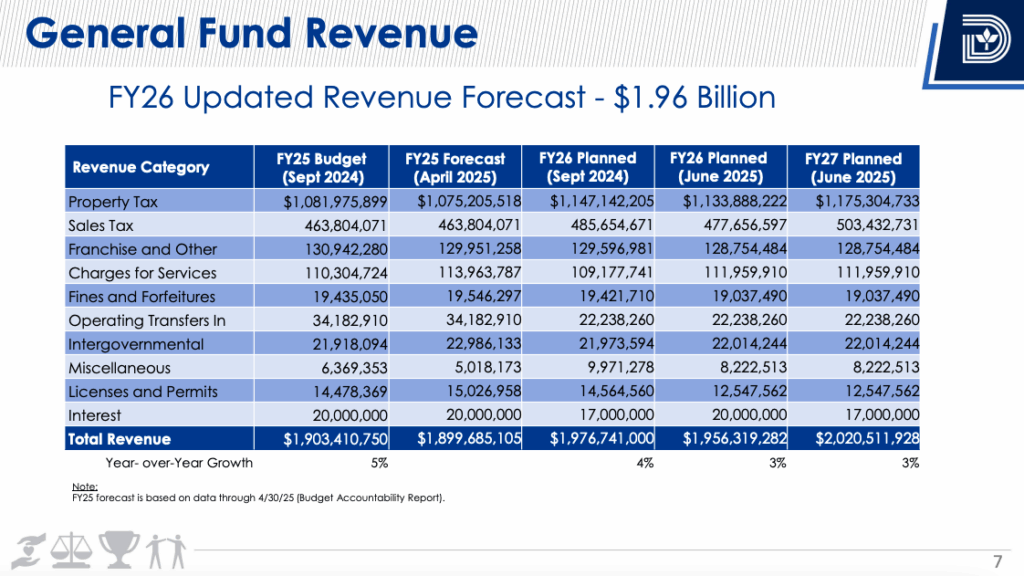
Some less consequential declines in other sources of revenue were also clocked, including franchise fees, fines and forfeitures, and licenses and permits. And with some “prior commitments and additional costs” that need to get tacked on to the FY 2026 budget, that brings the gap to roughly $36.5 million, according to Ireland.
Likely anticipating the rough road ahead, Mayor Eric Johnson alluded to his view on the role of municipal government during city council’s inauguration on Monday, saying that “City Hall was never meant to be everything to everyone” and that “ineffective, inefficient, and outdated initiatives” needed to be discontinued.
Breaking down Dallas’ planned $5.13 billion budget for FY 2026, there’s an operating budget of $4.19 billion and a capital budget for long-term capital improvements totaling $938.2 million. The general fund of $2 billion, which is part of the operating budget, is where staff might look to do some trimming.
According to the staff presentation’s appendix, every city department has an increase in funding planned for FY 2026 except for the Planning & Development Department, which actually saw a 10% decrease, a likely consequence of City Manager Kimberly Tolbert’s merging of the Development Services Department and the Department of Planning & Urban Design.
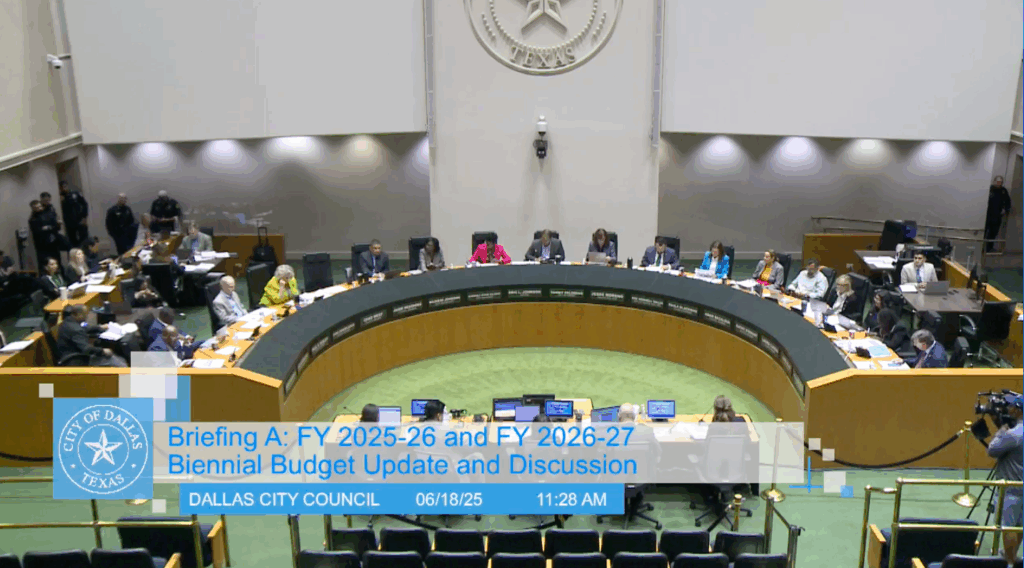
Council Members Paul Ridley (District 14) and Cara Mendelsohn (District 12) raised the issue of the city paying so much money for consultants. The former suggested departments better utilize existing staff to handle work that’s being contracted out to third parties, while the latter said that maybe firing staff is the way to go.
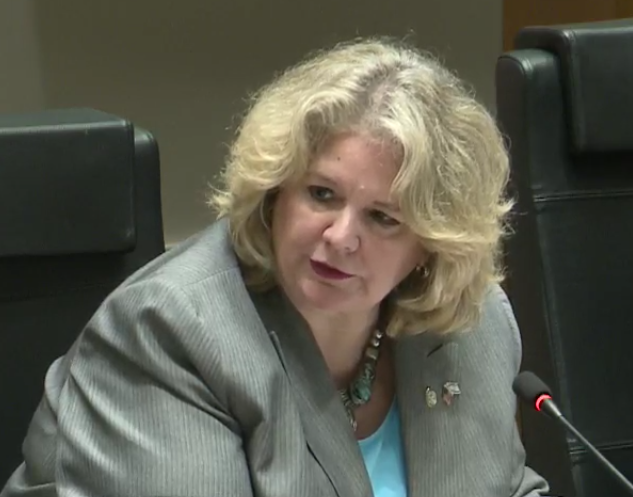
“I don’t mind keeping the consultants if that means you’re going to get rid of the staff,” Mendelsohn said. “If we’re going to have an organization that’s going to really provide the services through the consulting, that’s fine. Maybe we’re master contractors, but we can’t have both. That’s what’s been happening: robust staffing in a department, and then they hire consultants to do the actual work.”
One department that won’t be seeing any cuts is the Dallas Police Department, which is now required per the city charter to reach a force of at least 4,000. DPD has a 4% bump cooked into the FY 2026 budget and is far and away the most costly department in Dallas at more than $748 million for the year.






The most pressing concern facing this over spending by the city of Dallas is the potential for a replay of what happened to the downtown office market during the eighties. While lots of skyscrapers were built and they filled up pretty well at first, the companies began moving out to the suburbs after their leases expired. Eventually, the companies would just skip downtown altogether to relocate straight to the suburbs. I think the city of Dallas is taking the financial center forming around The Crescent for granted. This is going to lead to companies skipping over Central Dallas altogether to relocate north to West Plano and Frisco area.