
There’s a New Dallas City Council on Deck
Share News:

Dallas City Council members were sworn in on Monday to begin their two-year terms at the helm of the Lone Star State’s second-biggest city, and boy do they have a lot on their plate.
Between a tough budget planning season, significant zoning reforms to navigate, a confounding city real estate portfolio bursting at the seams, and police staffing concerns, the new city council has its work cut out for it.
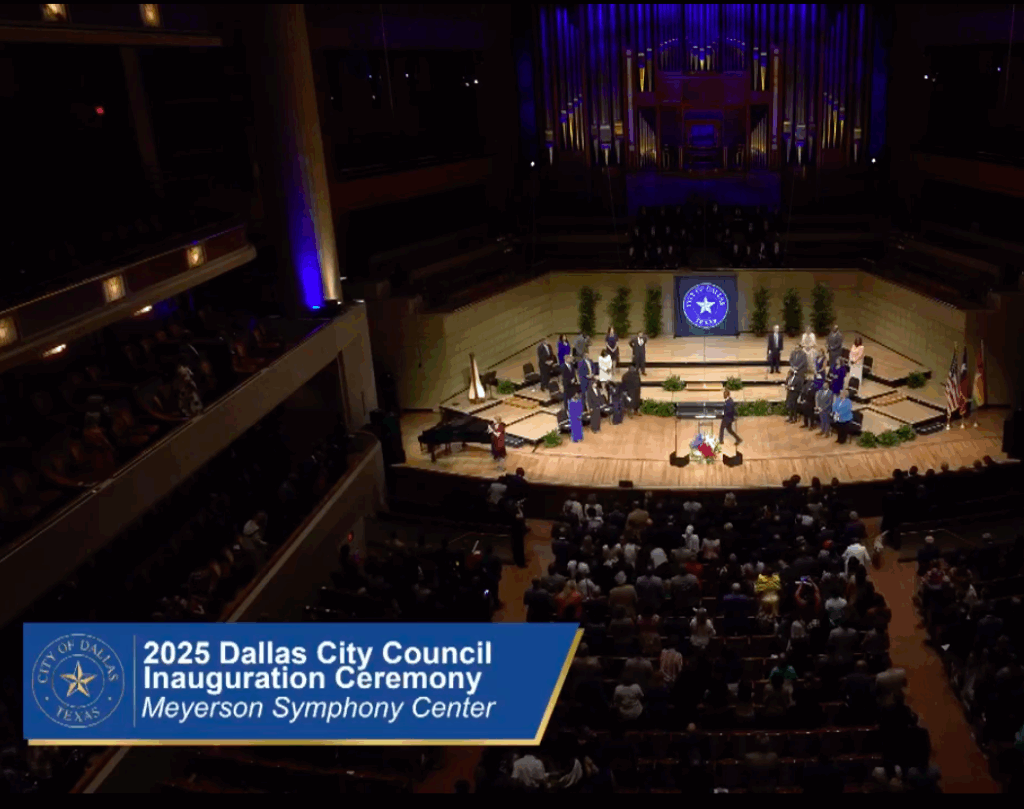
The swearing-in ceremony was held at the Meyerson Symphony Center where a few hundred people turned out to celebrate the induction of several familiar faces and a new crop of city leaders.
Voters in May sent back incumbent Council Members Chad West (District 1), Jesse Moreno (District 2), Zarin Gracey (District 3), Jaime Resendez (District 5), Adam Bazaldua (District 7), Paula Blackmon (District 9), Kathy Stewart (District 10), Cara Mendelsohn (District 12), Gay Donnell Willis (District 13), and Paul Ridley (District 14).
Incumbents at the horseshoe will be joined by newcomer Council Members Maxie Johnson (District 4), Laura Cadena (District 6), Lorie Blair (District 8), and Bill Roth (District 11).
Mayor Eric Johnson — who was not on the May ballot but in the middle of his second four-year term — addressed his colleagues and those in attendance, casting the last six years as a period in which officials began listening to their constituents on matters ranging from crime to property taxes.
“We have our marching orders. Our task now is to create a more efficient and a more focused city government,” he said. “City Hall was never meant to be everything to everyone. We must recognize that people don’t actually want us to develop a new program or a new law to solve every imaginable societal ill. We weren’t sent to City Hall to spend our time trying to help special interests or to appease every single person who feels that they’ve somehow been aggrieved.”
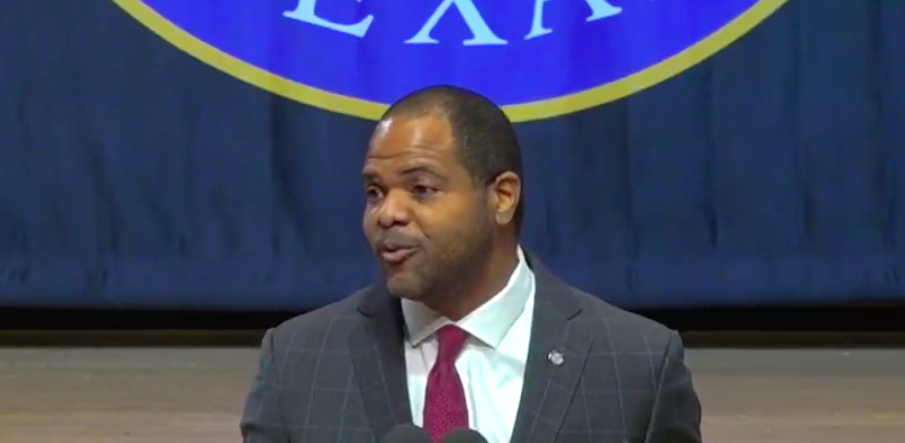
“Our job is actually quite simple. It’s to keep our people safe. It’s to keep their water clean and running, fix their potholes, and issue their permits quickly. It’s to maintain law and order. It’s to attract employers. And then it’s to get the hell out of the way,” he added.
The city started shifting gears in the aftermath of the COVID-19 pandemic. Serious inefficiencies and mismanagement in certain departments coupled with a rise in crime and homelessness put a lot of the city’s problems into sharp relief, culminating in the passage of the controversial charter amendments Props S and U, which require the city to devote significantly more taxpayer dollars to public safety and allow citizens to sue the city if it doesn’t comply with the city charter or ordinances.
Meanwhile, the city council grappled with planning the city’s future growth. Already in the throes of a housing affordability crisis, staff advised embracing density and urbanization, hoping the private sector would be enticed to build more housing and revitalize underutilized square footage. The city council’s been generally supportive of the strategy, much to the consternation of some single-family neighborhood advocates.
“I’m thrilled to say that our new city manager, Kim Tolbert, has so far been an amazing partner,” Johnson said. “Together, we’ve made it easier in Dallas to build, baby, build. We cut permit waiting times down from more than two months to less than 10 days. We’ve cut fat out of our city government by consolidating departments. We slashed our tax rate while still investing heavily in public safety.”
The mayor went on to acknowledge the challenges that will surround budget season and hinted that “ineffective, inefficient, and outdated initiatives” would be targeted for elimination to offset more tax relief, despite the fact that the city charter is requiring new financial obligations in the form of an expanded police force.
“Our people are what make our city great, and they deserve nothing less than our tireless commitment to a Dallas that’s safer, stronger, and more vibrant,” Johnson said.
The new city council’s first piece of business after the ceremony was electing a new mayor pro tem and deputy pro tem for one-year terms. The purpose of the roles is to have someone who’s an incumbent who could step in for the mayor as needed for official business and represent the city in various capacities. Moreno was elected mayor pro tem, and Willis was elected deputy mayor pro tem.