How Developer Swede Hanson Is Building Attainable Housing With Trust in Southern Dallas
Share News:


In a city where new housing can mean displacement in some neighborhoods, Dallas developer Swede Hanson is trying something different: getting buy-in from the community before breaking ground.
Hanson has developed a reputation for listening as much as building in his pursuit of delivering attainable workforce housing south of the city center. In carving out his niche in the industry, he discovered that establishing trust is just as important as securing financing, especially in communities wary of gentrification.
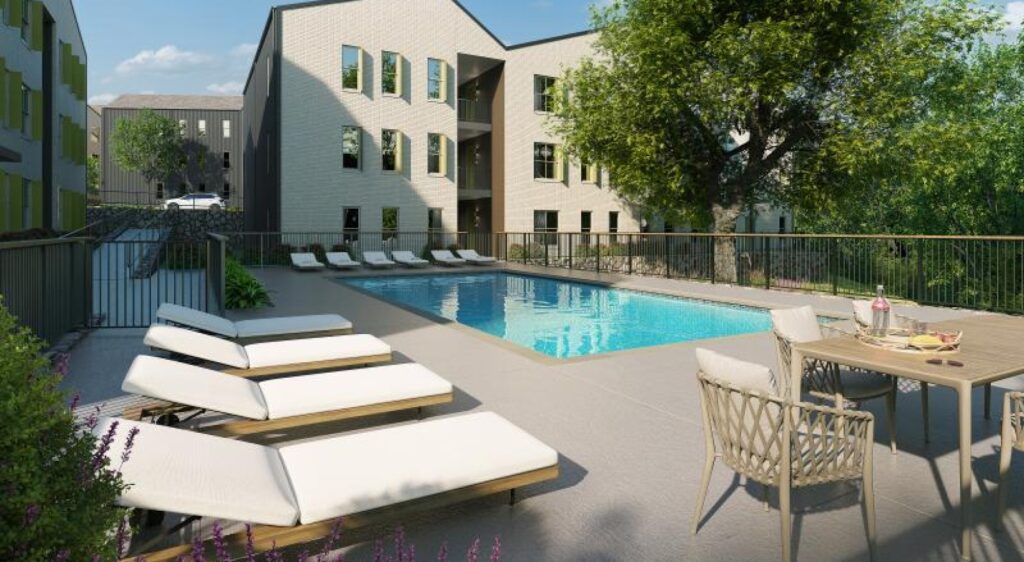
“Southern Dallas is really interested in growth, in new investment, but because of the historic relationship between the area and real estate, development here needs more of a high-touch type of model,” he told CandysDirt.com, taking the publication on a tour of his latest project: The Finch at 1710 Morrell Ave., a seven-building multifamily housing complex in a quiet part of Cedar Crest.
A number of communities in Dallas have been identified as vulnerable to gentrification by the non-profit group Builders of Hope, which published a vulnerability heat map showing where legacy residents are most at risk of displacement. Both southern and western Dallas are hotspots on that graphic.

“I’m a member of the Cedar Crest Neighborhood Association and have been for several years,” Hanson said. “I show up to every one of the meetings. I talk to them about what we’re doing. I inform the city council on the monthly about what we’re doing, our progress. All of it is about building trust and maintaining trust with the community.”

The overwhelming majority of units at The Finch are priced at 90% AMI or less, with the target demographic at annual incomes of between $40,000 and $80,000. He said the price range gives members of the community the opportunity to live at The Finch while simultaneously posing an attractive option for new residents who want to be near downtown and have an air of nature.
“You can stand on the ground floor, see downtown Dallas, and be surrounded by beautiful green trees. Those trees are an asset,” Hanson said.
He went on to explain that the next pattern of potential growth in Dallas he sees will likely be east of I-35 and south of I-30 where there are available tracts of land at affordable price points. While demographics aren’t such that developers are moving aggressively to put up high-dollar Pepper Squares or Crescent Towers, Hanson said he sees a need and desire in the community for high-quality attainable housing.
Outgoing Council Member Carolyn King Arnold (District 4), who represents the area, has been especially vocal about private investment neglecting her constituents amid the city’s ongoing housing shortage.
Still, Hanson said community engagement in the development process is critical in southern Dallas.
“Are you going to get them involved early? Are you going to communicate? Are you going to build trust and then are you going to execute? At the end of it, did you do what you said you would? Those are things that I think are really important. I think the idea of gentrification really comes from a lack of that,” he said.
Hanson credits the Dallas Public Facility Corporation and the city’s Mixed-Income Housing Development Bonus program for providing him with the incentives necessary to get investors behind The Finch.
“The PFC creates great opportunity for more development. We tried to raise capital for this project for six months without that program — completely unsuccessful,” he said. “When we finally were approved for the program, we were able to fully capitalize the project.”
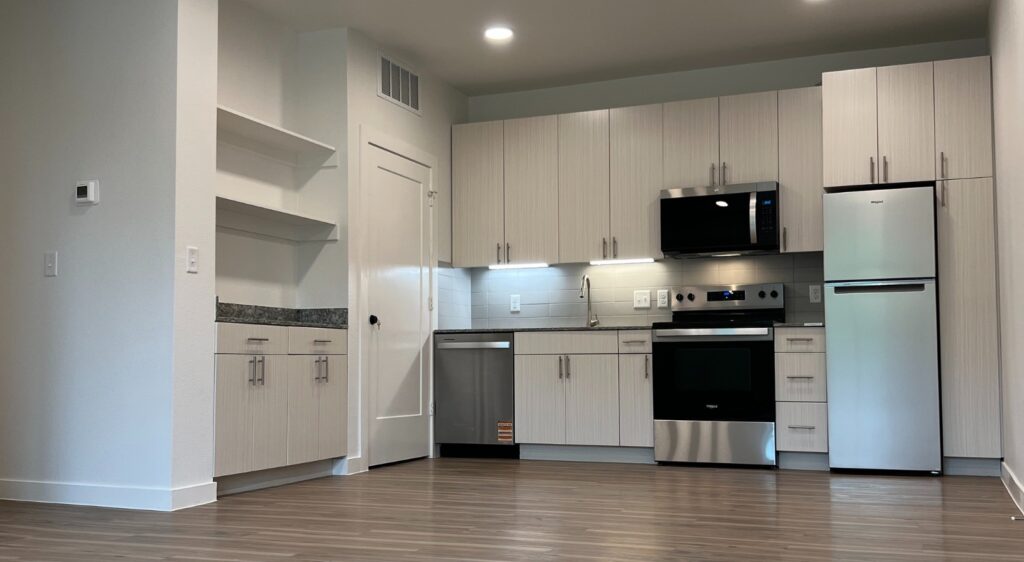
City incentives weren’t the only thing The Finch had going for it. Hanson’s company, Smart Living Residential, places an emphasis on thinking critically to realize efficiencies, something he claims the traditional development model doesn’t tend to incentivize.
“They try to go as fast as they can,” he said, noting the burdens of overhead costs. “If you look critically at the design and construction, you can find ways to bend the cost curve toward you.”
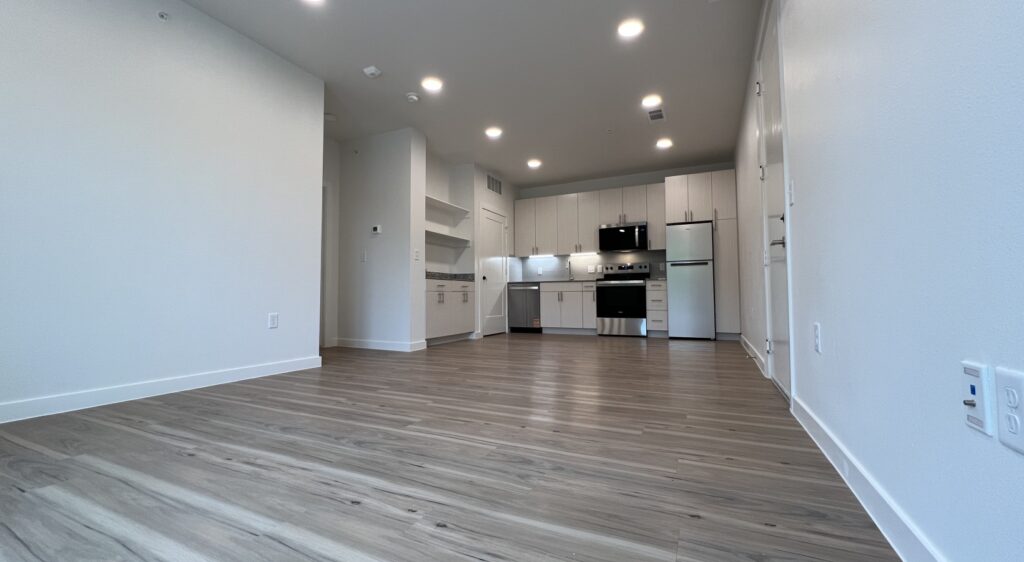
Hanson limited unit types and floor plans at The Finch and wasn’t shy about redeploying design elements across the complex. Additionally, he thought hard about certain features. For instance, he chose not to put balconies on his units.
“I don’t think balconies in Dallas get used a lot because of the heat. They collect junk, so it becomes an eyesore, and the last thing the communities we work with want are properties that are eyesores,” he said, noting that because of his decision his firm didn’t have to worry about water penetration or the extra costs associated with building the balconies.
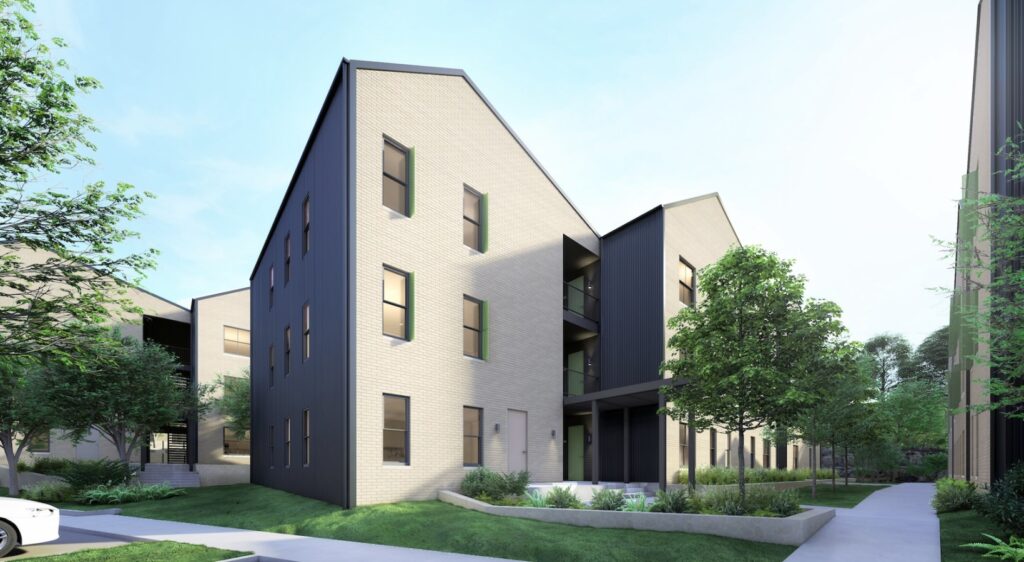
“We’ve created other opportunities for people to experience the outdoors. Each building has its own front porch and back porch, barbecue grill, things like that to kind of create opportunities for community,” he said.
The Finch also has a pool and is strategically located right by the Cedar Crest Community Center, which has full-size football field, basketball court, baseball field, soccer field, locker room facilities, and other amenities.
Before striking it out on his own as a developer, Hanson gained experience in various aspects of commercial real estate, including finance, leasing, development, and distressed note sales. His professional career had him working big markets in the northeast and other parts of the United States, and he put in time with CRE heavyweights like JLL and Credit Suisse.
In Dallas, where he was born and raised, he served as senior vice president within Bank OZK’s real estate specialties group, overseeing some $4 billion in CRE and loans. He left the company in 2022 to launch Smart Living Residential.