New Digs: Fort Worth Moves Into New City Hall, Site of Former Pier1 HQ Built After 2000 Tornado
Share News:

From Staff Reports
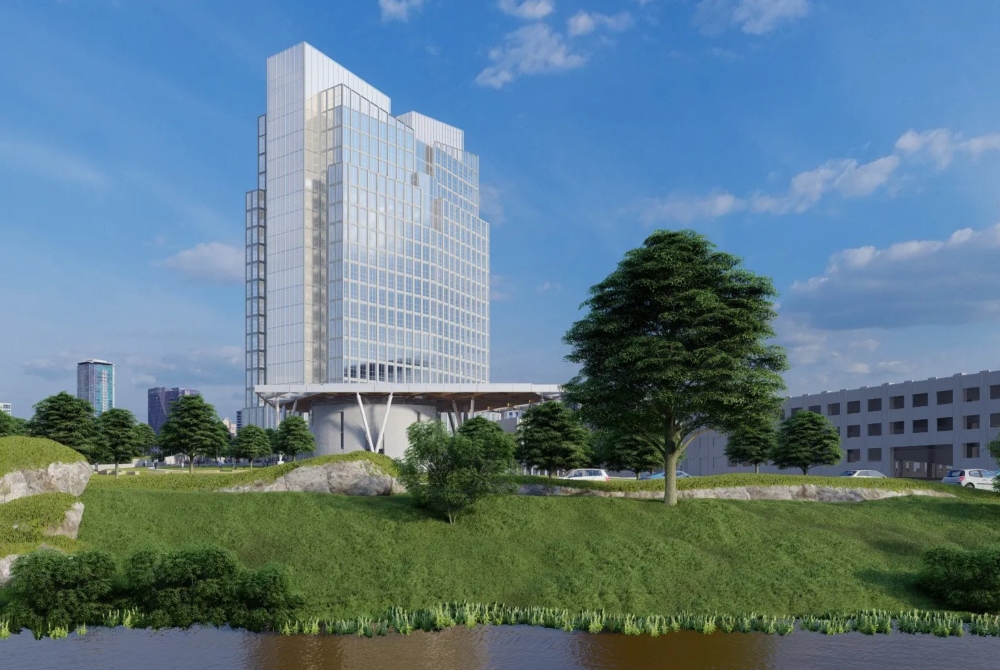
Fort Worth’s new City Hall isn’t just a new address — it’s a repurposing of a familiar landmark and a symbol of how far the city has come. Once the gleaming global headquarters of Pier 1 Imports, the 20-story tower off the Trinity River now houses the business of Fort Worth’s municipal government.
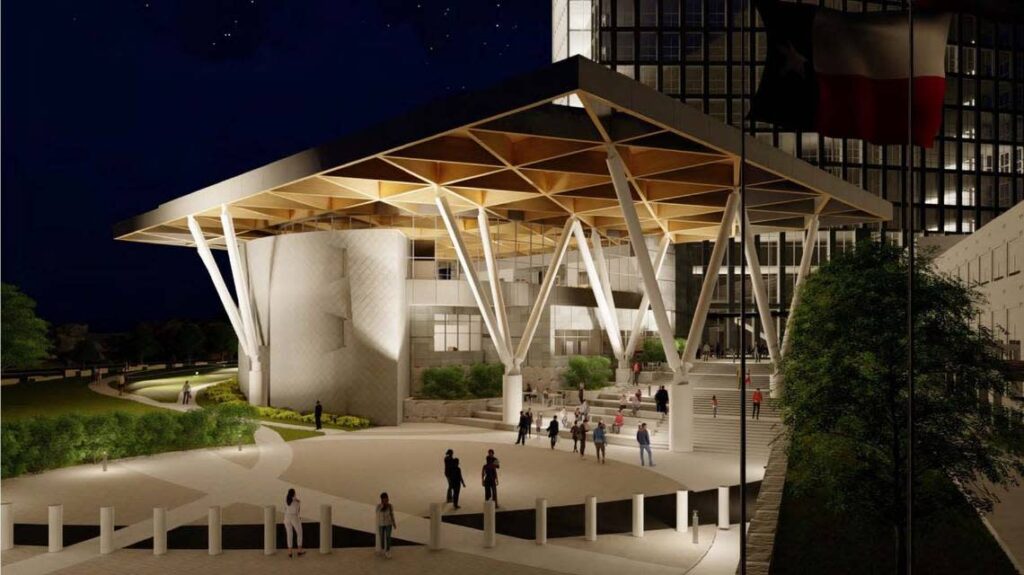
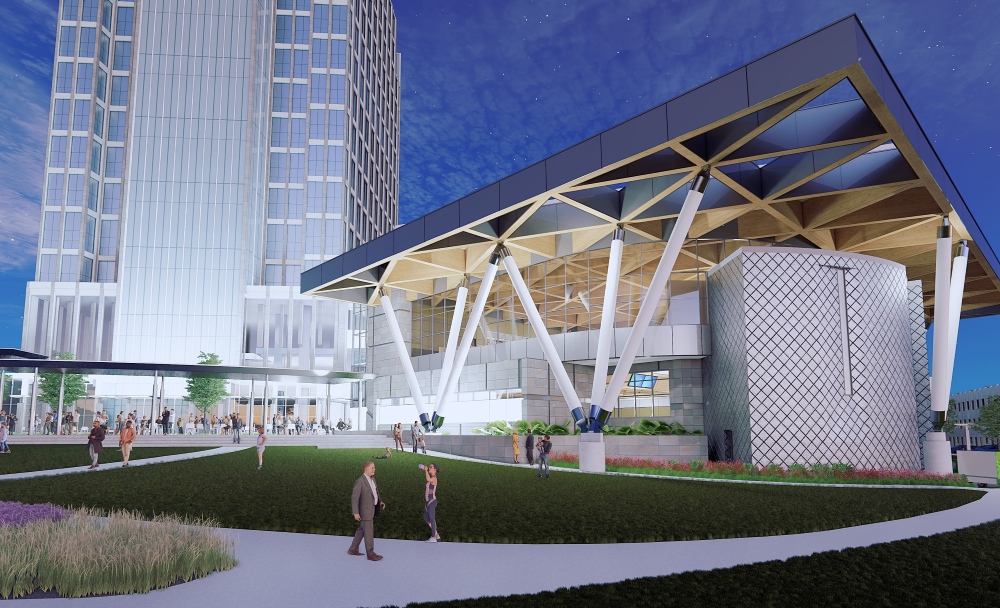
Mayor Mattie Parker, former Mayor Betsy Price, and current and former city managers were among the officials on hand to commemorate the ribbon-cutting this spring. Designed to foster transparency, accessibility, and public engagement, the new chamber offers 250 seats, outdoor gathering areas, and upgraded accessibility for residents and staff.
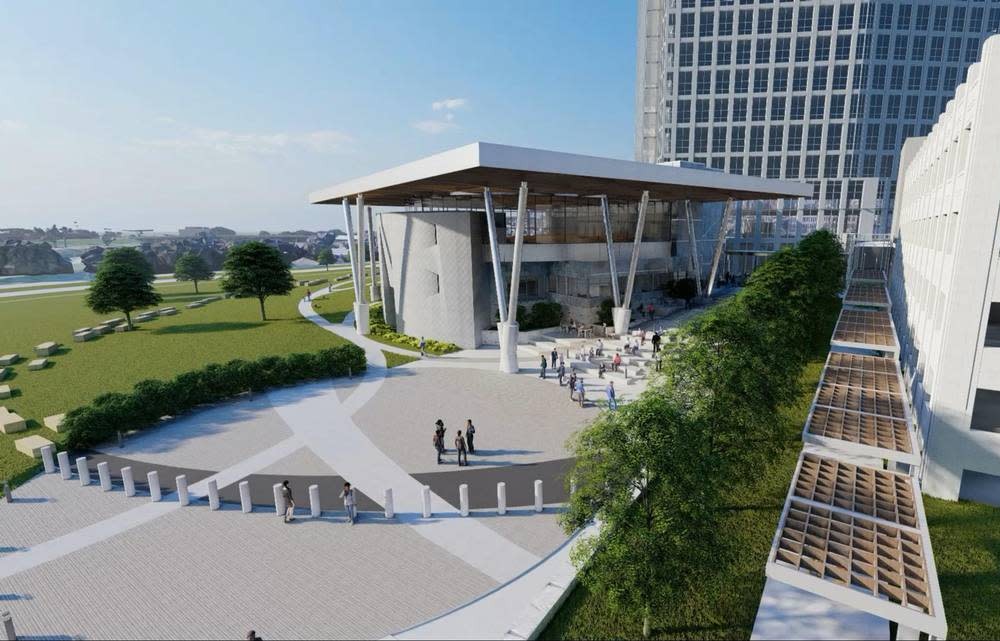
“This new City Hall — and especially the Council Chamber — is more than a building,” said Tanyan Farley, senior vice president of Athenian Group said in a City of Fort Worth news release. “It’s a statement about how Fort Worth values its residents and its public servants… Fort Worth didn’t just build for today, it built for the future.”
From Tornado Aftermath to Civic Centerpiece
The site of Fort Worth’s New City Hall has a unique origin story. In March 2000, an F-3 tornado ripped through downtown, destroying several buildings — including Calvary Cathedral, which once occupied this tract near the Trinity River. When Pier 1 Imports acquired the 15-acre site soon after, it was with an ambitious vision for its global headquarters.
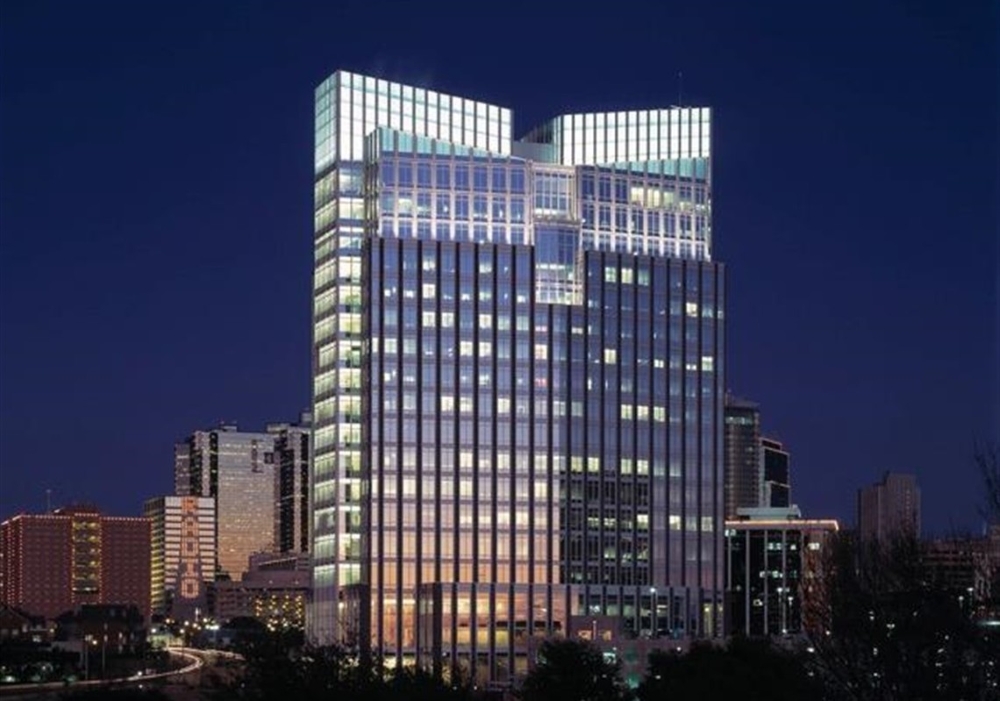
Unveiled in 2004, the 20-story, 450,000-square-foot tower was a showpiece. Built with granite, marble, exotic wood, and a curtain of reflective glass, it earned accolades for both its design and environmental integration. Now, more than two decades later, it’s getting a second life as the seat of Fort Worth’s government.
Marvin Girouard, the late Pier 1 CEO who led the company through the tower’s development, was known for his attention to detail. According to former Pier 1 communications executive Merianne Roth, Girouard handpicked materials, obsessed over sightlines, and worked to create a space employees would be proud of. “It’s a work of art,” Roth said in a city release. “Being part of that process was a career highlight.”
There are nods throughout the building to Pier 1’s international roots. Floors 4 and 13, for example, were intentionally omitted from the design in respect to cultural superstitions. The opening festivities even included a Chinese dragon dance, a ribbon-wrapping of the building, and international guests — a fitting tribute to Pier 1’s far-flung partnerships.
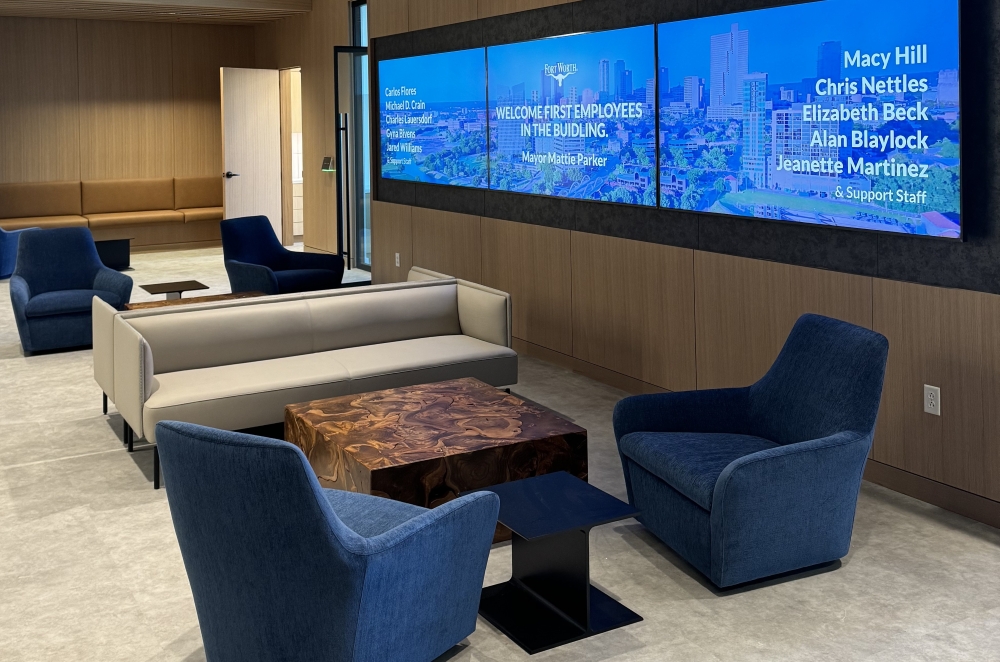
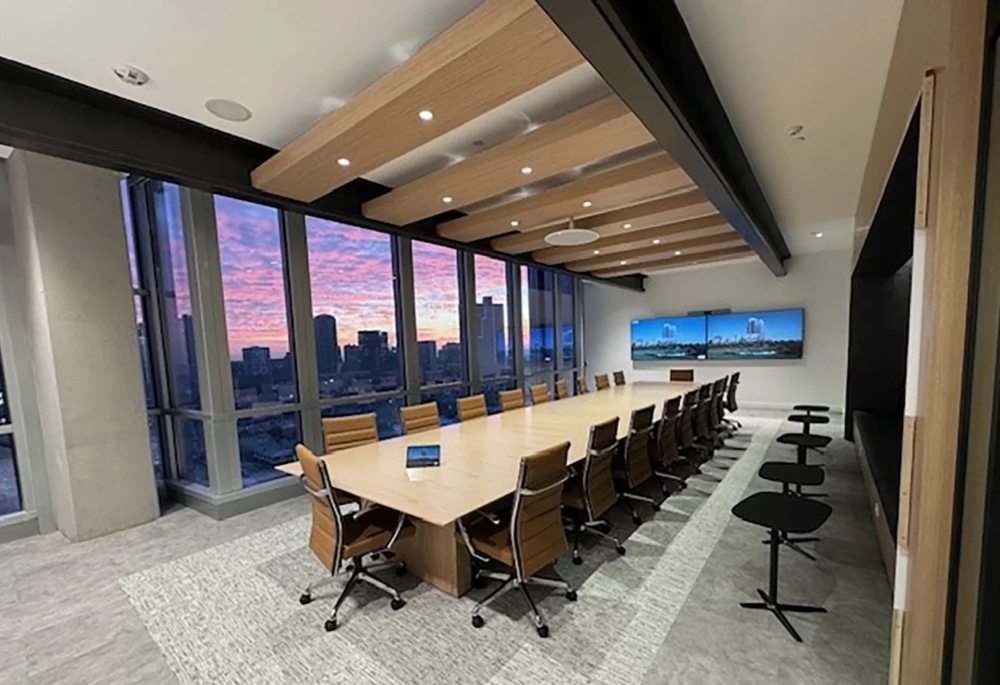
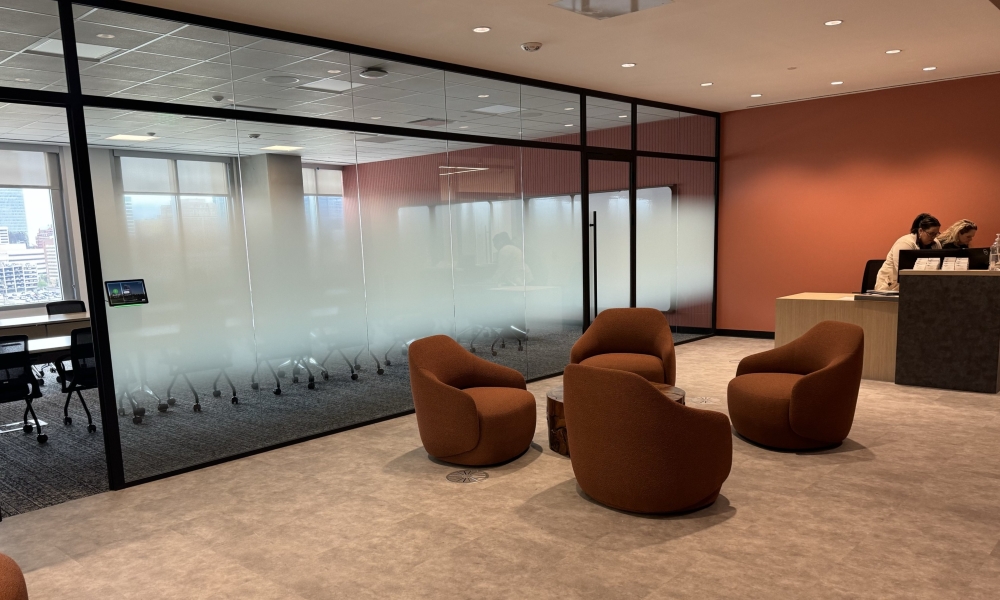
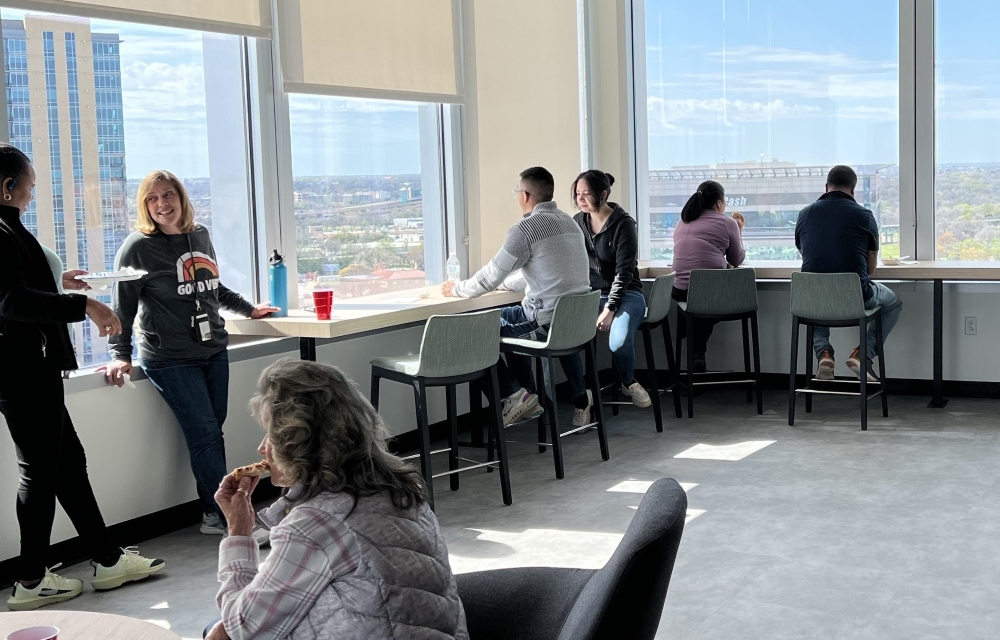
Since changing hands in 2021, the building has been adapted for municipal use. City employees moved in gradually, culminating with the completion of the Council Chamber. The 10th floor, once home to Pier 1’s communications team, is now occupied by the City’s comms department — one of many moments of full-circle symmetry.
And though it’s no longer called Pier 1 Place — the street is now Fort Worth Trail — the building’s character remains with its aluminum-and-glass exterior and light beacon that crowns it.
The City is offering free public parking during meetings and events, with dedicated spots off Forest Park Boulevard and a walking path to the building. The former City Hall on Texas Street had served Fort Worth since the early 1970s.