
Fairview Approves LDS’s Latest Zoning Request Under Duress
Share News:


A controversial permit request by the Church of Jesus Christ of Latter-day Saints was approved by Fairview Town Council on Tuesday after more than a year of uproar over its proposed design for a temple in a residential area.
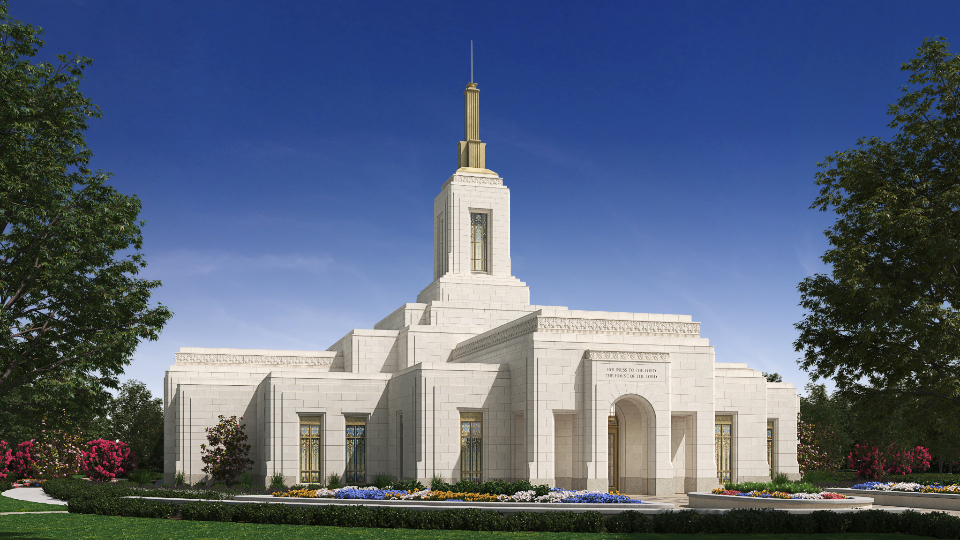
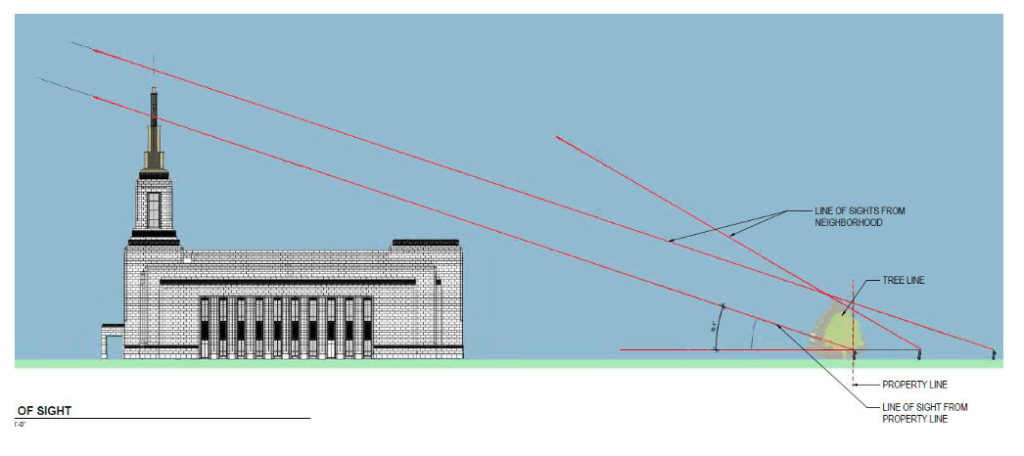
The vote came to the dismay of project detractors in Fairview who have been lobbying officials for months against several design features, not least of which is a steeple and spire that would tower over every other structure in the neighborhood, which is zoned for 1-acre ranches with a height restriction of 35 feet.
LDS revised its original plans so that the spire would only reach 120 feet. A recommendation by Fairview Planning & Zoning, however, advised the town council to only approve the church’s request for a conditional use permit if the overall height was reduced to just under 70 feet and its elaborate lighting system complied with town code, among other stipulations.
With some citing fears of costly litigation in a religious discrimination lawsuit the town might struggle to win, a 5-2 majority of town council members voted to approve LDS’s request for a permit allowing for a structure up to 120 feet. Before he cast his vote in favor, Mayor Henry Lessner expressed his frustration with LDS and its local leaders.
“You all have not been neighborly,” Lessner said. “You come into our town, ask for a zoning variance that far exceeds anything that should have been built on that piece of property, threaten to sue us if we don’t agree, and here we are tonight. None of us up here like what’s going on. We don’t like the way it’s being handled.”
He took care to differentiate between Mormon residents of the town and LDS as an institution, which was behind the church plans and previously threatened to sue Fairview.
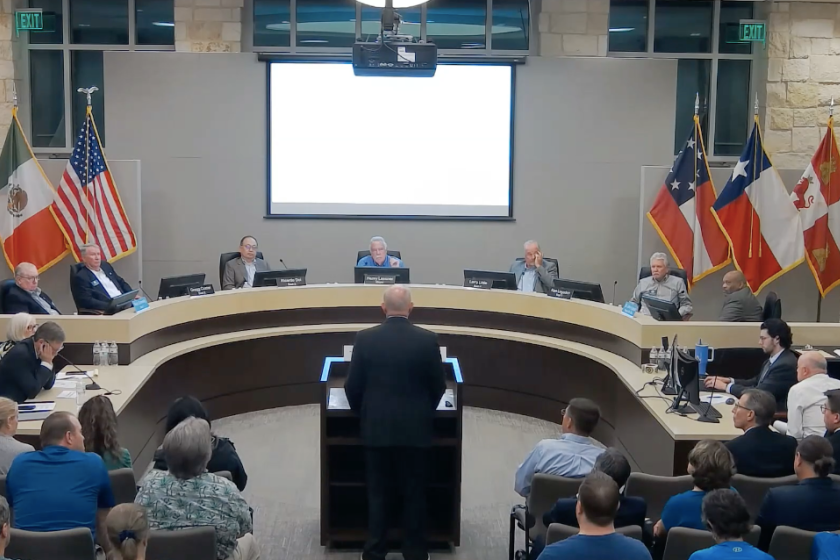
Earlier in the meeting, multiple council members grilled the church’s representatives on why it was insisting on constructing such a high steeple and spire, pointing to other cities in the United States where LDS built temples as short as 70 feet.
“The temple has a greater purpose than to house the activities that go on within the temple,” said McKinney-based attorney Bob Roeder, representing LDS. “The temple is a sign. It’s a symbol. It represents what the church is trying to depict to not only its members but to everybody that sees it. … In this particular case, the architecture and the proportionality has a meaning to the church.”
Prior to the public comment portion of the meeting, Mayor Lessner expressed exasperation with the situation, noting that council members want the temple to be built, just not up to 120 feet.
“It blows my mind that [the spire height] is such a stubborn issue. It has no impact on the functionality of the building,” Lessner said, remarking at one point that the town had offered to help LDS locate a site on the commercial side of town where height limits are less restrictive.
Holy Moly Did Townsfolks Have Their Say
Turnout at the meeting was high, with dozens of speakers taking turns during public comment to voice their position on the matter.
Supporters of the proposed temple design, some of whom were church members residing in McKinney and Allen, stressed the religious significance of the architectural design and the concessions LDS made in its latest permit request.
“Temples are fundamentally different from chapels, which is part of the important context to keep in mind and part of the reason why the design is so different and part of the reason why the height, I think, is a consideration,” said Fairview resident and local LDS leader Nolan Godfrey. “It’s a place where heaven and earth can meet, and I can’t think of a better place for heaven and earth to meet than right here in Fairview, Texas.”
Other LDS members echoed the sentiment, tying their religious faith to the structural design of the temple.
Those opposed to the project emphasized their desire to “keep Fairview country” and preserve the town’s rural character east of Highway 5.
“Many of us agree that such an enormous glowing structure belongs in a commercial zone, not built on the crest of a hill that serves to magnify its height in a residential area,” said Helen Dunham.
“The proposed height of the temple is almost twice the height of any other religious facility in Fairview. The height is solely an aesthetic characteristic that is objectionable to thousands of Fairview residents,” she added. “This temple will set a new height precedent for Fairview, forever altering the established rural character of our neighborhood and the town as a whole.”
Long Story Short
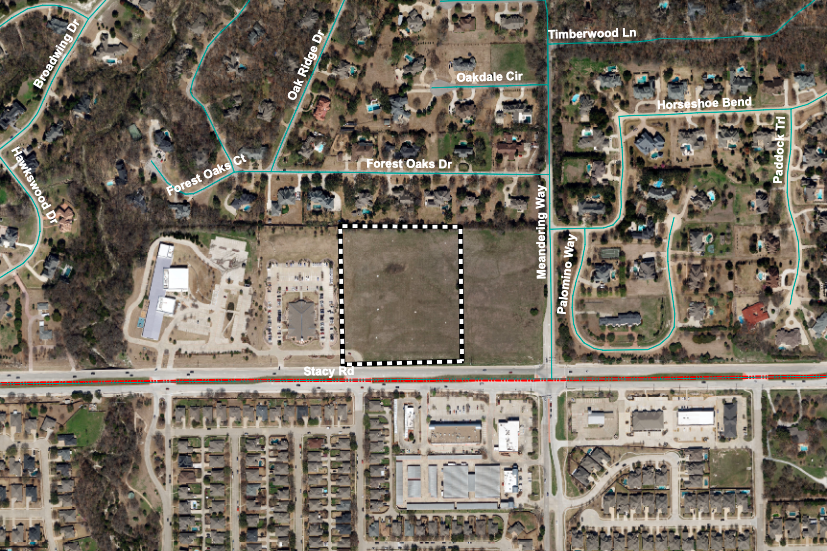
LDS originally planned for the temple to stand a little over 170 feet tall on a 8.1-acre site it owns on the north side of Stacy Road, west of Meandering Way. At that height, the building would’ve been the tallest in Fairview, a town of roughly 11,000 people just south of McKinney.
The town council shot down the church’s first permit request in August 2024. Following a round of non-binding mediation and lawsuit threats by LDS on the basis of religious discrimination, the church submitted an amended request for a shorter build at an overall height of 120 feet.
On Thursday, Fairview Planning & Zoning Commission voted to recommend issuing the permit, albeit with some important caveats. The commission advised council members that the permit should only be granted if LDS reduces the overall height to under 70 feet, reduces the building footprint to 30,742 square feet, officially changes the name to Fairview Texas Temple, and limits lighting per certain specifications related to non-operating hours, among other conditions.
LDS conceded the name issue on Monday, announcing it was dropping McKinney Temple Texas for Fairview Temple Texas in a news release. Other concerns expressed by residents opposed to the project have included traffic issues, drainage logistics, and the up-facing lights that would be maintained on the property (the city has an anti-light pollution ordinance in place).



Please consider adhering to the style guide media publishers: https://news-ca.churchofjesuschrist.org/style-guide. “LDS” is not an accurate way to reference the church.
Why do you think there is a sudden shift from the, “I’m a Mormon” educational, advertising and outreach campaign by the Church of Jesus Christ of Latter-day Saints from 2010[1] to 2018 about the church, featuring short profiles from church members (also known by the nickname Mormons)?
Do you think it has anything to do with headlines from legitimate new sources reporting on Mormons such as this one: https://www.cbsnews.com/news/mormon-church-ensign-peak-whistleblower-david-nielsen-allegations-60-minutes-2023-05-14/https://www.cbsnews.com/news/mormon-church-ensign-peak-whistleblower-david-nielsen-allegations-60-minutes-2023-05-14/
Stop with the “LDS is not the correct way to address us”.I’m a member and this gets old from hearing every member say this. This is why people are at odds with us.
I hear you, but that is not why people are, “at odds” with the LDS aka Mormons.
For a broader view maybe listen to, The Genesis of the CES Letter – Jeremy Runnells Pt. 1 – Mormon Stories Ep. 480. Good a place as any to begin. Any MormonStories.org podcast, actually. One I most related to is the heart wrenching story of Leah, Cody and Brinley Young. Been there.