In Southwest Dallas District 3, Candidates Grapple With Development Vs. Displacement
Share News:

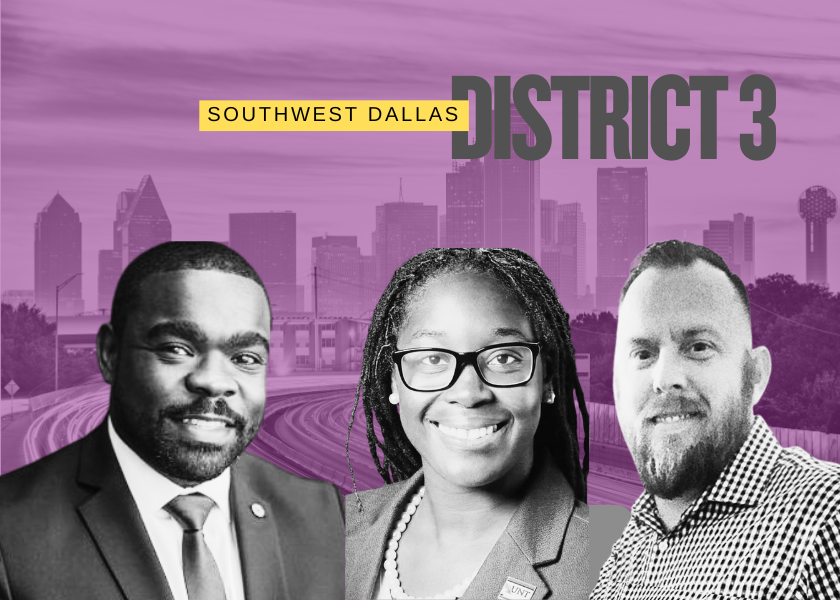
Southwest Dallas’s City Council District 3 is a dynamic and diverse area — a part of Dallas that is confronting both significant opportunities and pressing challenges. This part of Dallas, rich in history, has residents deeply concerned with affordable housing, aging infrastructure, and the fair distribution of city resources. The upcoming election holds significant weight, as the decisions made will directly shape the lives of those who call District 3 home.
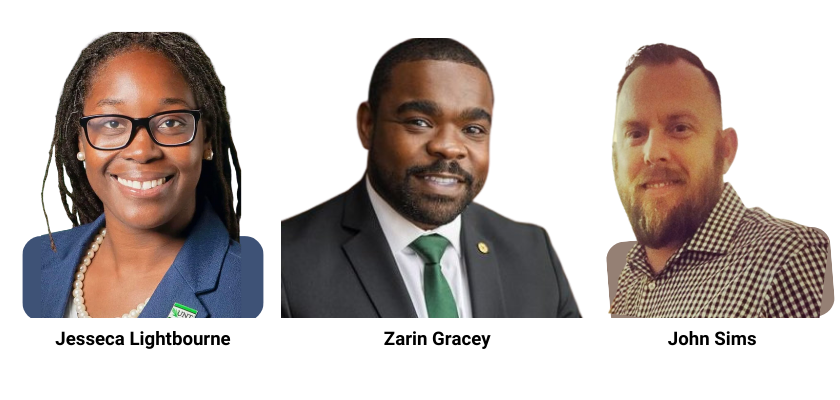
Incumbent Zarin Gracey is seeking a second term, facing engineer John Sims and University of North Texas professor Jesseca Lightbourne. Sims ran against Gracey in 2023, an election Gracey won in a runoff with 62.57% of the vote over five-time candidate Joe Tave.
As a real estate-focused news outlet, CandysDirt.com is asking candidates about the housing issues their district neighborhoods face — and the more difficult question, what can be done as a city council member to improve housing affordability in Dallas.
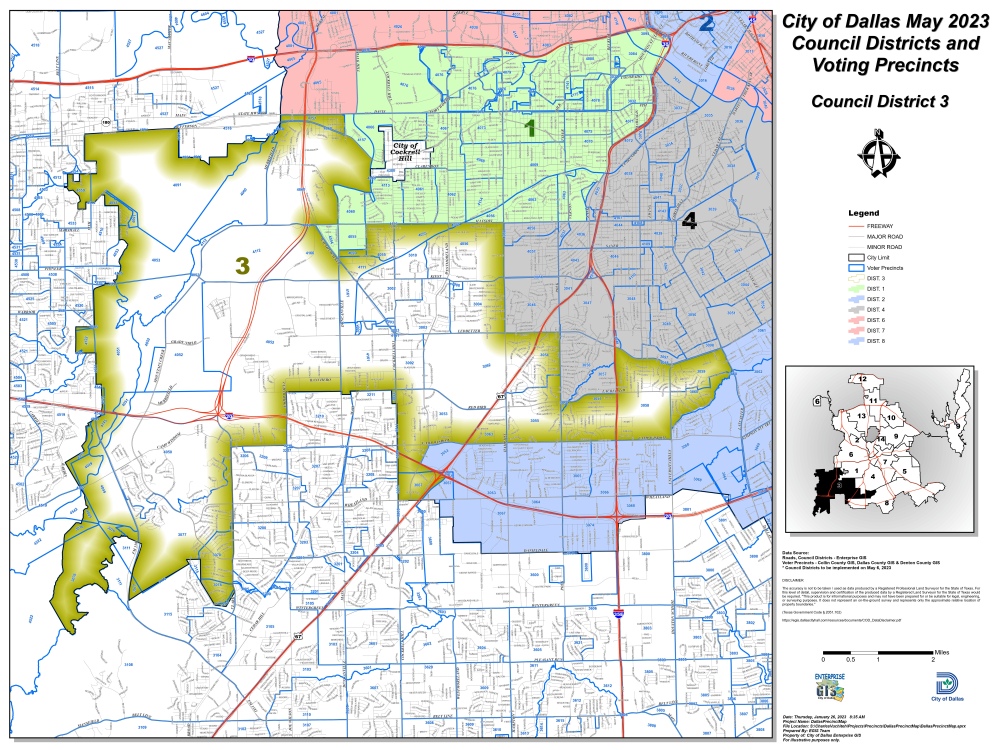
May 3 Election: If you’re not sure what your city council district is, you can search your address for your city council district on the City of Dallas website. Alternatively, visit the city’s ArcGIS map to search your City of Dallas address.

CandysDirt.com extended these questions to each Dallas City Council candidate, offering them the opportunity to speak directly to our readers and their constituents. Here are unedited and unabridged responses for Zarin Gracey and Jesseca Lightbourne. John Sims did not respond.
UPDATE: John Sims responded on March 19, after this story was published March 17. His answers have been added below.

Zarin Gracey: The most pressing housing needs in District 3 reflect both citywide challenges and issues specific to Southern Dallas. Our district faces a dual challenge: preventing displacement of long-time residents while encouraging appropriate development that benefits existing community members but also provides the single-family homes Southern Dallas has been asking for.
First, we need to protect vulnerable homeowners, particularly seniors and fixed-income residents, from being displaced due to rising property taxes and gentrification pressures.
Second, we need to increase affordable housing options that serve various income levels. While some areas of Dallas focus exclusively on building more units, District 3 needs a balanced approach that includes high-quality affordable housing, market-rate options, and everything in between.
The key to addressing District 3’s housing needs isn’t just building more housing — it’s building the right housing in the right places with the right protections for existing residents. Every neighborhood in our district has different needs, and I’m committed to finding solutions that reflect those specific community contexts while ensuring all residents have the right to stay in the communities they’ve helped build.
Jesseca Lightbourne: District 3 faces critical housing challenges, including rising home prices, an overconcentration of multifamily units, aging housing stock, and increasing homelessness. As a former Director of the Housing Finance Corporation for District 3, I have advocated for policies that expand affordable homeownership, protect long-term residents, and prioritize sustainable development.
At the City Council level, we must:
- Expand affordable homeownership programs to help working families stay in their communities.
- Strengthen tenant protections to prevent unjust evictions and displacement.
- Invest in home rehabilitation to preserve aging homes and revitalize neighborhoods.
- Ensure balanced zoning policies that prevent overconcentration of apartments while fostering diverse housing options.
- Promote public-private partnerships to drive mixed-income, sustainable housing developments that align with community needs.
- Expand permanent supportive housing with wraparound services to assist our unhoused neighbors in regaining stability.
Dallas cannot afford a one-size-fits-all approach to housing. We must invest in sustainable, community-driven solutions that create pathways for long-term homeownership and stability for residents.
John Sims: The city of Dallas is in a distressed position due to the council members’ inadequate, incompetent or willful mismanagement. They have mismanaged their responsibilities and neglected their duty to provide the level of service and accountability that every resident deserves. Instead, they are prioritizing special interests over the needs of the community. Their failure to manage infrastructure spending has resulted in $17 billion in deferred maintenance. The council has also failed to adequately fund the police, compromising public safety. Furthermore, council appointees have wreaked havoc in our neighborhoods by permitting non-conforming developments. Rather than addressing these critical issues, the council is more interested in spending $6 million to count trees and untold millions on consultants. It’s time to restore integrity and accountability to City Hall.

Zarin Gracey: I supported the ban on short-term rentals in Dallas due to the significant negative impacts they were having on residential neighborhoods and the quality of life for Dallas residents. Without proper regulations, many short-term rentals became nuisance properties with issues including noise disturbances, parking problems, overcrowding, trash violations, and safety concerns. Additionally, the proliferation of short-term rentals in certain neighborhoods effectively transformed residential areas into commercial lodging districts against residents’ wishes.
While I recognize property owners should generally have flexibility in using their properties, that flexibility cannot come at the expense of neighboring property owners’ rights to peaceful enjoyment of their homes. Without an effective regulatory framework to address these concerns, the ban was necessary to protect neighborhood character and residents’ quality of life.
Jesseca Lightbourne: Short-term rentals (STRs) have disrupted neighborhood stability, increased housing costs, and led to nuisance complaints. Dallas must adopt balanced, community-first regulations to ensure neighborhoods remain livable while allowing responsible hosting.
- By prioritizing resident voices in policymaking, we can create an approach that benefits both homeowners and responsible hosts while preventing housing instability.
- Restrict STRs in single-family neighborhoods to preserve affordability and residential character.
- Implement stronger licensing, taxation, and compliance measures to ensure STR owners contribute fairly to city resources.
- Increase enforcement against nuisance STRs that violate local ordinances.
- Develop data-driven policies that track STR activity, ensuring adjustments are made to address emerging concerns.
John Sims: I believe in capitalism and the fundamental rights of property owners, including the unrestricted freedom to own property and rent it out as one sees fit, whether for long-term or short-term use. We already have sufficient laws, such as noise ordinances and nuisance statutes, to address disruptive properties, and I maintain that these should be enforced rather than creating new regulations. In my view, the city has more urgent priorities—like infrastructure or public safety—that demand attention over the relatively minor issue of short-term rentals, which I see as a natural extension of property rights. Moreover, I strongly suspect that any meaningful regulatory attempts to limit short-term rentals would overstep government authority and likely be deemed unconstitutional by the courts, as they could infringe on the delicate balance between individual liberty and community interests that courts have historically protected.

Zarin Gracey: I initially had significant hesitations about supporting ForwardDallas 2.0 and carefully considered my position before ultimately voting in favor of it. My support came primarily because of the plan’s strengthened environmental protections and the neighborhood safeguards that prevent industrial uses like warehouses from being built adjacent to residential areas—protections that are particularly important for Southern Dallas communities that have historically borne the brunt of industrial encroachment.
However, I still have lingering concerns about its implementation, particularly as it relates to Southern Dallas and District 3. My primary concern is ensuring that as we implement this plan, we don’t use a one-size-fits-all approach that fails to recognize the unique character and needs of different neighborhoods. In Southern Dallas specifically, we need development that builds on community strengths while addressing historical disinvestment, not simply replicating development patterns from other parts of the city.
I’m also concerned about potential displacement of existing residents as areas develop. While the plan acknowledges this risk, we need robust anti-displacement policies implemented alongside increased density and development. This includes stronger tenant protections, property tax relief for long-time homeowners, and community preference policies for new affordable housing.
Finally, I want to ensure that community voices remain central to implementation decisions. ForwardDallas 2.0 provides a framework, but the details of how it’s applied in each neighborhood should involve substantial community input and respect for neighborhood context.
Moving forward, I will be vigilant in monitoring how ForwardDallas 2.0 is implemented in District 3, advocating for development that enhances rather than displaces our existing communities while bringing much-needed amenities and opportunities to historically underserved areas. The environmental protections that influenced my support must be fully realized to ensure healthier communities across Southern Dallas.
Jesseca Lightbourne: While ForwardDallas 2.0 provides a framework for addressing environmental justice and smart growth, concerns remain regarding its implementation and long-term enforcement.
- Protecting single-family neighborhoods from unintended zoning changes remains a priority for residents.
- Ensuring equitable investment in infrastructure and economic opportunities across all communities, not just high-growth areas.
- Holding polluters accountable and preventing industrial encroachment in historically marginalized communities like Joppa and West Dallas.
- Ongoing community engagement must be prioritized to ensure policies reflect the voices of residents, not just developers.
As a public policy researcher and advocate, I will work to ensure ForwardDallas 2.0 leads to genuine equity, sustainable growth, and environmental protection.
John Sims: I dont like the fact that previous council members and city employees provide a vision, guide, framework, or living document to influence the future development of Dallas. I feel like Forward Dallas is a bureaucratic way to influence development without providing transparency and accountability to the residents. Stinks of a backdoor deal.

Zarin Gracey: Public safety and infrastructure are certainly top priorities for District 3 residents, and we’ve made significant progress on both fronts during my first term. We achieved a 6.8% crime reduction across the district and installed 24 new Flock safety cameras (for a total of 80+ Flock safety cameras in the District) to enhance public safety. However, there’s more work to be done.
On public safety, the Council should:
- Ensure adequate staffing and resources for our police and fire departments while implementing innovative approaches like the Right Care program, which pairs mental health professionals with first responders for appropriate calls
- Expand youth violence prevention programs to address root causes of crime
- Increase community-based policing approaches that build trust between officers and neighborhoods
- Continue investing in technology like Flock cameras that have proven effective in reducing crime
- Address environmental factors that contribute to crime, such as improving street lighting and addressing vacant properties
Regarding infrastructure, we need to:
- Continue prioritizing long-neglected infrastructure in Southern Dallas, focusing on basic services like street repairs, sidewalk improvements, and drainage issues
- Develop a holistic approach to address creek erosion problems.
- Protect and expand DART service throughout Southern Dallas to ensure residents have reliable transportation options
- Develop better coordination between departments to ensure infrastructure projects are completed efficiently and with minimal disruption to residents
I’ve made infrastructure equity a priority during my first term, working to secure funding for projects like the Glendale Park renovation and addressing critical needs across District 3. In my second term, I’ll continue advocating for our fair share of city resources while ensuring these investments directly benefit current residents.
Jesseca Lightbourne: Public Safety: Expand community-based policing, invest in mental health crisis response teams, and enhance first responder recruitment. Programs like Right Care should receive adequate funds to provide non-police crisis interventions.
Data, Data, Data! To ensure lasting impact, the council must establish clear performance metrics, engage residents in decision-making, and allocate resources efficiently to enhance safety and quality of life across Dallas.
Infrastructure: Repair aging roads and sidewalks, upgrade drainage systems to prevent flooding, expand public transit options, and invest in sustainable infrastructure solutions that improve mobility and resilience.
John Sims: I agree with the other residents, and the other 175,996 voters that voted to pass proposition U and Fund the Police. $17 billion in Deferred Infrastructure Maintenance? No wonder it on the minds of residents. We must make Public Safety and Infrastructure the funding priorities in Dallas. If we want Dallas to be around for generations to come we have got to act like it and stop the waste!

Zarin Gracey: I want voters to know that my approach to service comes from deeply held values centered on fairness, community, and pragmatic problem-solving. During my first term, I’ve focused on delivering tangible results for District 3 residents – from reducing crime by 6.8% to securing funding for Glendale Park, addressing environmental hazards like the Envirotin plant, and implementing balanced housing solutions.
What truly guides my service, however, is my commitment to God and the people of District 3.
In my second term, I plan to build on our first-term progress with three key priorities:
- Economic Opportunity – ensuring Southern Dallas receives equitable investment that benefits existing residents
- Housing Stability – continuing to develop mixed-income housing solutions while preventing displacement
- Community Infrastructure – improving parks, transportation, and public safety to enhance quality of life
I’m deeply grateful for the trust District 3 has placed in me, and I’m committed to continuing our work together to build stronger, safer, more prosperous neighborhoods for all residents.
Jesseca Lightbourne: I want residents to answer, “Are you better off today than you were two years ago?” with a
resounding “Yes.” When asked, “Where is your council member?” I want residents to state,
“Moving District 3 forward resoundingly.” When residents are asked, “What district are you
from?” I want them to proudly say “District 3” and get the respect we are due. For the past two
years, District 3 has been abused and neglected. And we, as residents, are saying ENOUGH!
As a candidate, I want voters to know that I am not running for the council seat for political
power or a paycheck. I am running because I was called to serve. Our community profoundly
endorses me, and our grassroots leaders have asked me to move District 3 forward collectively.
A special thank you to all the passionate leaders and advocates of Fair Share for ALL Dallas for
their unwavering support.
With the community behind me, I am committed to serving District 3, focusing on improving the
quality of life for all residents. With two decades of experience in local community affairs, I
understand our neighborhoods’ unique challenges. I am dedicated to finding solutions that
promote affordable housing, public safety, and sustainable infrastructure with community
engagement first. My skills in analyzing policies and programs allow me to assess their
effectiveness and develop actionable solutions that meet the needs of our community. I also
bring strong abilities in relationship building and collaboration, which help me work effectively
with diverse groups and stakeholders to create positive change. I believe in collaborating with
residents, listening to their concerns, and developing policies that reflect our shared values. I am
ready to bring a solutions-oriented approach to the Dallas City Council, ensuring that District 3
thrives and continues to be a place we are all proud to call home.
John Sims: I will be Vocal, Transparent and Accountable. I will be “Your man Downtown!”
Dallas City Council members serve two-year terms and are paid an annual salary of $60,000. Early voting begins April 21.