
This Spring, Poor Drainage Isn’t Just About Your Allergies
Share News:

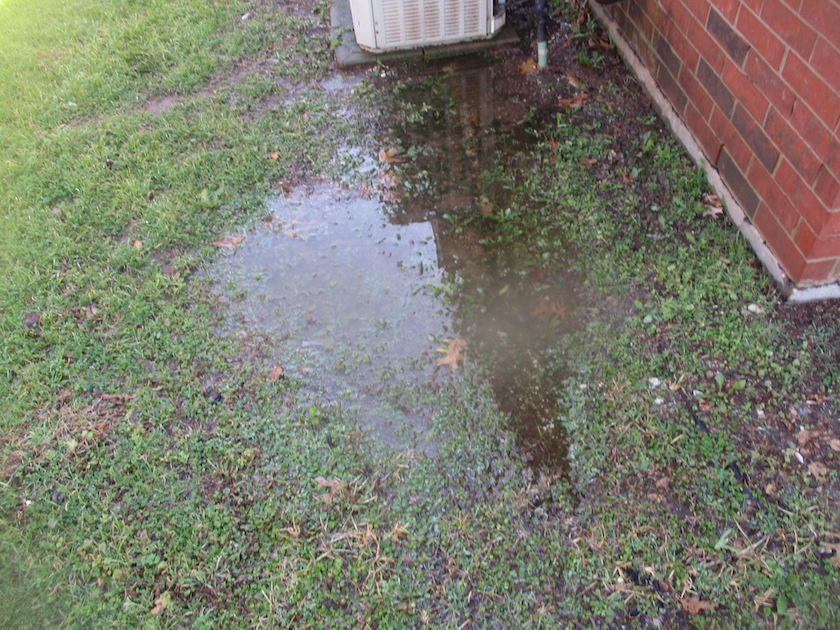
Each spring, in addition to “the pollening,” and a lot of sneezing and watery eyes, we can always count on a good deal of rain and stormy weather. The problem all that (usually much needed) rain can create is that it comes after a frequently long, dry winter. So the ground is dry and prone to flooding. If your home’s drainage system isn’t set up to effectively drain off all that excess water, you’re likely to end up with flooding, followed by standing water, which can cause damage not only to your yard, but to your foundation.
Here are some recent examples of poor drainage in action:
Negative Drainage

This house is a great example of what not to do. First, it doesn’t have any rain gutters. Rain gutters help by catching the water coming off the roof and directing it to the drain spout, so it doesn’t just run off into the yard and collect next to the house.
Second, you can see that the yard slopes toward the house, which is called negative drainage. This means water will flow to the house instead of away from it. You can see the effects of this in the discoloration of the bricks.
Marginal Drainage


This pier and beam home had marginal drainage and a high soil line. Marginal drainage is when the slope is basically flat, or minimally negative. A good measure for the soil line of your house is that you should see about 4-6 inches of foundation before the brick starts. You don’t want the soil against the brick because brick is porous and absorbs the moisture in the soil. When the soil line is too high, water can seep in through the foundation as well.
The crawlspace perspective of that area (the second picture) illustrates the long term effect and structural damage. There were also mud tubes as evidence of previous termite activity, another negative affect of both a high soil line and moisture in the foundation.
Pooling Water
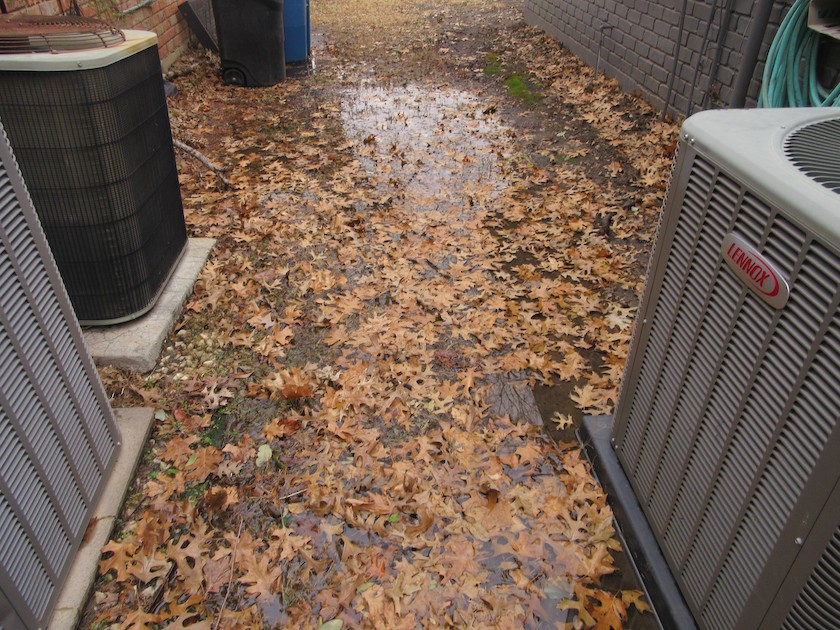
The water pooling next to the foundation is bad for all the reasons listed above, but it’s also about one storm and a high wind away from damaging that HVAC equipment pretty seriously. What this yard, and the previous houses, need is some proper drainage. A french drain would be ideal here. A french drain is a trench filled with gravel or rock that pulls the water away through a drain pipe.
If you have questions about your home’s drainage system this spring, give us a call. We can schedule a home maintenance inspection to help you determine the best course of action, along with investigating any other issues around the house.