
Will Dallas Keep Spending Taxpayer Money to Fight Short-Term Rentals? Tab Is Up to $3.5M
Share News:

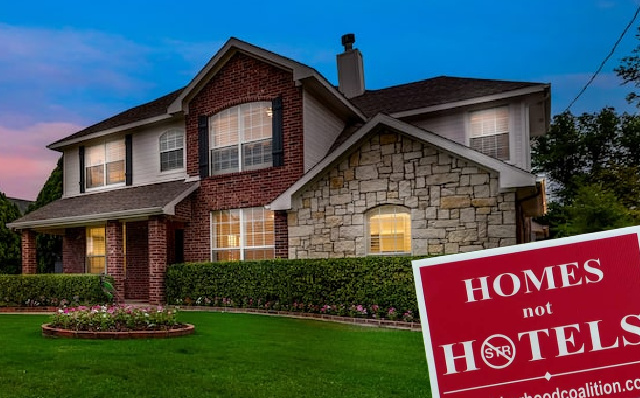
Twice now the City of Dallas has been shot down by the courts in its effort to prohibit short-term rental homes — like those listed on platforms like Airbnb and Vrbo — in single-family neighborhoods and it’s spent $3.5 million thus far doing so.
A judge ruled Feb. 9 that the City “is mistaken” in its four primary claims — The City alleges the Dallas Short Term Rental Alliance and four other plaintiffs failed to establish the right to relief and didn’t prove irreparable injury. Dallas also argued that House Bill 2127 (the “Death Star” bill) was irrelevant and that the STR operators had unclean hands because some don’t pay hotel occupancy taxes.
In June 2023, Dallas banned STRs in single-family neighborhoods, but that action was blocked after the City was sued. It’s been in litigation since.
STR Association Happy With Ruling
Lisa Sievers, a spokesperson for the Dallas Short-Term Rental Association, told CandysDirt.com that, in layman’s terms, the Fifth District Court of Appeals agreed last week that the District Court “made the correct decisions when it ruled late last year.
“In fact, the four points that the City brought up in their arguments to appeal … all of them were repudiated by the Court,” Sievers said. “Basically the appellate court sided with us. At this point, we are happy with the ruling but our ultimate goal is not just to win. Our ultimate goal is to work with the City of Dallas and get a fair and sensible ordinance on the books.”
Dallas City Attorney Tammy Palomino said through a spokesman she could not comment on pending litigation.
Sievers said Dallas has spent an estimated $3.5 million in taxpayer dollars to stand up and maintain an enforcement program for an ordinance that isn’t enforceable and about half a million dollars in legal costs. The City could take the matter to the Texas Supreme Court but that will likely depend on direction from the City Council. Elections are in May and all 14 council seats are up for grabs.
Council Viewpoints
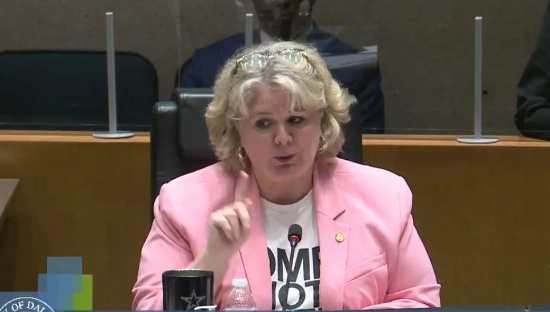
Councilmembers Cara Mendelsohn and Paul Ridley were adamantly opposed to STRs in single-family neighborhoods, with Mendelsohn even wearing a “Homes Not Hotels” T-shirt to the meeting in 2023 when the council adopted the ordinances to ban STRs in single-family neighborhoods. Councilmembers Chad West and Adam Bazaldua have offered the loudest voices in support of STR operators, saying the “ban” passed two years ago isn’t working.
“Not only is it missed hotel occupancy tax from us not addressing this in a more formal manner, the idea of prohibition — taking care of this problem — is just outrageous to me,” Bazaldua said in a November committee meeting. “We have done nothing … in our city to help short-term rentals. We have done nothing to help our code enforcement. We have done nothing to provide the necessary resources to actually get a hold of this issue.”
Read the latest judge’s ruling here.
The Backstory on Short-Term Rentals

When the Dallas City Council banned STRs in single-family neighborhoods, officials said at the time that enforcement would begin after a six-month grace period. But in October 2023, the Dallas STRA sued the City of Dallas. District Judge Monica Purdy granted a temporary injunction on Dec. 6 that allowed Dallas STR operators to continue renting their properties while the matter is tied up in litigation.
Dallas appealed the ruling in January 2024.
In the original lawsuit against the City, the Dallas STRA claimed:
- Violation of guaranteed due course of law
- Unconstitutional taking
- Unconstitutional retroactive law
- Arbitrary discrimination against owners and operators of STRs
- The City enacted zoning without authority to do so under the Zoning Enabling Act
- The ordinances are preempted by the Death Star Act, HB 2127
“Our judge at the District Court basically said all those six of those legal points had merit and issued an injunction against the City trying to implement their two ordinances,” Sievers said. “One of those ordinances was the ‘ban,’ the zoning piece. The second piece was the registration ordinance. Both of those ordinances have been blocked by the injunction. According to the appellate hearing judgment that came out on Friday, we are able to continue to operate under the injunction.”

STRs ‘Reduce Housing Stock’
Longtime Dallas resident Olive Talley told CandysDirt.com on Tuesday that it’s important to note that short-term rentals remove housing.
“When homes are removed from being used as full-time housing and turned into nightly rentals, that reduces housing stock for people who want to live, work, and put down roots in Dallas, not just visit for a day or two,” Talley said.
“STRs are hotels, as evidenced by payment of the state-required Hotel Occupancy Tax.”
“They are businesses operating in residential neighborhoods,” Talley continued. “Long-term rentals over 30 days are still allowed and every STR owner can rent their homes now and still make money from them. We want residents living next door — people who invest in the community, send their kids to school, and engage with their neighbors.”
A note on the City of Dallas’ short-term rental webpage says, “On December 6, 2023, a temporary injunction was filed prohibiting the enforcement of the two short-term rental ordinances. In the meantime, the City will continue enforcement of its existing ordinances governing minimum property standards, disturbing noises, and private nuisances.”
The webpage does not appear to have been updated recently.
What Happens Now with Short-Term Rentals?
The next steps are in the hands of the City of Dallas. They can take the matter to the Texas Supreme Court, but Sievers said she sees public backlash about the amount of taxpayer money that’s been spent. Meanwhile, a ban means the City is missing out on adding hotel occupancy taxes to its coffers for tourism.
It cost $1.3 million to stand up an enforcement and registration program, and it costs about $1 million a year to maintain that program, according to city documents.
Sievers added that as of September 2024, there were about 3,495 STRs in Dallas, representing just 1% of the city’s dwelling units. Of those STRs, the same 3% generate the vast majority of calls to 311 and 911. Over 80% of STR operators have never had a 311 or 911 call about their rental property, Sievers said.
Other Cities Fight STRs
David Schwarte, a retired attorney from Arlington, cofounded TX Neighborhood Coalition and worked with Arlington and Plano to create their STR ordinances, both of which effectively ban the rentals in single-family neighborhoods. Arlington’s fight over STRs went all the way to the Texas Supreme Court.
“If the city is spending money to do anything, it should be to preserve the rights of the people who reside there,” Schwarte said. “Short-term rentals are inherently destructive of the neighborhoods they invade.”
Schwarte acknowledged that “you cannot legislate against bad behavior.”
“A party house problem is really just the tip of the iceberg,” Schwarte told CandysDirt.com. “The real problem is the destruction of the fabric of the neighborhood as people you knew and trusted are replaced by a revolving door of strangers … If you step back and think about why people move into a single-family neighborhood, it’s so you can have a sense of security, stability, and community from knowing the people who stay next door.”
Schwarte said Dallas should go back to the trial court because the case is “certainly winnable.”
The lawyer shakes off criticism that he doesn’t even live in Dallas.
“My first answer is, ‘So what?’ And the second is, you can learn a lot from the successful things that other cities have done,” Schwarte said. “This is an existential threat to neighborhoods. Once they’re turned into a collection of short-term rentals, it’s going to be really hard to unscramble that egg.”
Create an Ordinance That ‘Actually Works’
Attorney David Coale of Lynn Pinker Hurst & Schwegmann, LLP represented the Dallas STRA and agreed that the ball is now in the City of Dallas’ court.
“Door No. 1 is to seek review from the Texas Supreme Court, which, speaking loosely, they have a couple of months to do,” Coale told CandysDirt.com. “Door No. 2 is to not seek review from the Supreme Court. The case would then go back to Judge Purdy at the trial court who signed the injunction in the first place. She would schedule the matter for a trial on merits. That said, in constitutional cases like this that are really about what the law is and not so much the facts, the preliminary injunction phase is often the ballgame. If they took Door No. 2 and went back down to Judge Purdy and wanted to have a trial, our side would say, ‘Try what?’ The facts aren’t going to materially change from what developed at the preliminary injunction hearing, so what’s the point?”
Door No. 3 Coale added, is “they can fix all this and do an ordinance that actually works.”
“That would be my recommendation,” he said. “If they really want to do something and satisfy people about short-term rentals, they ought to do something that works. It just seems like this has been on the wrong path. It would be a really good idea to change paths to something that actually works legally, that is actually enforceable, that could actually solve the problem they’ve identified, in my opinion.”
Talley said the ordinance never had a chance to work because the STR operators sued before enforcement could begin.
“I suspect some council members who never truly supported the ordinance will now use this as an excuse to try to unwind years of work on this issue,” she said. “These ordinances have never been given a chance to work because of the litigiousness of the STR industry. If the council tries to roll this back without a full and competent trial, council members should expect to hear from voters at the polls in May.”
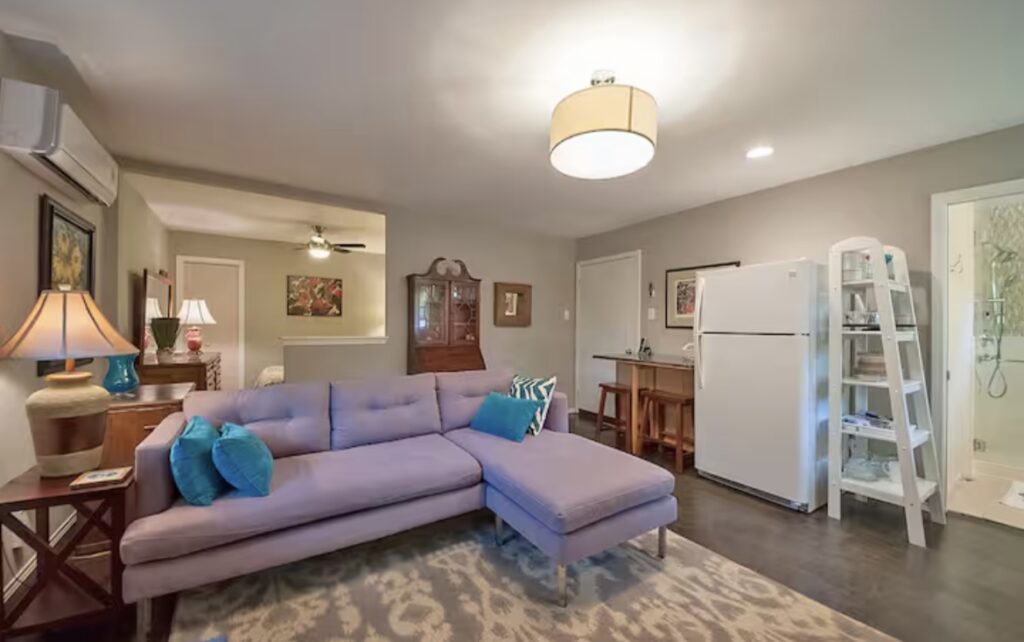
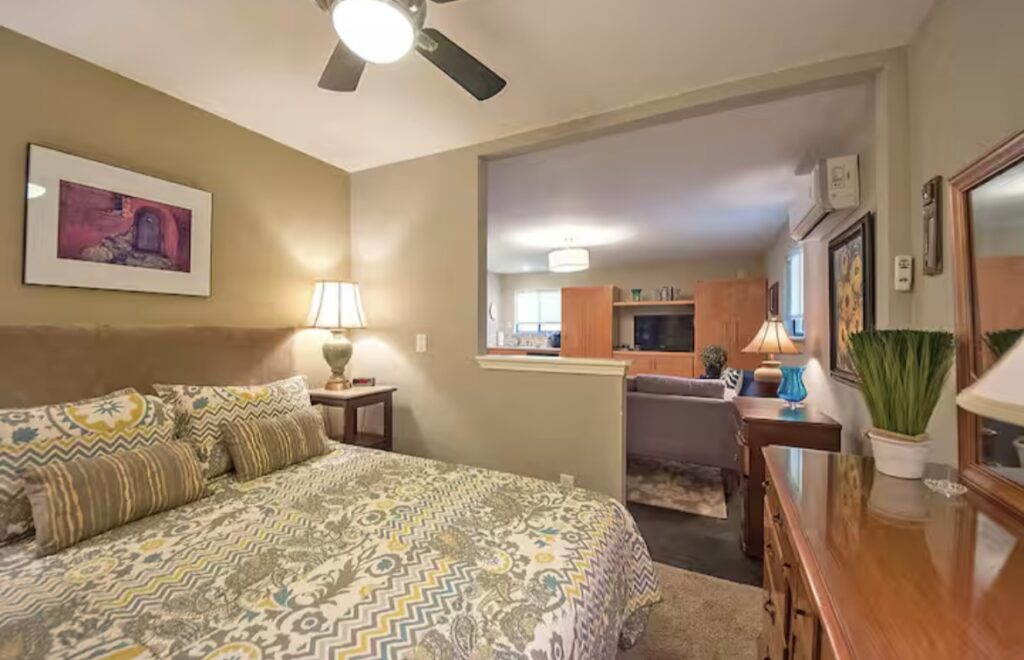
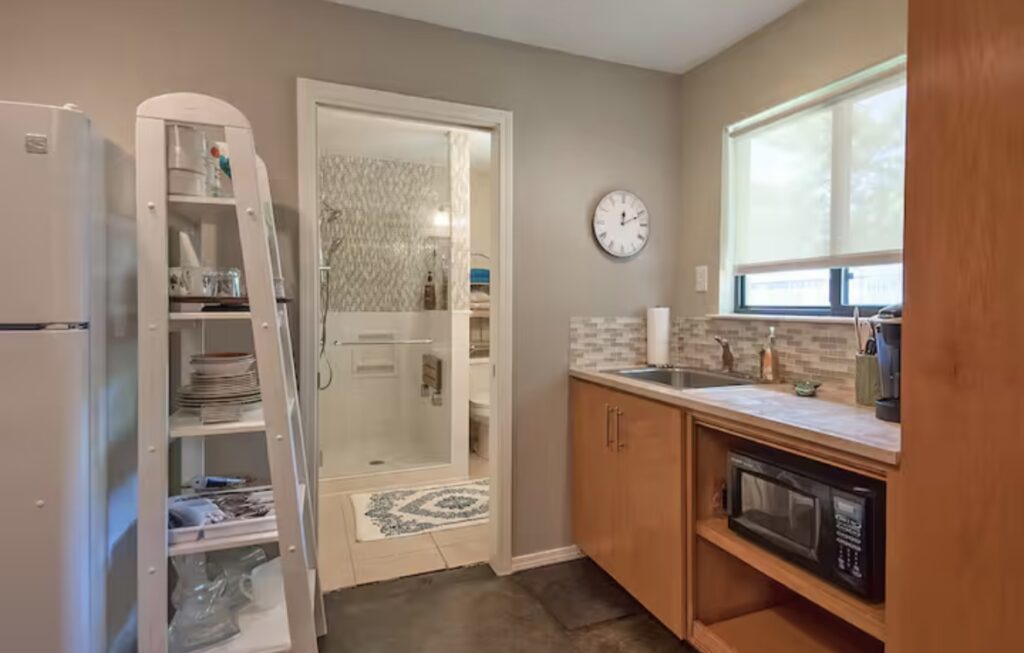
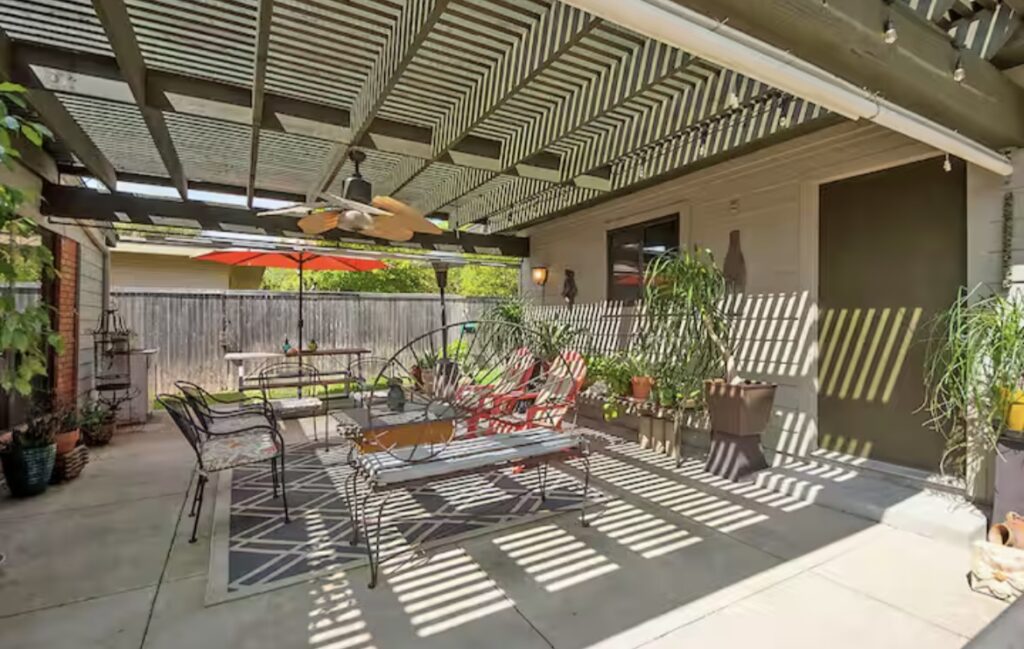
Denise Lowry has a different viewpoint. She’s hosted a one-bedroom STR in East Dallas for about eight years. She built the “granny flat” in her backyard for her mother, who has since passed away. A Realtor with Ebby Halliday & Associates, Lowry had to take time off when her husband was diagnosed with dementia about three years ago. The STR provides income in addition to a modest Social Security check.
“This is my main supplement to my income,” she said of the short-term rental. “I couldn’t live in this neighborhood if I didn’t have this extra income. It’s really devastating to me if this were to go away. I think it’s detrimental to my community too. A ton of my guests are visiting family within a mile from here. I haven’t had a single complaint from anyone in my neighborhood. They send me referrals.”







The underlying point with short-term rentals operating in neighborhoods zoned for single-family is that they are commercial operations much like hotels. They pay a state-mandated hotel tax. If these commercial operations are allowed in our neighborhoods, what’s next? Can I then operate a body shop, a childcare center, or other commercial operation in my home?
Property rights cut both ways. As a homeowner, I invested in my home relying on a covenant with the city when I purchased my home so that I could live peacefully in a neighborhood consisting of homes rather than hotels, I expect the city to live up to that covenant. If Dallas can spend $6 million dollars to count trees, they can certainly spend money to defend our single-family neighborhoods.
Both the City Manager and City Attorney need to do their jobs and defend the city against the scrouge of short-term rentals in our neighborhoods. To do so, the city must hire competent outside counsel with experience defending cities against short-term rentals and defend the ban at trial. Other cities in the Dallas area including Arlington, Plano, Fort-Worth, and Grapevine fought to implement bans on short-term rentals and Dallas must do the same.
Finally, councilmember West and Bazaldua should stand up for their constituents and neighborhoods by supporting the city’s ban. If they fail to do so, they should be voted out of office in May. These are the same council members along with others who talk about the need for more affordable housing, yet they support thousands of homes in Dallas being used as commercial enterprises that will never house residents, including families that are the bedrock of our city.
What is the source April Towery is using when she claims Dallas has spent $3.5 million fighting short-term rentals? Surely it’s not Lisa Sievers.
Short term rentals are a business, period. Many of these STR owners are driven by the almighty dollar. The STR owner I’ve interacted with in the past told me point blank that he can make more money with an STR so he converted all his long term rental properties to short term rentals. The STR next to my property had completely destroyed my sense of security, quality of life and neighborhood stability.
I’m am always mystified when I read that an individual builds a secondary home in their yard and then claims they couldn’t stay in the neighborhood if they couldn’t operate it as an STR.
Dallas what will you do when a tattoo parlor or hair salon decides to operate in a single family home in a single family neighborhood? How is an STR any different? How will Dallas legally justify shutting down the tattoo parlor and hair salon when STRs are allowed to operate. All of these are businesses. Actually with STRs it’s not a matter of shutting them down. Nothing is lost because the property still exists and can be rented for 30 days or more.
Frankly I don’t understand how Sievers can assert the city “spent an estimated $3.5 million …to maintain an enforcement program…” Dallas never had the opportunity to implement the STR ordinances due to the injunction so how were millions spent.
Chad West and Adam Bazaldua, city council members, are very vocal about their support of STRs over single family neighborhoods. They also appear to be in lock step with monied supporters of the 2025 Texas state legislature HB 878 efforts to destroy the fabric of Dallas single family neighborhoods. HB 878 allows developers to divide single family lots and build multiple homes on each part of the divided lot. It also will allow an accessory home to be built on any single family lot.
We have a municipal election coming up in May which will decide our city council members for the next 2 year term. So I encourage you to research and support candidates that will support established zoning regulations and are supportive of our existing single family neighborhoods.
Finally, Dallas legal must engage qualified outside council to ensure that our neighborhoods don’t become a free for all zone where STRs proliferate!