
City Hall Roundup: Should 1500 Marilla Street Receive Dallas Landmark Designation?
Share News:


Lately, Dallas residents have expressed strong feelings about how business is conducted in City Hall. Locals also have strong feelings about the building itself, an inverted pyramid structure designed by Chinese-American architect I.M. Pei that opened in 1978.
People who “aren’t from here” are prone to point out the unusual building. Native Dallasites and those with an appreciation for design and architecture often are enamored by it.
The building slopes at a 34-degree angle, with each of the seven above-grade floors being 9½ feet wider than the one below. This inclined façade interacts with the buildings it faces downtown and provides protection from the weather and Texas sun, according to a webpage on Dallas City Hall history authored by Mary Ann Sullivan.
So does its uniqueness make it worthy of the Dallas Landmark designation? The City’s Landmark Commission thinks so.
The Landmark Commission’s designation committee held a meeting earlier this month at which District 12 Commissioner Reagan Rothenberger presented a statement of intent letter signed by 13 members asking that the landmark initiation process be considered.
“Dallas’ ambition is now reflected in the redevelopment of City Hall’s western neighbor; the Kay Bailey Hutchison Convention Center,” Rothenberger wrote. “It is unclear at this time how City Hall aligns with the vision of this monumental project. It is now time to weigh the historic value of Dallas City Hall in preparation for the area’s redevelopment over the next decade. There’s the old phrase, ‘You can’t fight city hall.’ Perhaps it’s time to fight for city hall.”
Fighting for City Hall
Rothenberger, who serves as the planning director for the City of Murphy, told CandysDirt.com that his intent was not necessarily to “save City Hall,” but to start a conversation.
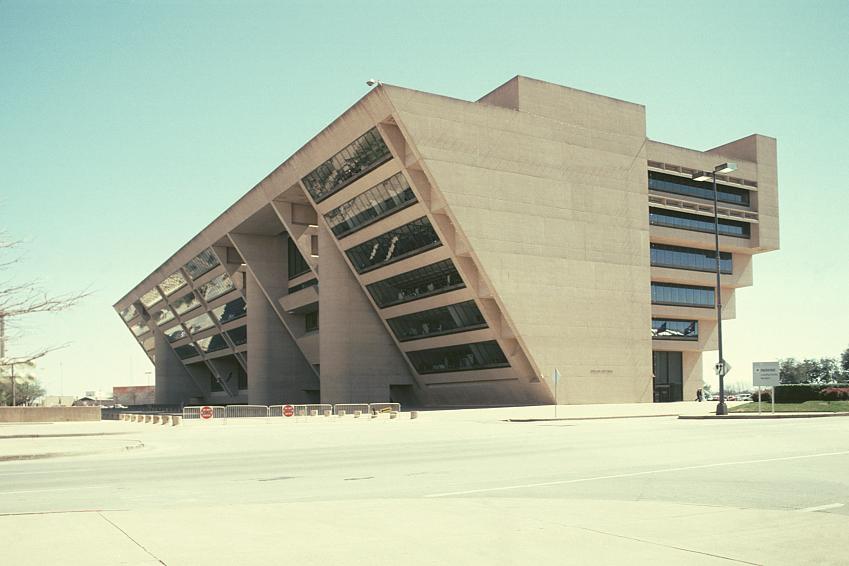
“I’ve always had a special place in my heart for localized public buildings,” said Rothenberger, who grew up in Beaumont, the son of a Jefferson County Court judge. “Each of these buildings at their inception reflects the very best the community could offer. I think Dallas City Hall is a prime example of this. Even people who have mixed feelings for or even hate the building say they can’t imagine Dallas without it. I think it’s the epitome of Dallas’ self-confident, can-do attitude.”
Billions of dollars are being invested in downtown, and Dallas preservationists felt like it was time to open up the conversation and talk about how City Hall plays a role in the area, Rothenberger added.
“The more I hear people talk about the building, the more I realize it’s misunderstood,” he said. “When I came on the landmark commission four years ago, I never would have imagined doing this, but the more I’ve worked in the building and interacted with it and learned its history, I’ve realized it’s worthy of preservation.”
Dallas City Hall’s Connection to John F. Kennedy
Rothenberger’s “statement of intent” was aptly dated Nov. 22, 2024, on the 61st anniversary of U.S. President John F. Kennedy’s assassination in Dallas.
From Rothenberger’s letter:
In 1964, Jacqueline Kennedy chose a young architect by the name of I.M. Pei to design a presidential library to perpetuate the memory of her late husband, John F. Kennedy. In 1966, Mr. Pei, now a rising star, was chosen to design a new city hall for Dallas. The concept of a new city hall emerged from Goals for Dallas, a community-driven plan with an unspoken purpose of overcoming the painful memory of the loss of President Kennedy in the heart of the city.
These buildings would be completed after more than a decade of challenges and setbacks. Each would serve their unique purpose in relation to one of our nation’s darkest days. These projects are reflective of the swift rise of Pei’s reputation, and Dallas City Hall figuratively “cemented” Mr. Pei’s relationship with Dallas. With other buildings such as One Dallas Center, Energy Plaza, Fountain Place, and the Morton H. Meyerson Symphony Center, Pei and his firm’s buildings forever changed how Dallas citizens interact with government, business, and the arts.
Since opening in 1978, the growth of our city has been reflected in City Hall’s iconic tilted windows. The City Council Chamber has echoed the demands of citizens wanting the best for their city. The Flag Room has hosted dignitaries and marked important milestones. Visitors have been awed by the 100-foot-tall Great Court while paying their water bill. City Hall Plaza has been home to demonstrations, gatherings, and countless special events such as the Dallas Marathon.
What Landmark Designation Means
According to a memorandum from Interim Assistant City Manager Robin Bentley, the next step is a public hearing at an upcoming Landmark Commission meeting “to determine whether sufficient information is included in the request to initiate the historic district procedure.”
“If the designation process is initiated, a two-year pre-designation moratorium would be placed on Dallas City Hall,” Bentley said in the memo. “During the moratorium, all exterior projects must be reviewed. Routine maintenance of the exterior can be reviewed by staff; however, anything beyond routine maintenance requires Landmark Commission approval. During the moratorium period, research regarding the significance of the building would begin. The designation committee would work with staff to determine the appropriate preservation criteria for the exterior of the property. This process can take two years or more to complete before it is ready for a final vote from the Landmark Commission to move forward to City Plan Commission and then City Council.”
If approved the building would be protected by local ordinances from significant alterations or demolition, requiring approval from the property owner — in this case, the City of Dallas — and ensuring its historic features are preserved.







This conversation about the past and future of City Hall, and I’m glad its moving forward. I look forward to any recommendations about the plaza and modernizing interior spaces.
The building was created by I.M. Pei’s Firm and a group of architects working there. The building came about from a Dallas culture of tasteless, nouveau riche climbers, which still applies. I don’t know if I put a whole lot of value in the opinions of an organization or person funded by the City. The building is awful. More importantly, is it completely inefficient and costs the taxpayers money.
I think you will be interested in our upcoming story about what area architects have to say about the building.
sure give it landmark status as a fine elegant example of brutalism and massive concrete mistake. Let the people of Dallas gaze their eyes upon this hideous lump