Far West Oak Cliff Report Reveals Opportunities for Revitalization
Share News:

Planning nerds rejoiced last month when the highly-anticipated Far West Oak Cliff report went live. Perhaps that’s an exaggeration. It’s me. I rejoiced. I’m the planning nerd.
The 55-page Far West Oak Cliff Task Force Report is not an area plan or a binding document but reveals some solid ideas for neighborhood, commercial, and corridor revitalization as well as a potential partnership with Dallas College Mountain View.
But questions linger … Why devote a whole year of volunteer and staff time to yet another document that could sit on a shelf? And how and when could implementation occur?
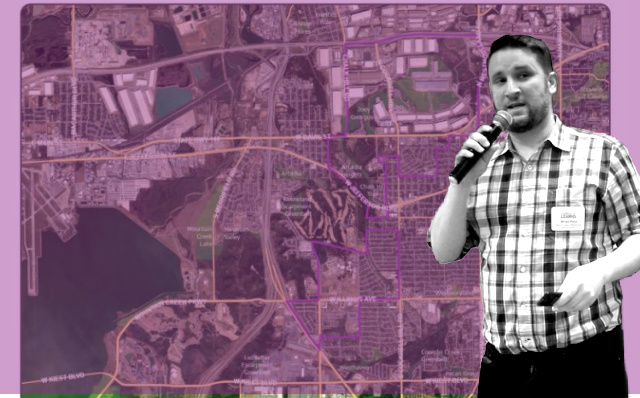
We reached out to Brian Price, Dallas’ supervisor of service area planning, to find out more.
“I think of it as an initial ‘existing conditions’ document that is leading to further action,” Price said. “It definitely points to some stuff that the City and its partners can act on immediately. To me, the most important part is helping the neighborhood develop community capacity building. There really are no neighborhood associations in this area. The task force identified leaders who are willing to start those neighborhood organizations.”
The document’s purpose is to “establish a framework for forward momentum,” Price added
“I wouldn’t be surprised if, in a few years, several of the recommendations from this plan come to fruition,” he said.
Read the full report here.
“We worked really hard, not just making frivolous recommendations but working with partners that understand this and gaining the council member’s buy-in on these issues,” Price said.
What’s so special about Far West Oak Cliff?
We hear a lot about North Oak Cliff, the district represented by Councilman Chad West, which includes the Bishop Arts District and neighborhoods like Kessler Park, Kidd Springs, Winnetka Heights, and Stevens Park Village. Then there’s South Oak Cliff in District 4, represented by Carolyn King Arnold, where many say neighborhoods have been underserved for decades and are now flagged as priority areas for infrastructure and affordable housing.
The term “West Oak Cliff” became a household name a few years ago when neighborhood representatives and business leaders began crafting the West Oak Cliff Area Plan. Unanimously adopted in 2022, WOCAP identified several regions that needed zoning changes to allow them to continue functioning as they were or to plan for the future.
And then, in 2023, Dallas City Council boundaries shifted based on the results of the state-mandated redistricting process to ensure that each of Dallas’ 14 council districts serves a proportionate number of constituents.
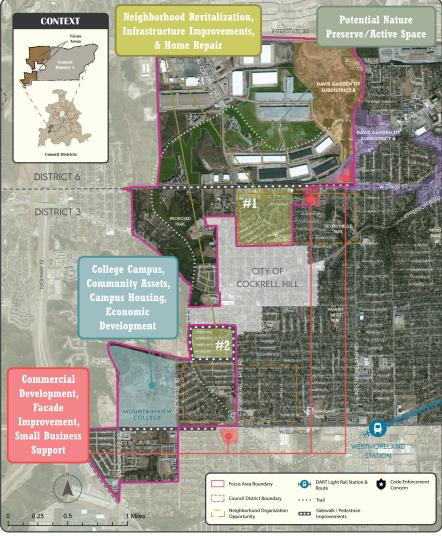
“One of the results of this [redistricting] process was the expansion of Council District 1 further westward into an area labeled as Far West Oak Cliff (FWOC),” according to city documents. “In September 2023, Councilmember [Chad[ West formed [a] task force with the purpose of studying the area in yellow on the map below.”
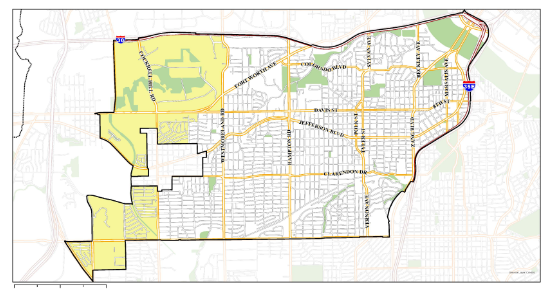
Redistricting shifted a significant amount of land from District 3 to District 1, West told CandysDirt.com, and the council member wanted to know more about the assets he’d be representing. D1 now includes Dallas College Mountain View, Chalk Hill Trail, and the long-neglected 200-acre Joey Georgusis Park.
“Planning staff doesn’t want to do area plans on a whim, but they did an overview to see what our infrastructure needs are and to look at our park assets and park needs,” West said. “We have a united focus on everything happening in Far West Oak Cliff. We have a park that hasn’t been touched in 20 years. This may result in an area plan but for now, we just need to see what we’re working with and engage the people who live in this area.”
Here are the six key findings in the Far West Oak Cliff Report.
Much of the language below is taken directly from the report. Lest you think we’re resting on our laurels, of course we asked about housing.
“Citywide there is a need for additional housing, kind of everywhere at all scales,” Price said. “There is definitely a lot of opportunity. I think the market’s momentum is moving this way. I don’t think we know how long that will take. It could be imminent. It could not be. Pinnacle Park, Davis [Boulevard], and some other vacant spots definitely have catalyst opportunities. My hope would be that we can get ahead of that wave by trying to produce and/or preserve affordable housing as the market moves in.”
In order to “convince the market” that housing is useful in areas like Far West Oak Cliff, road reconstruction and new sidewalks go a long way, Price added.
Neighborhood Revitalization
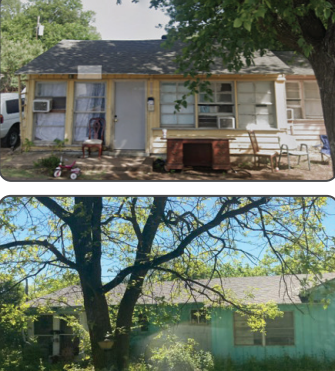
Certain neighborhoods in this area contain substandard infrastructure as well as challenges around housing conditions. Most pivotally, the area has a lack of neighborhood organizations to educate residents and promote interaction with key City services. Conditions are documented in this report with a series of recommendations to begin addressing these issues.
Commercial and Corridor Revitalization
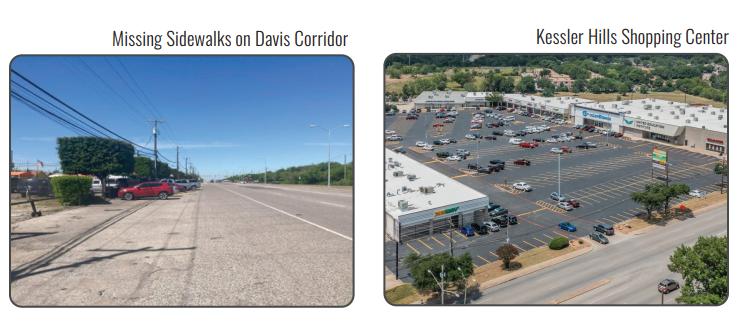
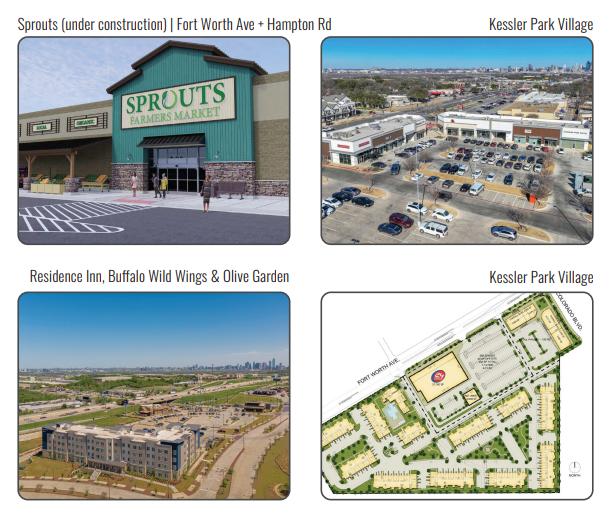
Given the flourishing commercial development in areas immediately to the north and east, the study area is primed for new development and presents many opportunities along multiple commercial corridors. The main east-west corridors, Davis and Illinois, could greatly benefit from vehicular and pedestrian street improvements to support existing businesses, encourage new development, and promote walkability and greater safety.
Neighborhood Capacity Building
While there are several active neighborhood-based organizations in the Oak Cliff area, Far West Oak Cliff contains a notable absence of such organizations. The consequences of this lack of representation are seen in each of the issues identified in this report. Work is already underway to identify residents who would be interested in forming organizations, with more support and momentum needed moving forward.
Dallas covers 350 square miles and sometimes the neighborhoods just need to be heard, Price said.
“Sometimes just having a dedicated staff member who meets with community residents can provide basic connections to city services or information, let alone helping them establish a vision or bringing the attention of the departments,” Price said. “It’s nice to be able to do these projects and connect the dots. I’ve always found this to be the most satisfying work that I’ve done with the city.”
Dallas College, Mountain View Opportunities
As part of the Dallas Community College system, the Mountain View campus is a thriving institution that is in the process of expanding its programs as well as physical development on its campus. There exist several opportunities for partnership with the City of Dallas and other public agencies, as well as greater physical connections to the surrounding corridors and neighborhoods. The college is currently working on a master land plan for its campus. The Task Force noted the college possesses a large unused land area fronting Illinois that has the potential to be activated with retail/mixed-use development.
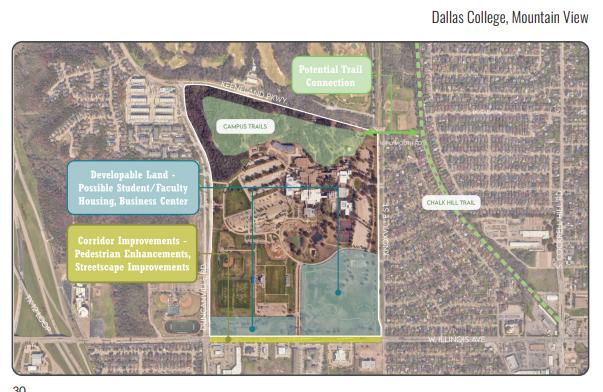
Dallas College, Mountain View president Macario Hernandez served on the Far West Oak Cliff Task Force, offering an opportunity for partnership with the City of Dallas.
Green and Open Space Development
While this area of Oak Cliff contains significant environmental assets, many of them have no direct access or connection to the adjacent communities. This report provides recommendations to activate the area designated as Joey Georgusis Park and the planned, and partially funded, Chalk Hill Trail.
Neighborhood Planning Context and Opportunities
There is a current lack of recent planning efforts in the FWOC area. This section will review recent neighborhood planning efforts from adjacent neighborhoods that highlight several issues and recommendations similar to those in this report. It will also recommend a neighborhood planning process for the area known as “Pinnacle Park”, an area facing a complex mix of uses, new development, and future open/green space opportunities.
“The area around Pinnacle Park is fascinating,” Price said. “It was developed and encouraged by the City’s Economic Development Department upwards of 20 years ago as a site for warehouses and job creation. A bunch of retail and now some housing has been popping up around it.”
The area also includes a massive park and the Chalk Hill Trail.
“There’s a multidimensional set of issues going on there,” Price said. “That was part of the ForwardDallas [comprehensive land use plan] effort, to look at different kinds of industrial or warehouse areas and determine which ones are compatible for residential, commercial development, and mixed-use and what areas need to be left alone and buffered from other uses. This is the kind of warehouse use that is potentially compatible with neighborhood uses. Our recommendation is for a neighborhood plan that could find a way to look at future development and at least have a community conversation about it.”