
Cyclists and Business Owners Spar Over Plan to Reduce Traffic Lanes Along Busy Maple Avenue
Share News:

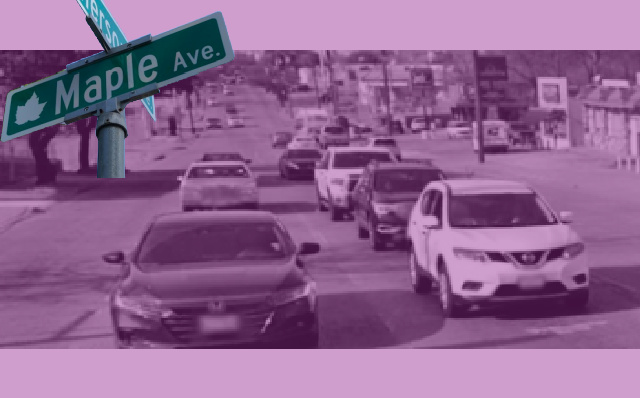
An initiative to keep cyclists safer on Maple Avenue is drawing criticism from a group of business owners who say they were never notified about a proposed city plan to transform the busy thoroughfare from four lanes to two — cutting the corridor’s traffic and access to their businesses in half.
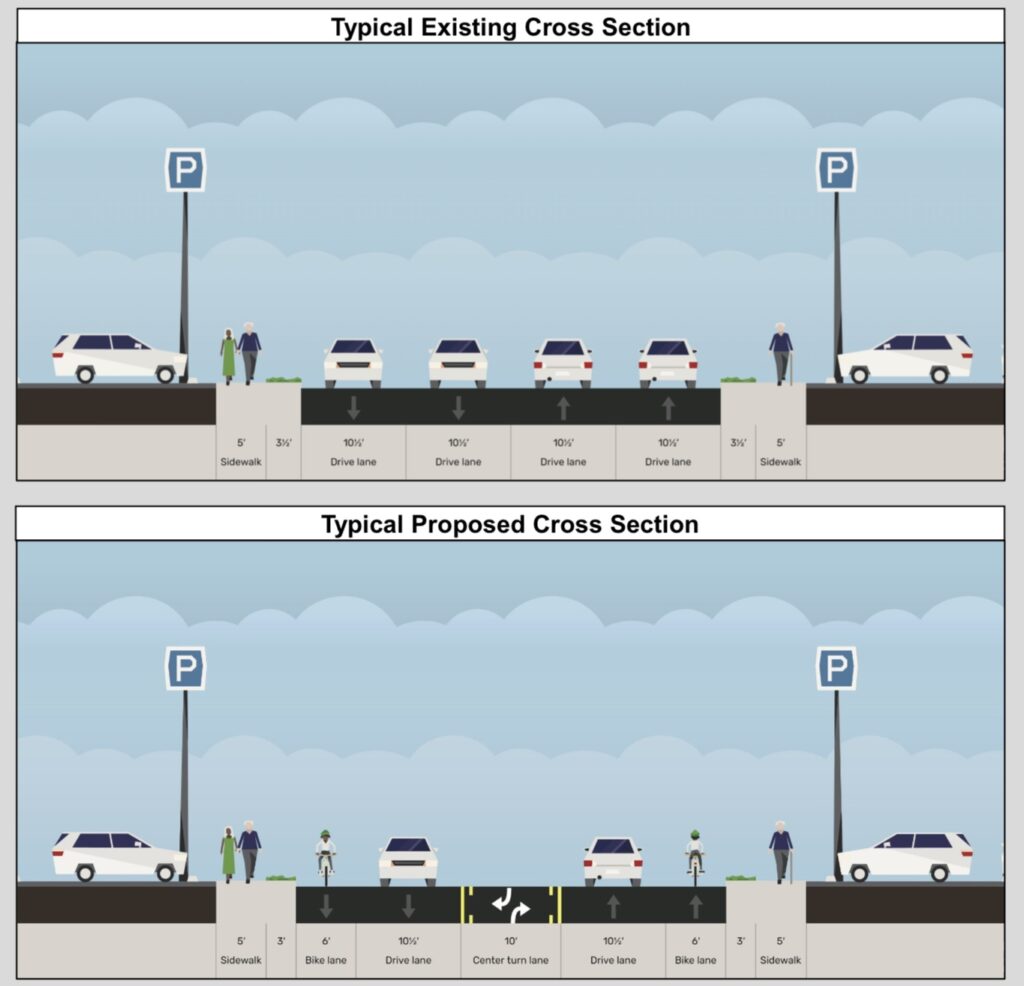
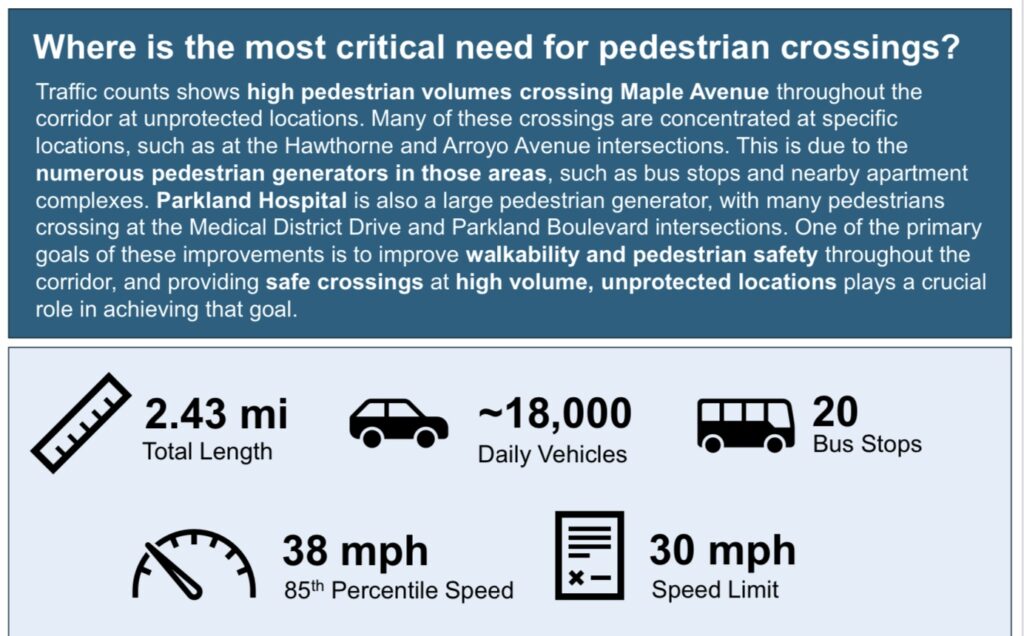
As part of the Dallas Vision Zero traffic safety plan, the city is proposing throttling a four-lane stretch of Maple Avenue — from Oak Lawn Avenue to Mockingbird Lane — by replacing two lanes with a center turn and a bicycle lane. The section of Maple from Hudnall to Oak Lawn has been called the most dangerous street for pedestrians in Dallas.
Residents and property owners discussed the plan during a meeting Friday, Nov. 1, hosted by Dallas Councilman Jesse Moreno with Councilman Paul Ridley and Transportation Director Gus Khankarli — incidentally held during 5 p.m. rush hour traffic — at Reverchon Recreation Center.
Vision Zero
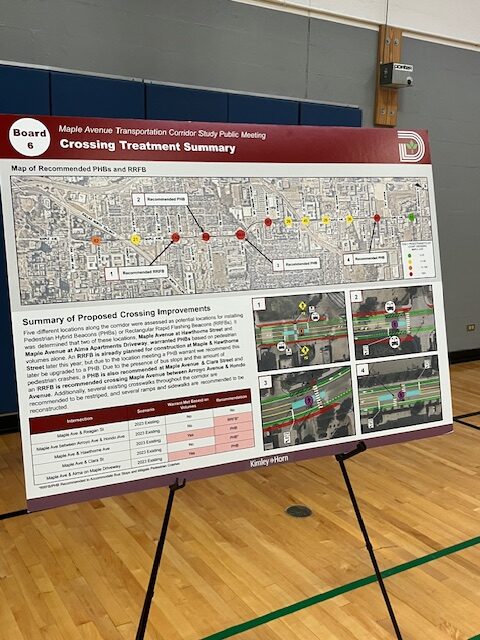
The Maple Avenue corridor was identified as a priority in the city’s Vision Zero Action Plan and the draft Dallas Bike Plan (2023 update). The proposed improvements include bike lanes, new or enhanced pedestrian crossings, and improvements to the Hudnall/Butler and Manor/Bomar intersections, according to a city webpage devoted to the project.
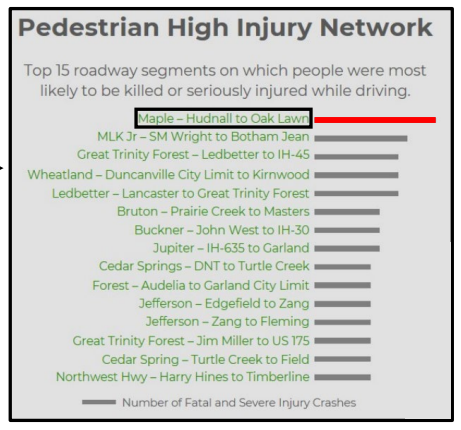
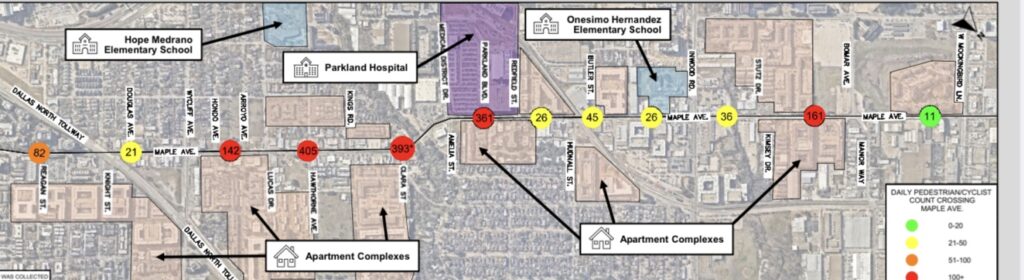
Khankarli reported that year-to-date, 22,611 total crashes have occurred on Dallas roadways, resulting in 165 fatalities and 736 severe injuries. The two-mile stretch along Maple has the highest concentration of fatalities in the city, Khankarli added.
Other roadways on the City’s “Pedestrian High Injury Network” included Martin Luther King Jr. Boulevard, Buckner Boulevard, Cedar Springs Boulevard, Jefferson Boulevard, and Northwest Highway.
‘It Takes 25 Minutes to Travel 3.3 Miles’
Attendees included a mix of residents, cyclists, and Maple Avenue business owners. The rush hour meeting may have exemplified the struggles each stakeholder has, as cyclists with bike gear commuted to the meeting with vehicular traffic while attendees — and reporters — had a hard time finding parking in the bustling area.
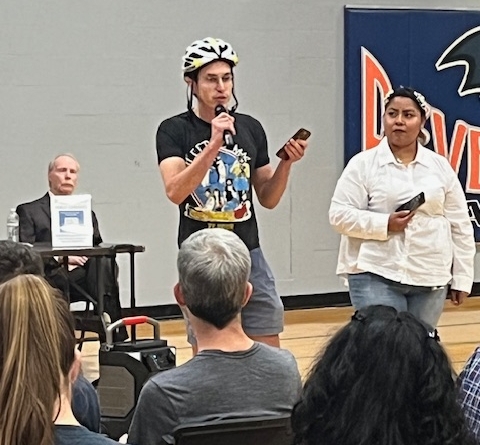
One resident at the meeting said traffic is already a problem, explaining that it takes 25 minutes to travel 3.3 miles down Maple. Another said reducing Maple from four lanes to two would be a “disaster” for every retailer. Others complained about other public safety issues, such as unhoused residents and alleged drug use in the area.
Hondo Avenue resident Jorge Garza said the traffic accident numbers are highest in the area surrounding his neighborhood.
“We love our businesses, we love our neighbors, but everyone agrees that Maple is the worst safety corridor for pedestrians and cyclists,” he said. “We have a problem, so let’s fix it.”
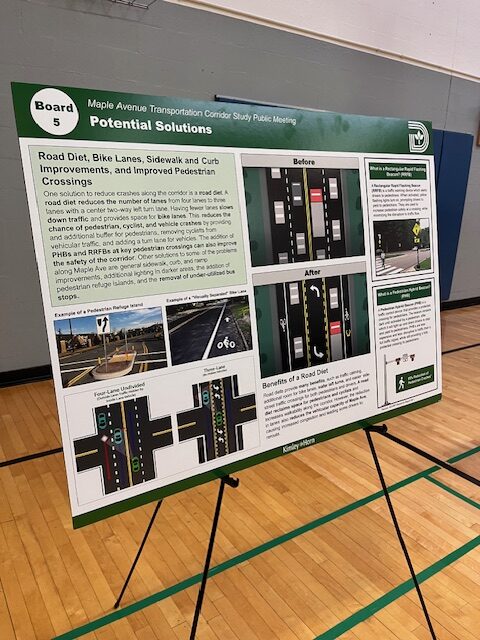
‘A Road Diet’
Local property owners say the Maple Avenue plan would hinder traffic flow and make it more difficult for customers to reach their businesses.
Alden Wagner Jr., a commercial and investment real estate broker, told CandysDirt.com that “as soon as they start jacking around with the lanes and building sidewalks and bicycle lanes, it’s going to reduce the access to many of the properties.”
The area is already gridlocked, which will be exacerbated by the lane reduction, Wagner added.
“You can’t get down the street now,” he said. “It’s heavily trafficked.”
Some stakeholders believe they were omitted from the city’s notification process.
Candace Rubin, who has for three decades led a commercial real estate company and owns eight properties on Maple, said she contacted more than 300 property owners, all of whom were unfamiliar with the city’s “road diet” plans for the corridor.
“Literally, no owners of Maple Avenue and the Maple immediate area received any written notice from the City of Dallas regarding proposed changes,” Rubin’s assistant Chris Taylor said in an email. “We need to ascertain what method the City used to notify the owners since none were aware of this proposed change. The lack of transparency and methodology for traffic control are of great concern to the owners.”
Rubin said she supports some of the safety measures but doesn’t understand how reducing the number of traffic lanes improves safety.
“Why are they being so covert about this?” she said. “What am I missing?”
By state law, municipalities are required to hold a public hearing and notify nearby property owners of a zoning change, however, no zoning changes have been proposed.
Strategic Messaging
Maple Avenue property owners are working with veteran Dallas broadcast journalist Brett Shipp as a consultant. The longtime WFAA reporter stepped down in 2017 to run for Texas’ 32nd Congressional District seat in the U.S. House against Pete Sessions. Following his loss, he returned to journalism and recently left Spectrum News in August.
The “most dangerous corridor” designation is disputed by Shipp who says, according to the Texas Department of Transportation, from January 2019 until October of last year, only one traffic-related fatality and nine serious injuries were recorded.
“Let’s keep in mind, we have already established that the City’s strategy was to push this through without the palpable pushback from the legacy stakeholders,” Shipp advised the group in an email before the Nov. 1 meeting. “Tonight’s meeting will be the first time the City gets a real taste of how the major stakeholders feel. Remember, a handful of urban renewal activists cannot usurp the power of the legacy stakeholders.”
Shipp went on to say that the legacy stakeholders are victims, “deliberately cut out of a democratic process.”
“All we seek is the truth, equity, free access to the legacy properties, living spaces and businesses of Maple Avenue, and SAFETY for the people of the corridor,” Shipp wrote.
Next Steps
Former City Councilman Philip Kingston told attendees that their concerns are “demonstrably correctable,” saying solutions for improving traffic along retail corridors have been employed across the country. His wife, District 14 Plan Commissioner Melissa Kingston, noted the positive economic impact and reduction in crime and homelessness that occurs when safety measures are initiated along commercial corridors.
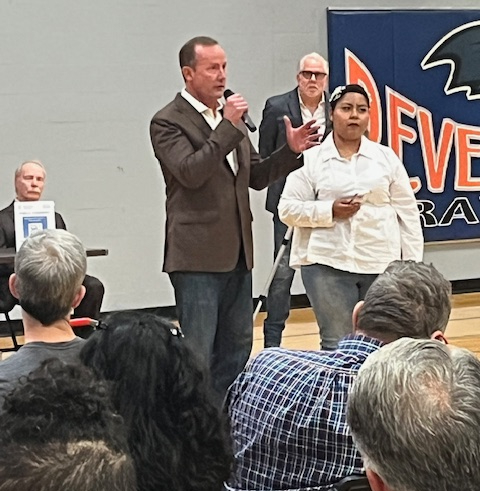
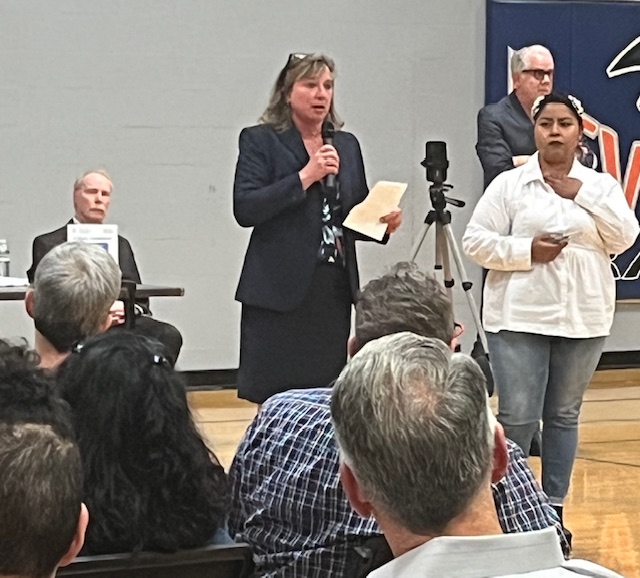
Councilman Moreno said the road diet is “by no means a final recommendation.”
“There are many more steps that we will be going over toward the end so that you know exactly what is going on,” he said. “As a small business owner myself, I want to make sure we are doing everything we can to make our businesses prosper. I was not in support of any conditions that would make our businesses suffer.”
No timeline for the Maple Avenue improvements was mentioned at this month’s meeting. A prior July presentation called for an amendment to the City’s thoroughfare plan, with construction to start in 2026.
Already, the city has jumpstarted safety improvements by completing the installation of pedestrian countdown timers and reflective traffic signal heads. “Through the end of 2024, we will make additional safety improvements including installing a pedestrian crossing beacon at Maple and Hawthorne, installing additional streetlights in darker sections of the corridor, and extending the pedestrian crossing time at some of the signalized intersections,” the city webpage states.
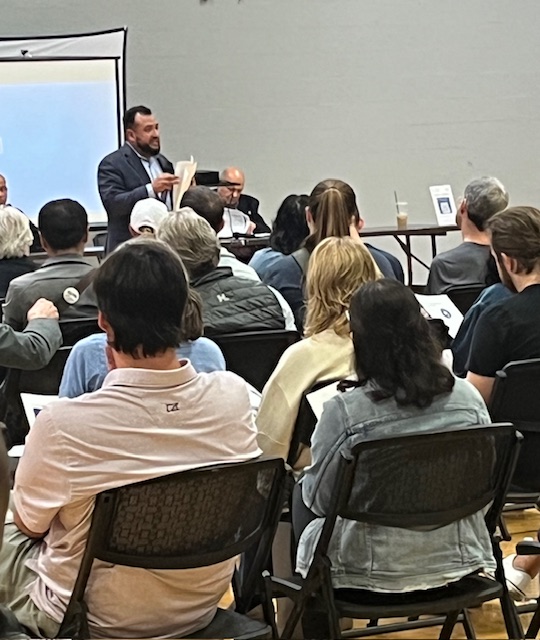
“Tonight was about listening to you,” Moreno said at the close of the meeting.
Public comment on the project remains open through Nov. 20, with a consultant’s report and additional public meeting to follow.





where is the objective data that shows that a bike lane is needed. Bike lanes are being pushed by the Dallas Bicycle Coalition. As I drive around town I see numerous unused bike lanes. Look at Fort Worth Ave west of Hampton. it is a protected bike lane. maybe set up surveillance cameras to capture how many cyclists actually use the lanes. Same goes for the protected bike lanes on Abrams.
Recently the city put in a bike lane on Akard starting at Marilla going south. How many cyclists use that lane? none that I’m aware and I travel that street everyday.
as for pedestrians why doesnt the City implement an ad campaign similar to Dont Mess with Texas that would educated pedestrians. make them in English and Spanish. I see far to many pedestrians jaywalking instead of using the crosswalks
as for the meeting who decided to hold it at 5 pm and for only an hour and in place with limited parking. have the meeting on the weekend hold it for at least 2 hours and if more time is needed then extended the time. Get the public’s input
“Other roadways on the City’s “Pedestrian High Injury Network” included Martin Luther King Jr. Boulevard, Buckner Boulevard, Cedar Springs Boulevard, Jefferson Boulevard, and Northwest Highway.”
all of the streets are major thoroughfares with 4 to 6 lanes. Reducing lanes and adding bike lanes wont solve the pedestrian problem.
put in place an ad campaign (English and Spanish) to educate pedestrians