Dallas Council Member Offers 3 Suggestions to Generate Revenue Without Burdening Residents
Share News:

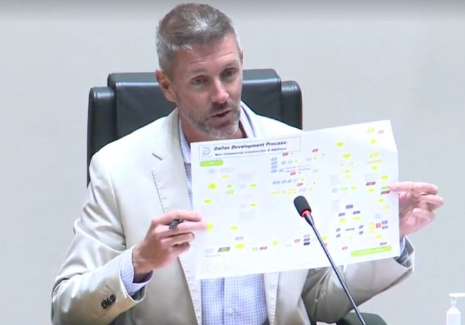
Texas cities are hamstrung by state budget caps that impact the amount of property tax revenue municipalities can collect, but there are opportunities to bring in revenue without raising taxes, Councilman Chad West suggested last week as the council adopted the lowest property tax rate in modern Dallas history.
During the City Council’s final public hearing on the Fiscal Year 2024-25 budget, elected officials debated ways to save and shuffle funds but most appeared comfortable with the $4.97 billion budget as presented by Interim City Manager Kimberly Bizor Tolbert.
“We’ve got budget shortfalls in the future; we know that’s coming,” West said. “Instead of focusing on cutting every library in the city and our parks and struggling in our couch cushions to make cuts, we need to focus on developing our income stream. I think there are three ways to get there.”
New Development
No. 1 is to consider that there are no caps on the tax rate of new development.
West suggested working with the Dallas Economic Development Corporation and activating “what we can and what’s appropriate [with] the city’s 50,000 acres of real estate.”
“Of course, Fair Park — our parks are in there — we’re not touching any of that, but there is a lot of land we need to really focus on that we own,” West said. “We need a strategic plan for how we’re going to handle our real estate.”
The EDC hired Linda McMahon as its first CEO in May and the panel is one of several that has reviewed the city’s real estate portfolio. The City Council’s Government Performance and Financial Management Committee, chaired by West, also has reviewed the property and looked for assets that can be sold or repurposed.
Permitting Office
No. 2 is to ensure that Dallas has the most efficient, impactful permitting office in the country.
“When the EDC or Council or whoever brings in new corporations to develop in the City of Dallas, they need to have a good experience at the permit office,” West said. “We’ve got to have … the most efficient permit office in the country. There’s no reason we can’t do that here. We’re much better than we were. We’ve got good leadership in the department. We’ve got to make it even better. It’s got to be the Major Leagues of the City of Dallas in terms of departments.”
The permitting office came under fire recently when it was revealed that city inspectors issued building permits in the Elm Thicket/Northpark neighborhood based on outdated zoning. A massive permitting backlog was cleared during former Chief Building Official Andrew Espinoza’s tenure, but it can still take several months to pull a permit, and Dallas has a reputation for being difficult to work with.
Officials have said they hope the department is poised to rise from the ashes since Development Services and Planning were merged and those departments are now under the purview of new Director Emily Liu, who reports to Interim Assistant City Manager Robin Bentley.
Consider Density, Economics in Land Use Decisions
No. 3 is taking a hard look at areas where housing density makes sense.
Density has become a four-letter word around City Hall lately, but the councilman brought it up to say that if you have to choose between great city services, low density, and low taxes, you might choose to forego the low density.
“All of us want great services — we want police, we want fire, we want parks, we want libraries,” West said. “All of us want low taxes. And a lot of people want low density. Density brings us more taxes. Density brings us the ability to pay for police, fire, streets, and roads. Density helps with that tax rate.”
Dense development is not appropriate everywhere, “but we’ve got to be willing to have that hard conversation,” the councilman added.
“When we have these zoning cases and these land use cases come before us, we need to do what the plan commission can’t. We should talk about the economics of it and what it means to the city. The plan commission is not allowed to do that, but we can do that here, and we need to start doing that.”
Council Members Weigh in on Density, Vacant Land
Councilwoman Cara Mendelsohn pointed out that the downtown, uptown, and Far North Dallas areas already have housing density, so location is important to consider.
“I don’t think people actually realize that the most dense district is District 14,” she said. “The second most dense district is District 12. When you hear people fighting back about, ‘We don’t want more density here,’ but yet you go to these other districts with lots of open lots, that’s probably where we need to be focusing our efforts.”
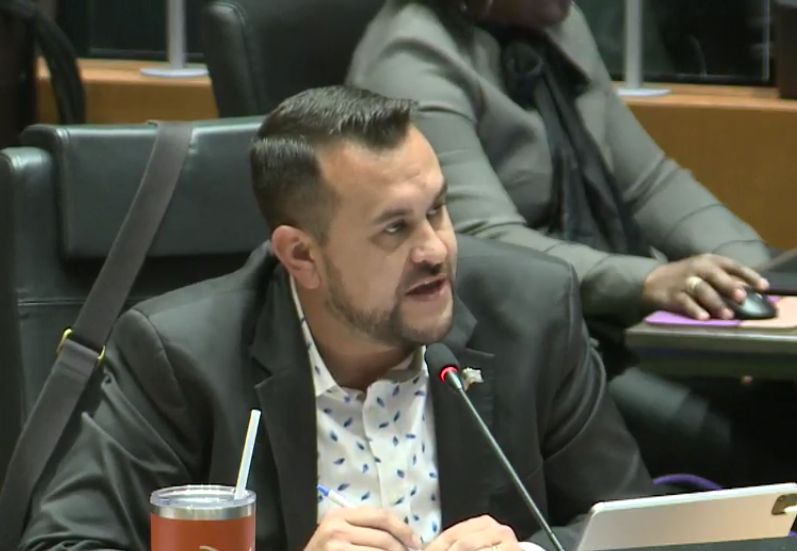
Deputy Mayor Pro Tem Adam Bazaldua asked that West bring forth a briefing about the tax-base impact on vacant land. West agreed to host a briefing on the topic between the Government Performance and Financial Management and Economic Development committees.
“We are talking about a couple of different things right now but I think they are directly correlated when it comes to our ability to grow our tax base,” Bazaldua said. “I know that our data analytics department has done great work to show what the vacant properties would do for us in growing the tax base.”
If District 7’s vacant properties were utilized in single-family form, the value would be around $8 million, Bazaldua said.
“You look at mixed-use opportunities with the same vacant land and it’s almost $90 million,” he added. “We can continue to say what it is that we need as a city and then continue to take action that contradicts it, or we can daylight this conversation to discuss the future and trajectory of where our city is going to be able to provide necessary services and to maintain resources as we do in this current budget that we’re going to pass.”
The new fiscal year begins Oct. 1.