
Here’s the Real Tragedy of Losing the Rose Lloyd Mansion
Share News:


I can’t shake the loss of the Rose Lloyd/ Edwin Cox mansion. Some deep introspection and a few heartfelt discussions with the best minds on preservation brought me enlightenment.
It’s not simply the loss of a magnificent Beaux-Arts mansion. It’s the inevitable loss of a story that impacts our history, culture, architecture, and the very fabric of our society.
People think that historic preservation starts with a place. I see it a little differently. Preservation more often starts with someone and their story — and that story then leads us to the place.
The obstacle is that the story can be very difficult to find and oftentimes impossible to document. This is especially so compared to an existing building that can still ‘speak’ to us about its past.
And yet, just like the one who dreamed it, the building, too, is now lost to time. It also can no longer tell us about the story.
Preservation Dallas President—Ron Siebler
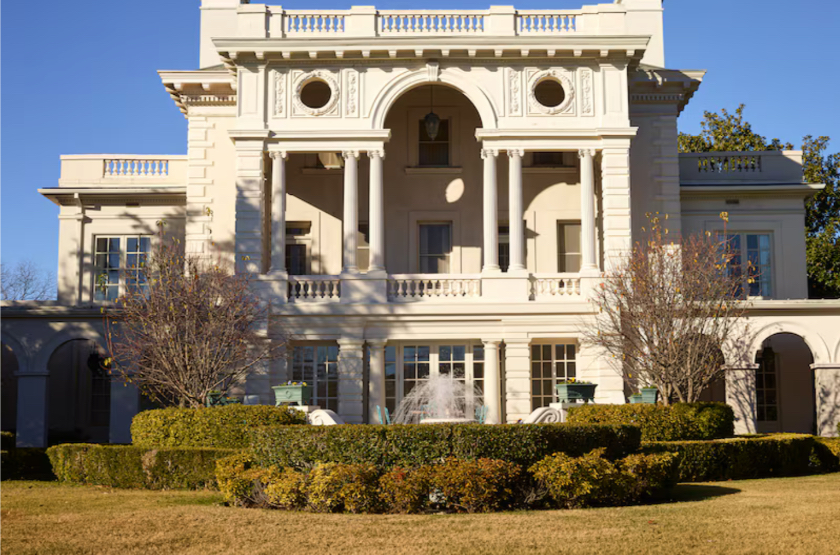
Who Was Rose Lloyd?
So, let’s start with the original owners and capture as much of the Rose Lloyd story as possible. Although Edwin Cox was the last owner to live in the mansion, it will historically, always be referred to as the Rose Lloyd mansion.
Rose Youree was born on August 9, 1881, and grew up in Shreveport, Louisiana. Her father, Peter, was a wealthy banker and businessman. Rose Lloyd made her formal entrance into society at two debutante balls, one in Shreveport and one in New York.
At some point, she caught the eye of Alfred T. Lloyd. They married on July 8, 1911, in Manhattan, New York. Now, do the math. Rose was not a young woman at the time, so one can assume she had a mind of her own. Alfred must have been quite the head-turner and enchanted by an independent woman.
The couple ended up in Dallas, which is not terribly surprising. Dallas was a boomtown in the 1920s with the rise of oil production, ranching, agriculture, and the growth of the railroad industry. It was the place to be if you wanted to make your mark.
Alfred was a wise investor, owned the Lloyd Advertising Agency, was president of the Dallas Ad League, and seems to have been as socially involved as Rose.
Rose inherited a fortune. She was the sole heir when her mother died in 1934, her father in 1914, and her only brother in 1904. Between her inheritance and Alfred’s business acumen, they had plenty to spend on a home.
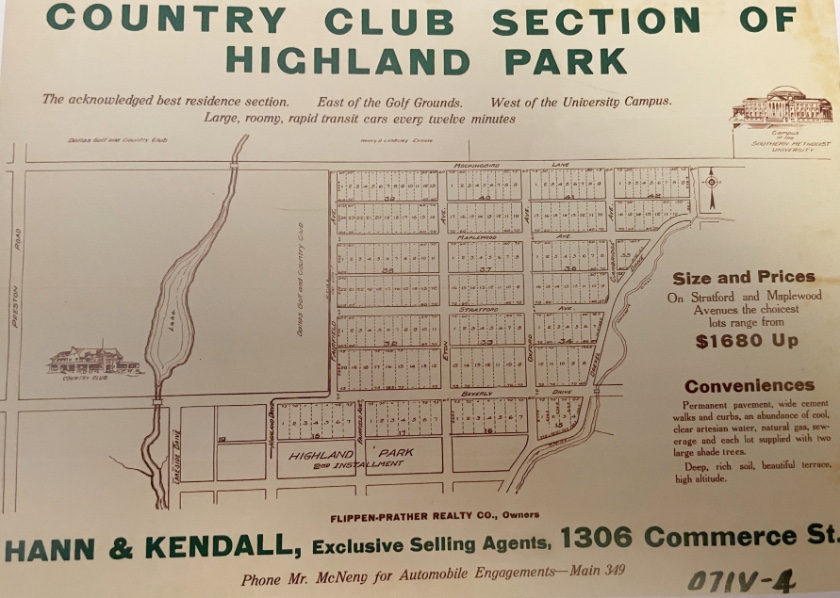
Considering the Lloyds’ stature in the community, it was only fitting that the home they built would reflect their place in society. Of course, the hottest neighborhood at the time was Highland Park.
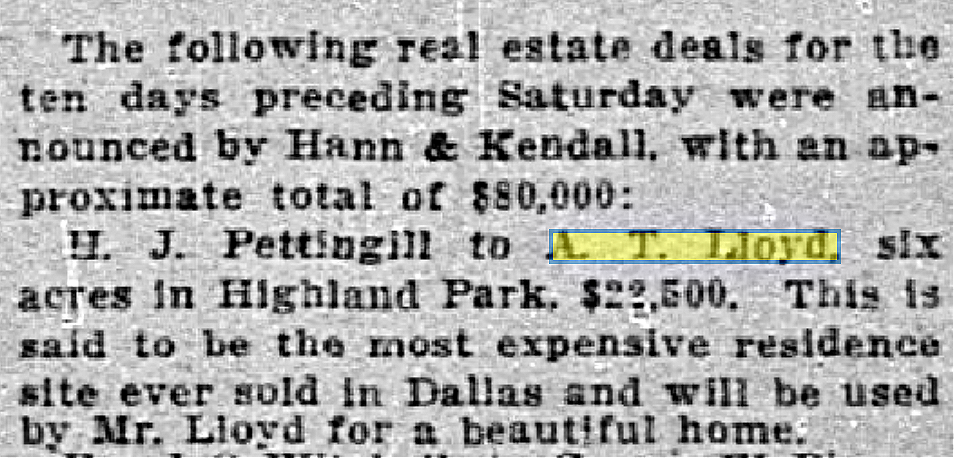
In 1915, the couple bought six acres on the corner of Preston Road and Beverly Drive on the shores of Turtle Creek for $22,500. The Dallas Morning News reported it to be the most expensive residence site ever sold in the city. Rose and Alfred engaged the firm of Hubbell & Green to design their home and hired H.J. Curtis to build the beautiful Beaux-Arts mansion.
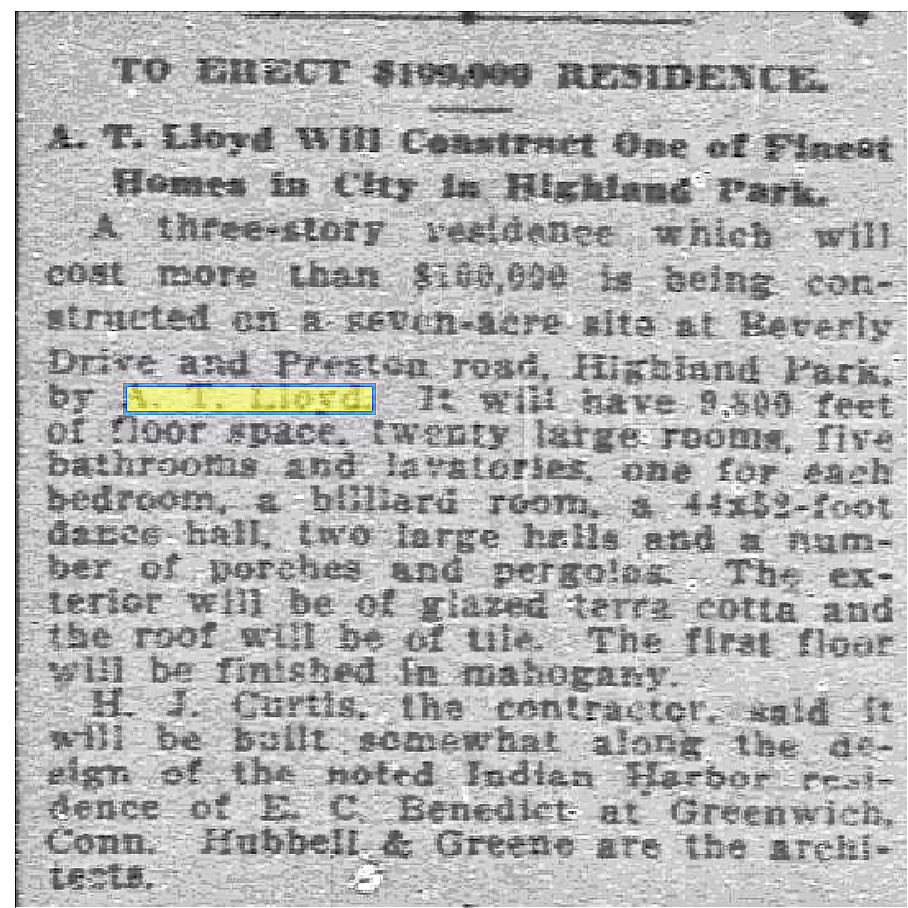
The inspiration for the home was Indian Harbor, the E.C. Benedict mansion in Greenwich, Connecticut, designed by Carrere & Hastings in 1895.
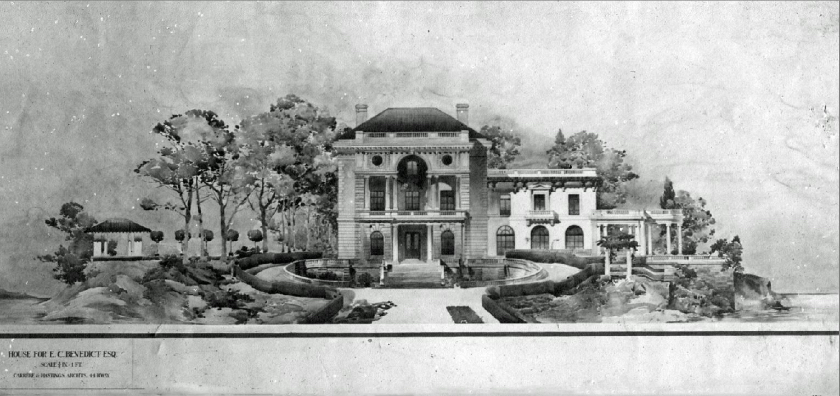
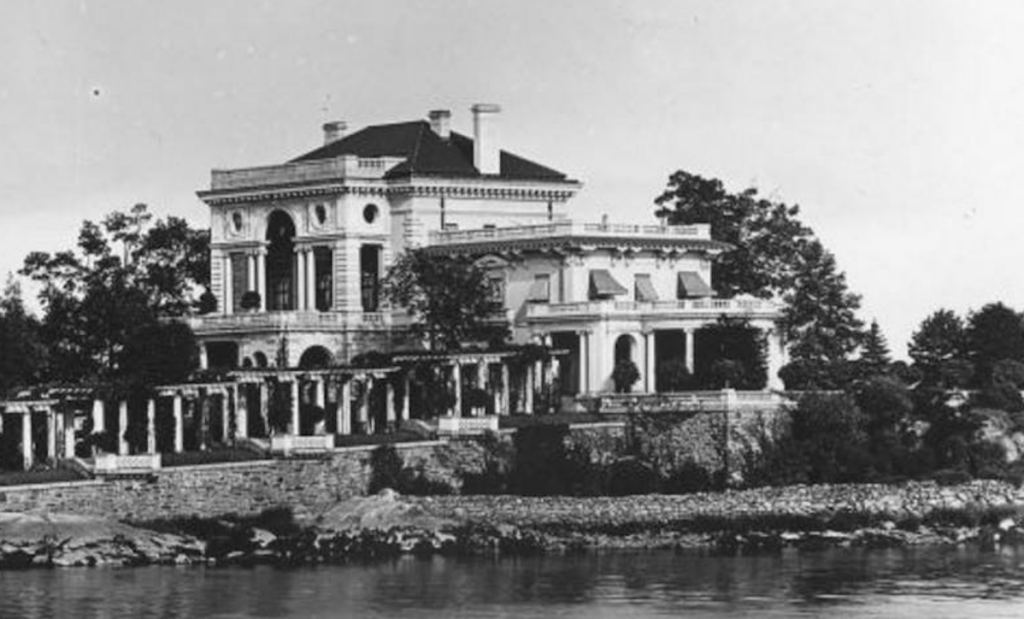
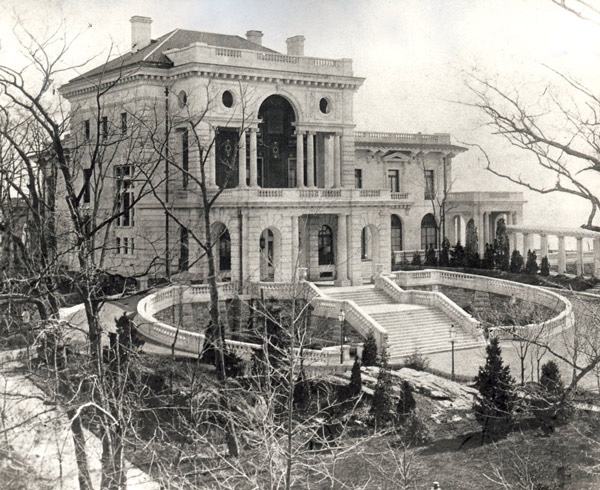
Without a Physical Touchstone, Memory Fades Fast
Once the Rose Lloyd mansion, as it became known, was finished, it was the center of Dallas society for decades. Rose seems to have been a perfect combination of the Unsinkable Molly Brown, a Titanic survivor and socialite known for her resilience and larger-than-life personality, and Auntie Mame, a fictional character known for her eccentricity and love for entertaining.
We must create a culture that values history and legacy because it’s not only about the physical house. It’s the memories of the people who lived in the house, their importance, legends, and myths. The Rose Lloyd mansion was full of that. It was a physical reminder that you could point to and recall the stories of the people who lived there. When we lose that, we lose the reminder.
Preservation Park Cities Board member and architect Larry Good.
She was the ultimate hostess and held parties, performances, picnics, and balls in her grand home and on the grounds. One of her more famous parties just a few years before her death was the talk of the town for years. She auctioned off a French picnic for 36 in her gardens to benefit TACA (The Arts Community Alliance). The winning bid was $5,000. Rose had the Dallas Symphony Orchestra entertain, and yes, there were more members of the symphony than guests. She flew in the best caviar and had local celebrities like actress Dorothy Malone and real estate broker and philanthropist, Henry S. Miller Jr. serving the guests. Newspaper reports mention Perry and Nancy Bass were among the guests.
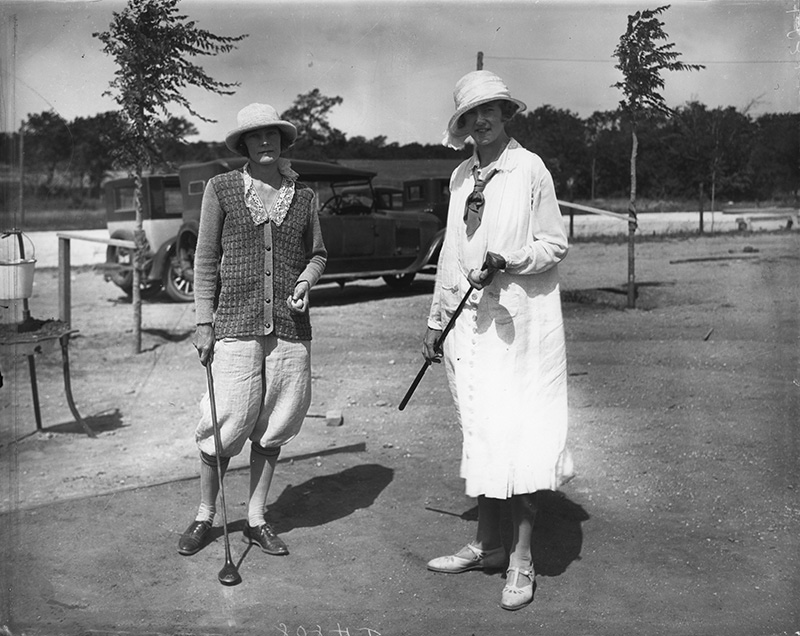
Rose was an avid golfer and club woman. If she was not at a Calyx, Idelwild, or Hesitation event, she was playing golf at Brook Hollow or the Dallas Country Club. She was also a member of the Dallas Civic Opera, DSO, the Colonial Dames, Daughters of the Republic of Texas and the United Daughters of the Confederacy.
Most people remember the stories about the Highland Park town budget and the Dallas Country Club because they perfectly illustrate Rose Lloyd’s character.
Although no one can verify this, it’s part of Highland Park lore. Apparently, the town’s budget was mistakenly sent to the Lloyds estate. Rose simply wrote them a check, thinking it was her tax bill.
The other legend is that Rose noticed a disturbing smell in the backyard one evening. Remember, the estate backed up to the creek and the Dallas Country Club, which had been running its sewage into the creek. Rose had the drain cemented shut one night and called the club the next day to suggest the showers might be impacted. The sewage was rerouted, and it was never a problem again.
My favorite story is when the country club wanted to buy the Rose Lloyd estate. She suggested a better idea. She could buy the country club.
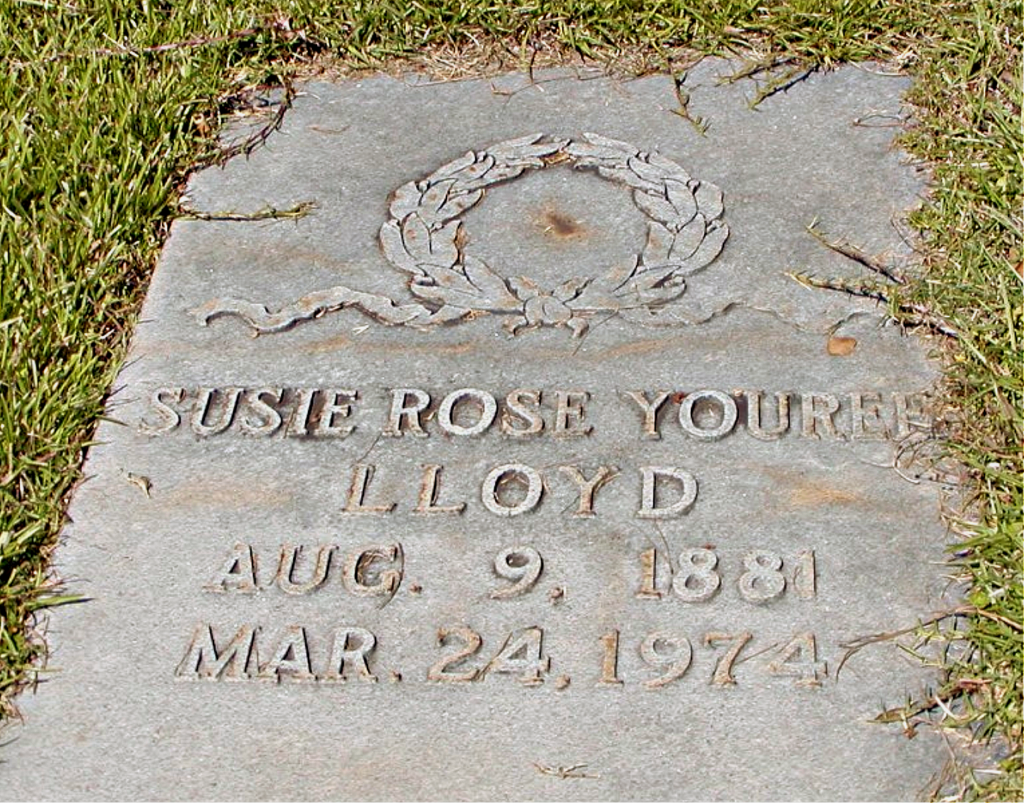
Alfred died in 1946. The couple had no children and maintained a close friendship. Rose died in 1974.
There is more to the significance of a major residence than just the architecture. The significant events and people are wiped away when the home is demolished.
Architect and author — Willis Winters

So, I now understand what I’m feeling. The void left by the destruction of the Rose Lloyd mansion means that sooner rather than later, our collective memory of the house and the magnificently eccentric Rose Lloyd will simply be erased.
That is the true tragedy.






Heartless and wasteful. No class. I don’t even drive past that area anymore.
Frances, I’m with you. I have not been able to drive past since it happened.
I drove past it the day after I read your original post about the mansion bein torn down. In hindsight, I now wish I had not. Not that it would change anything, but I do wish we knew why it was torn down, then we might be able to understand this tragedy a bit better.
Bill, I can imagine. It’s why I have not gone by yet. If I had to guess, I’d say there was a structural issue that was overwhelming. There is an image of a large steel dome-like structure that could have been an issue if they tried to place it on top. I don’t think he would have spent that long renovating if he was not serious about trying to keep the house but modifying it to his needs. What is the most interesting thing to me is the construction company. Read up on them. They are named in the permit
When a city loses a piece of significant architecture it loses a piece of its soul.
Exactly, Jim. Exactly.
Wonderful piece. Thanks for writing it.
We just returned from Newport where preservation is more important than here.
John,I never will comprehend why there is so little value placed on preservation in the Park Cities. To me, it increases the value of a home because most of the materials are no longer available, and certainly, the craftsmen are no longer living. It’s impossible to duplicate our historic homes.
Beautifully said, Karen. I am grateful I was able to tour this home before it was gone. I would absolutely love to have met Ms Lloyd. She was clearly a force of nature.
Thank you Kay. I’m so glad you got to see it. I think we would have all loved to know Rose
The bigger question, beyond what the nouveau riche troglodyte that bought it was thinking, is why the Hell doesn’t Highland Park care enough about it’s own history and architecture to have a historical preservation society to prevent things like this from happening?
Well, Andrew, from what I’ve heard Highland Park leaders value property rights above all else. To me the question is with all the preservation experts in this city, why not hire one? Why hire a newly formed firm that has no visible experience in preservation? I find that terribly unusual.
Why was the house torn down
Layton, the present owner, Andrew Beal, has yet to comment, and I doubt he will because it’s really no one’s business but his own despite the outcry. So, we can only speculate that perhaps during the process of renovation, something went terribly wrong, and it was either no longer safe or it was financially foolish to continue, even for a man of extraordinary means. Regardless of the reason, it is a terrible loss for Dallas.
I had no idea this was based on the E.C. Benedict mansion in Greenwich, which seems to still be standing. I knew this as the Cox house, only because we went to school with their kids. Not sure what year they bought it, maybe around 1974? Sad to see this go, a fine Dallas presence lost. Thanks for staying on the topic.
Isn’t it amazing! I mean, it is so similar! Rose died in 1974, and there was a huge estate sale. Anne and Ed Cox purchased it in 1976.
Beautifully written and very informative piece. AB should be ashamed of himself for taking such an important piece of Dallas’ history from the city.
Dallas does not respect or value anything old regardless of ancestry. Travel Dallas and you will witness the constant demolition of older properties in good shape for the construction of very modern structures built cheaply and sold for exorbitant prices. Our Mayor, council members and commissioners promote this annihilation for a more lucrative budget resource, aka property taxes. Meanwhile, they approve their own raises and enrich themselves with perks. It might be tolerable if these elitists at times displayed some consideration for its citizens and preservation of our older communities.
Well, this is the Park Cities, not Dallas. So our mayor and city council have no authority here. Dallas has issues but certainly does a better job than Highland Park because we actually have an office of historic preservation and advocacy for these issues.
Honestly, just a travestry all in all.
When WILL the Park City Councils re-write the
city perameters for razing & construction.
Our original city charters are aniquated.
Other cities around the country have managed
to go around those really early enticements to get people to buy & settle here.
Seems like they arent appropriate any longer.
And now our visual history is tanking!
Gosh, that is a great question. I dont’ live in the Park Cities or I’d be down at every council meeting asking questions like that. In my opinion it will take a lot of community pressure.
Aunt Rose had a nephew who lived with her.
Bill Critz. A very interesting person who was single and drank too much. He had various real estate holdings here and in the South of France. He developed four houses at the northwest corner of Mockingbird and Hillcrest.
OMH George! She was your aunt? Please send me more stories about her and Bill!
What a touching eulogy, so well written and beautifully expressed.
Thank you Margaret!
Thank you for the informative story. So well written and hopefully jars the locals to participate in saving the historical gems.
Important history and fascinating human stories.
Thanks Karen.
One of the best articles I’ve ever read on this blog! WELL DONE! I hope more people will write about the history of this property and of Rose….what an amazing woman she must have been!! Her memory and the magnificence of the home can be remembered in that way. Perhaps this situation can become the perfect cautionary tale necessary for the town to take long overdue ACTION… and just think, your thoughtful article will have been the spark.
From what I know (or have been told) I can’t say I’m terribly surprised by Mr. Beal and his poor decision making regarding this home. It’s truly disgusting to me that someone with his means and relationships would purchase such an historic and iconic part of HP and resolve themselves to anything other than the FULL restoration and preservation of the property – no matter the costs! There IS no acceptable excuse and these actions only speak to the soul of the individual making the decisions. Full Stop.
I understand. It does appear he was making every effort to restore and update the home. So, one can only assume during the process something went terribly wrong and that demolition was the only alternative.
Bulldozing Billionaire, be gone from any property that merits preservation.
Look what he did to the Crespi estate! Ruins everything
What a travesty! Rose Lloyd was a friend of my grand mother, Reita DeForest and both were golfing friends at the DCC across Beverly Drive from the mansion.
The estate was surrounded by a steel picket fence so as show the beautiful sunken gardens of flowers and trees. Cox removed the fence and replaced it with a stone wall which obstructed the view of much of the house and gardens, and built a huge enclosed rock tennis court bldg. Which, of course added nothing to the magnificence of the property.
A discrete neon sign saying MONEY might have been appropriate to reveal the true reason for all the property’s improvements.
And so went a truly beautiful, tasteful estate that spoke to the taste and character of Mrs Lloyd.
Today, it remains an icon of magnificence of Dallas society of the day,
As dumb as the L.A. 2025 fire.
This saddens me deeply since I am from Shreveport and have always felt the demolition of the Youree mansion (her parents’ home) was one of our city’s greatest losses. The grounds filled an entire city block that is currently home to a state office building. The original wrought iron fence still surrounds much of the property.