
Candy Evans: Why the ForwardDallas Land Use Plan Is Backward
Share News:


My husband Walter and I paid $65,000 for our first home in northwest Dallas 45 years ago. Today that home is valued at $528,000. About 40% of this city is zoned for single-family housing, and less than 5% is zoned for multifamily. Single-family homes are the power engine for the Dallas economy.
So why do we want to blow up the city’s biggest bank?
Dallas is currently undergoing a long-overdue update of its comprehensive land use plan, “Forward Dallas 2.0 – June 2024. The plan, required by state law, is under review by the City Plan Commission, and a public hearing is set for Thursday.
In my opinion, this document was conceived on theoretical principles to increase density in Dallas, though our city’s population has been dwindling lately. This plan is almost ready to be put in the oven pending a blessing from the (current) Dallas City Council. But before we grease the pan, ForwardDallas needs to include a firewall for our single-family neighborhoods.
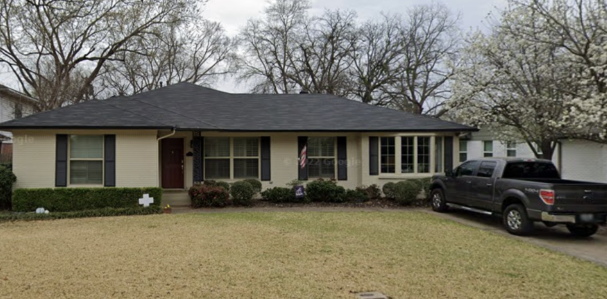
No doubt, homes are no longer affordable in Dallas. The fact that our starter home was $65,000 in 1980 but more than half a million dollars today means your average starter couple on a scant salary ($70,000) cannot afford to buy here unless they have a trust fund — a sentiment I heard at the recent NAREE conference.
We are landlocked. Dallas grew up fast these last four decades and outgrew its britches and boundaries. Theoretically, if you cram more housing options onto what is now single-family-zoned property, you will get more housing that buyers can afford. No.
In real estate, because of demand, it doesn’t work that way.
When a single-family home is sold and is replaced by a higher density dwelling, it doesn’t create affordability. Dividing a property up for smaller lots or more homes leads to a higher appreciation of the overall land. Congratulations, you’ve made existing homes even less affordable.

One problem I have with ForwardDallas as it is written today is that families are already moving out of the city. Dallas County lost 5,000 residents between 2020 and 2023, and if we mess too much with our single-family ‘hoods, more may soon follow.
Plus, as higher property taxes (which are based on rising values) push homeowners out of their homes, institutional investors snatch up properties and inflate rents via algorithms (see ProPublica’s story on Richardson-based RealPage). When the City of Austin allowed additional dwelling units on one’s property by right, 53% of the 2,000 accessory dwelling permits filed were in East Austin’s working-class neighborhoods. About 80% of those are owned by LLCs; 80% are NOT OWNED by families.
D-FW Is the Nation’s Top Apartment Building Market
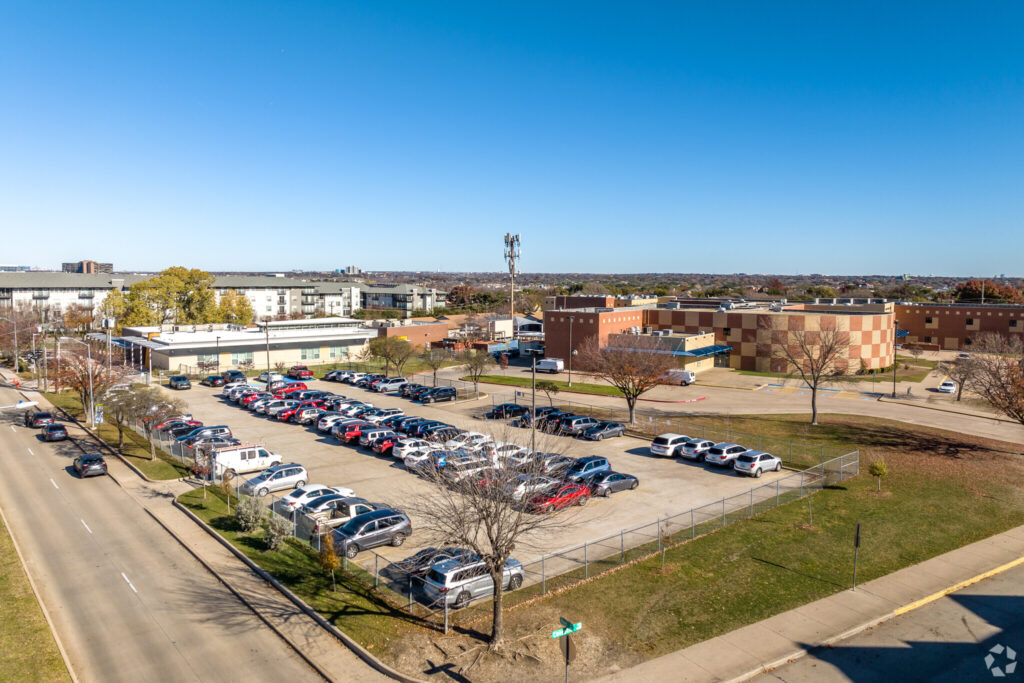
We already have plenty of multifamily living opportunities. Dallas-Fort Worth has led the nation in apartment building for years with more than 70,000 units under construction. More than 26,000 units were delivered last year, and this year’s crop will be an estimated 41% increase over the burgeoning six-year average. More than $6.8 billion in D-FW apartments were traded in the first nine months of 2023 — the most of any U.S. market.

Cramming more multifamily in single-family neighborhoods also brings collateral damage — more cars, more pressure on infrastructure, and more demand on city services like police, fire, schools, and sanitation. If more multifamily is built in areas sorely deprived of deferred capital repairs, this could lead to more infrastructure problems including flooding or water washes during heavy storms.
Former City Council Member Sandy Greyson addressed the effect of density at a recent neighborhood meeting in North Dallas:
“Developers always tell you that young, single people will live in their apartments,” she said. “Happens for two years, then the families move in. When we opened Anne Frank Elementary on Celestial in 1987, the school was overcrowded two years after the construction of all those apartments on Montfort.”
Some claim building more multifamily units could actually help lower property taxes for homeowners. (It might, for a minute). But commercial owners are slick. Most commercial property owners use paid consultants to aggressively contest and lower their property taxes. But many homeowners don’t protest their taxes, let alone hire consultants.
Then there is that argument I hear so frequently, mostly on the devil that is NextDoor where everyone is an expert. “ForwardDallas is not a zoning document. It’s a blueprint. It has no weight or bearing on existing zoning. You can still go to the City Plan Commission and fight it.”
Jack D. Kocks, GOP Precinct 2047 chair and a housing activist, addressed this at several neighborhood meetings.
“They say ForwardDallas has no bearing on existing zoning, but there will be a corner somewhere, in a single-family neighborhood, that will be developed into a multiplex and no one will notice,” Kocks said. “Pretty soon another property will become available in the same neighborhood, and the buyer will want to build a multiplex. They will point to that corner property to obtain the rezoning.”
The pro-ForwardDallas folks counter that it’s a statement of intent, a way to guide city growth in the future when we are out of here. As our City Hall reporter and news director April Towery told me after covering so many meetings, “They hear you, they know what you are saying. But they truly believe this is the way forward for Dallas.”
ForwardDallas 2.0
In almost perfect harmony, Harvard’s Joint Center for Housing Studies churned out a July report that says traditional zoning induces segregation:
“Restrictive zoning and NIMBY [Not in My Backyard] attitudes have left nearly a third of neighborhoods across the country with few options for renters. The concentration of rental housing in some neighborhoods and the exclusion of rental options from others reinforces enduring patterns of residential segregation by race and income. There’s fewer places to rent in the ‘burbs and higher-income, white neighborhoods.”
The study is almost a blueprint of ForwardDallas: mix up more neighborhoods based on diverse backgrounds of income, cultures, color, race, etc.
Just because a Harvard study cited examples doesn’t mean we should upend our thriving single-family-home neighborhoods. And we should study this carefully in other cities before taking the plunge, like Austin, which is fast becoming a petri dish for progressive politics. The connection between zoning intensity and density is less clear-cut than reformers suggest. In fact, there are many places in the country that already have relatively lax zoning, and yet density hasn’t happened. The best example is Houston, which has no citywide zoning.
Single-family zoning has been called exclusionary for a long time. Rather than multifamily, why not simply help more marginal citizens acquire homes?
Equity is not filling neighborhoods with high-end apartments. Equity is helping those who cannot afford homes acquire them and build wealth. I suggest we look closely at what Houston and Fort Worth are doing with Land Trust programs. We could encourage government programs for first-time homebuyers. Kendall Scudder, newly elected to the Dallas County Appraisal District Board, told me that he and his wife had recently purchased a home from the money they saved from having their student loans forgiven. I could totally see a bipartisan program that forgives loans as long as you buy a home within three years.
We Need Affordable Housing But in the Right Places
Finally, aesthetics really matter. We need to protect our single-family neighborhoods and it’s respective architecture that chronicles the history of our city. From the Tudors and Dilbecks of East Dallas/Lakewood and the bungalows and Georgians of Oak Cliff, to the Midcentury Moderns of the Disney Streets and the Frank Welch mansions of Park Lane, and all those strong, sturdy ’50s and ’60s Ranch homes in between. Those homes, those neighborhoods, are our architectural city treasures. They are the shoulders of our city.
Dallas homeowners are concerned and rightly so about the future of their single-family neighborhoods with ForwardDallas. If you don’t clearly say — in fact, shout — that single-family homes should be roped off and protected, somewhere down the road, they may become fodder.
Candy Evans is the founder and publisher of CandysDirt.com, a Dallas-Fort Worth real estate news site staffed by a team of journalists and editors. This opinion column reflects Candy’s personal views and does not influence the coverage of news topics on CandysDirt.com.
6 Comments
Leave a Comment






This might be the most intellectually dishonest thing I’ve seen on this website, and that’s really saying something. Increasing supply of something doesn’t make it cheaper… because of demand… this is the dumbest take I have ever seen. It’s not possible that you are this stupid, you’re just doing mental gymnastics to justify your NIMBYism and profit maximization for your realtor buddies.
In theory you are correct if you increase the supply of a product you very well may level out the costs or perhaps even reduce them. However, as in the past years and in the years to come our demand for real estate is way above the supply. Real estate is slowly becoming a product for the wealthy. Whether it be families with generational wealth and their large homes and the ability to help their children buy homes with the equity in their houses or for developers and investors that are buying up houses and, in some instances, actually developing whole neighborhoods of homes to rent to people. Just changing zoning doesn’t automatically create affordable housing. Tearing down a half a million-dollar home, dividing the lot into five separate parcels, and building $900,000 homes on it does not help with the housing situation. and in many instances it devalues the houses around it. Zoning changes should not be a sweeping change for any neighborhoods. It should be targeted and deliberate and approved on a case by case basis with objective standards. Community land trusts are also a great idea that do create affordable housing for people. I think they were very difficult to put together with the real estate market was a little bit crazier and interest rates were low and people were building everywhere. Maybe they’d be a little bit more practical right now for communities to look at. I can think of several areas in my city that they have allowed people to tear down homes and build multifamily properties or townhomes. The locations made sense, they complimented the neighborhood, and the price point did make sense for people on median incomes. And simultaneously I have seen the opposite, where they have allowed people to tear down homes, and build properties that do nothing to contribute to the housing issue, and do not compliment the neighborhoods. Blanket changes will cause harm when done without regards to the neighborhoods or the price points that are created. There has to be a balanced objective effort with a plan.
Yeah, I’ve never seen this site but it came up on my news feed and probably because I’m an economic development professional. That Harvard study Candy mentions isn’t radical or in need of further study. It’s pretty much the garden variety prescription for cities and the argument has been the middle of the road for the profession for donkey’s years.
What Candy doesn’t recognise, and I know she’ll be horrified to realise this, is she’s advocating for the San Francisco Bay model. (Yes, California in Texas, Baby!) See the issue for that market is it doesn’t have much land to build on that isn’t already occupied. They’re up against the mountains all over the place. The NIMBY attitude is preventing builders from building denser and so the supply gets constrained for every land use type and prices rise because supply is artificially constrained.
Now hold on, you says, what mountains prevent DFW from just building out and out? Yeah El Paso may be the only Texas city with that consideration, but for all the others the issue is infrastructure cost. Building low density at the edge increases the driving distance for everything and in the land of V8 everything, that’s a lot of wear-n-tear and a lot of lane miles. That’s expensive. Very expensive. There’s no way even the huge property taxes in TX can facilitate low-density forever. We’re already seeing this in the terrible state of Texas roads.
There’s nothing “progressive” about efficiency. Efficiency is cool for everyone, especially businesses. Efficiency saves on both capital and operating expenses and that is as tru for cities as it is businesses. As far as I know, no one is making single-family homes illegal for people who love lawn mowing and scooping poop with a garden trough. They’re just gonna have to pay closer to the real cost of that development paradigm.
Tom I am loving this convo… I’lll email you, MORE
Bravo, Candy.
[Edited for typos and formatting:]
This is Just more classic NIMBYism.
Candy wrote:“ Single-family zoning has been called exclusionary for a long time. Rather than multifamily, why not simply help more marginal citizens acquire homes?”. The answer is because single family housing can no longer be built or purchased at a low enough price point for many families and individuals.
Adding light density through small multi family (Duplexes, triplexes, and small 4-12 unit apartments) provides an opportunity for people to live in and be a part of communities where they can’t afford to buy a single family home. This is the “Missing Middle” housing that fills the gap between large single family homes and large apartment buildings.
My wife and I moved to Dallas from Atlanta, GA in 2022. We chose to buy our home in the Kings Highway Conservation District in Oak Cliff, which is a perfect example of how single and multi family homes can exist together. On our street and in nearby Kessler Park there are gorgeous historic Tudor, Craftsman and Italianate Single family homes in the $1M-$2M range, as well as carriage house apartments ( “Accessory Dwelling Units”), beautifully restored and maintained duplexes where the owners live in one side and rent out the other, and historic 1920’s apartment buildings where residents throw an elaborate Halloween festival in the yard for trick-or-treaters every October. The renters there tell me that the owner is a great landlord and maintains the properties meticulously. This mix of housing options makes our neighborhood stronger by providing local housing options for single people who staff our local restaurants, bars, and boutiques, the teachers at our neighborhood elementary school, the older single parent caring for their special needs child, and the nurses at nearby Methodist Hospital. Accessory Dwelling Units allow multigenerational housing for aging parents or adult children, or allow homeowners to age in place while renting a carriage house out to supplement their fixed income.
This is the same blend of housing we found in the Virginia Highland neighborhood of Atlanta, Georgia. Both King’s Highway and Virginia Highland were built around the 1910’s-1920’s to address the need for housing at that time. In 1917 a great fire swept through Atlanta, consuming hundreds of Victorian houses along Ponce De Leon Avenue. Immediately afterward, a number of small apartment buildings were built to house the many families who were suddenly homeless. The apartments of King’s Highway were originally developed as temporary housing for the workers and residents waiting for their new homes in the Winnetka Heights neighborhood to be built. Over the following decades it filled in with its current mix of single and multi family housing, and that is one of the things I love about living there.
The thing is, exclusionary single family zoning has made it illegal to build neighborhoods like these for many decades. The only options are detached single family homes or luxury townhomes (which must be made as large and well-optioned as possible for the builder to make any profit at all), or (in a completely different area away from the houses) large apartment buildings.
It seems like the opponents of Forward Dallas can only imagine these two diametrically opposite extremes. The reality is that we can have a much softer, more beautiful, and more beneficial blend of housing options that will create affordability make our neighborhood communities better, and create more housing affordability.