
National Homeownership Month: Is it More Difficult For People of Color to Purchase a Home?
Share News:


Rising interest rates and flattening wages have made it increasingly more difficult for anyone to purchase a home. Add racial disparity to the mix, and it’s enough to make a once-eager prospective homebuyer throw in the towel.
June is National Homeownership Month, and CandysDirt.com is taking a look at the obstacles people face when making one of the most important purchases of their lives. One of the things we heard frequently is that it’s more difficult for people of color to qualify for a home loan, and they’re more likely to sidestep the process. Even those with perfect credit scores and plenty of equity face difficulties.
A recent New York Times article tells the story of molecular biologist Raven Baxter, who claims a white homeowner tried to withdraw the sale of her Virginia Beach condominium because of Baxter’s race.
In Dallas, exclusionary zoning and “redlining” — the discriminatory practice of systematically denying services such as mortgages, insurance loans, and other financial services to residents of certain areas, based on their race or ethnicity — are not-so-distant memories for many, said James Armstrong, CEO of Builders of Hope Community Development Corporation.
“Historically we’ve known that real estate is a way to build wealth, but for black and brown families, we understand there has always been this adverse effect,” Armstrong said. “When you look at racially motivated and oppressive policies of the past like redlining, these communities were pushed out of certain areas, unable to buy a home. The neighborhoods they did establish, those neighborhoods are currently experiencing displacement.”
National Homeownership Month: Buyers by The Numbers
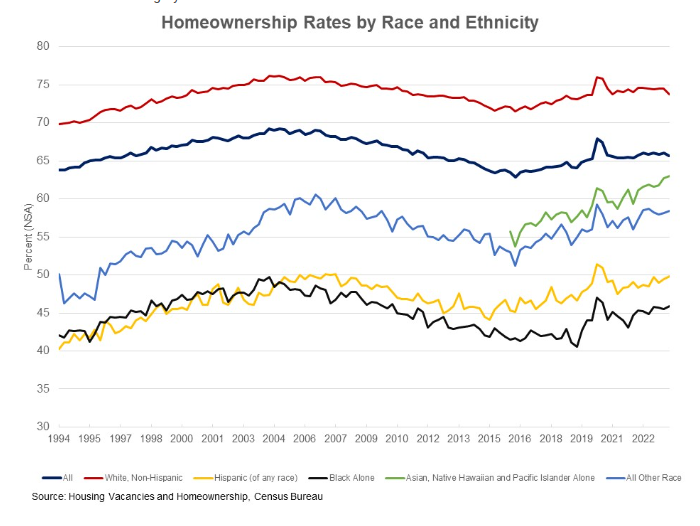
The National Association of Home Builders reports that homeownership in the U.S. varies significantly by race and ethnicity. In the fourth quarter of 2023, the homeownership rate among non-Hispanic White Americans was 73.8 percent, followed by Asian Americans (63 percent), Hispanic Americans (49.8 percent), and Black Americans (45.9 percent).
Armstrong’s Builders of Hope crunched the local numbers and has been working for more than a year with JP Morgan Chase Foundation and the Dallas Foundation to develop an anti-displacement toolkit. Aside from the racial barriers to homebuying, the shrinking affordability creates an even bigger challenge, Armstrong said.
According to the Builders of Hope research:
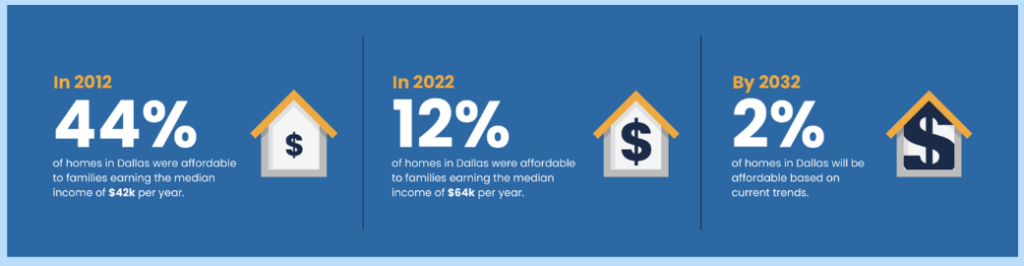
In 2012, a typical home-owning Dallas family earned $42,000 per year and could afford 44 percent of the homes sold that year. Just a decade later, in 2022, a typical home-owning Dallas family earned $64,000 per year but could only afford 12 percent of the homes sold that year.
“If this trend continues we estimate less than 2 percent of homes in Dallas will be affordable for families earning the median Dallas income in 2032,” Builders of Hope research states. “When we look at the rental households, the numbers paint a far bleaker picture. Dallas has one of the lowest homeownership rates of major American cities, with just 42 percent of residents owning a home. This is particularly concerning given that families vulnerable to displacement are far more likely to be renters than homeowners.”
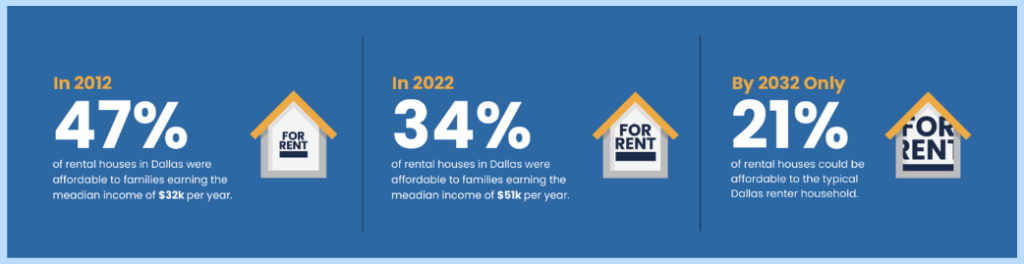
A review of the Dallas rental market shows that in 2012, a typical renter household in Dallas earned about $32,200 and could afford nearly 50 percent of the apartments for rent in the city.
In 2022, the typical renter household income increased to $51,600, but they could only afford roughly 30 percent of the apartments for rent in the city.
“And if the trend of diminishing rental affordability continues, by 2032 as few as 21 percent of rentals could be affordable to the typical Dallas renter household,” the research states. “This is particularly concerning given that families most vulnerable to displacement are far more likely to be renters than homeowners.”
How Racial Steering Skirts The Fair Housing Act
According to the New York Times story on Dr. Raven Baxter, two federal laws — the Fair Housing Act of 1968 and the Civil Rights Act of 1866 — make it illegal for both home sellers and their real estate agents to discriminate during a home sale.
“But more than 50 years after redlining was outlawed, racial discrimination remains an issue, housing advocates say,” according to the article. “A multiyear undercover investigation by the National Fair Housing Alliance, a Washington-based nonprofit coalition of housing organizations, found that 87 percent of real estate agents participated in racial steering, opting to show their clients homes only in neighborhoods where most of the neighbors were of their same race. Agents also refused to work with Black buyers and showed Black and Latino buyers fewer homes than white buyers.”
Dallas Fair Housing public information officer Chiamaka Nwaizu and Office of Equity & Inclusion Director Lindsey Wilson appeared recently on the “Tap in Dallas” podcast to discuss the topic. June is also Fair Housing Month.
“Dallas has been a trailblazer in fair housing since its first ordinance in 1971,” according to city documents. “Over the years, the city expanded protections to include sex, disability, and familial status. The Fair Housing Office, established in 1989, received HUD certification in 1995, proving Dallas’s commitment to upholding federal fair housing standards.”
But a lack of trust lingers, Armstrong said.
“There’s been a longstanding adverse relationship between black and brown communities and real estate,” he said. “That has created a wealth gap. Black and brown developers are underrepresented in the real estate sector.”
When looking at what it takes to buy a home, African Americans typically have credit scores that are 50 points less than their white counterparts. White families are four times more likely to own a home, Armstrong said.
“It’s kind of this perfect storm of past and historical context and current-day climate that really makes it difficult for black and brown families to become homeowners,” he said.







Great reporting on this important story. Home ownership is important in ALL communities and I definitely want to see more of it in our city’s communities of color!