Emily Vafa’s Approach to Spec Home Design: Smart, Livable, and Anything but Generic
Share News:


Designing a spec house comes with its own set of rules. The goal isn’t self-expression or trend-chasing — it’s creating a home that feels considered, livable, and broadly appealing without slipping into generic.
For interior designer Emily Vafa, that balance is shaped by years of hands-on experience working alongside her husband, builder Daniel Vafa. Their company, Vafa Construction, focuses primarily on custom homes, major remodels, and a select number of spec projects designed for families — many located within Dallas’s private school corridor, a highly sought-after stretch of North Dallas known for its established neighborhoods and long-term residential appeal.

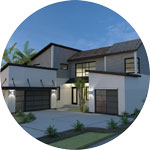
Their most recent project, a 5,927-square-foot stunner located at 4140 Shady Hill Drive, hit the market this week.
“The spec side is actually the most creative part of our business for me,” Vafa says. “With custom clients, they usually have their own interior designer. With a spec, I’m making all of the interior design selections myself, so every decision has to be intentional.”
One of the most common missteps Vafa sees in spec homes is mistaking repetition for restraint.
“You’ll walk into a house and see the same plumbing fixtures, cabinet hardware, and lighting repeated in multiple bathrooms,” she says.
“That’s not restraint — that’s a missed opportunity.”
Instead, she believes cohesion should come from a consistent design language, not duplicated selections.
“Each room should have its own identity,” she says. “The house still needs to feel calm and unified, but it shouldn’t feel flat.”
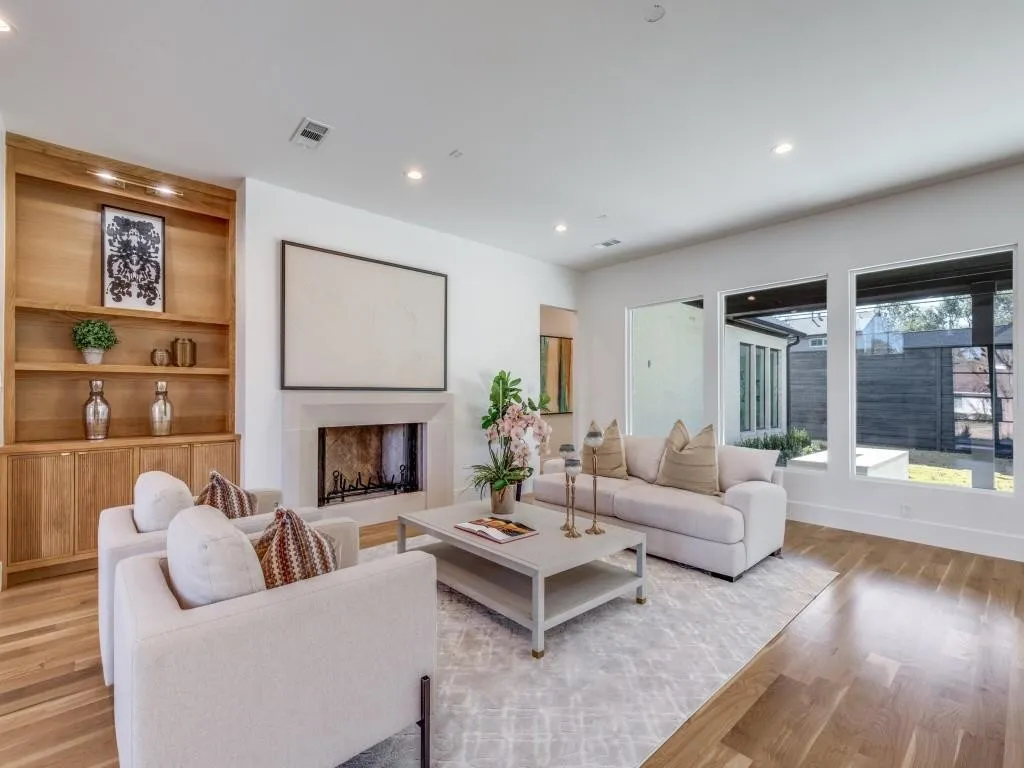
Because many of the Vafas’ homes are designed with families in mind, function plays a central role in every spec project.
“Floor plans are critical,” Vafa says. “If the layout doesn’t support how people actually live in the house, buyers feel it immediately.”
That perspective has led to a stronger emphasis on clearly defined spaces, including dedicated entertainment areas that don’t compete with the main living spaces. That perspective is sharpened by the fact that Vafa and her family have lived in five of the spec homes they’ve built — an experience she says is invaluable.
“You learn very quickly what you missed,” she says.
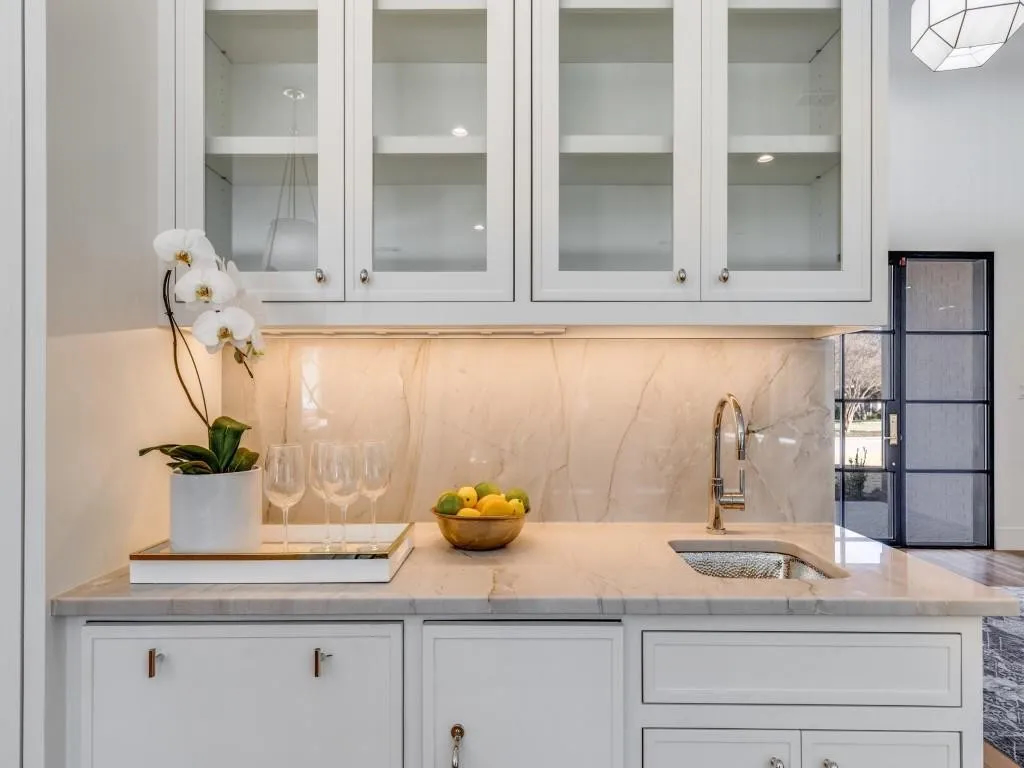
In their current home, the couple realized they hadn’t included a trash pull-out near the bar area, which was separated from the kitchen.
“It’s such a small thing, but once you’re living there, you feel it immediately. Those are the details that stay with you and absolutely inform how we design the next house.”
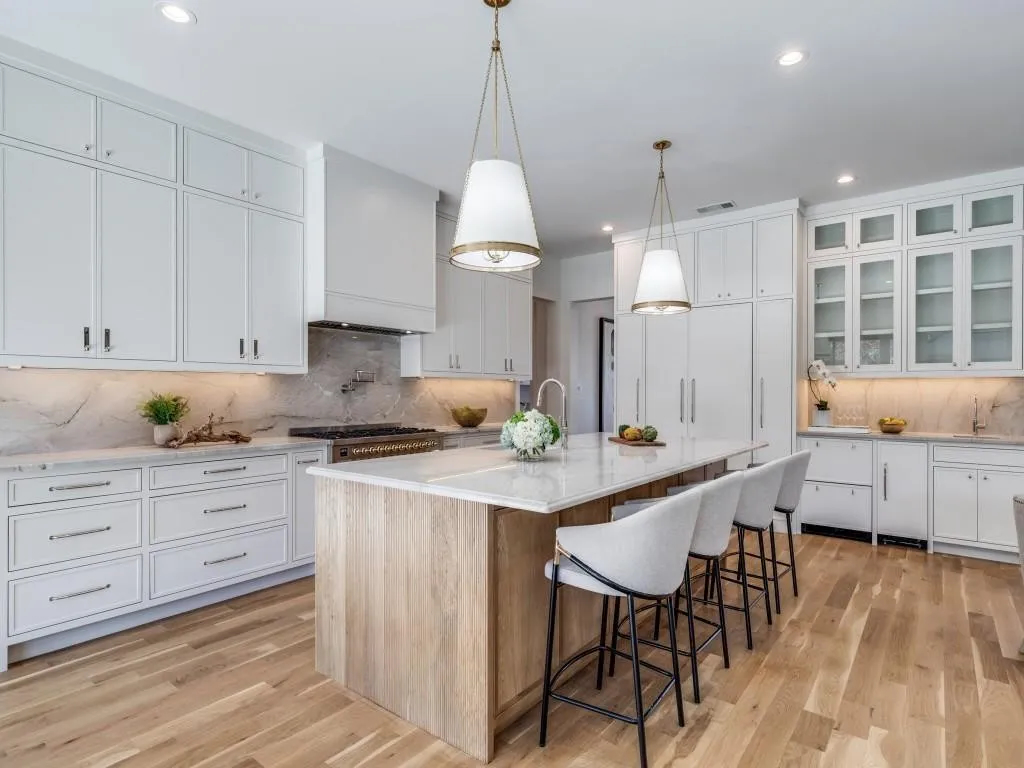
When it comes to budgets, Vafa is focused on thoughtful allocation rather than headline upgrades. Appliances, she notes, are an area where designers can specify high-quality, panel-ready options without defaulting to the most expensive brands.
“There are excellent mid-range appliances that perform beautifully and integrate seamlessly into the cabinetry,” she says. “That allows more flexibility elsewhere.”
Where she’s far less inclined to pull back is on light fixtures.
“Lighting is transformative,” Vafa says. “It’s highly visible, it sets the mood, and it completely changes how a space feels.”
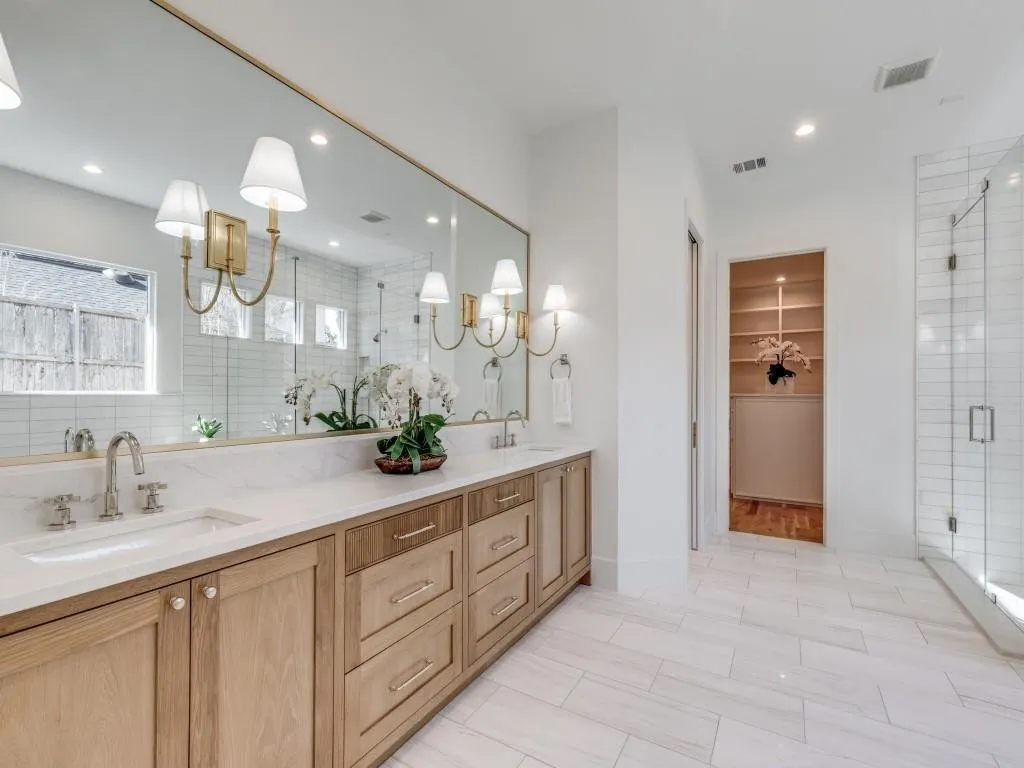
Flooring is another foundational choice buyers pay close attention to. True white oak floors consistently draw interest during showings, reinforcing the importance of materials that establish quality from the moment buyers walk in.
While overall editing is key, Vafa believes every spec home should include a handful of intentional design moments.
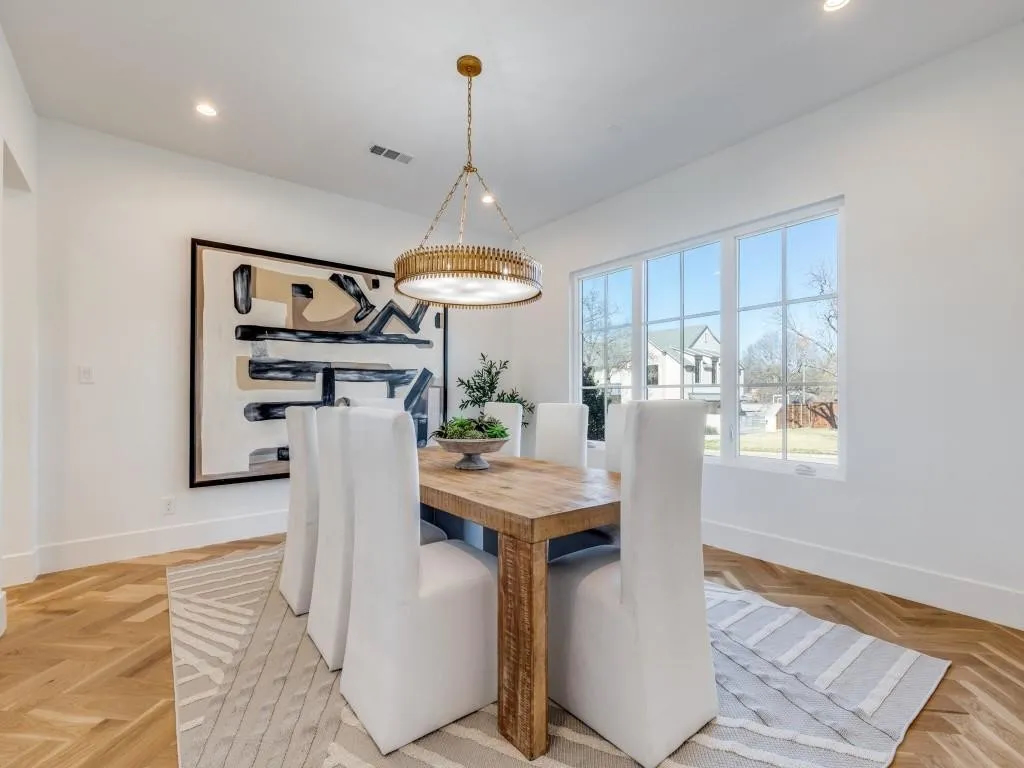
In the Shady Hill property, she introduced herringbone hardwood flooring in the dining room.
“With large open floor plans, I like creating one space that feels distinct,” she says. “The herringbone pattern gave the dining room a sense of importance and made it feel like a true entertaining space.”
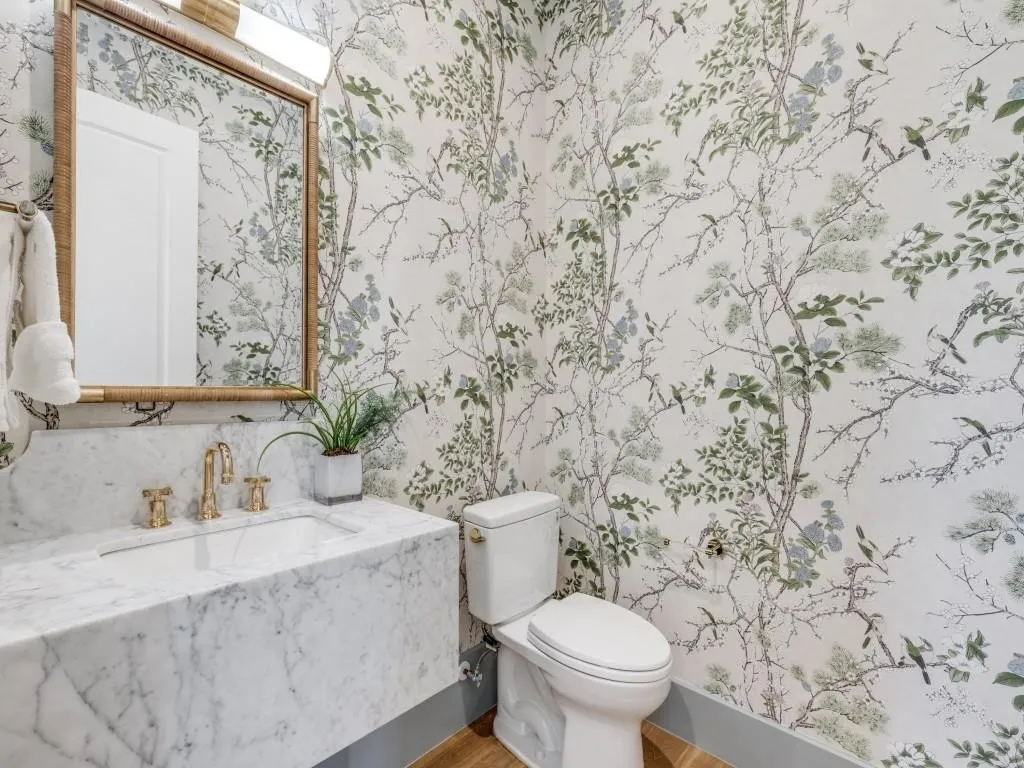
Those moments are carefully limited.
“I might do a wallpapered bath or a standout vanity,” she explains, “but the goal is always to leave room for buyers to imagine their own life in the home.”
A spec home doesn’t come together by accident. It requires early collaboration, clear direction, and consistent editing from start to finish.
“Design begins the moment we sit down with the architect,” Vafa says. “That’s where everything starts to align.”