
Trading Skyscrapers for Suburbia: AT&T Will Leave Downtown Dallas for Plano
Share News:


Well, it’s happening. AT&T is going to build a new campus outside of downtown Dallas, opting to relocate its global headquarters to Plano instead of maintaining operations in the city center.
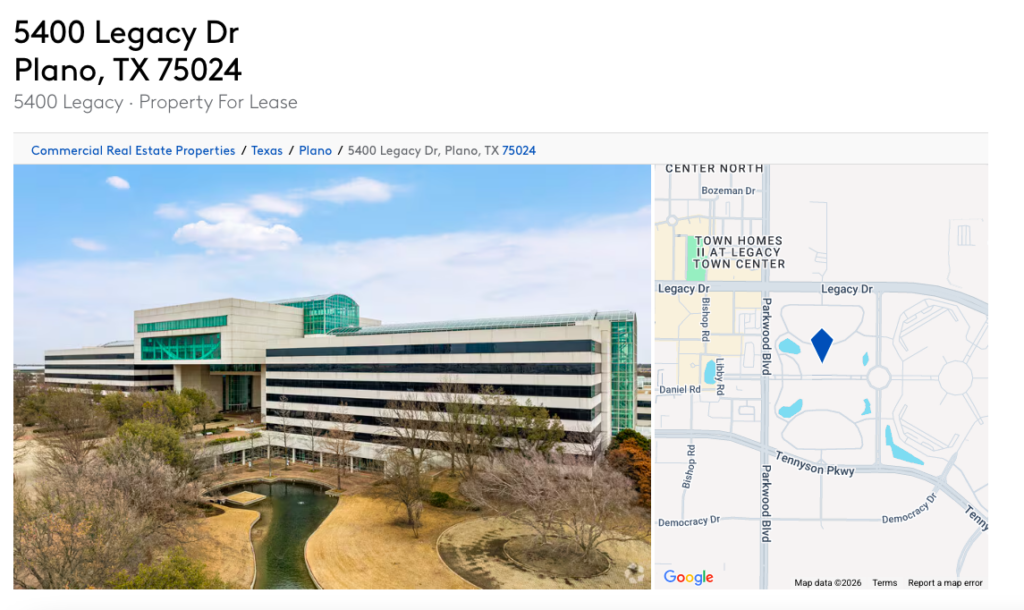
In a statement, a spokesperson for AT&T said that a 54-acre site at 5400 Legacy Dr. would provide the necessary space to consolidate its administrative operations, which are currently spread across a number of cities in D-FW.
“The nature of the company and our work have both evolved significantly since we moved our headquarters to Dallas in 2008, but what hasn’t changed is our belief and confidence in the Dallas-Fort Worth Metroplex as the right place to operate a thriving multinational corporation,” he said.
Partial occupancy of the new facility is expected as early as the second half of 2028, the company spokesperson said.
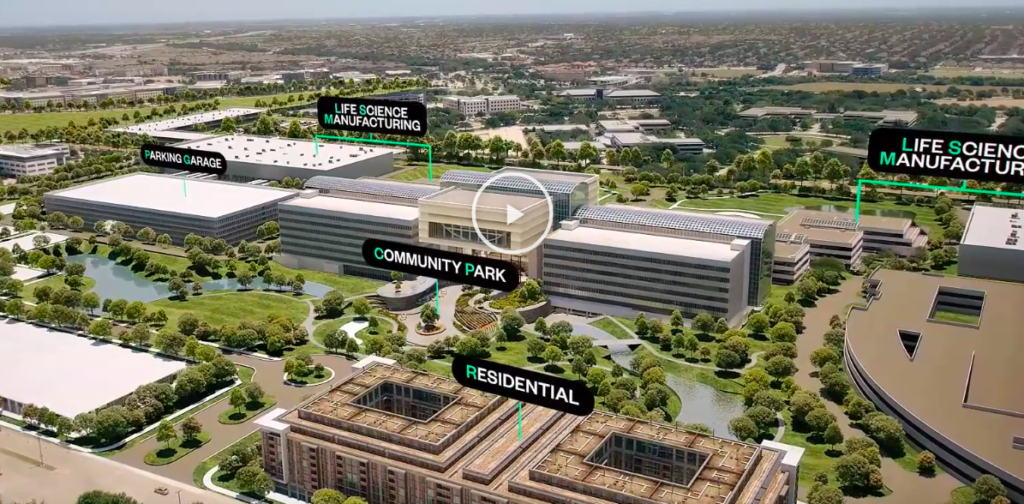
The property at 5400 Legacy Dr. is located within a 215-acre research-focused “life science district” at the site of the former Electronic Data Systems headquarters. NexPoint, a Dallas-based investment firm, is converting the 1.6 million-square-foot former EDS campus into a $4 billion, 200-acre complex. It aims to attract pharmaceutical companies, research institutions, and medical technology firms to what would be one of the Southwest’s largest biotech and life sciences campuses.
The first phase of the district’s construction is expected to be delivered later this year. It is unclear how AT&T’s new campus will fit into NexPoint’s project, which is called Texas Research Quarter.
While a new suburban campus might be exciting for the folks at AT&T, news of the relocation is a straight up blow to downtown Dallas, which is seemingly at an inflection point as office space gives way to residential amid changing workplace dynamics.
The fate of AT&T’s downtown offices in Whitacre Tower has been a topic of concern and speculation for roughly a year now, ever since a commissioned report on the central business district suggested the telecommunications giant would consider leaving downtown if improvements to public safety weren’t made. It’s unclear whether downtown crime and homelessness factored into AT&T’s decision at all, but no doubt critics of the city’s approach to these problems will seize on the company’s upcoming departure to call for more police resources.

Jennifer Scripps, president and CEO of Downtown Dallas, Inc., celebrated AT&T’s economic impact on the neighborhood, particularly its creation of the AT&T Discovery District as a significant cultural destination and the hundreds of millions of dollars the company invested in the city center. She also touted the growing presence of Y’all Street and the billions of dollars in public and private investment heading into the redevelopment pipeline.
“While this moment is challenging, it also creates space for new opportunities and continued reinvention,” she said in a statement. “DDI remains focused on advancing a long-term vision for a vibrant, competitive, and globally relevant urban core.”
City officials celebrated the gains made downtown while acknowledging AT&T had its own distinct plans for the future, and they didn’t exactly jive with the downtown cityscape.
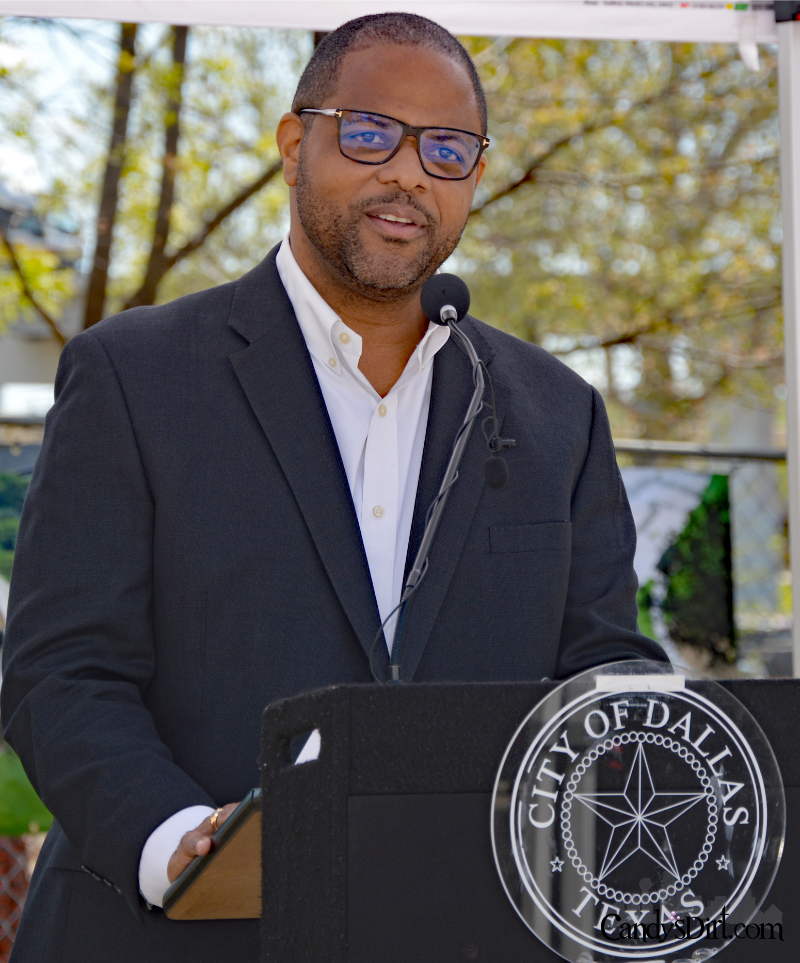
“Our city’s unique economic strengths are what attracted AT&T to our urban core in 2008, and Dallas has become a global economic powerhouse since then,” Mayor Eric Johnson said. “But as we worked to retain AT&T, it became clear that its current leaders preferred a large horizontal, suburban-style campus rather than the skyscrapers that define our city center.”
Both Johnson and City Manager Kimberly Tolbert made mention of the efforts undertaken to reduce homelessness in the neighborhood and get violent crime under control. The city manager similarly nodded to AT&T’s specific needs.
“This was a decision that came down to AT&T’s desire for a new horizontal location with significant acreage for development,” she said. “AT&T’s transition will be gradual, and the company will remain part of our city’s fabric in the years ahead.”
As has been an unfortunate pattern for downtown boosters, the city center’s loss is someone else’s gain. Uptown has been a pretty major beneficiary of corporate relocations out of the central business district. Plano and Las Colinas have also been office sector favorites. It’s in that spirit that Council Member Cara Mendelsohn (District 12) chose to look on the bright side.
“Many Far North Dallas residents work for AT&T and will enjoy a shorter commute and plenty of parking,” she posted on X.
1 Comment
Leave a Comment







What is good for the Platinum Corridor is good for the old downtown Dallas. I say old because that old central business district concept hasn’t been working for forty years as it has been shrinking as an office market having the same 25% vacancy even though many tall buildings have been taken off the market by way of conversions to residences and hotels. I dare say the old Interstate surrounded downtown has become a submarket of the new Financial District north of Woodall with Rose Caroline Hunt’s Crescent mixed use development as ground zero.
Has anyone else noticed the oddity of how the most prime office space in Dallas is located not in downtown, but in and around the Crescent, within the Knox Street district, Preston Center, and up around the vicinity of the Galleria Dallas?