
Dallas Housing Officials: City Can Provide About Half of the Needed Affordable Units by 2033
Share News:


We already know that Dallas needs more housing to shelter residents of varying incomes and that the City of Dallas and partners in the private industry are making huge strides to address the affordability crisis. But what we haven’t seen — until last week — was a strategic document outlining methods by which Dallas Housing Policy 2033 will be implemented.
Assistant Housing Director Thor Erickson, Area Redevelopment Manager Jasmine Bazley, and HR&A Advisors partner Aaron Abelson rolled out the Housing Action Plan during a Dec. 10 briefing at the Dallas City Council’s Housing and Homelessness Solutions Committee.
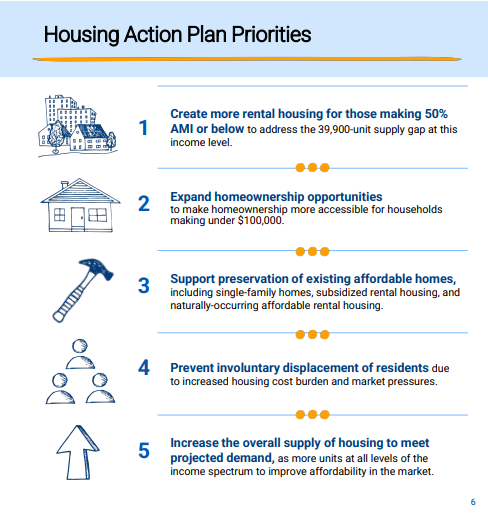
“We have our policy, we have our catalog full of our programs, and this document lays out the strategic ways that we operate to fulfill the policy direction,” Erickson said.
Bazley noted that the Inclusive Housing Task Force, a panel of resident volunteers, has offered feedback that was incorporated into the final document.
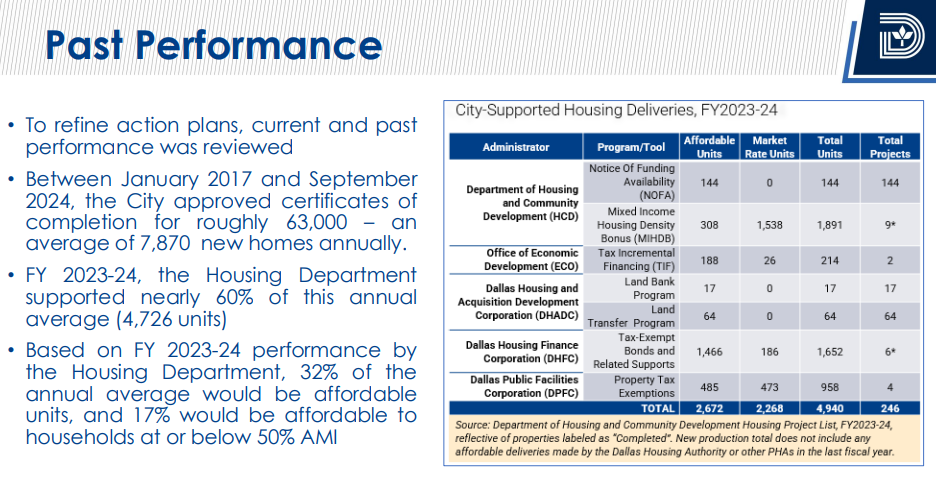
Experts estimate a net 68,000 new households are expected to move to Dallas by 2033. Bazley said the City and its Housing Department may be able to support 32,000 of the 68,000 needed units.
“The remaining units would need to be supplied by the market or other outside forces,” she said. “There is a strong call for the city to use its existing land or buildings for affordable housing. We should be exploring opportunities to pilot projects on city-owned property and finding ways to fast-track development on these sites.”
The task force also asked city leaders to remain focused on including anti-displacement strategies in their housing efforts. A briefing from Builders of Hope Community Development Corp. on its anti-displacement toolkit is anticipated next month.
Housing Strategies
The housing department is working with Transportation, Dallas Water Utilities, and Public Works, among other departments, to map areas where infrastructure is being installed and identify land that can be used for affordable housing, Bazley said.
“Through the next several years we plan to be even more coordinated and to align cross-department work to close infrastructure gaps in historically underserved areas and be able to further invest in housing,” she said.
Erickson noted that housing staff is working to ensure that equity target areas are reviewed closely and low-income apartments aren’t built in pockets, which creates a “concentration of poverty.”
“We know the composition of a lot of our neighborhoods in the city,” he said. “Some lean very heavy renter, some are homeowner, and some are balanced. When we look at the placement of future affordable housing buildings that have a lower-income [element], we need to be very aware of the concentration of poverty and we also need to be very aware of displacement when those units are more market-rate.”
Criticism of Housing Action Plan
North Oak Cliff Councilmember Chad West has been asking for months to see data, specific goals, and a plan for implementation. He appeared pleased that data was included in the briefing but said in a newsletter a couple of days later that the Housing Action Plan Report does not include “specific housing unit needs per income level, so our city can understand exactly how many new units of housing we need at what affordability levels.”
“Without clear metrics and goals, we simply do not know how to best allocate our limited resources,” he said.
West also commented during last week’s HHS meeting that a deeper policy discussion is warranted.
“We’re just now getting the data to show us where we’ve been historically and where we’re going,” he said. “It’s really a policy discussion on how we plug in those resources as a council. I’ve got a lot of folks who are very interested in this … I just want to have time for our housing partners to be able to absorb this.”
Erickson said there are continual opportunities for feedback and, at a minimum, annual updates will be made.
West emphasized that the 80-plus-page action plan included “a lot of words” but an unclear picture.
“How can I explain this to my residents, that this is a beautiful document but we don’t have a plan on how we’re going to close the affordable housing gap that I can clearly articulate to you?” West said. “We’re going to be coming up on budget discussions in a few months and we may have our philanthropic partners calling us and saying, ‘What gap do you have?’ We need to be able to articulate to them what that gap is and how they can step in to help us.”
More Council Feedback
Councilmember Gay Donnell Willis drew attention to data that shows 7,700 deed-restricted affordable homes are at risk of losing their affordability covenants by 2033.
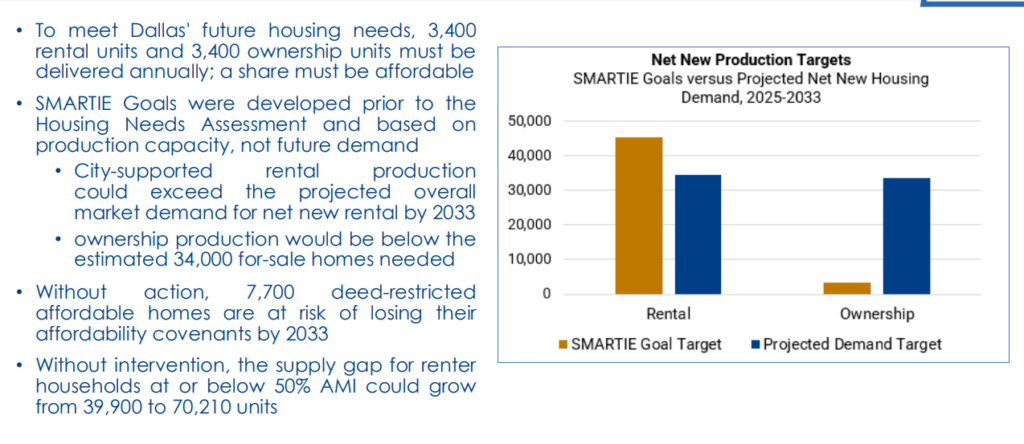
Erickson said there are a handful of multifamily properties in question with multiple units at each site.
“That is one of the low-hanging fruit that we see, opportunities where we know there’s an expiration coming and we know we need to preserve units,” he said. “Outreach and connections to city incentives or other available resources are directly part of this action plan that is happening now.”
Housing Director Cynthia Rogers-Ellickson said external partners are also looking into the deed-restricted properties.
“Some have such low rents that re-upping anything on that property would cause an inflation of rent amount,” she said. “There are a lot of different opportunities we can take on but there are also some issues that we have to figure out … How can we help address some of the things that could happen if we were to take ownership and change the property itself once the deed restriction comes up? There are a lot of property owners who aren’t interested in re-upping the tax credits … [The] market is very competitive.”
In response to questioning from Far North Dallas Councilwoman Cara Mendelsohn, staff members confirmed that the housing department has 62 employees and HR&A was paid $3.9 million for a consulting contract, about $350,000 of which was designated for housing work.
Mendelsohn said she appreciates where the department is headed.
“I appreciate that you’ve identified areas, I appreciate that you have project managers for each one,” she said. “But I still feel like we’re not getting the full picture of what we need to make policy that makes sense for the city. There was a question about who is advising [on the task force] and that maybe there are not enough developers. I would say maybe there are not enough neighborhood advocates. Not tenant advocates, not high-density advocates, but neighborhood advocates. You know, the people who fill our chambers. the people who were on the other side of ForwardDallas. That is a portion of our city and we have to be listening to them also, and I feel that we are not.”
1 Comment
Leave a Comment






I have apply have not heard back I am disabled in needed a place love