
Anti-Displacement Toolkit: Helping Legacy Residents Stay in Their Dallas Homes
Share News:

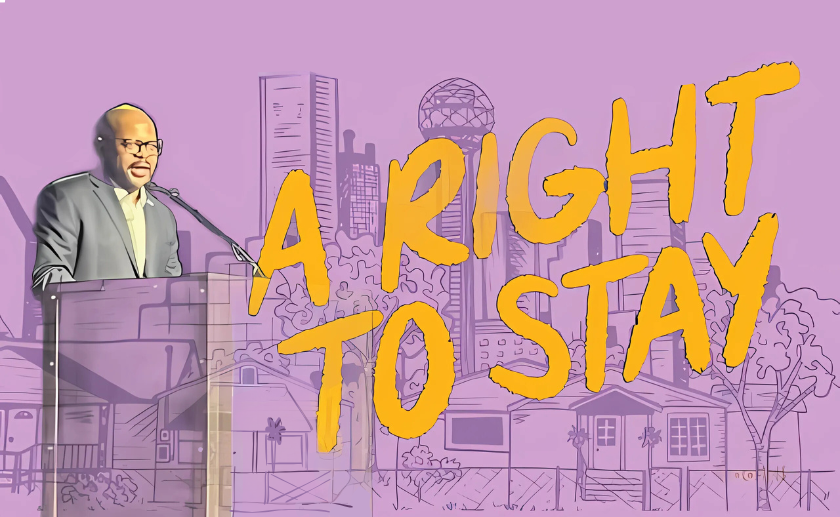
As gentrification reshapes neighborhoods across Dallas, Builders of Hope Community Development Corp. is helping vulnerable residents fight back with a comprehensive anti-displacement toolkit aimed at preserving the city’s legacy communities.
The “Right to Stay” initiative, devised in partnership with the Dallas Housing and Community Development Department and significant community input, recommends policies and programs that will protect legacy residents from displacement and gentrification.
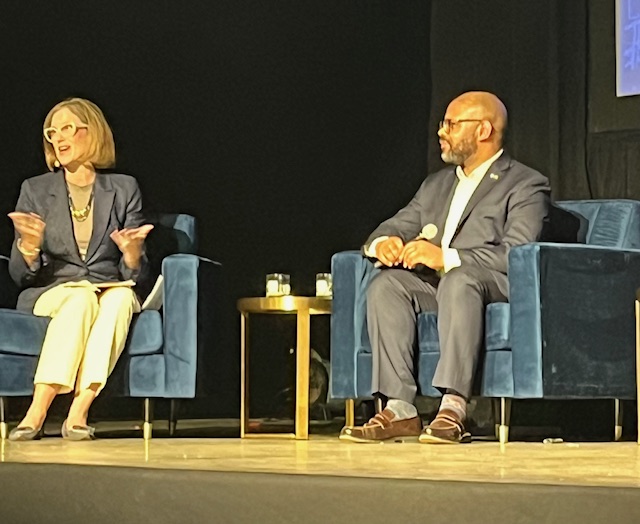
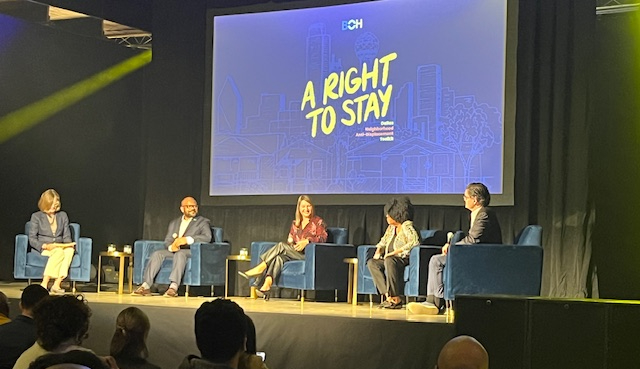
Builders of Hope celebrated the launch of its anti-displacement toolkit on Thursday, emphasizing that they’re just getting started. A powerhouse panel at Thursday’s event included University of Texas professor Heather Way, Builders of Hope CEO James Armstrong, JPMorgan Chase Head of Research, Policy & Insights for Corporate Responsibility Heather Higginbottom, Executive Director Emeritus of the South Dallas Fair Park Innercity CDC Diane Ragsdale, and Southern Methodist University professor Cullum Clark.
Michelle Thomas, executive director of global philanthropy at JPMorgan Chase, said 40% of Dallas neighborhoods are experiencing some level of displacement pressure.
“These statistics are the backdrop of shrinking affordability and record-breaking economic growth,” Thomas said. “These realities have created an urgent need for action — action that protects the legacy residents and neighborhoods.”
A Nov. 15 Dallas Morning News article pointed to the toolkit finding that one in five Dallas neighborhoods is in the early stages of gentrification. The Ledbetter neighborhood in West Dallas, Red Bird in southern Dallas, and Vickery Meadow in northeast Dallas are among those with the highest risk, the article states.
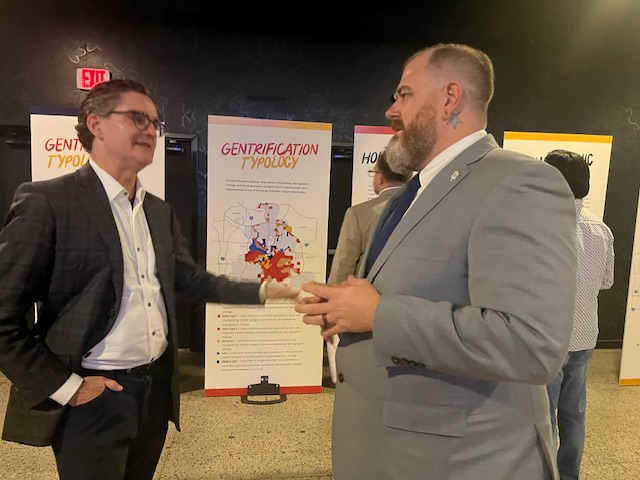
Download the Builders of Hope Anti-Displacement Toolkit.
Gentrification and Displacement
Author Peter Moskowitz (How to Kill a City) defines gentrification as “not just a trend but a purposeful act spurred by economic and political forces that fundamentally favor the creation of wealth over the creation of community.”

“While gentrification has often been referred to as a natural or even inevitable process of neighborhood change driven by individual choice and consumer-based supply and demand, those who study this process closely understand there’s far more at play,” said Stephanie Champion, chief community development and policy officer for Builders of Hope.
Gentrification results in direct displacement when residents can no longer afford their homes due to rising costs, exclusionary displacement caused by a demographic shift as lower-income residents move out, and cultural displacement when communities feel unwelcome and alienated in their own neighborhoods, Champion said.
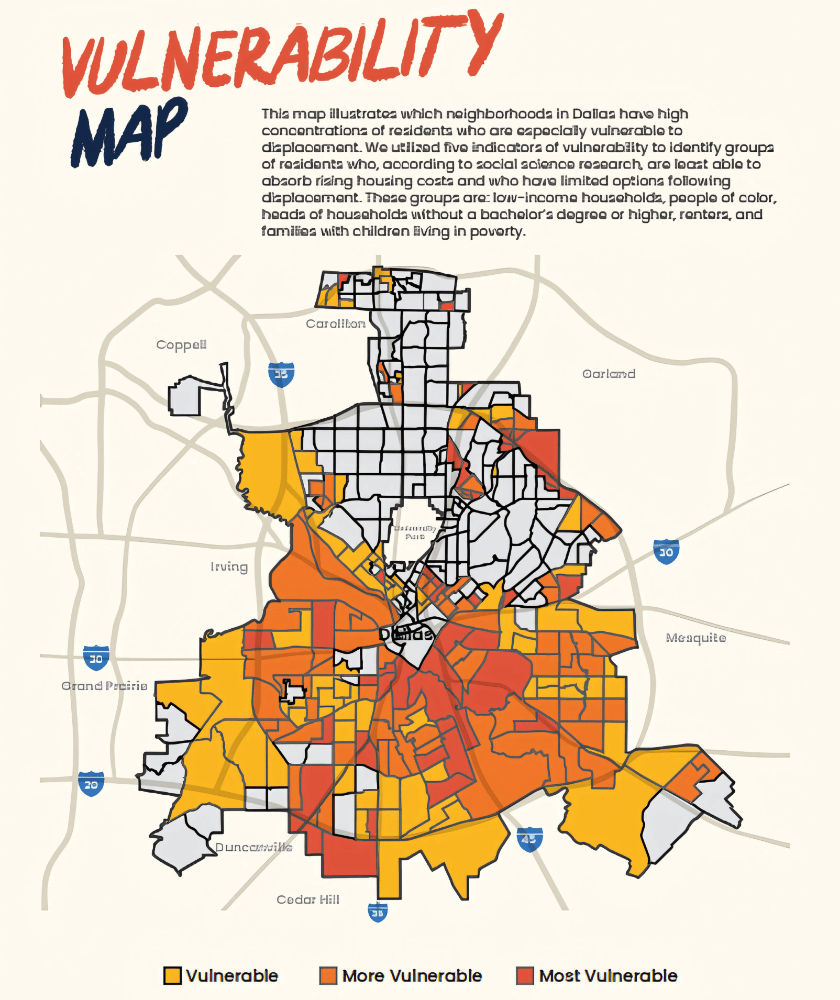
Builders of Hope mapped every neighborhood in Dallas to determine which ones are most at risk for displacement.
“Our vulnerable communities in Dallas are highly concentrated in the southern sector but there are also pockets of high vulnerability in the north as well,” Champion said.
A key takeaway from last week’s toolkit rollout is the policy recommendation that neighborhoods can petition for an anti-displacement overlay, similar to the process for establishing a conservation district or historic district. The policy recommendation is already written into the ForwardDallas comprehensive land use plan, but to some degree, it’s up to elected officials to determine how impactful the toolkit will be.
“We need to develop the capacity, but we need to start at the leadership [level],” Ragsdale said. “We need to start at the top. The tone has to be set that this issue is important, and once that tone is set, things can begin to move.”
‘We’re Not Going to Let Our Foot Off the Gas’
Armstrong said he and Champion embarked on the toolkit project because there wasn’t an active voice on the subject seeking solutions for Dallas.
“I’m excited that we’re starting to talk about it, and hopefully that talk will lead to implementation,” Armstrong said. “You can look in most Black and Brown communities in Dallas — especially those that are near the urban core — and see gentrification and displacement right before your eyes. It is happening now.”
Children have to maintain part-time jobs to help their parents pay property taxes. Senior citizens have to choose whether to buy medicine or pay their rent or mortgage, he explained.
“People are being uprooted from their neighborhoods where they have social capital and now is the time for action,” he said. “That is what excites me the most. We’re not going to let our foot off the gas. Now that this thing is introduced, we’re going to push forward and make this a topic of conversation everywhere that we can.”
A property tax relief program implemented as a result of the toolkit has already helped 71 property owners, equating to $14 million of wealth preserved for those families, Armstrong said.
‘We Have Not Built Enough Housing in This Country’
SMU economics professor Cullum Clark said displacement happens when there is a scarcity of homes and land that can be developed — and there are also “highly unequal incomes.”
“When those two things come together, there is ferocious competition for these very scarce land loans that are available,” he said. “The people with more resources win. The people who don’t [win], maybe they stick around for a little while and endure great hardship to try to stay in their homes. In the end, they’re displaced. We have a national problem. We have a local problem. We have not built enough housing in this country. We also have not developed adequate plans to preserve the housing that we have.”
The following initiatives, outlined in the toolkit, must be in place to address the problems in Dallas, Clark said:
- Preserve the affordable housing stock that exists.
- Build more housing.
- Provide eviction protection.
- Offer more programs for minor home repairs.
“One thing that needs to be done for this toolkit to fully work — and no one else can possibly do it; the city has to do it — is take charge of activating an enormous amount of publicly owned land,” Clark said, referring to property owned not just by the city but also Dallas Area Rapid Transit and the school district. “The amount of raw land in the City of Dallas exceeds that of any other large city in the United States. It’s owned in a lot of different pockets and maybe no one of which has a clear mandate to turn it into affordable housing.”
Throwing a Fist Instead of Pointing a Finger
Armstrong thanked Assistant Housing Director Thor Erickson and Director Cynthia Rogers-Ellickson for giving Builders of Hope a seat at the table of Dallas department directors as the toolkit was developed.
“Thor helped Stephanie and I organize 15 departments and we sat around one table to talk about this toolkit,” Armstrong said. “I don’t know if … a neighborhood organization has ever presented their findings or their work in front of 15 heads of departments at the city. That speaks to the change in tone at City Hall.”
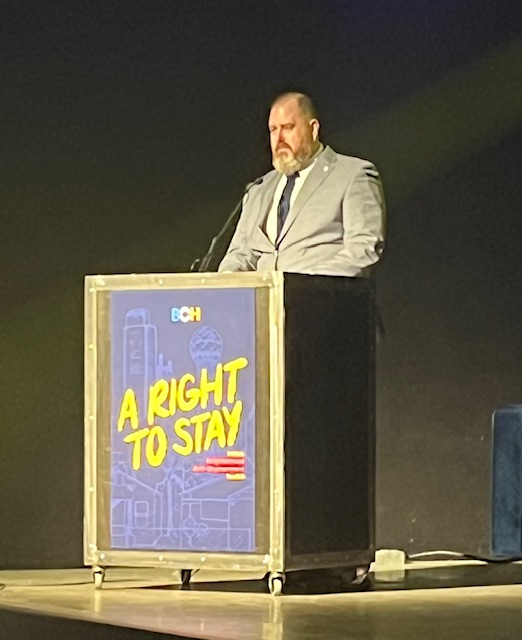
Erickson, who oversees the implementation of Dallas Housing Policy 2033, said it was refreshing to see community leaders and residents talking about housing.
“My family grew up very housing insecure. We moved a lot,” he said. “I went to five different elementary schools. That really affected my childhood. I know this work from personal experience, and I bring that story and that lived experience to my work at the City of Dallas. It’s something I never forget. We have to share our stories … and we have to listen and learn from each other.”
Armstrong applauded the neighborhood coalition West Dallas 1 for fighting against disruptive development.
“We have to organize communities in such a way that instead of pointing a finger at disruptive development, you are throwing a fist at it,” Armstrong said. “And when you throw a fist, there is always power in collective impact. I think that’s the model and I’m just happy to be part of it.”
1 Comment
Leave a Comment







Stop: “A Right to Stay”? The only “right to stay” comes with home ownership. Renters have a right to stay as long as they pay their rent. This newly invented “right” sounds like yet another Leftist excuse to build yet another government bureaucracy designed to further erode private property rights through some sort of rent control scheme. Stop this please. PLEASE. STOP.