Bringing Nature Home: Ginger Curtis on the Power of Biophilic Design
Share News:


In the current wave of residential design, biophilia isn’t a passing trend — it’s a quiet revolution. Instead of bold, showy statements, it shows up in subtle, intentional ways: the raw tactility of stone and wood, the softness of natural textiles, greenery thoughtfully layered into everyday spaces, and light that shifts gently throughout the day.
But this approach isn’t just about aesthetics. Grounded in research, biophilic design has been shown to sharpen focus, ease stress, and support overall well-being. “It’s a way of designing that reconnects us with the natural world — not as an escape, but as an integral part of how we live,” said designer Ginger Curtis, founder and CEO of DFW-based Urbanology Designs.
‘Bringing nature into your home affects you on a subconscious level.’
Among the most powerful ways this happens is through fractal patterns — repeating designs found in nature, like the grain of wood, the branching of trees, the flames of fire, or the shape of clouds. “These patterns have a profound impact on our emotions, helping to reduce stress and promote relaxation,” she added.
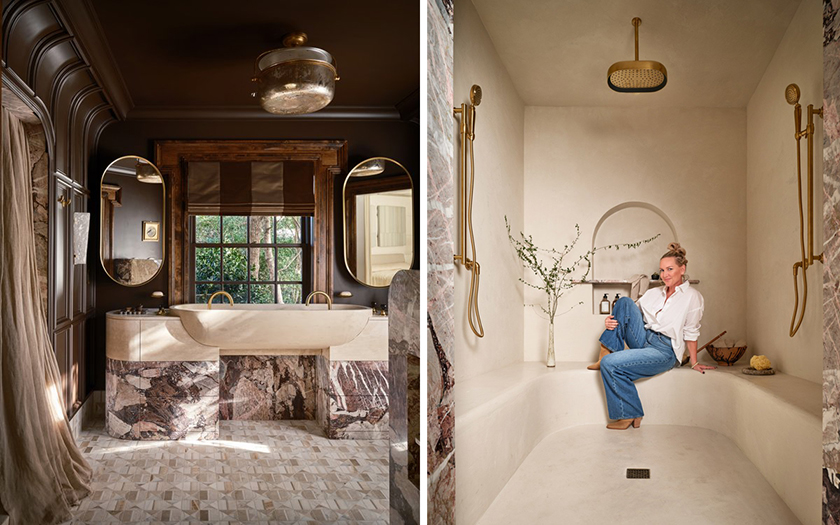
Curtis consistently gravitates toward natural materials, favoring them over their synthetic counterparts. Instead of engineered quartzite, she’ll select soapstone, marble, or limestone — stones that carry a sense of history and origin. “There’s something meaningful about knowing the material is real, that it came from the Earth. I’ve never found a manufactured stone that develops a patina as beautifully as a natural one.”
Earthy tones, authentic textures, and organic patterns echo the richness of the natural world, lending Curtis’ interiors a grounded, restorative quality. Stone, in particular, plays a quiet yet powerful role — bringing calm to bathrooms, depth to fireplaces, and a sculptural presence to water features.
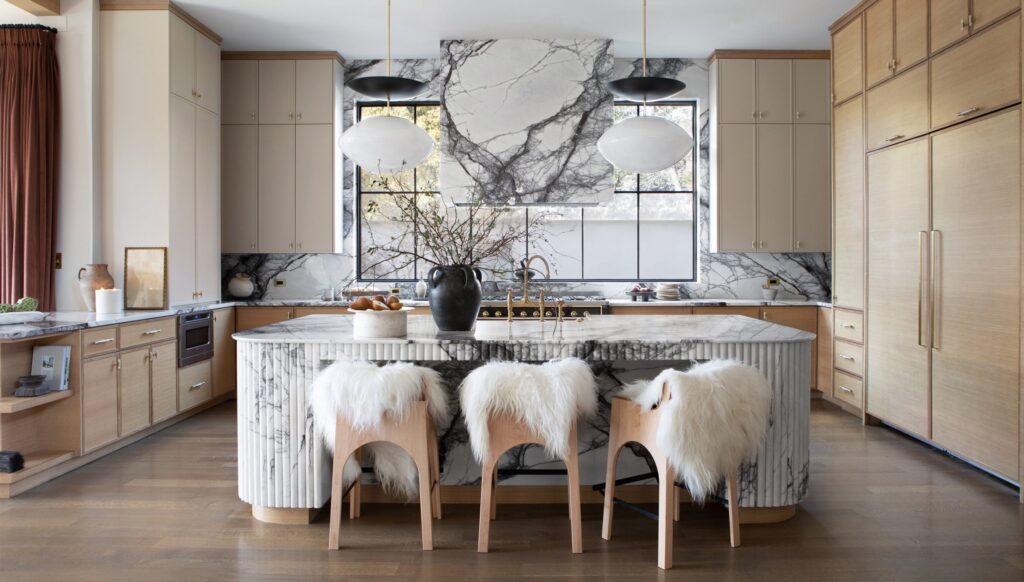
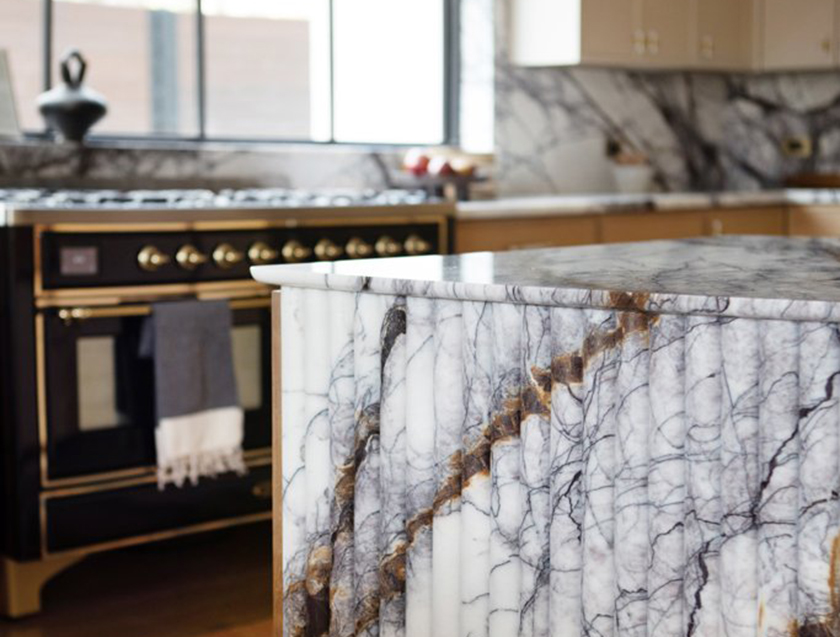
Beyond what we see, biophilic design is how a space makes you feel.
“A room may be beautiful, but it also needs to feel warm, layered, and textured,” Curtis explained. “There are a million principles that create that feeling, from space planning to color psychology. But if a room doesn’t feel comfortable, then you’re designing these interiors for nothing.”


A key component is natural greenery. “From a design perspective, I want to make sure that the nature, the real live plants, are cohesive with the home’s architectural style,” Curtis said.
Her pet peeve? “I don’t want to see palm trees where there shouldn’t be palm trees. It drives me nuts. I’m like ‘guys, we’re not at the beach.’”


We asked Curtis what’s driving the rise of biophilic design and why it matters now more than ever.
“American western culture is go, go, go. We have epidemic levels of stress, of anxiety. That people feel like they have to travel to Bali, Tahiti, or wherever to get a break is so backwards,” she said. “Our homes should be that place — a beautiful, serene haven we can experience every day. It’s why I’m so passionate about bringing biophilic design mainstream.”