
April Showers Can Bring May Storm Damage
Share News:

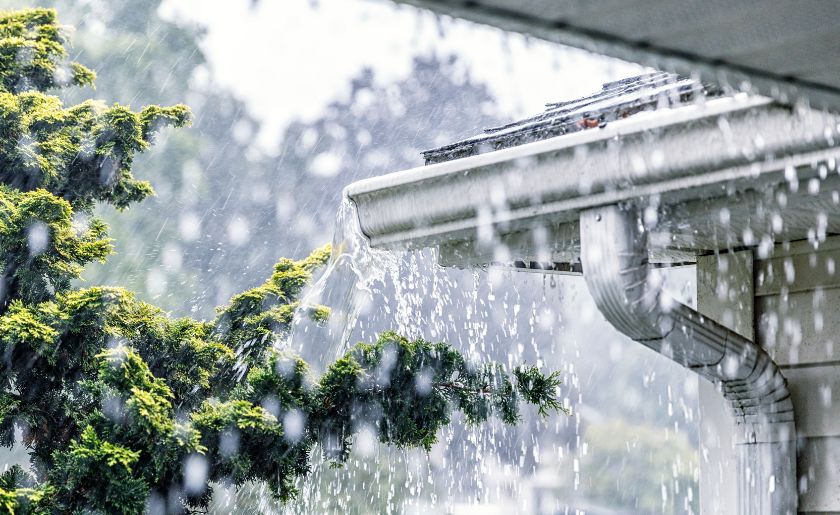
It’s storm season in North Texas, and that means it can be sunny and beautiful one minute and dark as night with 80 mph winds and golf-ball-sized hail the next.
Heavy rains and storms can wreak havoc on your home, and while some damage is covered by homeowners insurance, all damage costs time and energy you’d rather not spend. This week, we thought we’d look at some storm damage — and not only the ways it can be repaired but how it might be avoided.
Unintentional Waterfront Property
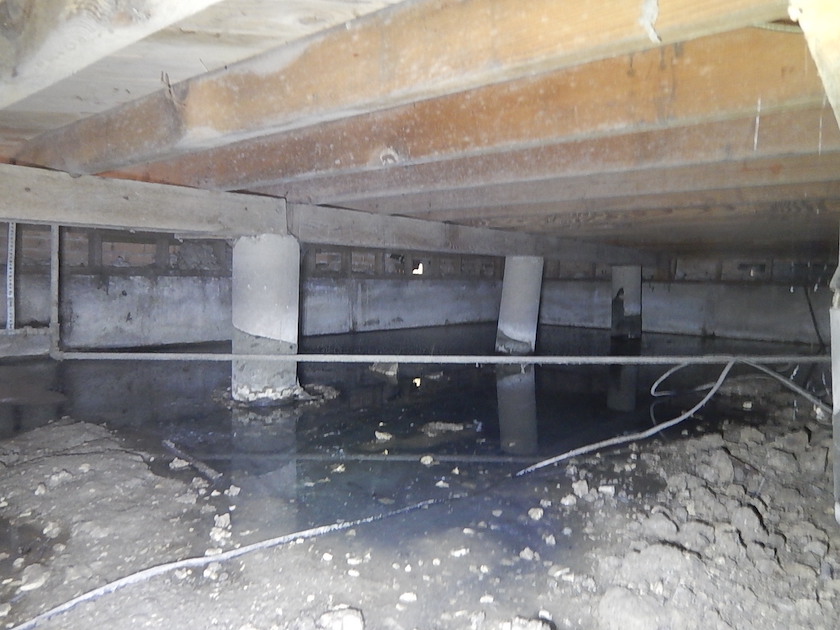
This image is of standing water in a crawl space after a storm. A flooded crawl space after heavy rain typically indicates a drainage problem or an issue with foundation leakage. Common culprits include clogged gutters, poorly positioned downspouts, inadequate property grading, or even a malfunctioning sump pump.
Addressing the underlying cause and removing standing water is crucial to prevent mold growth, pest infestation, and structural damage.
Putting a Bandaid on a Bullet Wound
Of course having your HVAC equipment sitting in water is an issue, but the real problem is what that water is doing there in the first place.
Roof systems are built specifically so this does not happen, so if water is pooling on your roof, something has gone horribly wrong. The first thing you should look at are your gutters, downspouts, and any other roof drainage. Check to see if these are clogged and clear the blockage so they can drain properly. Pooling water on your roof can eventually lead to leaks and damage to the decking and anything below it.
How do you know if there is water pooling on your roof? Well, it’s a good idea to check your roof and attic every now and then. Just after it rains, go in the attic to check for leaks, then head up to the roof to look for places where water might be collecting.
That’s Not a Water Feature, It’s Your Yard
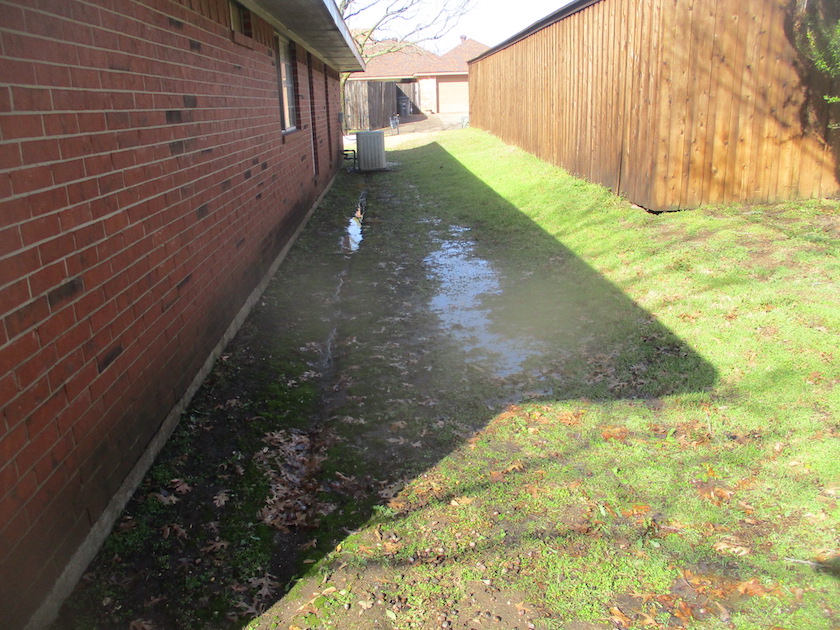
The angle of the ground slope next to your house is important, as it determines the direction water will flow when it rains. If it’s flat or sloped toward the house, the water will collect against the house, which can cause damage to the foundation and create little ponds like the one above.
You can have professionals help alter the angle of your yard (also known as grading) for proper drainage, or if the situation is not too severe, you can make this a DIY project.
Whole House Maintenance
If you’re interested in “storm-proofing” your home and getting comprehensive home maintenance advice from a professional, we offer pre-storm inspections. The inspector will cover key areas prone to storm damage, identifying those issues that you can address before they become a problem.