Oak Lawn Heights Resident Sounds Alarm on Love Field Noise, Aviation Safety
Share News:

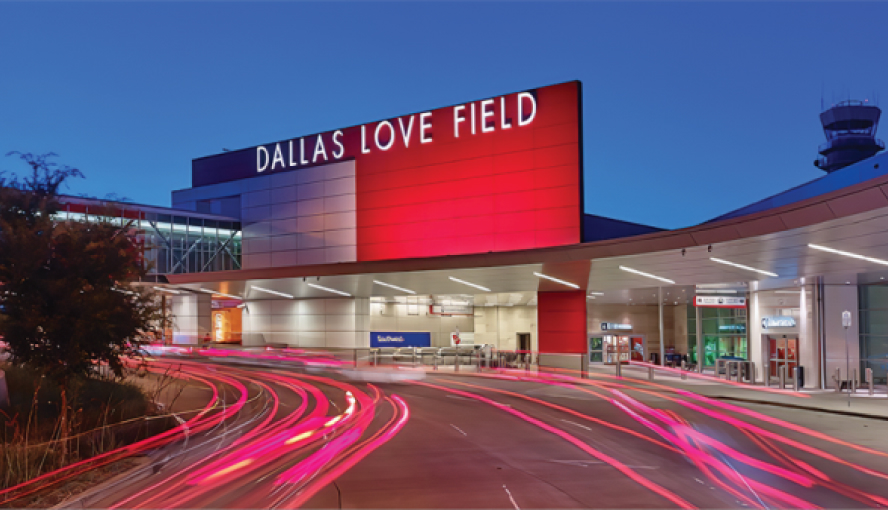
Residents who live near Dallas Love Field have been raising concerns for years that excessive noise from the City-owned airport has severely diminished their quality of life and, in some cases, had them contemplating moving to a new location.
Oak Lawn Heights resident Anna Jordan entered the chat early this year by launching Loudfield.org, a grassroots organization aimed at raising awareness about the noise, air pollution, and aviation safety issues caused by operations at Dallas Love Field.
Much of the groundwork has already been laid by another resident advocacy group and Jordan said she hopes to complement their efforts and engage new audiences rather than compete or duplicate efforts.
Jordan reached out to Steve Klein and members of the Citizens Action Committee that submitted 13 recommendations for improvement during an October 2023 Environmental Commission presentation.
“Sadly, there’s a strong sentiment that the City of Dallas and the Department of Aviation have favored commerce over neighborhoods surrounding Love Field and along the Lemmon and Denton flight paths,” Klein said at a 2023 City Council meeting. “Add the fact that the FAA’s NextGen has created overflights in neighborhoods that rarely saw a plane and that a city audit faulted the existing program for lack of enforcement and we have a perfect storm of anger, mistrust, and cynicism.”

Council members have appeared receptive to residents’ concerns but lean heavily on Dallas Love Field Director of Aviation Patrick Carreon to manage day-to-day operations. Airport personnel have repeatedly explained that their operations are governed by the Federal Aviation Administration and airlines are encouraged but not required to submit to a voluntary curfew for arrivals.
Why Loud Field?
Check the comments section on our Love Field archives and you’ll find at least a few readers who wonder why people complain when they chose to buy homes near an airport. Dallas Love Field opened in 1917 and was the primary local airport until DFW International opened in 1974.
Jordan said she’s heard the criticism that the airport was there before most of the residents purchased their homes, but it’s about more than the noise.
In the wake of recent airplane crashes in Washington, D.C., and northeast Philadelphia, national attention is turning to aviation safety and the risks of airspace congestion, Jordan pointed out in a Loud Field press release issued Feb. 2.
As part of its efforts to prevent future incidents, the FAA deployed new runway safety technology at Dallas Love Field, one of just four airports nationwide selected for the upgrade.
“While this system helps prevent ground collisions, it does nothing to address growing congestion in the skies — particularly in airspace shared with medical helicopters near hospitals,” Jordan said. “As Love Field continues to push record passenger volumes and unrestricted private jet growth, many in the community worry that Dallas is falling behind in protecting residents from the next aviation disaster.”
As for the noise complaints, residents of neighborhoods like Bluffview, Shorecrest, Briarwood, Elm Thicket, Bordeaux Village Condos, and parts of Highland Park have said that in recent years flights have increased and arrivals are occurring later in the evening. Love Field is one of the busiest airports in the country and has just two runways, Jordan said.
“Recently with the crashes that have occurred, it brings to light other issues,” she said. “It’s not just the noise. If there are a lot of planes, yes, it’s noisy but it’s also potentially dangerous. There are health and environmental safety concerns too.”
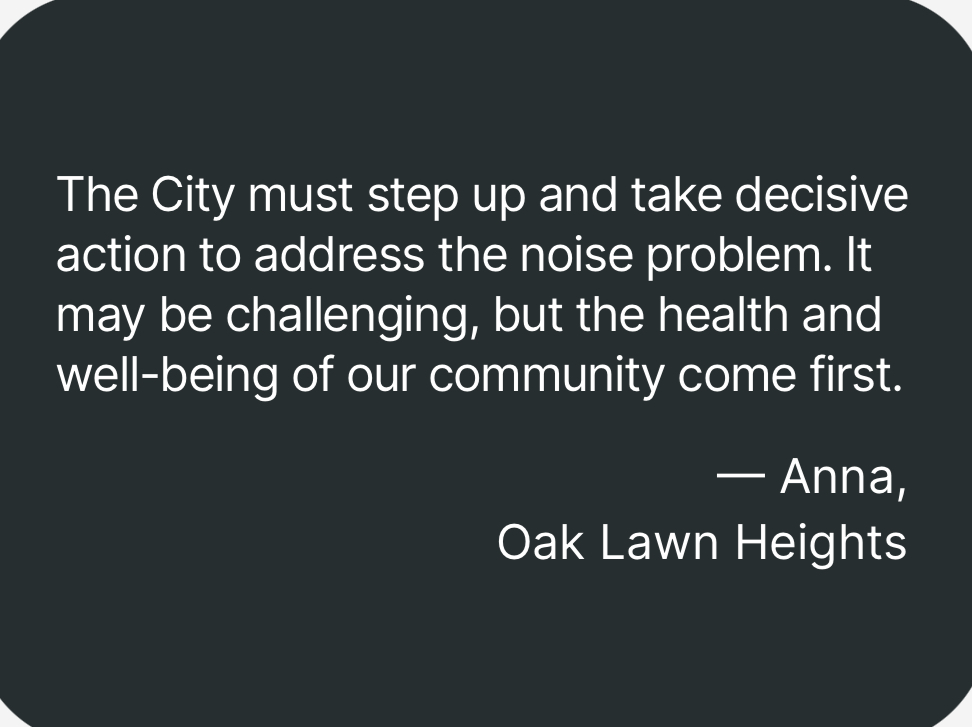
Additionally, there are neighborhoods like Maple Heights where residents are affected by the noise and safety issues but don’t appear to be aware that there’s a process for providing feedback, Jordan explained.
“Nobody from that neighborhood goes to the meetings,” she said. “Some of them are Hispanic families who have lived there for generations and some are saying, ‘It’s been like this for 30 years.’ That’s why I started Loud Field, to represent that neighborhood and to bring a fresh awakening, if you will, to the issues.”
What Does Anna Jordan Want?
We asked Jordan what she hopes to accomplish with the Loud Field group.
“PIe in the sky? I’m sure you’re aware of the struggle. It would be for [city officials] to say, ‘Love Field is so close to neighborhoods and downtown that we have to cap it,’ or the City would step up and insulate the houses and make them a priority,” Jordan said. “They have 13 recommendations … but they’re kind of slow-walking those. They have no timeline. To me, it feels like lip service and there’s no real accountability.”
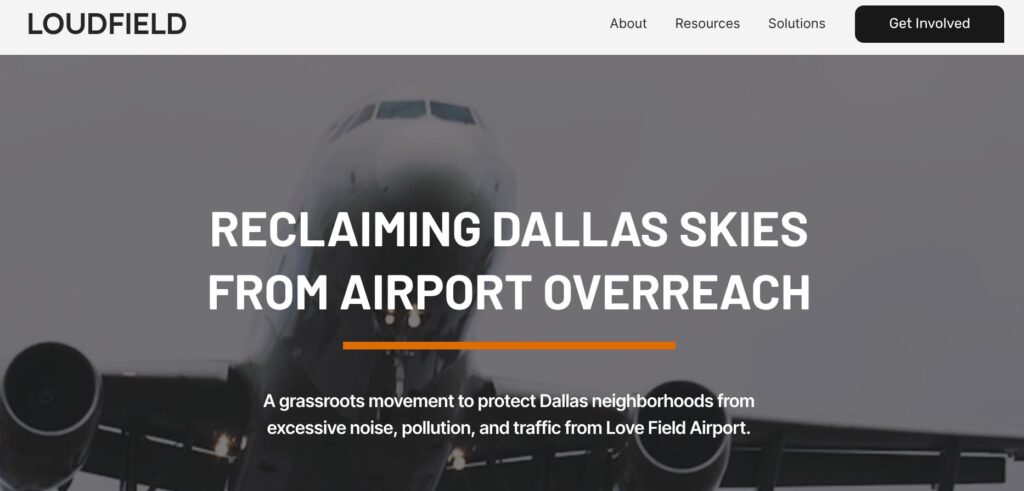
In her press release announcing the launch of Love Field, Jordan points out that airport officials have acknowledged Love Field is operating beyond its capacity.
Passenger volume at Love Field hit a record 17.9 million in FY 2024. Despite a federally mandated 20-gate cap, airport officials project passenger traffic to rise to 24 million by the early 2030s, raising concerns about congestion, safety, and unchecked flight growth, Jordan reports.
“In addition to record passenger numbers, Love Field had 249,099 total aircraft operations in FY 2024,” according to the news release, which cites the Dallas Airport Systems 2024 Annual Report and Dallas Love Field Master Plan Progress Update. “With just two runways, this level of air traffic makes Love Field one of the most congested airports per runway in the country.”