
‘There Are Still People Outside And We’ve Got to Keep Going’: Dallas Reduces Unsheltered Homelessness by 24%
Share News:


Leaders in the fight to house the unsheltered gave an encouraging progress report last week before the Dallas City Council’s Housing and Homelessness Solutions Committee — but it’s clear that plenty of challenges still exist.
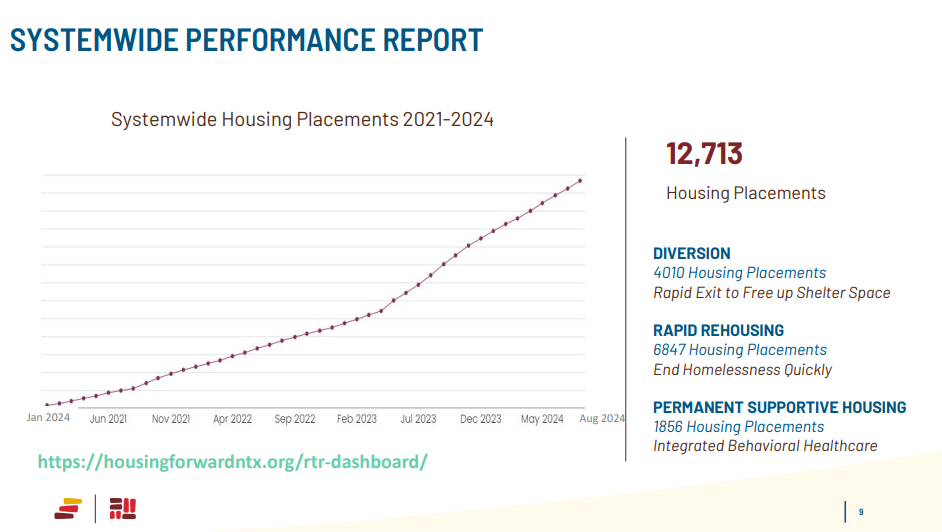
Sarah Kahn, president and CEO of Housing Forward, pointed out that her organization, in partnership with other agencies and city initiatives, has seen a 24% reduction in unsheltered homelessness since 2021. Housing Forward aims to bring that number to 50% by 2026.
“We have a lot of work to do,” Kahn said. “We know that not everyone is feeling the progress because we still have a lot of vulnerable people who are living outside.”
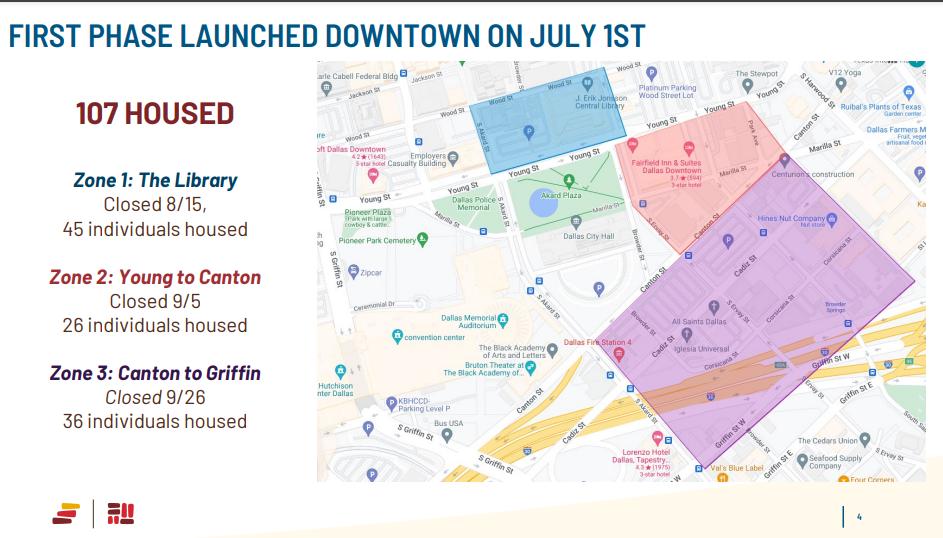
A $30 million Street to Home initiative — the first of its kind in the U.S. — is Housing First’s silver bullet to reach its goals, officials said.
“We must continue rehousing at the historic pace that has allowed us to house over 12,700 individuals since 2021,” Kahn said.
Darilynn Belier, vice-president of Meadows Mental Health Policy Institute, said a large percentage of Dallas’ unsheltered population is experiencing mental illness, substance use disorder, or both. Serious mental illness is eight times higher among the unsheltered than the general population, Belier said.
View the Housing Forward slide presentation or watch the Oct. 22 HHS Committee meeting.
Council Responds to Homeless Situation
Councilwoman Gay Donnell Willis said she was excited about the Street to Home initiative.
“When we think about the chronically homeless and the special circumstances that usually presents, this seems like it is something that could actually help move the needle to bring some stability,” she said. “I love that the funding is coming from the state and federal government.”
Council member Cara Mendelsohn questioned whether the City is equipped to assist unhoused persons in mental health crises or suffering from severe addiction. Kahn said the Rapid Integrated Group Healthcare Team (RIGHT Care) responds to such behavioral healthcare matters when a person is a danger to themselves or others. But Mendelsohn said those who are referred to mental health services are generally released the same day.
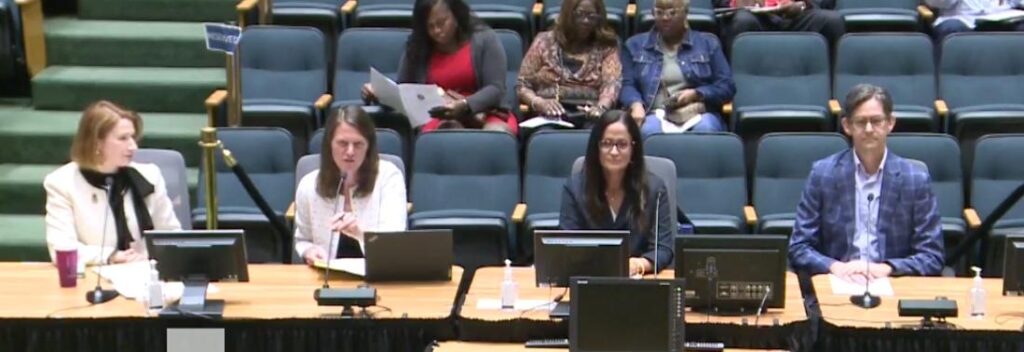
Matt Roberts, chief operating officer of the North Texas Behavioral Authority, said multidisciplinary teams are “on the ground” to serve those in mental health crisis.
Mendelsohn, who represents Far North Dallas, has repeatedly expressed concern that the CIty’s shelter and permanent supportive housing facilities aren’t full while there are unhoused individuals who remain on the streets.
“What are you doing about the ones who are absolutely going to reject housing?” Mendelsohn asked. “You’re going to go out, you’re going to meet with them, you’re going to try over and over again. They don’t want housing. Now what?”
Kahn said that’s a small percentage and Housing Forward would continue to try to offer comprehensive care.
“We see people moving into housing after being on the street for 20 years and being very successful in that environment as long as we have comprehensive care to be able to support people,” she said. “Now with this new tool, I think we’re much better positioned to not only engage the population that you’re talking about but to ensure that once they are housed, they stay there.”
Homeless Solutions Director Christine Crossley agreed with Mendelsohn that they don’t want to continue doing the same thing over and over again with no results “but what we can do is keep working on site cleanigs, site hardenings, and behavior change while offering services while these new groups are getting closer to closing that gap.”
Update on Homeless Housing Facilities
In an Oct. 22 memorandum, Assistant City Manager Alina Ciocan provided an update on plans for permanent supportive housing at 1950 Fort Worth Avenue, 4150 Independence Drive, 9019 Vantage Point, and 2929 Hampton Road.
The HHS Committee briefly discussed the memo at the Oct. 22 meeting. Councilwoman Willis asked about the status of the Independence Drive property.
A Notice of Funding Availability was issued in July for developers interested in creating permanent supportive housing at the District 3 site but no one responded, officials said in a September meeting.
Assistant Housing Director Darwin Wade told the committee last week that the project was re-advertised and several interested parties have toured the site.
“I expect we will have applications on Nov. 18,” he said.







The progress of Housing Forward and affiliated Dallas nonprofits is most encouraging. In response to Cara Mendelsohn, individuals who refuse housing should be provided with supervised designated camping sites, which include communal kitchens and bathrooms. Tents on sidewalks can create safety hazards requiring sight impaired persons, wheelchair users, caregivers with baby strollers, and all pedestrians to walk in the street.
Houston’s Housing First policy specifies the provision of apartments and rent subsidies, followed by treatment and services. It is also demonstrating success.
San Francisco unfortunately continues to be without a cohesive and humane homeless-to-housed policy. This present deficiency will influence the result of its current mayoral race.
Excellent article. There are solutions.
I finite detail has not been asked, what percent of those permanently housed remained after one year at that residence, or did they just continue to rehome the same people at different locations. The chronic homeless are the majority who have severe mental illness and chronic addictions, some comingled.