
Upon Closer Inspection: Everything’s Wrong With the Kitchen Sink
Share News:

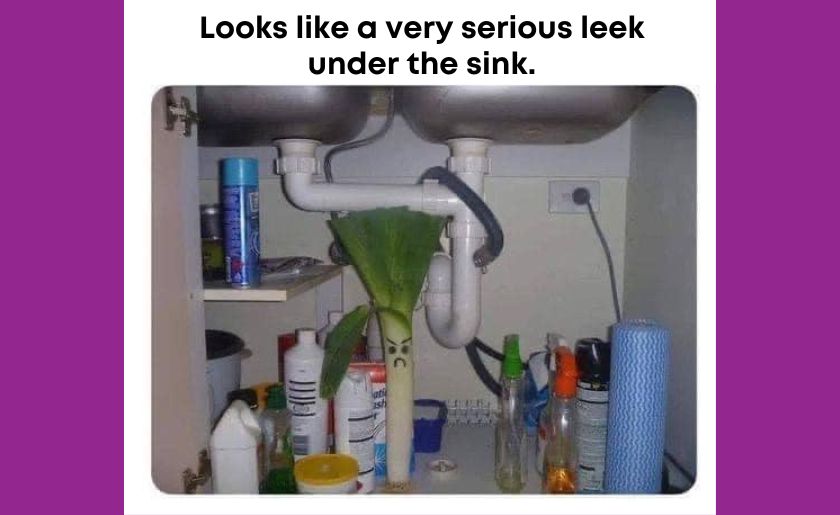
The kitchen may be the heart of the home, but sometimes it can be the heart of the problem. There’s a lot of equipment in there, and that means a lot can go wrong. But today, we’re focusing in even further, on just the kitchen sink. Seems simple, right? But you’d be surprised how many problems can start right there.
DIY Ingenuity
When your kitchen faucet is broken, it’s not as easy as it looks to fix it. A kitchen faucet has a lot of parts! And when you have a baby at home (as the sock would seem to indicate), it’s easy to understand why these homeowners might not have a lot of time on their hands to either retrieve the correct replacement part from the hardware store and fix the existing faucet, or purchase a new one and a) remove the old one, and b) install it.
So they did what all new parents do, and improvised. I’m not mad. That baby sock works surprisingly well. I do think, however, that when it comes time to sell that house, that you might go ahead and fix it or call a plumber, in that not everyone will find a baby sock to be a good permanent solution.
Did I See That Loop-the-Loop at the State Fair?
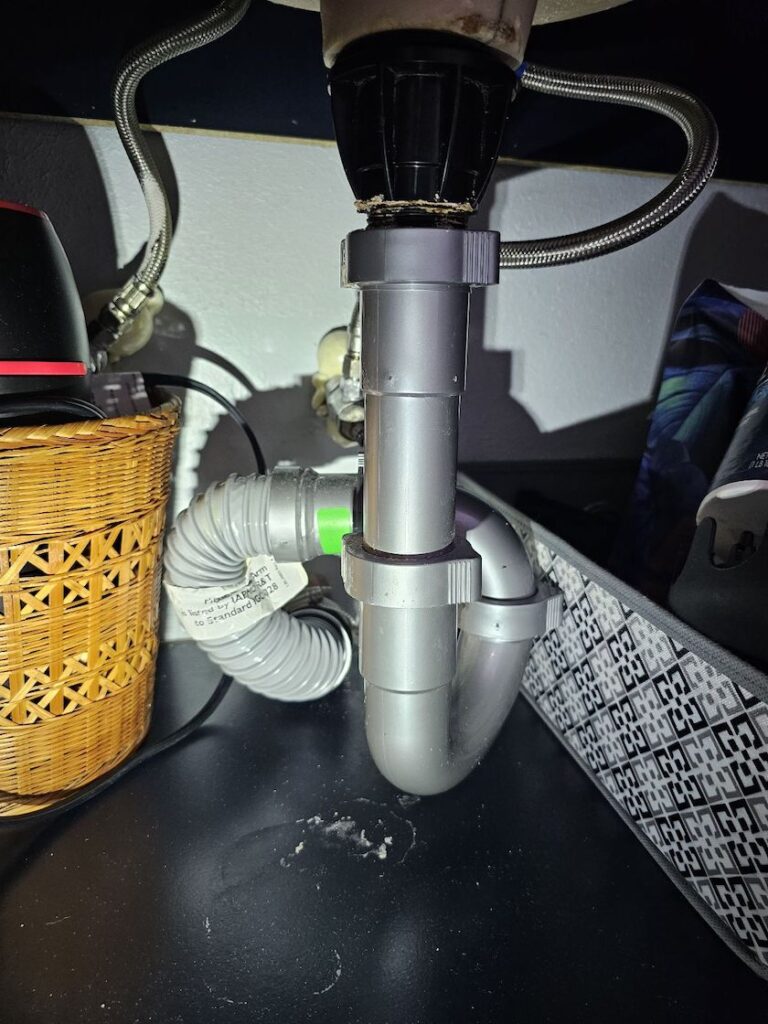
Speaking of DIY plumbing, mostly you should stay away from that. You end up with things that look like this. The water coming down the drain isn’t coming with such force that it can manage these sharp turns, especially not the debris it might be carrying. This is also why you’re not supposed to use that accordion-style pipe you see there in plumbing. Debris has a tendency to get caught on the ribbing, making it easy to get clogged. This is a clogged sink waiting to happen.
Where There’s Water…
You know the expression, “Where there’s smoke, there’s fire?” In home inspection, where there’s unexplained water, there’s probably a leak, and around a sink is definitely a place where one could be lurking. One of the pipes under the sink could have a slow leak, or it could be the pipes in the wall or the floor where you can’t see.
If you are concerned about hidden or slow water leaks, find your water meter (out front, in your yard, or in the back alley) and follow these steps. Can you open your water meter lid? If so, turn off every fixture that uses water (NOT your water heaters), open the plastic or metal lid of your meter, and watch the low flow indicator (see pictures) for at least a minute. If it moves, it means freshwater is moving toward your home and is most likely an indication of a leak. Or of course, call a plumber to do this for you.

If you have questions about home maintenance or are looking for a home inspector before you purchase a home, call the pros at Green Scene Home Inspections. We’ll inspect everything and the kitchen sink.